
A functional organizational structure groups departments or sections based on their type and skills (e.g., finance, administration, legal, IT, production, maintenance, human resources, etc.).
The PMBOK Guide defines functional organizational structure as “an organizational structure in which staff is grouped by areas of specialization, and the project manager has limited authority to assign work and apply resources.”
Large organizations use this structure to carry out their functions and daily operations.
Some popular organizations that use functional organizational structures are:
- Microsoft
- General Motors
- Proctor and Gamble
- Colgate
A functional organizational structure is useful for businesses with defined and stable operations requiring specialized repetitive tasks.
Functional organizational structure can effectively be used by manufacturing, production, and law firms. Employees have clear roles and responsibilities and can develop and use their skills efficiently.
In functional organizations, functional managers have all the authority, while project managers have limited or no roles. Project managers will need functional managers’ approval to use resources, and they may operate as coordinators or expediters.
Functional Organizational Structure Example
A traditional manufacturing company is an example of a functional organizational structure.
The company comprises production, marketing, finance, and human resources departments. Each department is led by a functional manager specializing in that area and oversees the department’s activities.
For example, the production department focuses on manufacturing processes and efficiency, while the marketing department handles advertising and sales strategies. Employees report to their functional managers, who develop expertise within each function.
Key Characteristics of Functional Organizational Structure

The following are a few key features of functional organizational structure:
Departments by Functions
In a functional structure, employees are grouped into departments based on their functions: marketing, finance, human resources, and production. Each department focuses on its specialized area, which helps with efficient task management and expertise development. This grouping helps streamline processes and improves coordination within each functional area.
Hierarchical Structure
Functional organizational structure has a clear hierarchical system, with each department having its own department head. This hierarchy ensures that authority and responsibility are well-defined, decision-making is smooth, and employees are accountable for their actions. Employees report to their functional managers, who supervise staff performance.
Expertise Specialization
All employees in a functional organization structure do the same tasks. Focusing on specific functions allows employees to develop deep knowledge and skills in their areas, thus improving efficiency and productivity. Specialized expertise enhances the quality of work and promotes innovation within each function.
Clear Career Path
In functional organizational structures, employees have clear career paths within their departments. With well-defined roles and responsibilities, employees can see potential progression and advancement opportunities in their functional areas. This clarity can help with career planning and professional development.
Stability and Predictability
Functional organizations provide stability and predictability due to their standard processes and defined roles. Established procedures and clear hierarchies minimize uncertainty and enhance operational consistency. This stability develops a reliable work environment and helps organizations maintain steady performance.
Functional Organizational Structure Advantages
A few advantages of functional organizational structures are:
- Increased Work Efficiency: In a functional organizational structure, work efficiency is higher because all employees specialize in their skills and have experience completing the same tasks. This specialization reduces errors and enhances productivity.
- Better Skill Development: Continuously focusing on a particular function allows deeper knowledge acquisition and more advanced skillsets. Employees can develop their skills and expertise in specific functional areas, thus leading to professional growth.
- Clearer Roles and Responsibilities: The clear delineation of roles and responsibilities ensures that employees know their jobs, which minimizes confusion and overlap. This clarity can help set expectations and improve accountability.
- Lower Cost of Operations: By concentrating on specialized functions, organizations can achieve economies of scale, thus reducing operating costs. Efficient use of resources and streamlined processes within each department will contribute to cost savings.
- Better Coordination and Communication: A clear hierarchy smooths inter- and intra-departmental communication and coordination. Information flows without any obstructions, which improves performance.
Functional Organizational Structure Disadvantages
The following are a few disadvantages of functional organizational structures:
- Silo Effect: Due to monotonous work, departments become isolated from one another, which negatively affects communication and collaboration across the organization. This isolation can result in a lack of shared knowledge, inefficiencies, and missed opportunities.
- Resistance to Change: Staff may resist change because they are accustomed to established processes and routines. This rigidity can make implementing new strategies, technologies, or practices difficult, thus affecting the organization’s adaptability to evolving market conditions.
- Hindered Decision-Making: Due to centralized decision-making—which goes through a chain of command—some decisions are slow and can get stuck in a bottleneck, thus leading to potential delays. Approvals from multiple departments can further complicate and lengthen the decision-making process.
- Competition Between Departments: Each department focuses on specific goals, which can lead to competition rather than collaboration. This internal competition can create conflicts, reduce cooperation, and hinder organizational performance.
- Limited Flexibility: Functional organizational structures struggle with flexibility due to their rigid structure and specialization. Employees are limited to their roles and departments, which makes it hard to reallocate resources or shift priorities quickly.
Other Types of Organizational Structures
The Project Management Institute (PMI, USA) defines the three main types of organizational structures as: (1) projectized, (2) matrix, and (3) functional.
I have already explained functional organizational structures above; the other two types of organizations are as follows.
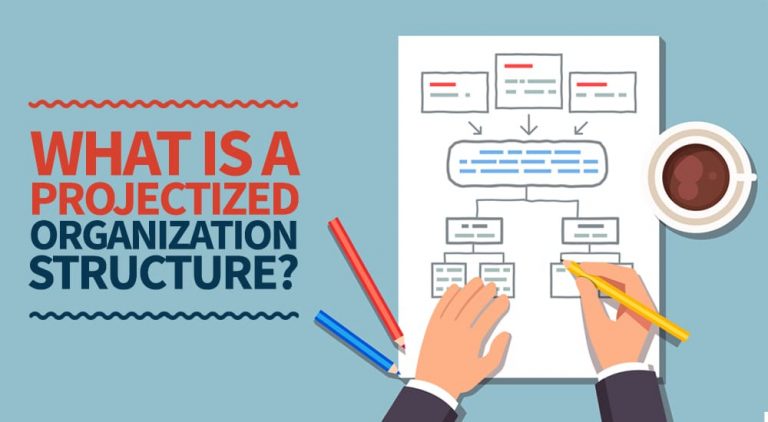
Projectized Organizational Structures
In a projectized organizational structure, employees are grouped by project rather than job function. Each project has a dedicated project management team. The project manager has complete authority over the project, budget, and resources. The project team reports directly to them.
This structure is commonly used in industries dealing mainly with projects (e.g., construction, consulting, and software development).
Pros
- Focused Approach: Projects receive dedicated attention, thus leading to higher quality outcomes.
- Flexibility: Teams can quickly adapt to changing project requirements.
- Skill Development: Team members gain diverse experience and skills from various projects.
- Clear Accountability: Project managers have clear responsibility for project success.
Cons
- Resource Allocation: Competing projects may lead to resource shortages.
- Effort Duplication: Similar tasks may be duplicated across different projects.
- Limited Growth Opportunity: Employees may find it challenging to develop within a specific functional area.
- Short-Term Focus: Teams might prioritize immediate project needs over long-term company goals.
Matrix Organizational Structure
A matrix organizational structure blends projectized and functional organizational structures. In a matrix organizational structure, employees report to functional and project managers.
Depending on the matrix type, its structure can be strong, balanced, or weak. A strong matrix organizational structure has more features of projectized organizational structure, while a weak matrix organizational structure has features of functional organizational structure. A balanced matrix organizational structure is a balance between the two.
Pros
- Efficient Resource Use: Resources can be shared across projects, thus optimizing their use.
- Enhanced Collaboration: Collaboration is encouraged between different departments.
- Flexibility: Employees can quickly adapt to changes in project scope or priorities.
- Broader Skill Development: Employees will gain experience in functional and project-based work.
Cons
- Conflicting Reports: Dual reporting lines can lead to confusion, conflicts, and stress.
- Increased Complexity: Managing multiple managers and projects can be complex and time-consuming.
- Slower Decision-Making: Decisions might be delayed due to the need for a consensus between managers.
- Resource Contention: Competing demands from different managers can lead to resource allocation issues.
Functional Vs Projectized Organizational Structure
In a projectized organizational structure, resources are organized around projects, with project managers having full authority over the project team and budget. Team members report directly to the project manager and are dedicated to the project until its completion.
Meanwhile, functional organizational structures are structured by departments (e.g., marketing and finance), each of which are headed by a functional manager. Employees report to their functional managers and work on projects within their departmental roles.
In a projectized organizational structure, a functional manager has no role or a limited role, while in a functional organizational structure, a project manager has a limited role or no role.
Functional Vs Matrix Organizational Structure
Matrix organizational structures blend aspects of functional and projectized organizational structures. Employees report to functional managers and project managers, thus creating dual authority. This can help achieve efficient resource use and flexibility, as personnel can be allocated across multiple projects while maintaining their functional expertise.
Functional organizational structures have a single hierarchy, in which employees report to a functional manager and work within departmental roles.
Summary
Functional organizational structure can help organizations run their businesses—especially those involved with ongoing operations. In a functional organizational structure, employees feel secure, perform well, and are highly skilled. Project managers do not have any role in a functional organizational structure. If they exist, then they will have a limited role and no authority. Employees’ roles are static in a functional organizational structure, and they report to the functional manager.
This is an important topic for the PMP exam. You will see quite a few questions on this topic in your exam.

I am Mohammad Fahad Usmani, B.E. PMP, PMI-RMP. I have been blogging on project management topics since 2011. To date, thousands of professionals have passed the PMP exam using my resources.




By looking into its advantages and disadvantages, is it considered a good structure? I am confused bcz disadvantages are more listed then advantages
Please can you brief me the link between a firm functional organizational structure and it’s organizational culture
Hello Andrews,
The term “firm functional organizational structure” is not available in the PMBOK Guide.
helpful information thanks verymuch
You are welcome Haggai.
Thank you it helped a lot
You are welcome Kikie.
please put referenses
Okay, will do it.
thanks Fahad
You are welcome Sichone.
Thank you so much for your explanation , it is understandable
You are welcome kerene.
Am I correct in saying the Foschini Group falls under functional specialisation
Not sure about them but mostly big organizations use matrix structure.
Thanks but in this a point of suitability will
also to add
I did not understand you Richals.
Woow thanx for the information its what I was looking for all along
You are welcome Nakizito.
Awesome post. i liked it!!!
Thanks Godfrey for your comment.
It is helpful.
Thanks Alex.
Thnkx bt can you help me on my assessment? Aworker is allowed to plan and organised his/her own work
Sorry Nombulelo due to time constraint, I cannot help you in your assessment.
Hi. I like your work. A very helpful explanation I should state. Keep it up!
Thank Bonnie.
Thanks Bonnie.
I believe this is one of the most significant information for me. And i’m satisfied studying your article. However wanna commentary on some common things, The site style is wonderful, the articles is really great : D. Just right process, cheers
Is this suitable for large enterprises……
Depends on type of work an organization is managing.
thank you
You are welcome Tahseen.
plz who discovered the functional organisation structure?
I searched it and could not find it. Anyway it is a good thing to know the origin of this concept.
Fredrick W. Taylor.
:)
pls he can one answer this question. pick any organization of ur choice and draw out the organization structure and Wat are the main function of organization chart?
It shows hierarchy.
very good, when was this published please?
It was published in August 2012.
I liked the way in which you’ve explained. It was really helpful for me.
Thanks Barkha for your comment.
Like the post,thanks for sharing
You are welcome Arnold.
hanks very much, i found ur notes understandable, comparing to my lectures one. Thanks a lot.
You are welcome Nasser.
nasser in advantages of a functional structure is it correct according to your understanding if i say it promotes in depth functional expertise
This help me out a lot in fact it answered me all the questions i was in doubt. For the assignment I’m doing i need the date you posted basically the reference of this.
I am glad Muminur that you find my blog post useful.
when was this article published
In August, 2012.
Corrected.
Can we answer this Q. As answer A
A project coordinator is having trouble securing programmers for her project. Every time she asks her boss to give a resource to the project he says that they are too busy to help out with her project. Which type of organization is she working in?
Select one:
a. Functional
b. Weak Matrix
c. Strong Matrix
d. Projectized
A and B both can be the answer. It is not very clear from the given description.
Hi Fahad,
Thanks for the great article! Just one confusion from exams perspective when they say the organization is functional, should it be assumed that no project manager will be there, or should we assume that there may be a project manager?
Regards
Pawan Rai
If there is a project manager, it will have a very limited or no authority.
How do you overcome disadvantages of functional organizational structure?what organisation structure do you adopt for cost effectiveness and enhancing productivity?
These problems are difficult to manage. If team team members are getting bored, you can transfer them into another department, if the appraisal system is not effective, you can tweak it, etc.
Which is influenced by the level of scientific and technological development in society that impact on the success of an organisation .can you please help Sir my textbook is no specific.ThAnks alot
Sir can you please help me out with method study activities or symbols in work study I am totally confused
Can you be little more specific?
Never mind that. Don’t you have some information on ” when and why will you use flow process chart : Equipment type.
Or notes on flow process chart types my textbook is confusing me.
Thank you
Usually the big organization uses a matrix structure. Small company’s can be more close to projected or functional.
Hello: Helpful blog. Will you provide names of companies that fit into the different organizational structure categories you describe? Thank you.
very helpful notes now i clearly understand this topic. jazak ALLAH
Thanks Fari for your comment.
VERY HELPFUL BLOG.KEEP UP THE GOOD WORK
Thanks Sadia for your comment.
Hi, i wanted to ask,
If a business has now grown too large to manage centrally, because this shop has six shops across three states & each shop has a manager and several staff, is it suitable to advice this shop a functional structure or hybrid?
p/s: This shop sells clothing retail business as a sole trader.
Thank you!
What do you mean when you say “hybrid”?
What i meant was, is it considered as a hybrid structure? Does my question refer to a functional structure?
Yes, as per my understanding it is a functional structure.
Thanks alot Sir your work is the best and i really liked the advantanges and disadv..appreciate
Thanks Msekeli.
What organizational type would you consider Uber to be then? It definitely has the hierarchy and the organization is broken out into smaller units. However, how would drivers play in to this?
Mostly big organizations follow matrix structure.
Well this actually helped me for understanding organizational structure in a understandable way…
Thank you.
You are welcome Imesh.
This topic along with topic of proectized organizations have been really helpful. Thanks a lot for both these articles. They complement pmbok.
You are welcome Patel.
I have been reading textbooks and ppts given by my professor nothing went into my mind. when I read this article got surprised, it made my work very very easy. Thank you so much..
You are welcome Ambika.
thanks for provide such as sevrice for us i was confused by these question day to day
You are welcome Nasrullah.
Too Thaaaaaaaaaaaaaaaaaanx
Thanks Ahmed.
I like to add some org chart templates for companies, multinational companies, matrix and functional that’s in Creately diagram community.
Thanks Shalin for providing these informational charts.
it is very helpful. keep writing and sharing your knowledge.
Thanks Jordon.
thank you so much now I have understood fuctional stuctures
You are welcome Seize.
Dear Fahad
Is it possible in single organization have multiple Organization structure as follow.
For example A company in business of some consumer durable or medical instrument manufacturing.
then Production department usually follow functional structure, while design or new product development team follow matrix organization.
Please clarify me….
Yes it is possible.
For example a big oil company can have production structure to get the oil from the fields and at the same time projectized structure to develop new oil fields.
I find this post amazing and very clear.It makes strategic Management interesting!
Thanks for your comment Solomon.
its easier to understand as compared to my lecturer’s
I am glad Brenda you liked my blog post.
Thanks a lot for this wonderful breakdown. U just made my presentation on this topic easy. God richly bless u
Thanks Maria for your comment.
Great explanation. The best interpenetration have seen on the topic. Also love those advantages and disadvantages. The most and easiest to understand listed anywhere.
Thanks Hayka for visiting and leaving your comment.
Everything is clear now, on this topic . Thanks a lot . It really helps me!
You are welcome Ceddy.
Thanks for such an elaborate analysis. Really useful for my assignment, by the way can you assist differentiate between functional organisational structures and functional organisational systems. Thanks once again.
Please visit below given page to understand the difference between system and structure.
https://www.marxists.org/reference/archive/spirkin/works/dialectical-materialism/ch02-s07.html
Very clear explanation
thanks
You are welcome Aung.
Really awesome.. Got everything cleared out now..God bless u so much
Thank you Bismark.
It is short and clear topic, i understand it very well
Thanks Khadija for your comment.
So helpful. Thank you so much.
You are welcome Senedu.
so helpful uuuuummmm. danki
You are welcome Mposa.
can i get the examples of industry using functional organizational structure
Production based organizations are having this kind of structure.
Thank you for the article. It helped me get a quick understanding the Org structures and differences.
You are welcome Vidhya.
u hv made my module easy for me thank you guys god bless yah a lot!!!!!
You are welcome Elsie.
Honestly, you are amazing!
You made this into such a simple read :)
Thank you!
Thanks Marcus.
This is wonderful work. I would like to enrol for PMP Certification. Kindly advise me on how to go about it. Thank You!
Please read all FAQs available here:
https://pmstudycircle.com/pmp-faqs/
Thank you for breaking this down. It’s so easy to understand now. What do you know about disciplinary bases for management?
Thanks Omar for your comment.
This page will help you understand disciplinary basis:
http://www.york.ac.uk/admin/hr/resources/policy/disciplinary/
thanks for your article straight forward and easy to understand.
Thanks Gerald for your comment.
Very clear and understandable format
Thanks Deepak.
Very interesting and brief
jazaakalahu khairan
Thanks Al-Hassan for your comment and visit.
Thanks! I had to revisit this topic to complete some other work. I hope to find other useful PM topics explained in like fashion at your blog.
Thanks Keith for your visit.
Thanks alot, this helped me alot in revising for my exams.????
You are welcome Edgar.
Thanks very much, i found ur notes understandable, comparing to my lectures one. Thanks a lot.
Thanks Portia.
Uhm so Sir the best organisational structure is the functional structure?
It depends on your requirements.
Easy to understand than others I’ve ever read…. Thank a lot.
You’re welcome Kenzao!
Many thanks for your efforts and the way you clarify the topic
I love the way you break it down to my own understanding thanks
You are welcome and thanks for visiting my blog.
I had given up on reading the organization structure but you have simplified my work. Now I find your notes more interesting than most of these textbooks I’m using. Thanks and may God bless you
Thank you Levi and I hope you will enjoy the rest of the posts as well.
I do agree being I was lost when asked to select an organizational structure that described Human Resource Development and Training.
I like those advantages and disadvantages given in article.