
Skip to content
PM Study Circle
  • Home
  • Blog
  • PMP Questions
  • Resource
  • Contact Hours
  • Notes
PM Study Circle
  • bottom-up estimating
    Cost | Planning

    Bottom-Up Estimating: Step-by-Step Guide, Example, Pros & Cons

    ByFahad Usmani, PMP January 18, 2026January 18, 2026

    Bottom-up estimating is one of the most accurate methods for estimating project costs, durations, or resources. It helps you create realistic budgets and schedules. This approach starts by breaking the project into small tasks. Each task is estimated for time, cost, and resources. These small estimates are then added to form the total project estimate….

    Read More Bottom-Up Estimating: Step-by-Step Guide, Example, Pros & ConsContinue

  • secondary vs residual risk
    Planning | Risk

    Secondary Vs Residual Risk: Risk Types for PMP Exam

    ByFahad Usmani, PMP January 17, 2026January 17, 2026

    I have discussed risks and risk-related terms, including secondary risks and residual risks. But I see many professionals having issues with understanding these two risks.

    They think residual and secondary risks are unknown risks. We use a fallback plan for them and use the management reserve if they occur.

    Please understand this: residual and secondary risks are identified risks. You will carry out the contingency plan if any identified risk occurs and apply the fallback plan if it fails. In both cases, you will use the contingency reserve because it is for identified risks.

    You will use the management reserve when any unidentified risk occurs.

    Read More Secondary Vs Residual Risk: Risk Types for PMP ExamContinue

  • image for affinity diagram
    Planning

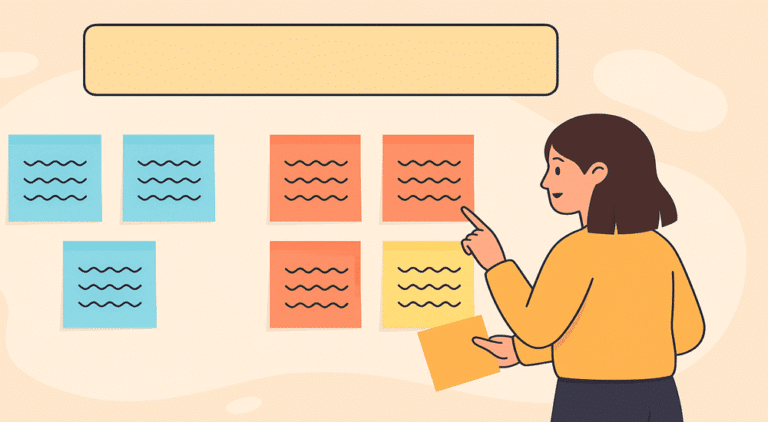
    Affinity Diagram in Project Management: Example & PMP Exam Tips

    ByFahad Usmani, PMP January 10, 2026January 10, 2026

    The affinity diagram, also known as an affinity chart, K-J Method, or thematic analysis, is one of the Seven Management and Planning Tools developed by Jiro Kawakita in the 1960s. You can use it to organize large sets of ideas into meaningful groups.  When people brainstorm or collect feedback, they often generate many unstructured ideas….

    Read More Affinity Diagram in Project Management: Example & PMP Exam TipsContinue

  • free float vs total float
    Planning | Time

    Free Float Vs Total Float

    ByFahad Usmani, PMP December 30, 2025December 30, 2025

    I never thought that total float and free float were different concepts before my PMP exam preparation. I used to think they were synonymous.

    While reading the Head First PMP book, I came to understand the difference between these two terms.

    Total floats and free floats have an important role in the development of a network diagram. A better understanding of these terms will help you draw a network diagram and analyze a critical path.

    You will see a few questions on this topic in your exam; it is an important concept.

    Read More Free Float Vs Total FloatContinue

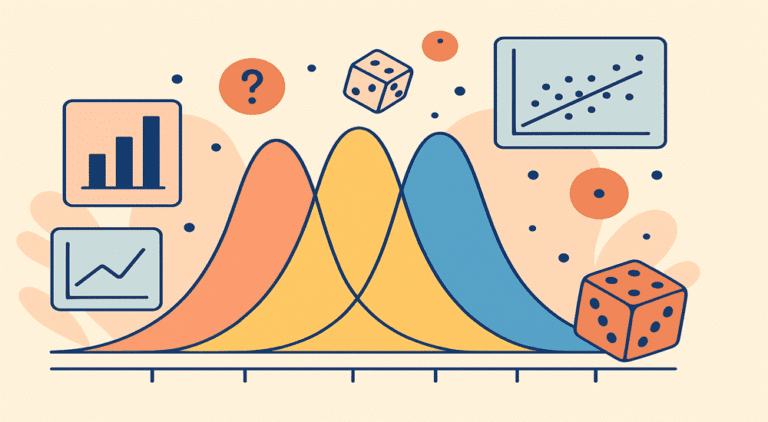
  • monte carlo analysis
    Planning | Risk

    Monte Carlo Analysis in Project Management

    ByFahad Usmani, PMP December 10, 2025December 10, 2025

    The Monte Carlo simulation is an important technique in risk management that many PMP and PMI-RMP exam study books do not describe in detail.

    Most of the guides say it is a complex technique that requires a computer’s assistance, and so aspirants don’t dig further. This assumption is not true; it is a straightforward technique.

    The Monte Carlo simulation is a quantitative risk analysis technique used in identifying the risk level of achieving objectives.

    Read More Monte Carlo Analysis in Project ManagementContinue

  • fast-tracking vs crashing
    Planning | Time

    Fast-Tracking Vs Crashing

    ByFahad Usmani, PMP December 6, 2025December 6, 2025

    There are many reasons you may want to compress the schedule.

    Your project could have been delayed and you have to bring it back on schedule.

    Management may also ask you to compress the schedule. Often this happens when your resources are needed for a new opportunity.

    Project delays can happen for many reasons. For example: an unrealistic schedule

    Read More Fast-Tracking Vs CrashingContinue

  • group brainstorming
    Planning

    Group Brainstorming: Top Techniques & Best Practices

    ByFahad Usmani, PMP November 11, 2025November 11, 2025

    Group brainstorming is a key part of solving problems together in project management. It brings people with different skills and experiences into one room to share ideas, solve issues, and make smart decisions. In today’s competitive environment, teamwork and creativity are essential. I’ve seen how brainstorming sessions turn unclear problems into clear, practical plans. Whether…

    Read More Group Brainstorming: Top Techniques & Best PracticesContinue

  • quality vs grade
    Planning | Executing Process | Monitoring & Controlling | Quality

    Quality Vs Grade: Definitions & Differences

    ByFahad Usmani, PMP November 10, 2025November 10, 2025

    Grade and quality are two of the most commonly used terms in project management. Not just in this field either; you will use these terms on a daily basis. For example, people frequently say that this is a low-grade product, this is a high-grade product, this is a low-quality product, or this is a high-quality product.

    What does that actually mean?

    Does “low-grade” mean bad or undesirable and “high-grade” always mean good?

    To put it simply, no. low-grade and high-grade are not necessarily right or wrong, and that is what we are going to discuss in this blog post.

    Grade and quality are fascinating concepts; however, even professionals don’t understand their differences and mistakenly use them synonymously. They are not difficult terms to understand, we simply need to pay them a bit more attention.

    Read More Quality Vs Grade: Definitions & DifferencesContinue

  • risk vs uncertainty
    Planning | Risk

    Risk Vs Uncertainty in Project Management

    ByFahad Usmani, PMP November 7, 2025November 7, 2025

    Risks are commonly assumed to be the same as uncertainty in the area of risk management. Although there is a big difference between risk and uncertainty, many professionals often think that they are the same.

    Although this concept is not too important from a PMP or PMI-RMP exam point of view, you must understand the difference to avoid mixing them up.

    Therefore, I’m writing this blog post to explain it and I hope after reading it, you won’t have any problems distinguishing between risk and uncertainty.

    Read More Risk Vs Uncertainty in Project ManagementContinue

Page navigation

Previous PagePrevious 1 2 3 4 … 6 Next PageNext
  • FAQs
  • Books
  • Contact
  • About
  • Privacy

Copyright 2026 PM Study Circle, All rights reserved.

  • Home
  • Blog
  • PMP Questions
  • Resource
  • Contact Hours
  • Notes