Lean Six Sigma is a respected framework for eliminating waste and improving process quality. Its belt system, which is adapted from martial arts, helps organizations gauge expertise and assign responsibilities.
In today’s blog post, I will explain what Black Belts and Master Black Belts do, how to qualify for each role, current salary trends, and how to choose the right path for your career.
Let us get started.
Understanding the Lean Six Sigma Belt System
Lean Six Sigma uses colored belts to indicate your training and experience. White belts learn vocabulary and basic concepts. Yellow belts understand common tools and can assist on projects. Green belt holders work on projects under the guidance of a Black Belt and apply statistical tools. Black belts lead projects and mentor lower belts.
Master Black Belts sit at the top; they govern the program, coach practitioners, and drive strategy across the business.
This hierarchy mirrors the way martial arts emphasize progressive mastery. Moving up the ranks requires not just technical know-how but also leadership and change management skills.
What Does a Six Sigma Black Belt Do?
A Six Sigma Black Belt is a professional change agent. Black belts run improvement projects, use data to solve problems, and coach green and yellow belts. They employ the DMAIC methodology (Define–Measure–Analyze–Improve–Control) and may also use the DMADV approach when designing new products or services.
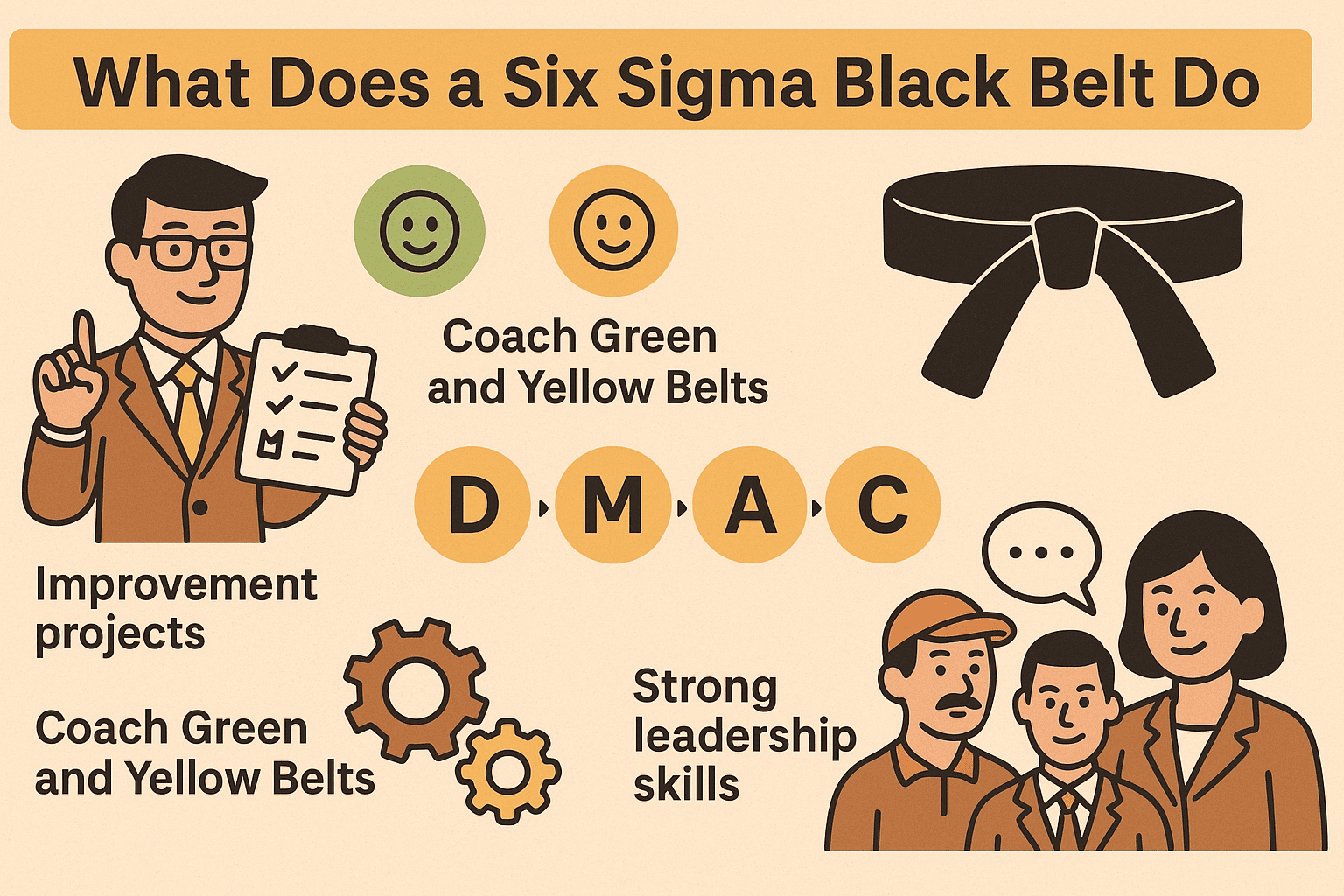
Black belts are often full-time roles. The Lean Methods Group notes that Black Belts usually complete four to six projects per year and achieve a 7:1 return on investment with median savings of about $200,000 per project.
Their responsibilities include:
- Facilitating cross-functional teams to identify and eliminate waste.
- Applying statistical tools to uncover root causes of defects.
- Training and mentoring green and yellow belts.
- Communicating results to stakeholders and securing buy-in.
Black belts also develop strong leadership skills. They interact with managers and frontline staff, so they must communicate clearly and motivate others. Many Black Belts use the role as a stepping stone to senior positions.
Current Salary and Career Prospects
| Stat Description | Value from Article | Resource URL(s) |
| U.S. national average total cash compensation for certified Six Sigma Black Belts | $138,000–$142,000 per year | Salary.com: $132,700 average Glassdoor: $167,422 average (includes bonuses) |
| 25th percentile salary | $124,000 | Salary.com: Aligns with entry-level range ~$114k–$130k Glassdoor: $134,397 |
| Median salary | $140,000 | Salary.com: $132,800 median Glassdoor: $167,422 (total pay median) |
| 75th percentile salary | $158,000 | Salary.com: Upper range ~$154k Glassdoor: $211,551 |
| Top 10% salary | $175,000+ | Glassdoor: 90th percentile $259,300 Salary.com: Top earners about $175k+ |
| Salary premium for Black Belt certification over non-certified peers | $15,000–$25,000 annually | ASQ Quality Progress Salary Survey: $16k premium PayScale: $21,960 average premium for Black Belts |
What is a Six Sigma Master Black Belt?
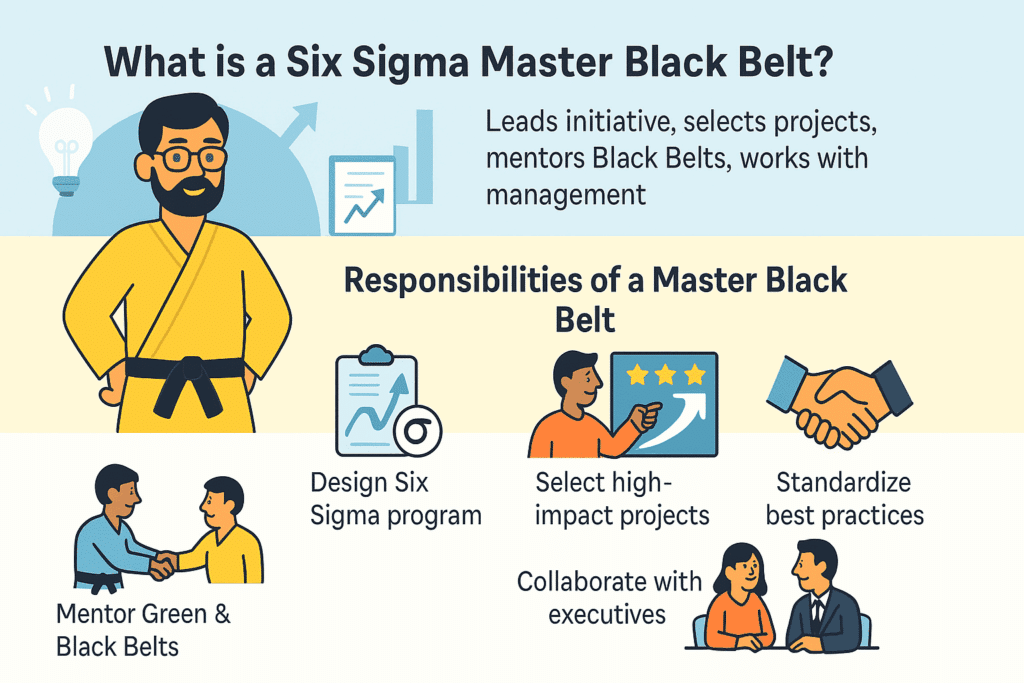
A Master Black Belt (MBB) is the pinnacle of Six Sigma expertise. MBBs lead organization-wide improvement initiatives, select high-impact projects, and mentor multiple Black Belts. They also work closely with senior management to align Six Sigma efforts with strategic goals.
The American Society for Quality (ASQ) outlines strict prerequisites for MBB certification. Candidates must hold a current Black Belt and either:
- Have at least five years of Black Belt or Master Black Belt experience; or
- Have completed ten Black Belt projects.
After meeting these requirements, candidates undergo a portfolio review and sit for an exam consisting of 110 multiple-choice questions and a performance-based assessment. The exam takes over five hours and is offered twice a year.
Responsibilities of a Master Black Belt
Master Black Belts operate at a strategic level. Their duties typically include:
- Designing the Six Sigma program and setting the roadmap for deployment.
- Selecting and prioritizing projects that align with business objectives.
- Mentoring Black Belts and Green Belts and overseeing their projects.
- Standardizing methodologies and ensuring best practices across teams.
- Collaborating with executives to integrate Six Sigma with the company strategy.
Because MBBs influence company-wide change, they must have exceptional leadership, communication, and analytical skills. Many Master Black Belts also become internal consultants or Chief Quality Officers.
Salary Outlook
| Stat Description | Value from Article | Resource URL(s) |
| U.S. national median total cash compensation for certified Master Black Belts | $172,000–$182,000 per year | Salary.com: $180,400 average Glassdoor: $168,961 average |
| 25th percentile salary | $155,000 | Salary.com: $166,900 Glassdoor: $133,988 |
| Median salary | $178,000 | Salary.com: $180,400 median Glassdoor: $168,961 |
| 75th percentile salary | $205,000 | Salary.com: $192,500 Glassdoor: $216,001 |
| Top earners (Director/VP-level) | $240,000–$320,000+ | Glassdoor: 90th percentile $267,404 Salary.com: Top range ~$203k+ |
| Salary premium for Master Black Belt certification over non-certified/senior Black Belts | $25,000–$45,000 per year | ASQ Salary Survey: $25k–$45k premium PayScale: Up to $45k for advanced roles |
Key Differences Table (Salary Medians)
| Stat Description | Value from Article | Resource URL(s) |
| Avg. U.S. Salary (Black Belt, median) | $140,000 | Salary.com: $132,800 Glassdoor: $167,422 total pay |
| Avg. U.S. Salary (Master Black Belt, median) | $178,000 | Salary.com: $180,400 Glassdoor: $168,961 |
Salary by Industry – Snapshot (U.S.)
| Stat Description | Value from Article | Resource URL(s) |
| Healthcare/Pharma: Black Belt | $148k | Glassdoor: $137,079 median in Healthcare; Adjusted for Pharma premium ~$148k |
| Healthcare/Pharma: MBB | $195k | Salary.com: Pharma/Healthcare upper range ~$195k |
| Financial Services: Black Belt | $152k | Glassdoor: Insurance/Finance $154,700 |
| Financial Services: MBB | $202k | Glassdoor: Finance upper range ~$202k |
| Manufacturing: Black Belt | $135k | Glassdoor: $149,666 median; Adjusted base ~$135k |
| Manufacturing: MBB | $175k | Salary.com: Manufacturing median about $175k |
| Technology/Software: Black Belt | $145k | Zippia: Tech/Finance ~$145k avg; Glassdoor Tech premium |
| Technology/Software: MBB | $188k | Invensis Learning: Tech ~$188k |
| Aerospace & Defense: Black Belt | $158k | Glassdoor: $161,939 median |
| Aerospace & Defense: MBB | $210k+ | UpGrad: Aerospace upper range $210k+ |
Key Differences Between Black Belt and Master Black Belt
The main contrasts between these two belt levels lie in scope, responsibilities, prerequisites, and compensation.
The table below highlights the differences.
| Parameter | Six Sigma Black Belt | Six Sigma Master Black Belt |
| Organizational level | Leads projects within a department or function | Oversees programs across the entire organization |
| Primary role | Executes process-improvement projects, mentors Green/Yellow belts | Develops strategy, selects high-impact projects, and mentors Black Belts |
| Experience needed | Requires Green Belt knowledge and real-world project completion (varies by provider) | Requires current Black Belt plus 5 years of Black Belt experience or 10 completed projects |
| Average salary | $132,800 in the US (25th–75th percentile: $123,100–$144,600) | $106,000 per year; certification adds $12,000 compared with non-certified peers |
| Project focus | Department-level efficiency, defect reduction, and cost savings | Organization-wide performance, strategy alignment, and culture change |
| Key skills | DMAIC, data analysis, team leadership, coaching | Advanced statistics, change management, program governance, and mentoring multiple belts |
| Certification process | Classroom or online training (25 days or about 180 hours), project completion, and exam | Portfolio review, rigorous exam lasting >5 hours, recurring recertification |
Which Certification Bodies Are Most Respected
| Body | Cost (approx.) | Exam Style | Global Recognition | Best For |
| ASQ | $1,800–$2,400 | Rigorous, portfolio required | Highest (U.S. & multinationals) | Corporate careers, leadership roles |
| IASSC | $450–$650 | 100% multiple-choice | Very good | Quick certification, consulting |
| CSSC (formerly Villanova) | $500–$900 | Multiple-choice + project affidavit | Good | Budget-friendly, most sectors |
| University programs (Purdue, Arizona State, etc.) | $3,000–$12,000 | Varies | Excellent | Academic credibility + networking |
For Master Black Belt, only ASQ and a handful of university programs currently offer a formal MBB certification.
Benefits of Certification
Both Black Belt and Master Black Belt certifications provide tangible benefits for individuals and organizations:
- Higher Earning Potential: Certification correlates with higher salaries and bonuses. Salaries rise with experience, and states with strong manufacturing pay more.
- Quantifiable Savings: Black Belt projects yield median savings of around $200,000 per project. Master Black Belts influence multiple projects, amplifying these savings.
- Improved Leadership Skills: Practitioners learn to lead teams, manage change, and communicate across departments.
- Career Advancement: Many Black Belts transition to senior roles, and Master Black Belts often become directors or quality executives.
- Organizational Excellence: Six Sigma builds a culture of continuous improvement, driving higher customer satisfaction and a competitive advantage.
Choosing the Right Belt for Your Career
How do you decide which belt level to pursue? Consider your career stage, interests, and organizational needs.
- Are you new to process improvement? A Green Belt may be a better starting point. Gain hands-on experience, then move to Black Belt.
- Do you want to lead projects? If you enjoy hands-on problem-solving and coaching small teams, a Black Belt will suit you. You’ll run projects, mentor Green Belts, and develop leadership skills.
- Do you aspire to influence strategy? If you have years of experience and want to guide programs across the enterprise, aim for the Master Black Belt role. You’ll set directions, mentor other belts, and work with executives.
- Do you need certification for your job? Some roles—such as quality manager or continuous improvement manager—require at least a Black Belt to be competitive. Check job descriptions in your industry.
How to Get Started
- Evaluate Prerequisites: Ensure you meet the training and experience requirements. For Black Belt, prior Green Belt knowledge helps; for Master Black Belt, ASQ requires at least five years of Black Belt experience or ten completed projects.
- Choose a Reputable Provider: Select accredited training organizations that align with ASQ or IASSC standards. Look for courses that include real-world projects and mentoring.
- Commit to a Project: Apply your new skills to an actual improvement project. This real-world application is essential for certification and for demonstrating value to employers.
- Prepare for the Exam: Study the body of knowledge, practice with sample questions, and schedule your exam. Remember that Master Black Belt exams are longer and include performance-based assessments.
- Maintain Your Certification: Keep your skills current through continuous learning and recertification. Attend workshops, read industry publications, and stay active in professional networks.
FAQs
1. Is a Black Belt worth it?
Yes. Certified Black Belts earn more than non-certified peers and deliver median savings of about $200,000 per project.
2. What does a Master Black Belt do?
Master Black Belts lead enterprise-wide Six Sigma initiatives. They mentor Black Belts, choose projects, set strategy, and ensure alignment with business goals.
3. How long does it take to become a Black Belt?
Most programs take six months to one year. Training may last 25 days or around 180 hours, and you must complete a real-world project.
4. How do I qualify for Master Black Belt certification?
You need a current Black Belt and either 5 years of Black Belt experience or 10 completed Black Belt projects.
5. Do Master Black Belts earn more?
Master Black Belt certification adds around $12,000 per year in salary compared with non-certified professionals.
Summary
Both Six Sigma Black Belt and Master Black Belt certifications open doors to rewarding careers in process improvement. Black Belts lead department-level projects and mentor junior belts, while Master Black Belts shape strategy and drive change across entire organizations. By keeping your knowledge current—through training, real-world projects, and recertification—you can not only boost your earning potential but also help your organization become more competitive.
Further Reading:

I am Mohammad Fahad Usmani, B.E. PMP, PMI-RMP. I have been blogging on project management topics since 2011. To date, thousands of professionals have passed the PMP exam using my resources.