
A change in an organization affects the working culture and environment. Every employee responds differently, and many may resist the change. This resistance can lower the success rate of your change initiative. The Kübler-Ross Model, also known as the change curve or five stages of grief, helps you understand and manage these emotional responses.
The Kübler-Ross Change Curve categorizes change into stages of personal transition, preparing you for negative reactions from employees. With this model, you can guide your team through the emotional impact of change and increase acceptance.
In today’s article, I will explain the Kübler-Ross change curve, its five stages, and how you can apply it to support employees and successfully implement changes in your organization.
What Is the Change Curve?
The Change Curve, also known as the Kübler-Ross Change Curve, originates from the 5 Stages of Grief model developed by psychiatrist Elisabeth Kübler-Ross in 1969. She used it to explain how people react to loss, moving through denial, anger, bargaining, depression, and acceptance.
Over time, people began using this model in the workplace to understand how employees react emotionally to change. Whether it is new software or a new process, employees may struggle to adapt. This curve helps leaders see those emotional stages and prepare for them.
Change managers can use it to identify resistance early and plan more effective ways to support employees. It makes the change smoother by helping employees deal with emotions and adjust to new situations more easily.
5 Stages of the Kübler-Ross’ Change Curve Model
In Kübler-Ross’ Change Curve Model, each person may go through the five stages in a different order or revisit some stages more than once. These emotional responses are natural and help people cope with shock and change.
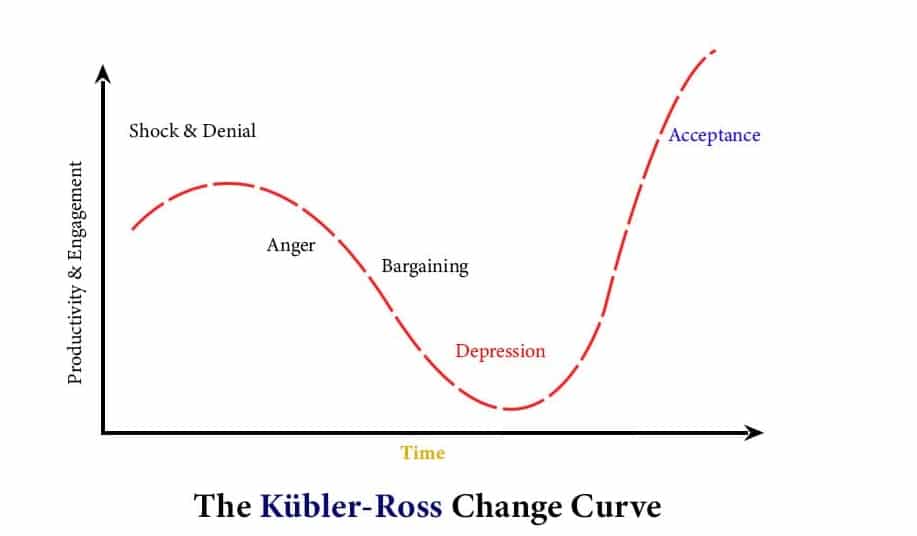
These five stages are as follows:
1. Denial
This is the first stage of grief. People often struggle to accept the truth, especially after hearing shocking news. They may say things like, “This can’t be happening,” or “I feel fine.” This is a temporary way to protect the mind from overwhelming emotions.
During this stage, people may avoid conversations and isolate themselves. Denial helps individuals cope with the initial shock and initiate the gradual process of accepting reality. As the shock fades, they often become more aware of the situation.
2. Anger
When denial fades, reality sinks in. People begin to feel frustrated and helpless. This often turns into anger. They may ask, “Why me?” or say, “Life is unfair.” Some may blame others, such as family members, doctors, or even themselves.
Anger is a natural step in the healing process. It is better to express anger than to suppress it. Letting it out clears the way for healing. Family and friends should remain patient and understand that the person is expressing emotional pain, not personal hatred.
If anger becomes too much, a counselor can help guide the person through it in a healthy way.
3. Bargaining
In this stage, people try to regain control by making deals or promises. They might say, “God, if you let me live, I promise to change,” or “If I study more, I’ll pass the next time.” This stage often comes with guilt. People may think, “If I had done something differently, this wouldn’t have happened.”
For those not facing death, they might try to bargain for more time, better outcomes, or second chances. Bargaining may provide temporary comfort, but it does not alter the situation. It suggests that the person is trying to evade confronting the truth.
4. Depression
Depression follows when people realize the loss is real and unavoidable. They feel deep sadness, hopelessness, and sometimes regret. They may withdraw from others, avoid conversations, and spend time alone. Thoughts like “I’m going to die,” or “What’s the point of anything?” are common.
This stage is quiet and heavy. Unlike clinical depression, it is a natural part of grieving. People often need support, but they may not want to discuss it. Providing them with space while remaining available is the best support during this time.
5. Acceptance
In this final stage, people come to terms with the situation. They stop fighting reality and begin to live with it. Acceptance doesn’t mean they are happy, but they are no longer in shock or denial. They may say, “It is going to be okay,” or “This is my destiny.”
At this point, emotions stabilize. People reconnect with family and friends, prepare for what’s ahead, and begin to find peace. Acceptance allows them to move forward, even if life has changed forever.
How the Kubler-Ross Model Aligns with the ADKAR Model?
The Kübler-Ross Model and the ADKAR Model both help employees understand and manage change, but they focus on different aspects.
The Kübler-Ross Model examines emotional responses to change, while the ADKAR Model focuses on the steps required for successful change at the individual level. When combined, they provide a complete picture of how employees react to and adopt changes.
1. Denial (Kübler-Ross) ? Awareness (ADKAR)
In the Kübler-Ross Model, denial is the first emotional reaction. People may ignore the change or believe it won’t affect them. In the ADKAR Model, the first step is awareness of the need for change. As a leader, you must clearly explain why change is happening. Creating awareness helps move people out of denial.
2. Anger (Kübler-Ross) ? Desire (ADKAR)
Anger shows resistance to change. People may feel upset, fear loss, or blame others. In the ADKAR Model, the desire to support change is crucial. As a leader, you need to listen to concerns, address emotional resistance, and help individuals find personal reasons to accept change.
3. Bargaining (Kübler-Ross) ? Knowledge (ADKAR)
Bargaining is a way people try to regain control. They might make deals or hope for a compromise. In ADKAR, knowledge involves providing people with the necessary information and training to move forward. When people feel prepared, they stop bargaining and start participating.
4. Depression (Kübler-Ross) ? Ability (ADKAR)
Depression reflects a loss of motivation or confidence. People feel stuck or hopeless. In the ADKAR Model, ability is about practicing new skills and building trust. Support, coaching, and hands-on experience help people move from sadness to action.
5. Acceptance (Kübler-Ross) ? Reinforcement (ADKAR)
Acceptance means people are ready to move on. They adjust to the new reality. In the ADKAR Model, reinforcement helps keep the change in place. Leaders reward progress and make sure new behaviors continue.
[The Kübler-Ross Model explains how people feel, and the ADKAR Model shows what they need to do. When used together, they help leaders support both the emotional and practical sides of change.]
Summary
The Kübler-Ross Model helps you understand how people respond emotionally to significant changes or loss. It includes five stages—denial, anger, bargaining, depression, and acceptance. Each stage reflects a natural part of the adjustment process. By recognizing these stages, you can support others through complex changes.
The model also helps you manage emotional reactions during workplace transitions. Understanding this model allows you to guide individuals with empathy, reduce resistance, and make the change process smoother and more successful.
Further Reading:
- Using Satir Change Model for Organizational Change
- What is the ADKAR Model in Change Management?
- Change Management Vs Release Management
- Top 9 Change Management Books
References:

I am Mohammad Fahad Usmani, B.E. PMP, PMI-RMP. I have been blogging on project management topics since 2011. To date, thousands of professionals have passed the PMP exam using my resources.