The Harsey-Blanchard Situational leadership model is a flexible approach to managing and guiding people. This model emphasizes understanding the needs of team members and the demands of the task and adapting your leadership style.
This model is widely used in business, education, and other areas where leadership plays a key role. It encourages leaders to adjust their methods based on the skills, experience, and confidence of their team. By doing so, you can improve communication, boost performance, and create a supportive work environment.
In this blog post, I will explain Harsey Blanchard’s situational leadership model, its background, limitations, and benefits.
What is the Situational Leadership Model?
The Situational Leadership Model, developed by Paul Hersey and Ken Blanchard, states that there is no single best leadership style. Instead of applying the same approach to every situation, you should adapt your style to match the abilities and needs of their employees.
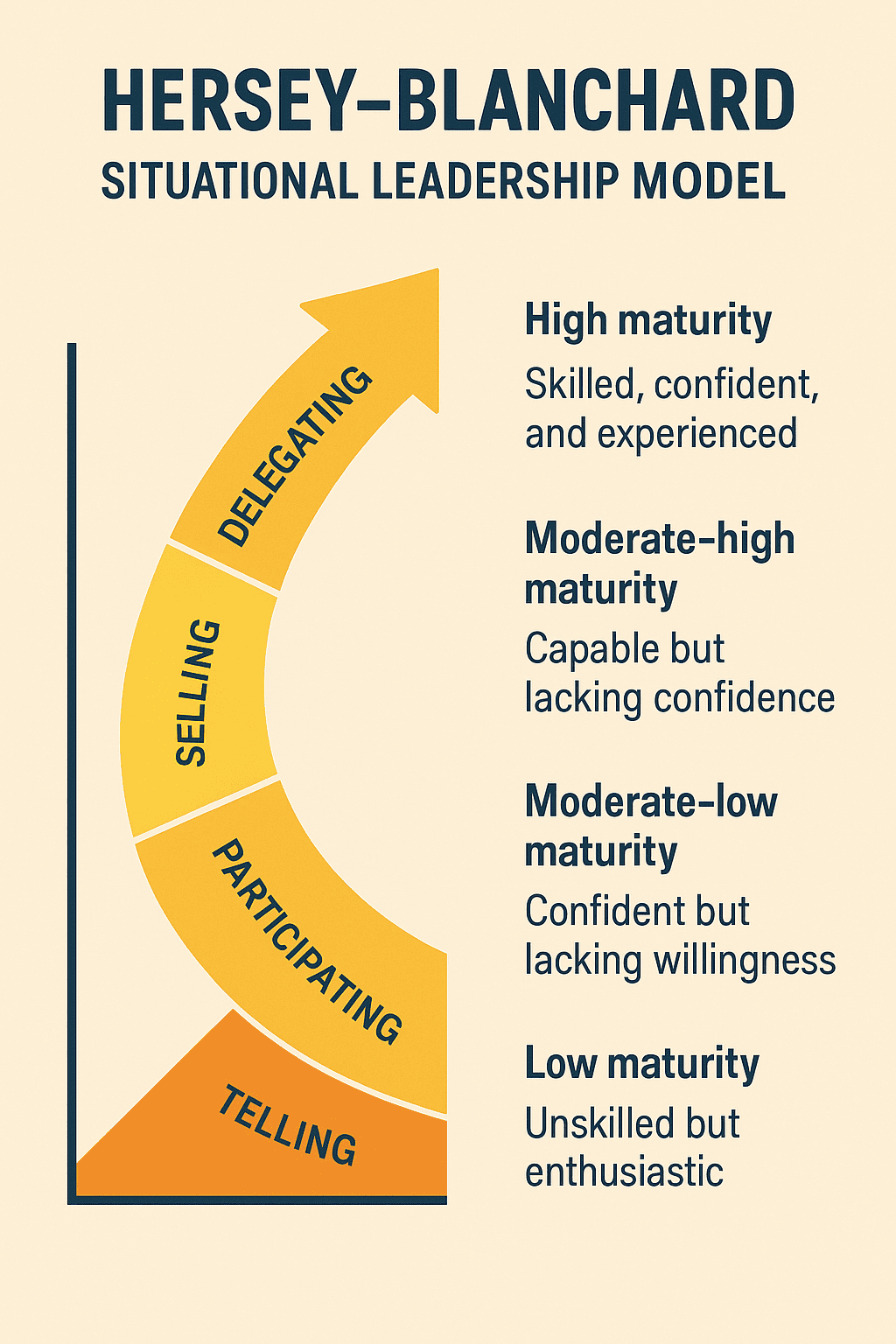
This model focuses on understanding employees’ maturity levels and motivating them accordingly. Maturity is defined by an employee’s ability, confidence, and willingness to complete a task. As a leader, you should assess these factors and adjust your guidance and supervision to fit the situation.
The model outlines four maturity levels:
- High maturity: Skilled, confident, and experienced individuals who work well independently with minimal guidance.
- Moderate-high maturity: Capable employees who need encouragement and support to take full responsibility.
- Moderate-low maturity: Confident employees who lack willingness or motivation and require guidance and motivation.
- Low maturity: Unskilled but enthusiastic employees who need clear instructions and close supervision.
This approach is not one-size-fits-all. It uses an individualistic method, helping you provide the right balance of direction and support. By adapting your style, you can build confidence, boost performance, and ensure tasks are completed effectively.
What are the Hersey-Blanchard Model Leadership Styles?
The Hersey-Blanchard Model identifies four leadership styles that leaders use depending on the maturity and readiness of their team members. Each style combines a different level of guidance and support.
These four styles are as follows:
- Telling (Directing): The leader gives clear instructions and closely supervises the work. This style works best for people with low maturity who lack skills but are willing to learn.
- Selling (Coaching): The leader still gives direction but also explains decisions, answers questions, and encourages the team. This style is useful when employees have some ability but lack confidence or motivation.
- Participating (Supporting): The leader focuses on building relationships and involves the team in decision-making. This style suits capable employees who need motivation rather than guidance.
- Delegating: The leader hands over responsibility and lets employees work independently. This style works well for highly skilled and confident individuals who can manage their tasks.
The Hersey-Blanchard Model helps you choose the right style for each situation. By matching leadership style to the team’s ability and willingness, you can improve performance, boost morale, and help people grow. It ensures leadership is flexible and responsive to the team’s needs.
How to Use the Situational Leadership Model
To use the Situational Leadership Model effectively, you must assess your team members and adjust your leadership style to fit the situation.
The process involves these steps:
- Identify the task or goal: Clearly define what needs to be done so both the leader and team members understand the expectations.
- Assess the maturity level of team members: Evaluate each person’s skills, confidence, and willingness to complete the task. Classify them into one of the four maturity levels: high, moderate-high, moderate-low, or low maturity.
- Select the right leadership style: Match the maturity level with the corresponding style:
- Low maturity -> Telling (Directing)
- Moderate-low maturity -> Selling (Coaching)
- Moderate-high maturity -> Participating (Supporting)
- High maturity -> Delegating
- Low maturity -> Telling (Directing)
- Apply the style consistently: Provide the right mix of direction and support, and communicate clearly so employees know their role and responsibilities.
- Monitor progress and adjust: Keep track of performance, provide feedback, and change your leadership style if the team member’s maturity level changes.
By following these steps, leaders can create a supportive environment, build skills, and improve results through a flexible and responsive leadership approach.
Limitations of the Harsey-Blanchard Situational Leadership Model
A few limitations of the Hersey-Blanchard Situational Leadership Model are as follows:
- Subjective maturity assessment: Determining an employee’s maturity level can be based on the leader’s judgment, which may lead to bias or misclassification.
- Oversimplification: The model assumes all employees fit into one of four maturity levels, but skills, motivation, and confidence can vary for different tasks.
- Leader’s adaptability: It relies heavily on the leader’s ability to change styles quickly and effectively, a skill not all leaders possess.
- Time-consuming: Constantly assessing everyone’s maturity and adapting styles can be slow and challenging, especially in large teams.
- Limited consideration of other factors: The model focuses mainly on the relationship between leader and follower, ignoring other influences like organizational culture, external pressures, or team dynamics.
- Short-term focus: It emphasizes immediate task performance rather than long-term development of leadership consistency and trust.
- Not suitable for all situations: In emergencies or highly structured environments, there may not be enough time to assess and adapt leadership style.
Advantages of the Situational Leadership Model
The following are a few advantages of the Hersey-Blanchard Situational Leadership Model:
- Flexibility: Leaders can adapt their style to fit the needs of individual team members and specific situations.
- Focus on people and tasks: It balances task direction with relationship building, ensuring both work completion and team satisfaction.
- Promotes growth: By adjusting support and guidance, leaders can help employees develop skills, confidence, and independence.
- Improved performance: Matching leadership style to readiness often leads to better results and higher productivity.
- Encourages self-awareness in leaders: It makes leaders reflect on their behavior and how it affects others, leading to more mindful leadership.
- Supports motivation: Employees feel valued when leaders respond to their current needs and capabilities.
- Widely applicable: It works in various industries, team sizes, and organizational cultures.
- Enhances communication: Clear alignment of leadership style with team readiness encourages open dialogue and feedback.
Summary
The Situational Leadership Model shows that effective leadership depends on adapting to the needs of each employee. By assessing skills, confidence, and willingness, leaders can choose the right balance of guidance and support. This flexible approach helps employees grow, stay motivated, and perform better. It works in many situations and encourages stronger communication between leaders and teams.
By applying this model, leaders can create a positive work environment and achieve better results for both individuals and the organization.
Further Reading:
- The One Minute Manager – Summary
- Leadership Style in Different Phases of Team Formation
- Leadership Vs Management
- What is Servant Leadership?
- Management Styles: Definition, Types, and Examples
Reference:

I am Mohammad Fahad Usmani, B.E. PMP, PMI-RMP. I have been blogging on project management topics since 2011. To date, thousands of professionals have passed the PMP exam using my resources.