
Project managers work at the center of change. They coordinate teams, balance scope and budgets, and make sure new ideas turn into finished projects. The Project Management Professional (PMP) certification remains the gold standard in project management and is a wise investment for anyone who leads projects.
The salary gap between PMP-certified and non-certified professionals is significant. According to the U.S. Bureau of Labor Statistics (BLS), project management specialists earn a median annual wage of $100,750, and the top 10% earn more than $165,790.
PMI’s latest salary survey shows that U.S. PMP-certified project managers have a median salary of $135,000, while non-certified peers earn about $109,157. That difference translates into both higher pay and greater recognition.
In today’s blog post, I will share the latest PMP certification salary data, explain why the PMP matters, and offer practical guidance for aspiring and experienced project managers.
Why PMP Certification Boosts Your Salary
Why does a three-letter credential make such a big difference? The PMP validates your ability to lead teams, manage budgets, and deliver results across industries. Employers recognize that trained project managers reduce risk and waste. In 2024, the BLS found a median wage of $100,750 for project management specialists. Yet PMI’s 2025 survey reports that PMP-certified professionals in the U.S. earn $135,000, about 24% more than non-certified peers. Globally, certified project managers earn 17% more than non-certified project managers.
Certification also signals experience and commitment. PMI’s survey shows that professionals certified for more than 10 years have a median salary of $173,000, while those certified for less than 5 years earn approximately $123,000.
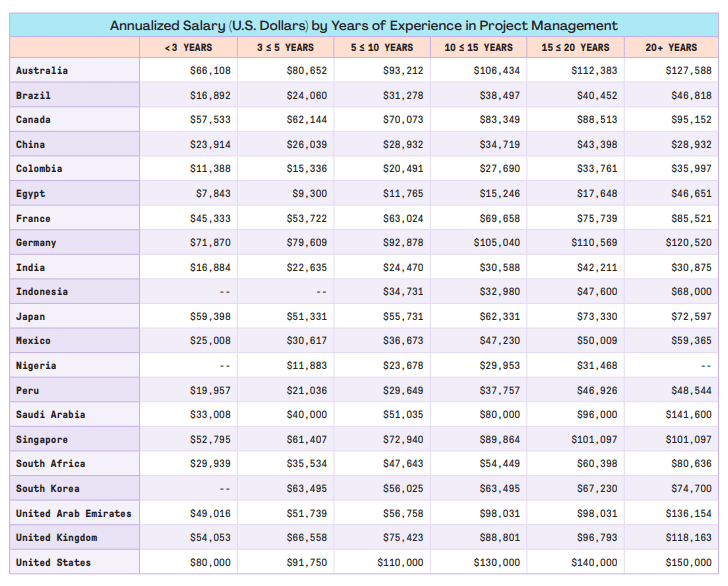
Employers value depth of experience, and the PMP provides a way to demonstrate it.
Latest PMP Salary Statistics
Salary figures change each year due to economic conditions, technology adoption, and industry demand. The data below comes from the PMI Salary Survey, the BLS Occupational Outlook Handbook, and the U.S. Census Bureau. These official sources provide up-to-date wage and job-trend data.
| Metric | Data Source | Value |
| Median wage for project management specialists | BLS | $100,750 |
| Lowest 10% / Highest 10% wage | BLS | $59,830 / $165,790 |
| Median salary for PMP-certified project managers | PMI Salary Survey 14th edition | $135,000 |
| Median wage for non-certified project managers | PMI Salary Survey 14th edition | $109,157 |
| Median salary after 10+ years as a PMP | PMI Salary Survey 14th edition | $173,000 |
| Median household income in the U.S. | U.S. Census Bureau | $83,730 |
What the Data Shows
The table highlights two key points. First, project management salaries far exceed the national median household income by more than $17,000, even for non-certified managers. Second, earning the PMP increases your compensation by tens of thousands of dollars, and the longer you maintain the credential, the more you earn. In many industries, the salary boost outweighs the time and exam costs.
Factors That Influence Your PMP Salary
Location
Where you work can make as much of a difference as your credentials. The All Business Schools salary guide lists median wages for project management specialists by state. The national median is $100,750, but wages vary widely. For example, Washington pays a median salary of $117,030, California offers about $111,300, and New Jersey pays $113,320.
At the other end of the spectrum, Arkansas reports a median of $81,970, while Mississippi reports a median of $77,500. Higher salaries often align with higher costs of living; a six-figure salary in a coastal city may not stretch as far as a slightly lower salary in the Midwest.
Industry
Not all projects are equal. PMI’s survey found that U.S. project managers in the pharmaceutical and aerospace industries reported a median salary of $150,000. These industries handle high-stakes projects and rely on specialized knowledge, so employers pay a premium. Finance and insurance, professional services, and manufacturing also pay above the BLS median. When choosing your next role, consider how the industry affects your earning potential.
Experience and Certification Tenure
Salary increases with both experience and tenure. PMI notes that project managers certified for more than ten years earn $173,000, while those certified for less than five years earn $123,000. New PMP holders typically start around the BLS median and climb as they gain expertise. Continuous learning and credential renewal signal dedication and keep your skills aligned with the PMBOK Guide.
Project Size and Complexity
Large projects require greater coordination and risk management. PMI highlights that project managers who lead complex, international, or high-budget projects can expect salaries well above the median. Companies trust certified professionals to deliver strategic initiatives and pay accordingly. As you gain experience, seek opportunities to manage larger projects and showcase your leadership.
Earning Potential by Experience
Experience is a significant salary driver. The BLS notes that the top 10% of project management specialists earn over $165,790, which typically reflects senior professionals. PMI’s earlier survey data also shows that salaries increase with experience. In 2025, project managers with 5–10 years of experience earn approximately $110,000; those with 15–20 years earn about $140,000; and seasoned professionals with 20+ years can expect $150,000 or more. These figures underscore the value of staying in the field and maintaining your certification.
Do these numbers surprise you? Many new project managers underestimate the long-term value of staying in the profession. Over time, your network, domain expertise, and leadership skills translate into higher pay. Continual professional development—through workshops, conferences, and professional development units (PDUs)—keeps your knowledge fresh and signals your commitment to employers.
Earning Potential by Project Scope
Project scope also impacts pay. Handling large, complex projects often leads to higher salaries because more is at stake. Whether you manage a multi-million-dollar software rollout or coordinate a global expansion, your decisions directly affect profitability. PMI notes that PMP-certified managers working on large or international projects see compensation reflect the greater effort and risk involved. If you want to climb the salary ladder, seek assignments that challenge you and broaden your skills.
Why PMP Certification Matters in the Age of AI
Artificial intelligence and automation are transforming how teams plan, execute, and monitor projects. PMI’s press release warns that the skills needed in people’s jobs could change by 70% in the next five years. As AI handles routine tasks, human leaders must focus on strategy, ethics, and stakeholder management. PMP certification provides a structured framework for integrating new technologies while maintaining control over timelines and budgets.
The same survey predicts that up to 30 million more project professionals will be needed by 2035. Even with automation, the world still needs people who can translate ideas into action. The PMP is the most straightforward path to join that talent pipeline.
How to Earn Your PMP Certification
Getting your PMP credential takes effort, but the process is straightforward. To sit for the exam, you need either:
- A four-year degree, 36 months leading projects, and 35 hours of project management education, or
- A secondary degree (high school or associate’s), 60 months of leading projects, and 35 hours of project management education.
PMI also accepts an active Certified Associate in Project Management (CAPM) in lieu of 35 hours of education. Once you meet these prerequisites, you can apply through PMI’s website, schedule your exam, and start studying. Many candidates choose formal training because the exam covers people, processes, and business environments in depth. PM Sprout Training Program offers an online options that help you prepare efficiently.
After you pass the exam, the work isn’t over. You must earn 60 PDUs every 3 years and pay a renewal fee to maintain your certification. Although some see this as a burden, it ensures that credential holders stay current. In return, salaries tend to rise with tenure.
FAQs
Q1. How much can a PMP earn?
Median salaries vary by source and location. BLS data shows that project management specialists earn $100,750, while PMI reports that certified managers in the U.S. earn $135,000. Tenured PMP holders earn even more.
Q2. Is the PMP certification worth it?
Yes. Certification boosts salaries by about 24% and opens doors to senior roles. Employers trust PMP-certified leaders to manage complex projects, and the credential is globally recognized.
Q3. How long does it take to get certified?
Preparation time depends on your experience. Most candidates spend two to three months completing training and studying. Meeting the experience prerequisites can take three to five years for those starting from scratch.
Q4. Does experience affect salary more than certification?
Both matters. Experience drives salary growth, but certification accelerates it. Professionals certified for more than ten years earn $173,000, while those certified for less than five years earn $123,000.
Summary
Project management remains one of the most rewarding career paths. Salaries are high, and the demand for skilled leaders is growing faster than in other occupations. The data shows that earning your PMP certification is one of the best ways to maximize your earning potential. Certified managers earn more, enjoy greater job security, and gain access to exciting projects.
If you’re ready to take the next step, start by assessing your eligibility and planning your study schedule. Invest in a reputable training program, connect with a community of project managers, and dedicate time to learning. The payoff—both financial and professional—can be life-changing. Are you ready to boost your career?

I am Mohammad Fahad Usmani, B.E. PMP, PMI-RMP. I have been blogging on project management topics since 2011. To date, thousands of professionals have passed the PMP exam using my resources.