The field of project management has grown rapidly as organisations take on more complex work. Knowing who does what more than a matter of job titles can help you plan your career and run projects more effectively. Are you curious about the difference between a project manager and a project director?
This blog post will explore the roles, responsibilities, authority, skills, and career outlook for both positions. Whether you are an aspiring professional, a business owner, or someone looking to hire a leader, this post will give you clarity and confidence.
Project Manager Vs Project Director
Many people use the titles project manager and project director interchangeably, but they refer to different levels of responsibility. A project manager focuses on one project at a time. They plan, organise, and execute tasks to meet specific goals. A project director, on the other hand, oversees a collection of projects and ensures they align with the organisation’s strategy. Understanding these distinctions helps businesses allocate resources wisely and gives individuals a roadmap for progression.

According to the U.S. Bureau of Labor Statistics, the median annual wage for project management specialists was $100,750 in May 2024, and employment is projected to grow six percent from 2024 to 2034, with about 78,200 openings each year. These figures show that project management offers promising prospects.
1. Scope of Work and Daily Responsibilities
Project Manager: A project manager runs the day-to-day activities of a single project. This includes creating a project plan, assigning tasks to team members, monitoring progress, and controlling the budget. As the BLS notes, they communicate with clients to determine requirements, develop plans with objectives and timelines, assign duties to staff, and monitor costs and milestones. They adjust the plan when issues arise and ensure that deliverables meet quality standards. If a problem arises – such as a supplier delay or a missed milestone – the project manager responds by reallocating resources or negotiating new deadlines.
Project Director: In contrast, a project director operates at a higher level. Instead of managing one project, they oversee a portfolio of projects or programmes. They ensure that each initiative aligns with broader business objectives and strategic goals. Rather than tracking every task, they set standards, allocate budgets across projects, and mentor project managers. Project directors also balance competing priorities: one project might be ahead of schedule while another faces challenges. They prioritise resources and decide which initiatives to accelerate or pause.
Practical Example
Imagine a technology firm rolling out a new software product. The project manager might organise daily stand-up meetings, assign coding tasks, track testing progress, and manage the release schedule. Meanwhile, the project director monitors multiple product launches, decides which markets to enter first, negotiates budgets with executives, and guides the managers when they encounter obstacles. By balancing short-term execution with long-term strategy, both roles contribute to success.
2. Authority and Decision-Making Power
Project Manager: A project manager has operational control over the project team. They decide how tasks are executed, resolve conflicts among team members, and ensure the project stays within scope. Their authority is usually limited to the project itself. They may advise senior leaders on project status, but they rarely have the power to change organisational priorities. For instance, they can recommend a change in vendor if equipment is delayed, but they typically cannot alter the organisation’s overall budget.
Project Director: A project director holds greater authority and serves as a bridge between executives and project teams. They often report directly to senior management or the board. Their decisions can affect multiple projects or entire programmes. For example, if two projects compete for the same resources, the director decides which one gets priority. They also approve project plans, set performance metrics, and may alter the scope if strategic needs change. Given this broader influence, project directors need strong leadership skills and a deep understanding of organisational goals.
3. Communication and Stakeholder Engagement
Project Manager: Clear communication keeps a project moving. Project managers meet regularly with team members, listen to concerns, and ensure everyone understands their tasks. They also provide updates to clients, senior managers, and other stakeholders. The BLS emphasizes that project management specialists need to consult with staff to resolve issues and communicate with clients on progress. Regular reporting builds trust and allows for timely feedback.
Project Director: Communication at the director level is more strategic. Rather than detailing every task, project directors focus on alignment with corporate objectives. They speak with executives, board members, and department heads about how each project contributes to the larger mission. Their role often involves negotiating conflicting interests and gaining support for resource allocation. They also mentor project managers, helping them develop stakeholder management and negotiation skills. Good directors listen to feedback and adjust priorities when needed, fostering a culture of collaboration.
4. Risk Management and Strategic Oversight
Project Manager: Every project carries risk. A project manager identifies potential threats – such as budget overruns, quality issues, or unexpected scope changes – and builds mitigation plans. They monitor risks through status reports and adjust tactics as needed. For example, if a supplier goes out of business, the project manager must quickly identify alternatives to avoid delays.
Project Director: Project directors view risk through a wider lens. They assess risks that span multiple projects and consider how they could affect the organisation’s reputation, finances, or long-term strategy. They set company-wide risk-management standards and ensure each project adheres to them. A director might decide to delay a low-priority initiative to free resources for a high-risk but high-reward project. They also review lessons learned from completed projects to improve future performance.
5. Required Skills and Qualifications
Educational Background: According to the BLS, project management specialists usually need a bachelor’s degree, often in business or a related field. This requirement applies to both project managers and directors. Experience often matters more than the specific major, but knowledge of project management principles helps.
Certifications and Training: Professional certifications such as the Project Management Professional (PMP) or Program Management Professional (PgMP) demonstrate a strong grasp of project management processes. While a certification is not always mandatory, it can help project managers advance into director roles. Many employers expect directors to have several years of experience managing large projects and leading teams.
Soft Skills: Both roles require strong communication, leadership, problem-solving, and time management. Project managers need to motivate teams and handle day-to-day issues. Directors must inspire confidence among executives and project managers and steer diverse teams toward common goals. They also need strategic thinking and financial acumen to make high-level decisions.
6. Career Path and Salary Outlook
Project management offers a rewarding career path. Many professionals start as project coordinators or assistants and move into project manager roles as they gain experience. With years of successful project delivery, they may progress to senior manager, programme manager, or project director positions. Larger organisations may also offer roles such as portfolio manager or head of project management office (PMO).
Compensation reflects this progression. The U.S. Bureau of Labor Statistics reports that the median annual wage for project management specialists was $100,750 in May 2024. Those in the top industries, such as finance and insurance, earned even more. Project directors usually earn higher salaries because they oversee multiple projects and carry greater responsibility. While specific figures vary by industry and region, many directors receive six-figure packages plus bonuses.
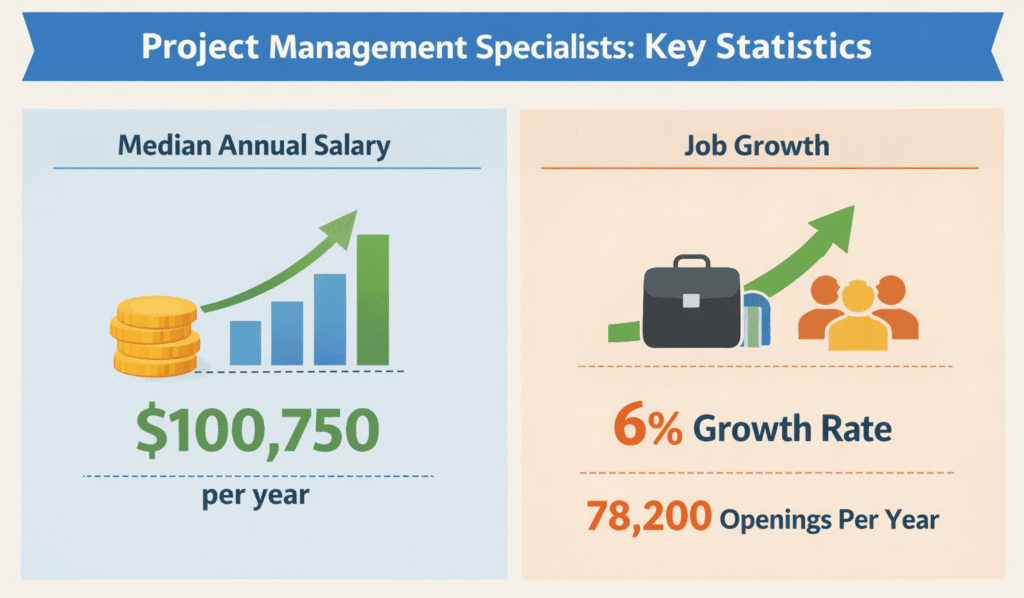
The outlook is also bright: employment of project management specialists is projected to grow six percent from 2024 to 2034, faster than the average for all occupations. About 78,200 openings are expected each year during this period as organisations replace retirees and expand their project portfolios. These numbers suggest a strong demand for skilled professionals.
7. Choosing the Right Role for You
If you enjoy hands-on work, collaborating closely with teams, and seeing a project come to life, a project manager role may be a good fit. You’ll be involved in every detail, from planning and budgeting to quality control. It’s a challenging but rewarding job where you directly influence outcomes.
If you prefer to guide multiple initiatives, shape strategy, and mentor others, aim for a project director role. You’ll need broader business knowledge and confidence in making high-stakes decisions. The path often requires several years of managerial experience and advanced training.
I remember when I moved from managing one software product to overseeing a suite of digital projects. At first, I missed the closeness with my team. Over time, I found satisfaction in mentoring younger managers and aligning projects with our company’s mission. Your own career journey may differ, but reflecting on what motivates you will help you choose the right path. Why not jot down what you enjoy most about your current role and identify which responsibilities align with those interests?
FAQs
Q1. What is the main difference between a project manager and a project director?
A project manager runs a single project day-to-day, while a project director oversees multiple projects and aligns them with the organization’s strategy.
Q2. Do I need a certification to become a project director?
Certifications like PMP or PgMP are not mandatory, but they demonstrate expertise and help you progress from manager to director roles.
Q3. How long does it take to move from project manager to project director?
It depends on your experience and organization. Many professionals gain 5–10 years of leadership experience before moving into director positions.
Q4. Which industries pay project managers the most?
Finance, insurance, and professional services tend to offer the highest salaries for project management specialists.
Q5. Is project management a secure career?
Yes. The BLS projects a 6% growth rate for project management specialists from 2024 to 2034, with tens of thousands of new openings.
Summary
Project managers and project directors both play crucial roles in guiding organisations to success. While the manager focuses on executing individual projects, the director oversees a portfolio and aligns it with strategic goals. Salary and job outlook figures from the U.S. Bureau of Labor Statistics show that project management remains a promising career path. Whether you are starting or looking to advance, acquiring solid experience, sharpening your leadership skills, and earning respected certifications will open doors.
Further Reading:

I am Mohammad Fahad Usmani, B.E. PMP, PMI-RMP. I have been blogging on project management topics since 2011. To date, thousands of professionals have passed the PMP exam using my resources.