Choosing between PMI-ACP and CSM can feel confusing, especially if you want to grow in Agile project management. Both certifications prove your skills, but they serve different career paths. PMI-ACP covers many Agile methods, such as Scrum, Kanban, and Lean, while CSM focuses only on Scrum and team leadership. So, how do you decide which one fits you best?
If you want flexibility and plan to work across industries or frameworks, PMI-ACP may suit you better. If you prefer a clear, focused role as a Scrum Master, then CSM is a strong choice.
This PMI-ACP vs CSM blog post explains the key differences in simple terms. It compares eligibility, exams, and career impact to help you make a smart decision. By the end, you will know which certification aligns with your goals and experience.
Key Takeaway
- Scope: PMI-ACP teaches many Agile frameworks such as Scrum, Kanban and extreme programming. CSM focuses only on the Scrum framework.
- Eligibility: PMI-ACP candidates must have a secondary degree, 21 contact hours of Agile training, and 1 year of project work experience. CSM candidates must finish a two-day course with a Certified Scrum Trainer.
- Exam Difficulty: The PMI-ACP exam includes 120 questions and lasts 3 hours, whereas the CSM exam has 50 questions and lasts 1 hour.
Why Agile Certifications Matter
Agile is not just a buzzword. This State of Agile report found that about 63 percent of Agile users rely on Scrum and 71 percent of survey respondents use Agile practices in their software development lifecycle. Agile adoption has spread beyond software too; nearly 70 percent of IT teams use Agile, while about 48 percent of engineering and research teams have adopted these practices. Certifications validate your ability to plan, adapt and deliver in these dynamic environments.
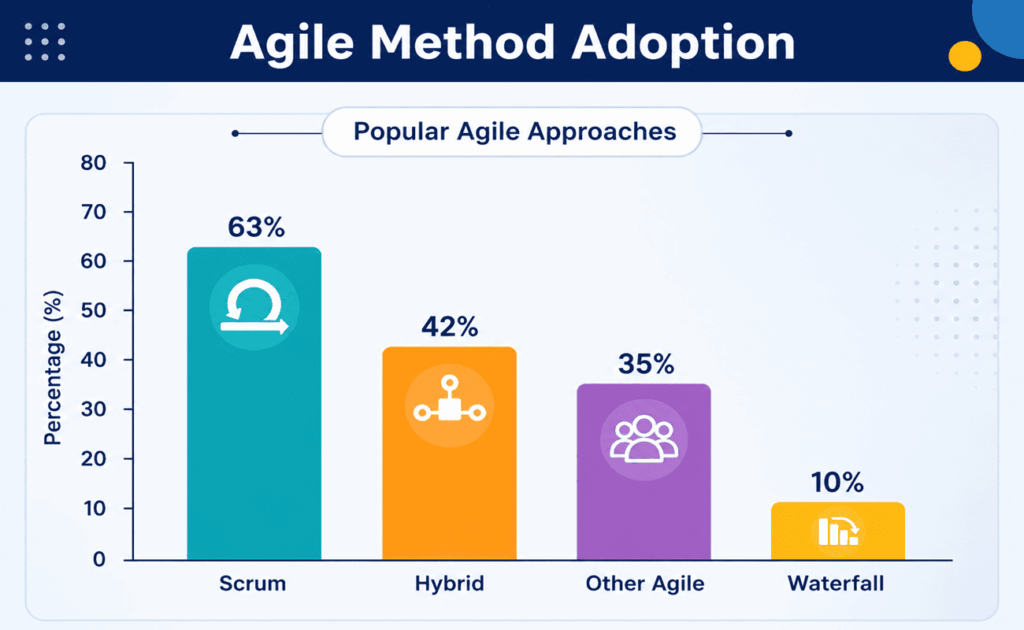
This bar chart illustrates the dominance of Scrum and the growth of hybrid methods. Use it as a quick reference when explaining Agile trends to colleagues or clients.
What is PMI-ACP?
The PMI-ACP credential signals broad knowledge of Agile methods. It covers Scrum, Kanban, Lean, extreme programming and test-driven development. Candidates must hold a high school diploma or higher, complete at least 21 hours of Agile training, and have 12 months of project experience within the past 5 years. The exam has 120 multiple-choice questions and lasts three hours with a short break.
Preparing for PMI-ACP requires studying frameworks beyond Scrum. Because the certification spans many disciplines, it suits project managers, product owners and team members who work across varied industries. Think of it as a broad toolbox for Agile leadership. After passing, certificate holders must earn 30 professional development units every three years to maintain the designation.
What is CSM?
The Certified ScrumMaster (CSM) credential is offered by the Scrum Alliance. It focuses solely on the Scrum framework, emphasizing roles, events, artifacts, and core values. To qualify, you must complete a two-day CSM course taught by a Certified Scrum Trainer. The exam consists of 50 multiple-choice questions. Candidates have one hour to answer at least 37 questions correctly.
CSM helps people learn how to guide Scrum teams through sprints, remove obstacles and uphold Scrum principles. Because it focuses on a single framework, it is ideal for new Agile practitioners and those working in software, product development, or IT. The Scrum Alliance requires certificate holders to renew every two years by submitting Scrum Education Units.
Comparing PMI-ACP and CSM
Choosing between PMI-ACP and CSM depends on the breadth of knowledge you want and the roles you aim to hold. PMI-ACP is suited for managers who need to oversee diverse teams and projects that use multiple Agile methods. It asks for more work experience and longer exam preparation, but it signals versatility. CSM is simpler to attain. It delivers deep Scrum expertise and is often the first step for people entering Agile work.
Navigating the Certification Journey
Both certifications have structured paths. PMI-ACP candidates should:
- Confirm they have a secondary degree, 21 contact hours of Agile training and a year of project experience.
- Complete a PMI-ACP prep course or study plan.
- Sit for the 120-question exam and aim to complete it within three hours.
- After passing, earn 30 professional development units every three years.
For CSM, the steps are shorter:
- Attend a two-day course led by a Certified Scrum Trainer.
- Study Scrum principles and practice mock questions.
- Take the 50-question exam online; you need 37 correct answers to pass.
- Renew your certification every two years with Scrum Education Units.

This table makes it easy to spot the differences. PMI-ACP requires a broader skill set and a longer exam. CSM is faster to earn but less versatile.
Exam Details and Difficulty
The PMI-ACP exam covers topics such as Agile principles, stakeholder engagement, problem detection, and continuous improvement. Many candidates find it challenging because it requires knowledge across multiple frameworks. You have three hours to answer 120 questions.
The CSM exam is shorter and more focused. Because it is built around Scrum, most questions test your understanding of roles, ceremonies and artifacts. You have 1 hour to answer 50 questions and must get 37 of them right.
Career Impact
PMI-ACP can lead to roles such as Agile project manager, product owner, or Agile coach. Because it covers many methods, it appeals to employers in manufacturing, finance, healthcare and other fields. In contrast, CSM often leads to roles as a Scrum Master or in product development at software and IT companies. Both certifications can increase salaries, but PMI-ACP may open more doors due to its broader scope.
Pros and Cons
PMI-ACP advantages include global recognition and a strong focus on real-world application. Its rigorous requirements ensure you have substantial experience. The downside is the higher cost and the need for ongoing education. CSM benefits include an easier entry, hands-on training and a clear path for beginners. Its limitation is a narrow focus on Scrum, which may not suit professionals seeking broader Agile knowledge.
FAQs
Q1. Is PMI-ACP harder than CSM?
Yes. PMI-ACP requires more experience and covers several frameworks, while CSM focuses on Scrum and has fewer exam questions.
Q2. How long does it take to prepare for PMI-ACP?
Most people spend about two to three months studying, depending on their background and the time they can dedicate.
Q3. Can beginners take the CSM course?
Absolutely. CSM is designed for newcomers and only requires attending a two-day class and passing a short exam.
Q4. Do both certifications expire?
Yes. PMI-ACP holders must earn 30 professional development units every three years, while CSM holders renew every two years with Scrum Education Units.
Q5. Which certification should I choose if I work outside IT?
PMI-ACP may be better because it applies to multiple industries. But if your team uses Scrum heavily, CSM could still add value.
Summary
Both PMI-ACP and CSM can boost your career. The right choice depends on your goals, the industries you serve and the time you can invest in learning. If you manage projects in diverse settings or want an expansive view of Agile, PMI-ACP will suit you. If you work in software or product development and need to lead Scrum teams, CSM offers a focused path. Take time to evaluate your aspirations and decide which certification brings you closer to your dream role.
References:

I am Mohammad Fahad Usmani, B.E. PMP, PMI-RMP. I have been blogging on project management topics since 2011. To date, thousands of professionals have passed the PMP exam using my resources.