Effective project management helps organizations turn ideas into clear results. When a project team follows effective project management practices, they plan work better, control scope, and manage time and budgets with confidence. Many organizations rely on effective project management to keep projects aligned with business goals and avoid costly delays.
Strong project leadership also improves communication and teamwork. Teams know what to do, when to do it, and how success will be measured. In today’s fast-changing business world, effective project management is vital to delivering consistent outcomes.
In simple words, effective project management helps teams complete projects on time, within budget, and with greater stakeholder satisfaction.
Understanding Project Management
Project management is the process of planning, organizing, and guiding work to achieve a specific goal. It helps organizations complete projects on time, within budget, and with the expected quality. Every project has a clear objective, such as launching a product, building software, or improving a business process. Project management provides the structure needed to reach that objective.
A project manager leads the team and coordinates tasks, resources, and schedules. The manager defines the scope, sets timelines, assigns responsibilities, and tracks progress. When issues arise, the project manager solves problems and keeps the work moving forward.
Project management usually follows five main stages: initiation, planning, execution, monitoring and controlling, and closing. These stages help teams organize work and manage risks throughout the project.
Good project management improves communication, keeps stakeholders informed, and ensures resources are used efficiently. As a result, organizations deliver better results and achieve their business goals more consistently.
Five Core Benefits of Effective Project Management
The following are the five main benefits of effective project management:
- Aligning Goals and Priorities. A well-managed project starts with clarity. Defining goals and success criteria ensures that everyone understands what matters most. Collaboration with stakeholders at the beginning sets the stage for smooth execution.
- Controlling Scope. Clear boundaries prevent projects from ballooning beyond their original intent. Managing scope means documenting requirements, validating changes, and guarding against unauthorized additions. Early detection of scope creep saves time and money.
- Managing Budgets and Schedules. Projects succeed when they stay on schedule and within budget. Good project management establishes realistic timelines, monitors spending, and adjusts resources as needed. As the saying goes, time is money.
- Mitigating Risks and Managing Resources. Every project faces uncertainty. Identifying potential risks early, planning responses, and continuously monitoring them help avoid surprises. Allocating people and materials effectively ensures that the right resources are available when needed.
- Enhancing Stakeholder and Customer Satisfaction. Open communication with stakeholders keeps expectations aligned and builds trust. Regular updates, feedback loops, and transparent decision-making make stakeholders feel engaged and valued. A satisfied customer is the true measure of project success.
Adapting to Modern Work
Remote and hybrid work models are now common. The Pulse of the Profession report notes that 90% of organizations support flexible work arrangements, and only 10% expect employees to be on-site all the time. Work location has no negative effect on project performance. For project managers, this means being comfortable with digital collaboration tools and asynchronous communication. If your team is scattered across time zones, you must think carefully about meeting times, document sharing, and maintaining a sense of connection.
The Role of Training and Support
Organizations that invest in their project teams outperform those that do not. According to PMI, supportive programs boost project performance by 8.3%. Training equips managers with the skills to plan, communicate, and lead effectively. Earning professional certifications such as the Project Management Professional (PMP) credential signals expertise and enhances credibility. Continuous learning also demonstrates your commitment to your craft, thereby increasing stakeholder trust.
Project Management Process Example
To visualize how these benefits come together, consider a simple project management process:
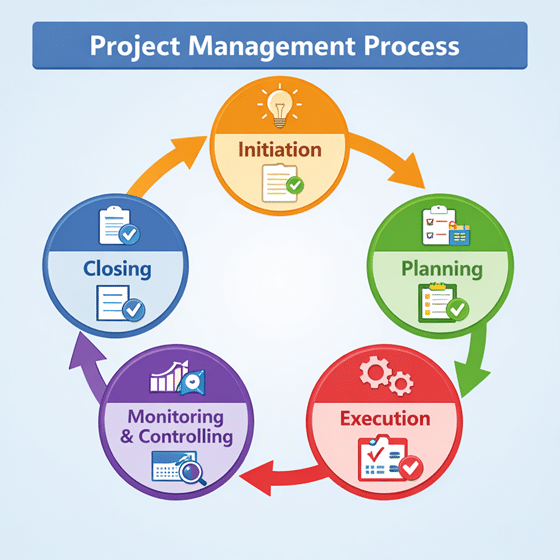
- Initiation: You define the project’s purpose and scope with stakeholders.
- Planning: You build a schedule, assign tasks, set a budget, and assess risks.
- Execution: The team completes tasks, communicates progress, and addresses challenges.
- Monitoring & Controlling: You track performance, compare actual progress to the plan, and make adjustments.
- Closing: You hand off the final deliverable, evaluate lessons learned, and celebrate success.
FAQs
Q1. What is effective project management?
Effective project management means applying proven methods to plan, execute, and control work so that it meets defined goals, timelines, and budgets. It combines clear communication, goal alignment, and risk awareness.
Q2. Why does controlling scope matter?
Defining scope sets boundaries. Without it, projects can expand unexpectedly, leading to cost overruns, missed deadlines, and frustrated stakeholders. Scope control keeps the work focused and manageable.
Q3. How does risk management improve results?
Risk management identifies potential problems early and plans responses. By monitoring risks throughout the project, you avoid surprises and make informed decisions that keep the work on track.
Q4. How can I become a project manager?
Start by developing leadership, communication, and organizational skills. Seek opportunities to lead projects at your current job and consider earning certifications like the PMP to validate your knowledge and experience.
Summary
Effective project management helps organizations turn ideas into successful outcomes. By defining goals, controlling scope, managing budgets, and addressing risks early, you can deliver projects more efficiently. Clear communication and strong leadership also improve collaboration and keep stakeholders engaged throughout the project lifecycle. When organizations apply effective project management practices, they reduce delays, control costs, and improve results.

I am Mohammad Fahad Usmani, B.E. PMP, PMI-RMP. I have been blogging on project management topics since 2011. To date, thousands of professionals have passed the PMP exam using my resources.