Organizations now compete in a world shaped by rapid technology shifts and rising customer expectations. These shifts create pressure to modernize processes, adopt new tools, and build a resilient workforce. Organizational readiness, which is the ability of people, processes, and culture to absorb change, is no longer optional. It is the foundation for any successful digital transformation readiness effort. Without a prepared workforce and clear plan, even the best-funded initiatives can stall.
This blog post defines organizational readiness, explains why it matters, and offers a practical framework for leaders to plan their next transformation.
Key Takeaways
- Readiness matters more than funding. A Gartner survey of over 3,100 technology leaders found that only 48% of digital initiatives meet or exceed their business targets. Preparing people and processes is critical to improving that success rate.
- People are central. A PwC operations survey reports that 89% of leaders say tech investments fall short of expected results and 87% blame poor data quality. Without engaged employees and clean data, digital tools can’t deliver value.
- The market is booming. Research firm Grand View estimates the global digital transformation market at USD 1.3 trillion in 2025, with projected growth to USD 5.5 trillion by 2033. This growth underscores the need for scalable, people-oriented, focused strategies.
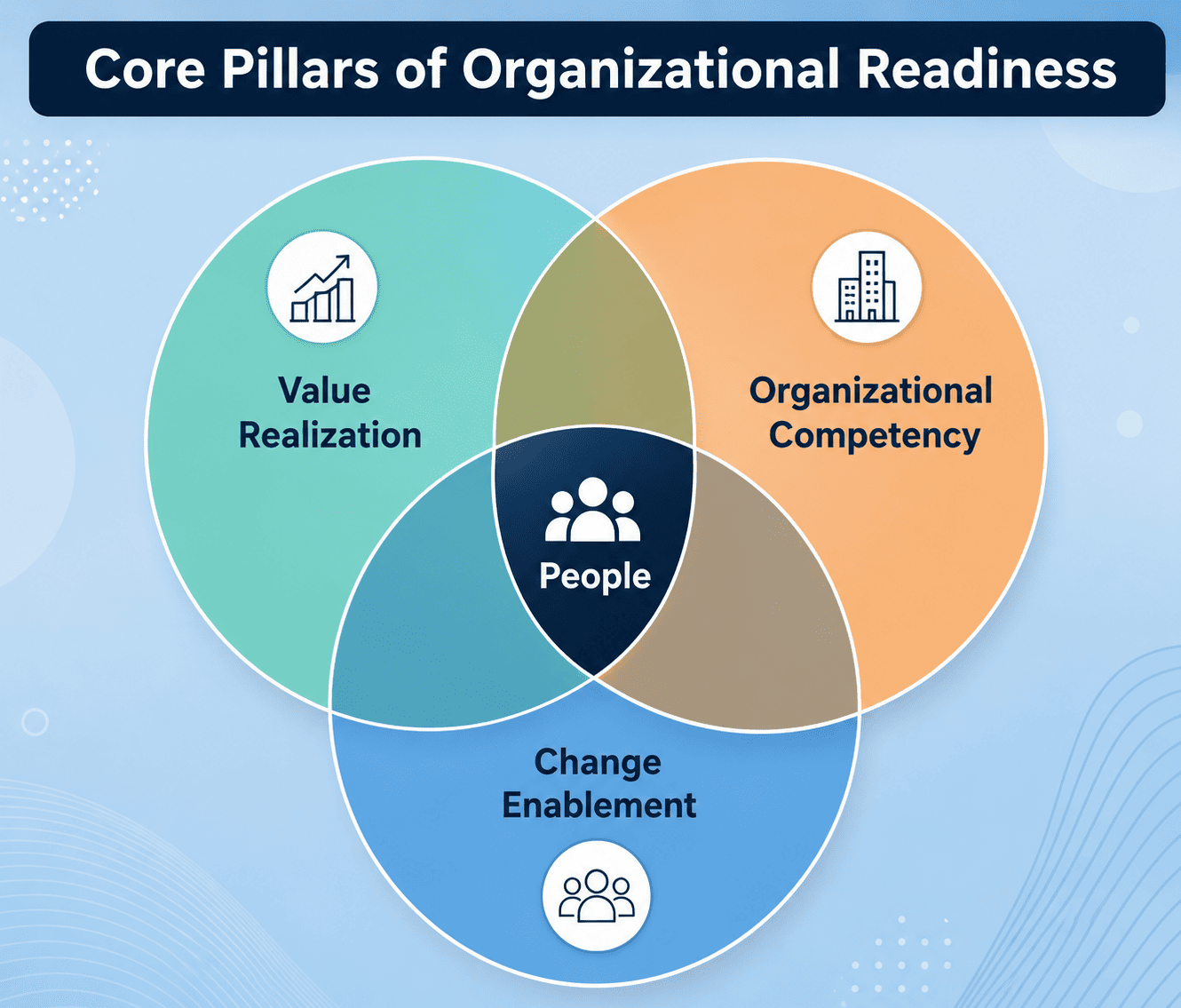
- Core pillars guide readiness. Organizational competency, value realization, and change enablement form the foundation of readiness. Each pillar ensures that people, processes, and data align with the organization’s mission.
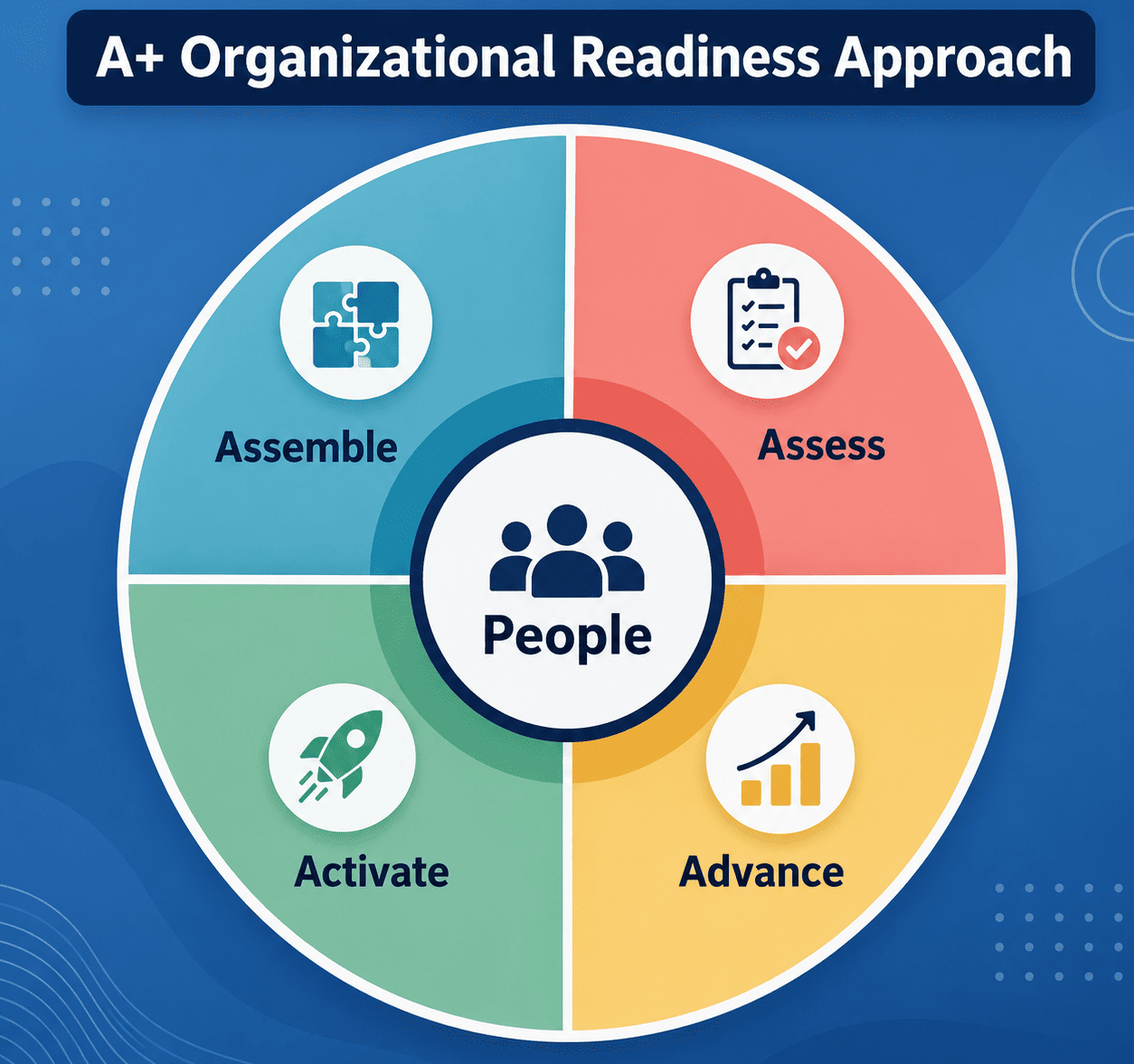
- The A+ approach provides a roadmap. Assess your starting point, assemble the right team, activate new behaviors, and advance the journey. This structured method helps leaders build momentum and sustain change.
Why Organizational Readiness Matters
Organizational readiness matters because even the best strategy can fail if people, systems, and processes are not prepared for change. Companies today face constant pressure from new technology, changing customer expectations, and growing competition. To stay successful, businesses must adapt quickly and smoothly. Readiness helps organizations manage this change with less confusion and resistance.
When employees understand the purpose of a change, they are more likely to support it. Clear communication, training, and leadership guidance improve confidence and reduce fear. This creates stronger teamwork and faster adoption of new tools or processes.
Organizational readiness also lowers risk. It helps leaders identify problems early, improve planning, and avoid costly delays. A prepared organization can respond faster to market changes and customer needs. It also improves productivity and long-term performance.
In simple terms, organizational readiness builds a strong foundation for successful transformation, helping companies grow, stay competitive, and achieve lasting business results.
Core Pillars of Organizational Readiness
Successful readiness initiatives rest on three interlocking pillars. Think of them as overlapping circles that place people at the center. The infographic below illustrates how these pillars connect:
Organizational Competency
This pillar ensures that your structure, culture, and skills support the mission. It answers questions like: Does your workforce understand the organization’s purpose? Are roles defined and aligned with strategic goals? Organizations with strong competency can bridge the gap between current processes and future aspirations. When planning a transformation, take stock of skills, leadership support, and change history. Use surveys or interviews to gauge readiness and identify gaps. Including employees from all levels will uncover hidden strengths and concerns.
Change Enablement
Change enablement focuses on helping people adopt new tools and ways of working. It involves clear communication, targeted training, and supportive leaders. Avoid technical jargon; explain why change is happening in plain language. Provide safe spaces for employees to ask questions and practice new skills. When people feel heard and supported, they are more likely to embrace change. The PwC survey shows that data quality issues and siloed teams impede value realization. Address these human and process issues before rolling out new systems.
Value Realization
Value realization is about tracking benefits beyond installation. Too many projects declare victory when technology goes live, only to see usage decline. Set clear performance metrics tied to strategic goals. Monitor adoption rates, customer satisfaction, and financial return. Celebrate quick wins to motivate teams, and adjust the plan when results lag. It’s wise to involve finance and operations early to define what success looks like. This pillar ensures that investments translate into tangible benefits rather than shelfware.
The A+ Approach to Building Readiness
While the pillars provide a conceptual foundation, leaders need a practical roadmap. The A+ approach offers four steps to guide organizations from planning to sustained adoption. The diagram below illustrates the cycle:
Assess
Begin by understanding your current state. Conduct interviews, surveys, and data audits to identify strengths, weaknesses, and cultural dynamics. Look at past change efforts: What worked? What didn’t? Use this information to craft a realistic vision. Assessment should also examine market conditions and competitor actions. For instance, the rapid growth of the digital transformation market shows that lagging behind could jeopardize competitiveness. By assessing internal and external factors, you can set priorities and avoid surprises.
Assemble
Next, bring together a diverse team that represents all key functions. Include executive sponsors, subject-matter experts, frontline staff, and skeptics. Diversity ensures that potential obstacles surface early. During this stage, define roles and responsibilities and set clear expectations. Consider creating a steering committee to guide the initiative and an advisory group to provide feedback. When people have a voice in shaping the journey, they become champions for change.
Activate
Activation is where plans meet reality. Roll out training, pilot programs, and communications. Use storytelling to illustrate how new processes will improve daily work. Encourage managers to model new behaviors and reward early adopters. Keep feedback loops short; adjust training materials based on real-time observations. According to PwC, many organizations struggle with integration and data quality. Activation is the time to address these issues head-on. Invest in data cleansing, integration tools, and user-friendly interfaces to smooth adoption.
Advance
After initial deployment, the journey continues. Track performance against goals and keep leaders involved. Use dashboards to visualize progress and highlight success stories. Offer refresher courses and mentoring to embed new habits. As the organization matures, revisit the readiness assessment and adjust strategies. Continuous improvement prevents complacency and prepares teams for future waves of change.
Overcoming Common Challenges
Digital transformation isn’t a straight path. Leaders often encounter obstacles that can derail progress. Below are some challenges and strategies to address them:
- Low adoption rates – When staff hesitate to use new tools, pair them with enthusiastic colleagues. Provide hands-on training and celebrate small victories. Ask managers to lead by example.
- Poor data quality – Start data cleansing early and involve data stewards. Use automation to detect errors. Regularly review data definitions and ownership.
- Siloed workflows – Encourage cross-functional projects and job rotations. Align incentives to emphasize collaboration. The PwC survey notes that many companies plan to shift to networked structures, so they are beginning to break down walls today.
- Resistance to change – Listen to concerns with empathy. Share stories of individuals who benefited from past changes. Provide clear answers to “what’s in it for me?” questions.
- Undefined success metrics – Work with finance and operations to set measurable goals. Review these metrics at regular intervals and adjust when necessary.
Measuring and Sustaining Value
Value realization requires more than a go-live checklist. Here are a few practices to ensure lasting impact:
- Define value early. Align metrics with strategic objectives. For example, measure customer retention, order accuracy, or cycle time.
- Track adoption continuously. Use dashboards to monitor usage. If adoption drops, investigate the root cause.
- Celebrate wins and correct course. Share success stories and publicly thank teams. When metrics lag, revise training or processes rather than placing blame.
- Iterate and improve. Treat readiness as an ongoing journey. The organization you lead tomorrow will differ from the one you lead today. Stay agile and adjust plans accordingly.
FAQs
Q1. What is organizational readiness?
It is the capability of an organization’s people, processes, and culture to embrace and sustain change. It measures how prepared the workforce is for transformation.
Q2. Why does organizational readiness matter in digital transformation?
Without readiness, technology investments often fail to deliver promised benefits. Engaged employees and clear processes are essential for successful adoption.
Q3. How do I assess my organization’s readiness?
Conduct surveys, interviews, and data audits. Evaluate skills, culture, leadership support, and past change efforts. Identify gaps and strengths.
Q4. What are common pitfalls?
Frequent pitfalls include unclear communication, inadequate training, poor data quality, and metrics that focus only on technology rather than outcomes.
Q5. How long does building readiness take?
It varies. Smaller projects may require a few months, while enterprise-wide transformations can take years. Continuous improvement is key.
Summary
Organizational readiness helps companies prepare for change in a clear and structured way. It aligns people, processes, technology, and leadership toward shared goals. Businesses that build readiness can reduce resistance, improve adoption, and achieve stronger results from digital transformation efforts. The right strategy is important, but success depends on how well employees and systems adapt to change. By focusing on readiness early, organizations create a stronger foundation for growth, resilience, innovation, and long-term success in a fast-changing business environment.

I am Mohammad Fahad Usmani, B.E. PMP, PMI-RMP. I have been blogging on project management topics since 2011. To date, thousands of professionals have passed the PMP exam using my resources.