A cost-reimbursable contract (also known as a “cost-plus contract” or “cost-reimbursement contract”) is an agreement in which the buyer pays the seller for their actual costs plus a fee representing the seller’s profit.
A cost-reimbursable contract reimburses the seller’s cost, and since the profit is factored separately, it is also known as a cost-plus contract. This contract can be used when the scope of work is uncertain, and the cost cannot be estimated accurately.
According to acquisition.gov, “Cost-reimbursement types of contracts provide for payment of allowable incurred costs, to the extent prescribed in the contract. These contracts establish an estimate of total cost for the purpose of obligating funds and establishing a ceiling that the contractor may not exceed (except at its own risk) without the approval of the contracting officer.”
A cost-reimbursable contract requires the seller to track costs accurately and submit a detailed invoice to the buyer. This contract is riskier for the buyer because the total costs are unknown, and they are responsible for paying for all incurred costs.
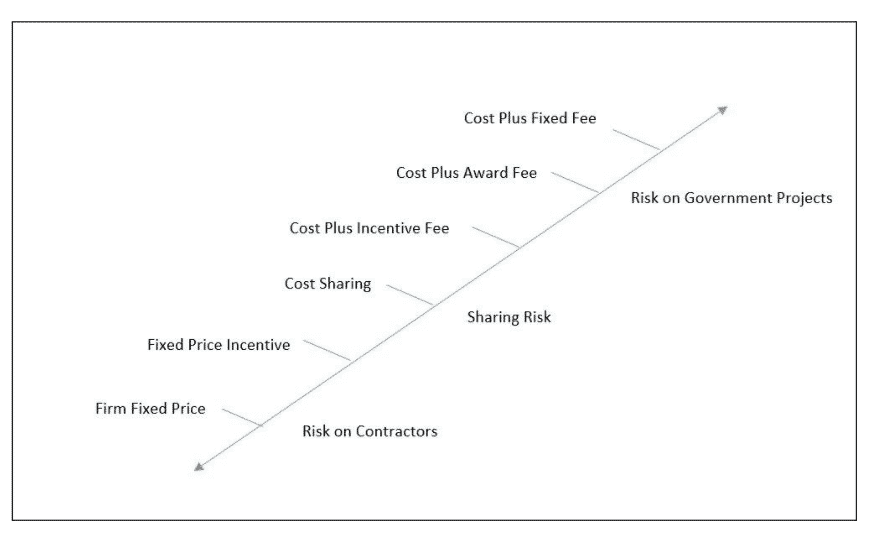
A cost reimbursement contract allows for a simpler procurement statement of work because you can use it when you have unclear work requirements. This contract requires less work for you than the fixed-price contract. This contract is less costly than a fixed-price contract because the seller does not add costs for risks.
However, you should be ready to audit the sellers’ invoices. The seller has no incentive to control the cost, and they can artificially increase it. The main drawback of this contract is that the final price is unknown.
Types of Cost-Reimbursable Contracts
Cost-reimbursement contracts can be of the following types:
1. Cost Contract
In a cost contract, the seller receives no fee (profit). This agreement is appropriate for work performed by non-profit organizations. Since there is no profit, the seller is reimbursed for incurred costs only.
Please note that this contract is not mentioned in the PMBOK Guide.
2. Cost-Plus Fixed Fee Contract (CPFF)
A cost-plus fixed fee (CPFF) contract is where the buyer pays the seller for all project costs plus a set profit fee. The fee remains the same, regardless of the actual project costs. This type of contract is common when the project scope is uncertain or likely to change. It ensures the seller gets paid for their work and makes a profit, even if costs increase.
However, the client must monitor expenses closely to avoid overspending, as they cover all costs, making budgeting more challenging.
For example, the buyer reimburses the seller for work and materials costs. They agreed on a fixed fee of 10,000 USD, which is pure profit for the seller.
3. Cost-Plus Incentive Fee Contract (CPIF)
A cost-plus incentive fee (CPIF) contract reimburses the seller for all costs and adds an extra fee based on performance. The incentive fee increases if the seller meets or exceeds specific targets, like completing the project under budget or ahead of schedule.
This encourages the seller to control costs and work efficiently. However, the buyer still pays for all costs, so they need to monitor spending closely. CPIF contracts are useful when both parties want to share the benefits of cost savings or improved performance while managing project risks.
For example, the buyer reimburses the seller for work and materials, and a base fee of 100,000 USD is awarded pending buyer-specific performance criteria.
4. Cost-Plus Award Fee Contract (CPAF)
A cost-plus award fee (CPAF) contract reimburses the seller for all incurred costs and includes an additional award fee based on performance. Unlike fixed or incentive fees, the award fee is subjective and depends on the client’s satisfaction with the seller’s work (e.g., quality, timeliness, or overall project management).
The seller evaluates performance and decides the award amount. This type of contract motivates the seller to deliver high-quality work. However, the seller still gets paid for all costs, so the buyer must carefully track spending and performance to avoid overspending.
An example of a cost-plus award fee contract is one in which the cost of work and materials is reimbursed. In addition, a base fee award is made to meet buyer-specific performance criteria. The maximum award available is 100,000 USD.
This is similar to the cost-plus incentive fee (CPIF) contract, except that the maximum possible award amount is decided in advance in this case.
5. Cost-Plus Percentage of Cost (CPPC)
A cost-plus-percentage-of-cost (CPPC) contract reimburses the seller for all project costs and adds a fee based on a percentage of those costs. The more the seller spends, the higher the fee, increasing costs.
This contract provides less incentive for the seller to control expenses since their profit grows with the project’s total cost. Because of this, CPPC contracts are rarely used in government projects and are generally considered risky for clients, who must closely monitor spending to prevent unnecessary cost increases.
An example of a cost-plus-fee contract is one in which the cost of work and materials is reimbursed plus 10% of costs as a fee as profit to the seller.

Examples of Cost-Reimbursable Contracts
I will provide three examples of cost-reimbursement contracts for the construction, IT, and pharmaceutical industries.
1. Construction Industry
In a government infrastructure project (e.g., building a dam or highway), the agency may use a cost-plus fixed fee (CPFF) contract due to its complexity and unknown factors (e.g., geological and environmental issues).
Under this contract, the construction company is reimbursed for all actual costs incurred, including labor, materials, and equipment, and also receives a fixed fee as profit. This fixed fee remains constant, regardless of how much the project costs, providing the seller with a guaranteed profit while ensuring the government covers the actual expenses.
2. Information Technology (IT) Industry
Due to the complexity and changing requirements of developing a custom ERP system, a large corporation may use a cost-plus-incentive-fee (CPIF) contract with an IT firm. The IT firm is reimbursed for all allowable costs and earns an additional incentive fee if it meets specific performance targets, like finishing the project early or staying under budget.
This contract encourages the IT firm to manage costs efficiently while providing flexibility to accommodate the evolving nature of the project.
3. Pharmaceutical Industry
Due to the unpredictable costs and trial duration in a clinical trial for a new drug, a pharmaceutical company can use a cost-plus-award-fee (CPAF) contract with a research organization. The organization is reimbursed for all related expenses, including patient care and lab tests, and receives an additional award fee based on the quality and effectiveness of its trial management.
This award fee varies depending on performance, incentivizing the organization to deliver high-quality results while managing the inherently uncertain costs of the trial.
Advantages of Cost-Reimbursable Contracts
- Provides Flexibility in Scope: Cost-reimbursable contracts allow for adjustments in the scope of work without the need for extensive renegotiation, thus making them suitable for projects in which requirements are likely to change.
- Reduces Risk for Sellers: Sellers are reimbursed for all costs, thus reducing their financial risk. This is advantageous in projects with unpredictable expenses or unforeseen challenges.
- Encourages High-Quality Work: Since sellers are assured of cost reimbursement, they may focus more on quality rather than cutting corners to meet a fixed budget. This can be especially beneficial in industries like construction and pharmaceuticals, where quality is critical.
- Facilitates Complex Projects: These contracts are well-suited for complex, innovative projects (e.g., research and development or custom software development), where upfront costs are difficult to estimate.
- Motivates Seller Performance (Incentive/Award Fee): When coupled with incentive or award fees, cost-reimbursable contracts can motivate sellers to achieve specific performance targets (e.g., completing a project on time or meeting quality standards).
Disadvantages of Cost-Reimbursable Contracts
- Increases Cost Uncertainty for the Client: The contract’s final cost is not fixed, which can lead to budget overruns. Buyers bear the risk of increased costs, which can be challenging for budget planning.
- Requires Extensive Monitoring and Auditing: Buyers must closely monitor and audit the seller’s expenses to ensure reasonable, allowable costs. This can increase administrative overhead and require specialized knowledge.
- Increases Potential for Inefficiency: Since the seller is reimbursed for costs, there may be less incentive to control costs or work efficiently, thus leading to inflated expenses or extended project timelines.
- Requires Complex Contract Management: Managing a cost-reimbursable contract requires detailed record-keeping and clear communication between the buyer and seller. This can lead to administrative burdens and disputes over what constitutes “allowable costs.”
- Requires Longer Negotiation Time: Establishing a cost-reimbursable contract can take longer, as it requires detailed agreements on which costs will be reimbursed and how fees will be calculated. This could delay the start of the project.
Cost Reimbursable Vs Time and Material Contracts
In a time and material contract, the buyer pays for the actual time spent by the seller and the materials used. The seller charges an hourly or daily rate for labor and a set price for materials. This contract is straightforward, and costs are based on the work done and resources used.
While a cost-reimbursable contract covers all allowable project costs and includes an additional fee for the seller’s profit, this fee can be fixed, incentive-based, or performance-based, depending on the contract type. Unlike time and material contracts—in which costs are directly tied to the work performed—cost-reimbursable contracts offer flexibility for projects with uncertain scopes and evolving requirements. However, they require close monitoring to manage expenses and avoid cost overruns.
Cost Reimbursable Vs Fixed Price Contracts
In a fixed-price contract, the seller agrees to complete the project for a fixed amount. The price is agreed upon before work begins and does not change, regardless of actual costs. This type of contract suits projects with well-defined scopes and low risk of unexpected expenses. The seller bears the risk of any cost overruns.
While a cost-reimbursable contract covers all allowable project costs and provides an additional fee for the seller’s profit, the total cost can vary based on expenses. This contract type is used when project requirements are uncertain or likely to change, offering flexibility for the seller. However, the buyer must monitor and manage expenses closely to avoid excessive costs.
Conclusion
Cost-reimbursable contracts offer flexibility and are ideal for complex projects with uncertain costs. They ensure the seller is paid for all expenses and include additional fees for profit. However, these contracts require careful cost monitoring by the buyer to avoid overspending. While they reduce financial risk for sellers, buyers must manage the risk of budget overruns.
Cost-reimbursable contracts are valuable when the scope of work may change, but they demand strong oversight to ensure efficiency and cost control.
Further Readings:
- What is a Contract?
- What is Project Procurement Management?
- What are the Types of Procurement Contracts?
- What is a Fixed-Price Contract?
- What is a Time & Material Contract?
This topic is important from a PMP exam point of view.

I am Mohammad Fahad Usmani, B.E. PMP, PMI-RMP. I have been blogging on project management topics since 2011. To date, thousands of professionals have passed the PMP exam using my resources.