Scrum is the most popular Agile Framework for delivering software projects in short, repeatable steps called iterations. Scrum meetings are a key part of this process. These quick, daily chats help team members stay updated, share progress, and spot problems early. They also keep everyone, including stakeholders, in the loop so nothing is missed.
By talking regularly, the team can work better together and finish the project faster and with fewer issues. Scrum meetings ensure everyone knows what’s going on and what to do next, making the whole project run smoothly and with less stress.
Who Attends the Agile Scrum Meeting?
A Scrum meeting is usually attended by the core Scrum team, which includes the Scrum Master, the Product Owner, and the Development Team. The Scrum Master helps guide the process, the Product Owner represents the client’s needs, and the developers work on the project tasks.
Sometimes, other stakeholders or clients may also join to stay informed, but they usually listen rather than actively participate. Everyone who attends helps ensure the team stays on track, blockers are removed quickly, and the project moves forward smoothly.
Types of Scrum Meetings
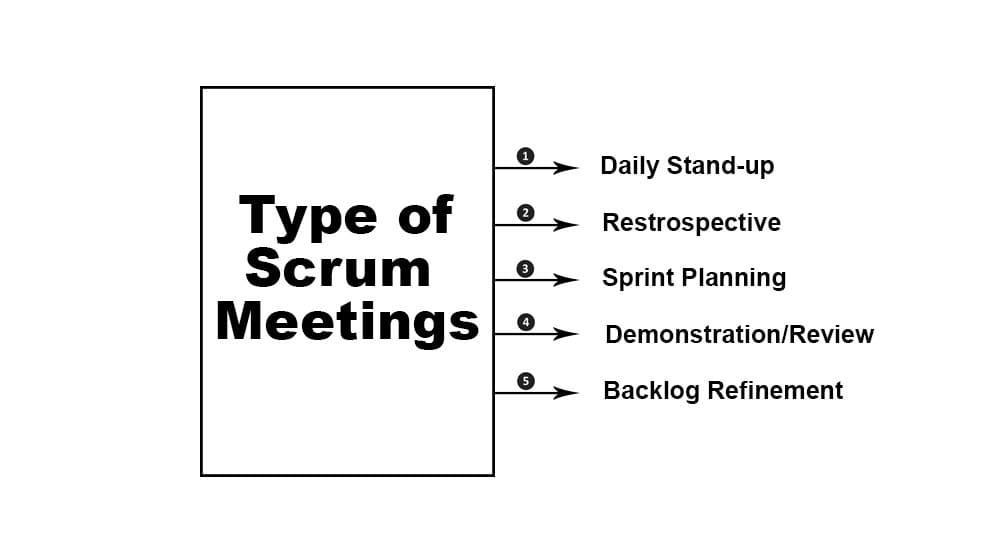
In Agile projects, you can encounter the following Scrum meetings:
Daily Scrum
The Daily Scrum, also called the Scrum Huddle or stand-up, is a short 15-minute meeting held every day. It helps the Scrum team stay in sync, keep things moving, and catch problems early. In this meeting, team members answer three simple questions:
- What did I do yesterday?
- What will I do today?
- What’s in my way?
This chat isn’t for reporting to a boss—it’s for the team to plan, commit, and support each other. If deeper discussion is needed, it happens after the stand-up in the “parking lot.” Anyone on the team can lead it.
The goal is to keep things focused, build trust, and uncover blockers quickly so the Scrum Master can jump in and help. It connects yesterday’s work with today’s plan and any roadblocks.
This keeps the workflow smooth, avoids surprises, and boosts team visibility—just like a Kanban board. Face-to-face talk keeps things clear and fast.
Benefits of Daily Scrum
- Keeps the team aligned: Everyone knows what others are working on and where things stand.
- Improves communication: It encourages quick, daily face-to-face (or virtual) check-ins to stay connected.
- Identifies blockers early: Team members share what’s slowing them down, so the Scrum Master or others can step in quickly.
- Promotes accountability: Saying what you did yesterday and what you’ll do today builds trust and encourages follow-through.
- Supports planning and focus: Helps the team stay on track and focused on sprint goals.
- Encourages collaboration: Team members can offer help or adjust plans if someone is stuck.
- Boosts visibility: Stakeholders and team leads get regular updates without needing long status reports.
Sprint Planning
Sprint planning (iteration planning) is a meeting where the whole Scrum team gets together to plan the next sprint. This includes the Product Owner, Scrum Master, and the development team. The goal is to agree on what work will be done and how it will be done in the upcoming sprint.
The team reviews the product backlog, picks top priorities, and sets a clear sprint goal. These items become part of the sprint backlog. The team breaks them down into tasks, checks how much work they can handle (based on capacity), and assigns tasks fairly to avoid burnout.
Two main questions are answered:
- What needs to be done?
- How will we do it?
The Product Owner explains the work and clears up doubts. The developers estimate tasks and define what “done” means (Definition of Done). The Scrum Master runs the meeting. This planning ensures everyone is aligned and ready to start strong.
Benefits of Scrum Planning
- Clear goals: The team sets a clear sprint goal, so everyone knows what to focus on during the sprint.
- Better focus: Helps the team avoid distractions by deciding what work will be done upfront.
- Improved task clarity: Breaks down prominent features into smaller, doable tasks that are easy to understand.
- Team alignment: Everyone on the Scrum team (Product Owner, Scrum Master, and Developers) agrees on what’s to be done and how.
- Workload balance: Helps manage team capacity so no one is overloaded, reducing burnout and poor quality.
- Encourages commitment: Since the team helps choose the work, they feel more responsible and committed to completing it.
- Minimizes surprises: Planning reduces last-minute confusion or missed work.
Sprint Retrospective
A Sprint Retrospective is a casual team meeting to review and improve the team’s work after each sprint. It’s all about asking, “How can we work better?” and “What can we improve?” The goal is to improve the product and the process over time.
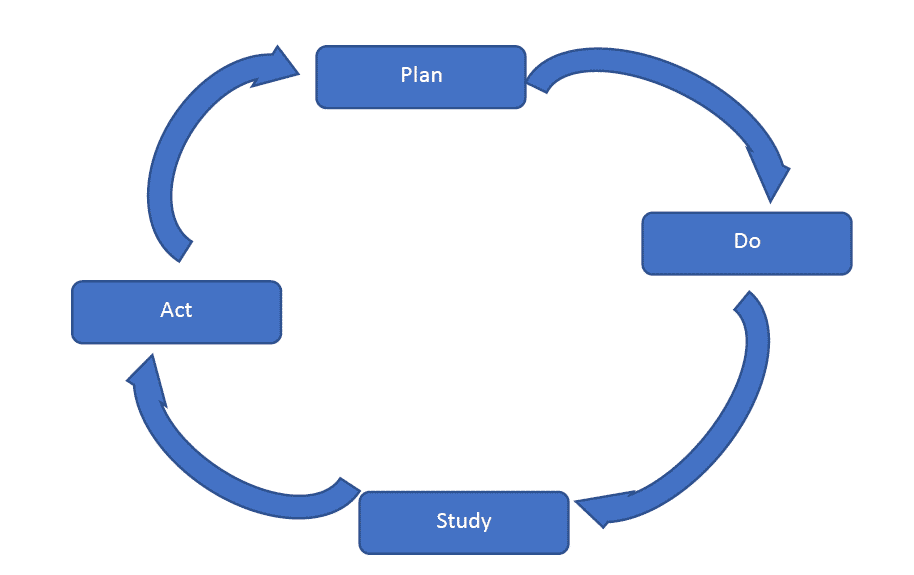
This meeting is not about blame—it is about learning and growing. It’s a chance to inspect what went well, what didn’t, and what can be done differently next time. The team sets small goals and experiments with new ways of working. It’s like the kaizen idea of continually improving, using the plan-do-study-act (PDSA) model.
Held every two weeks (or at the end of each sprint), it helps prevent knowledge loss, especially when a subject matter expert shares insights. The retrospective can also tackle quality issues through a root cause analysis based on customer feedback. In short, it keeps the team improving with each sprint.
Benefits of Sprint Retrospective
- Continuous improvement: This helps the team reflect on what went well and what didn’t, so they can improve in the next sprint.
- Faster problem-solving: Identifies issues early and allows the team to fix them before they grow.
- Boosts morale: Everyone gets a voice, which makes team members feel valued and heard.
- Reduces waste: Helps eliminate unproductive habits, delays, or repeated mistakes.
- Encourages experimentation: Teams can try new ideas and measure what works best.
- Supports organizational learning: Captures lessons learned that help the whole organization grow.
- Strengthens accountability: Action items created in retrospectives drive real change and keep the team on track.
Sprint Review (Demonstration)
A Sprint Review, also called a demo, happens at the end of every sprint. In this meeting, the Scrum team shows the new features they’ve added to the product. It’s a great chance to get feedback from stakeholders like clients, users, or managers.
The team walks everyone through the working version of the software. This helps everyone see what’s been done, what’s working well, and what might need changes. Positive feedback means things are on track, while negative feedback helps spot issues early before they become big problems.
This regular demo distinguishes Agile from older methods like Waterfall. Instead of waiting months, teams get fast feedback and adjust quickly. It also helps catch risks and new ideas early.
After the demo, the team holds a Sprint Retrospective to improve their work. The Sprint Review helps build a better product by keeping everyone involved and focused on real results.
Benefits of Sprint Review
- Gets real-time feedback: Stakeholders see the product and can give immediate input on what works and doesn’t.
- Keeps everyone aligned: The team and stakeholders stay on the same page about progress, priorities, and goals.
- Validates progress: Demonstrating a working product shows the team delivers value every sprint.
- Helps spot issues early: Regular reviews help catch problems, gaps, or changes in direction before it’s too late.
- Builds trust with stakeholders: Open demos create transparency and show steady progress, building team confidence.
- Encourages collaboration: Stakeholders feel involved and are more likely to support the project.
- Guides future planning: The feedback helps the Product Owner adjust the backlog and prioritize better for upcoming sprints.
Backlog Refinement
Backlog Refinement, or Look-ahead Planning, is a meeting where the Product Owner and the team review and prepare user stories for the next sprint. It’s about ensuring each task is clear, detailed, and ready to work on. This is when the team defines Ready (DoR), a checklist to know if a story is good to go.
It’s not an official Scrum ceremony, but it’s super helpful. It helps spot missing info, resource gaps, or blockers early, which saves time later. It also finds links between tasks so the team can plan and prioritize better.
By doing this ahead of time, sprint planning becomes faster and smoother. However, if not managed well, it can distract the team from their current work, so timing and focus matter.
Backlog refinement reduces delays and confusion and keeps the team moving forward with fewer surprises. It’s a small step that makes a big difference.
Benefits of Backlog Refinement
- Prepares work in advance: Breaks down and clarifies user stories to help the team prepare for upcoming sprints.
- Defines the Definition of Ready (DoR): Ensures each backlog item meets the criteria to be picked up in a sprint.
- Saves time in sprint planning: Well-refined items speed up planning meetings since less clarification is needed.
- Uncovers missing information early: It helps spot gaps in requirements, dependencies, or resource needs before they cause delays.
- Improves task estimates: The team can give better time and effort estimates with clearer stories.
- Supports better prioritization: It makes ranking tasks based on value, risk, or urgency easier.
- Reduces waste: Avoid waiting or rework by getting things ready.
FAQ
Q1: Who Leads the Scrum Meeting?
The Scrum Master ensures the Scrum meeting happens regularly, but anyone on the team can lead it. It doesn’t always have to be the Scrum Master—sometimes, the Product Owner or a team member may run the meeting.
Q2: What is the Best Time for Daily Scrum Meetings?
The best time for the daily Scrum is in the morning. It helps the team plan their work for the day and clear up any questions from the previous day before getting started.
Q3: What are the Different Types of Scrum Meetings?
There are five main Scrum meetings:
- Daily Stand-up (or Daily Scrum)
- Sprint Planning
- Sprint Review (Demonstration)
- Sprint Retrospective
- Backlog Refinement (Look-ahead Planning)
Summary
Meetings are a key way to communicate in project management. In Agile Scrum, meetings help teams stay flexible, reduce waste, and work more effectively. They’re essential for successful software development because they boost teamwork, keep everything transparent, and encourage constant improvement.
Agile meetings work best when everyone actively participates, sticks to time limits, and uses visual tools like Kanban boards and burndown charts to track progress.
Further Readings:
- Agile Vs Scrum
- Five Scrum Events or Ceremonies for Beginners
- Waterfall Vs Agile Vs Scrum Vs Kanban
- Scrum Vs Extreme Programming
- 21 Best Free Scrum Tools for Agile Projects
References:

I am Mohammad Fahad Usmani, B.E. PMP, PMI-RMP. I have been blogging on project management topics since 2011. To date, thousands of professionals have passed the PMP exam using my resources.