In project management, you have six main constraints: Scope, Time (Schedule), Cost (Budget), Quality, Resources, and Risk. Quality is one of these key constraints, and it directly impacts project success. You must deliver a high-quality outcome to your client because if the product quality is poor, the project cannot be considered successful.
A quality management plan (QMP) helps project teams define what quality means for their deliverables and set clear steps to ensure that the standard is met. It guides the process, reduces errors, and improves customer satisfaction.
In today’s blog post, we will explore quality management in project management and explain how it helps you achieve consistent, reliable results that meet client expectations.
What is a Quality Management Plan?
Quality management in project management is about making sure that a project delivers results that meet agreed standards and satisfy the client. It focuses on preventing errors, checking progress, and improving processes to ensure reliable and valuable outcomes. Quality management plays a central role in project success.
A quality management plan sets the rules and processes for maintaining standards. It defines what quality means for the project, how the team will measure it, and what actions they will take to achieve it. For example, you may use checklists, audits, or reviews at different stages to track whether project deliverables match the required standards.
Quality management ensures that resources are used effectively. By focusing on doing things right the first time, the team avoids rework, saves time, and controls costs. Clear communication and stakeholder involvement are also key parts of quality management, because they help align expectations and reduce misunderstandings.
A quality management plan guides the team to produce high-quality deliverables consistently. It creates trust with clients, improves efficiency, and ensures that the project meets its goals successfully.
Importance of a Quality Management Plan in Project Management
A quality management plan is a vital tool in project management because it ensures the final deliverables meet both client expectations and industry standards. Below are five key reasons why having such a plan is important.

1. Defines Quality Standards Clearly
A quality management plan helps set clear, measurable definitions of quality for the project. By explaining exactly what standards the deliverables must meet, it prevents confusion, avoids mismatched expectations, and ensures that the whole team is working toward the same goal.
2. Improves Team Efficiency and Productivity
When processes, checks, and guidelines are defined in advance, the project team avoids unnecessary errors, duplication of effort, and costly rework. This proactive clarity saves time, reduces wasted resources, and allows the team to focus on producing high-quality outcomes efficiently.
3. Ensures Compliance With Rules and Standards
Many industries have strict regulations, certifications, or quality benchmarks. A quality management plan ensures projects remain compliant by including methods for meeting these requirements, avoiding penalties, and keeping deliverables aligned with both internal policies and external legal or regulatory standards.
4. Identifies Problems at an Early Stage
The plan builds in regular monitoring and review steps, making it easier to catch potential issues early. This allows teams to take preventive or corrective actions immediately, reducing risks, saving costs, and keeping the project on track from start to finish.
5. Increases Client Trust and Satisfaction
A project that delivers consistent, high-quality results builds confidence with clients and stakeholders. When clients see quality standards being carefully managed, it reassures them that their investment is in safe hands, strengthening trust, improving satisfaction, and boosting organizational reputation.
Roles of Stakeholders in Developing and Maintaining the Quality Management Plan
The roles of stakeholders in the quality management plan through the project life cycle are as follows:
Project Managers lead the process by defining quality objectives and aligning them with project goals. They make sure that the QMP covers all six project constraints and provides a framework for delivering high-quality results.
Team Members contribute by sharing technical expertise and identifying potential risks or quality issues. Their feedback ensures that the plan is realistic and can be applied effectively during execution. They are also responsible for following quality guidelines and documenting results.
Clients provide requirements and expectations that set the standard for quality. Their input defines what “success” looks like and helps shape the criteria for measuring deliverables. Continuous client involvement ensures the project stays aligned with expectations.
Quality Assurance Specialists design and oversee quality control processes, such as audits, reviews, and inspections. They ensure compliance with standards and recommend corrective or preventive actions whenever necessary.
Suppliers and Vendors also influence quality by providing reliable materials or services. Their adherence to agreed standards impacts the overall success of the project.
Finally, Senior Management and Sponsors support the QMP by providing resources, approving policies, and reinforcing a culture of quality. Their commitment ensures the plan remains active, updated, and sustainable across projects.
How to Create a Quality Management Plan for a Project in Five Steps

You can follow the following five steps to develop a robust quality management plan for your project:
Step 1: Define Quality Standards
The first step is to define what quality means for your project clearly. This involves working with stakeholders to understand client expectations, industry regulations, and organizational policies. Document measurable quality criteria, such as performance levels, compliance benchmarks, or customer satisfaction targets.
When these standards are written down and agreed upon, the project team knows exactly what they are aiming for. This shared understanding prevents confusion, aligns the team, and ensures the project remains focused on delivering the right outcomes.
Step 2: Assign Roles and Responsibilities
Once standards are clear, the next step is assigning roles to ensure quality is maintained. The project manager usually leads, while quality specialists conduct audits, and team members follow set processes. Clients provide input and feedback to validate deliverables. By assigning responsibilities early, everyone knows their role in meeting quality expectations.
This avoids misunderstandings, builds accountability, and ensures that no important task is overlooked. Clearly defining responsibilities also helps the team coordinate better and address issues before they escalate into bigger problems.
Step 3: Establish Quality Assurance Processes
Quality assurance (QA) focuses on creating the right processes to prevent errors from the beginning. This includes setting up training programs, conducting internal audits, reviewing documentation, and applying checklists or templates. QA ensures that the team consistently follows proven methods that meet quality standards. Instead of fixing mistakes later, assurance prevents them from happening at all.
These processes give confidence to stakeholders that the project is being managed carefully. They also make work more efficient by reducing rework, saving time, and minimizing wasted resources.
Step 4: Implement Quality Control Measures
While QA prevents problems, quality control (QC) identifies and corrects them. QC involves inspecting outputs, testing deliverables, and checking whether work meets defined standards. Examples include reviewing reports, testing software features, or auditing finished tasks. When issues are found, corrective or preventive actions are applied to fix them.
This ensures the final product meets client requirements. Regular control checks reassure clients that quality is under constant review. QC creates a safety net that catches problems before final delivery, ensuring the project achieves its objectives successfully.
Step 5: Monitor, Report, and Improve
A QMP should not remain static; it must evolve as the project progresses. Continuous monitoring ensures that standards are maintained at every stage. Teams should report progress regularly, collect stakeholder feedback, and identify areas where processes can be improved.
By updating the plan and adapting to lessons learned, the project stays aligned with quality goals. This step also builds long-term improvement, as knowledge from one project can be applied to future ones. Regular monitoring and improvements make the QMP a living framework that ensures ongoing success.
Quality Control Templates
Now, I will provide you with three templates you can use in quality management:
Template 1. Quality Control Checklist

This quality control checklist template helps track project tasks against defined standards. Each row lists a task, its required quality standard, and the status.
For example, “Inspect materials” must meet ISO standards, and the status shows “Pass.” It ensures consistency, compliance, and clear documentation of quality checks.
Template 2. Quality Control Process Flow

This quality control process flow template outlines five steps: plan, inspect, test, record, and approve or reject.
You can start by creating inspection checklists, reviewing supplier shipments, performing stress tests, documenting results, and finally deciding approval. It ensures products meet standards before production, reducing risks and improving overall quality outcomes.
Template 3. Quality Control Report Summary
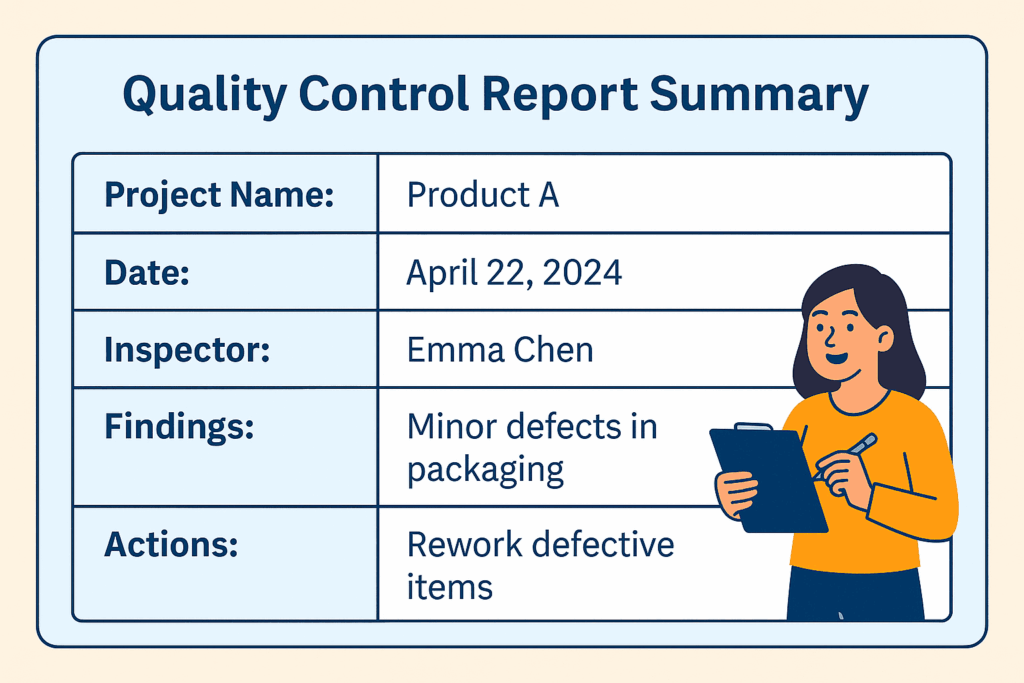
This quality control report summary records key inspection details. It includes the project name, date, inspector, findings, and actions.
In this example, Product A inspected on April 22, 2024, showed minor packaging defects. The inspector recommended reworking defective items. Such summaries help track issues, ensure accountability, and guide corrective measures.
Example of a Quality Management Plan
Now I will provide an example of a quality management plan for a Mobile Banking App Development:
1. Project Information
- Project Name: Mobile Banking App Development
- Project Manager: Sarah Lee
- Client: XYZ Bank
- Start Date: March 1, 2025
- End Date: December 15, 2025
2. Quality Objectives
- Deliver a mobile app that meets all functional requirements.
- Ensure compliance with ISO 9001 standards.
- Achieve at least a 95% defect-free rate in final release testing.
- Provide a user-friendly interface with customer satisfaction scores above 90%.
3. Quality Standards
- Follow Agile methodology with bi-weekly sprints and reviews.
- Apply coding standards as per industry best practices.
- Meet all security guidelines for financial applications.
- Deliverables must pass the acceptance criteria defined in the requirements document.
4. Roles and Responsibilities
- Project Manager: Oversees quality planning and ensures compliance.
- Development Team: Writes code according to standards and performs unit testing.
- Quality Assurance Team: Conducts audits, reviews, and system testing.
- Client Representatives: Participate in sprint reviews and provide feedback.
5. Quality Assurance Activities
- Conduct peer code reviews at the end of each sprint.
- Organize monthly internal audits to ensure compliance with standards.
- Provide training sessions on secure coding and testing practices.
6. Quality Control Activities
- Perform functional, performance, and security testing.
- Track and document all defects in the issue tracker.
- Conduct final user acceptance testing with client stakeholders.
7. Continuous Improvement
- Review lessons learned after each sprint.
- Update processes based on client feedback.
- Document best practices for future projects.
Summary
A quality management plan is an essential tool for delivering successful projects. It sets clear quality standards, assigns responsibilities, and outlines assurance and control processes that guide the team at every stage. By following the plan, you can prevent errors, ensure compliance, and produce reliable deliverables that meet client expectations.
A well-designed quality plan also improves efficiency, reduces costs, and strengthens trust with stakeholders. It ensures that quality is not left to chance but managed proactively. With a strong quality management plan, every project has a greater chance of long-term success.
Further Reading:
- A Few Quality Management Plan Examples?
- Quality Assurance vs Quality Control
- Quality Control vs Verify Scope
- Grade versus Quality
- A Short Guide on the Seven Basic Quality Tools
References:

I am Mohammad Fahad Usmani, B.E. PMP, PMI-RMP. I have been blogging on project management topics since 2011. To date, thousands of professionals have passed the PMP exam using my resources.