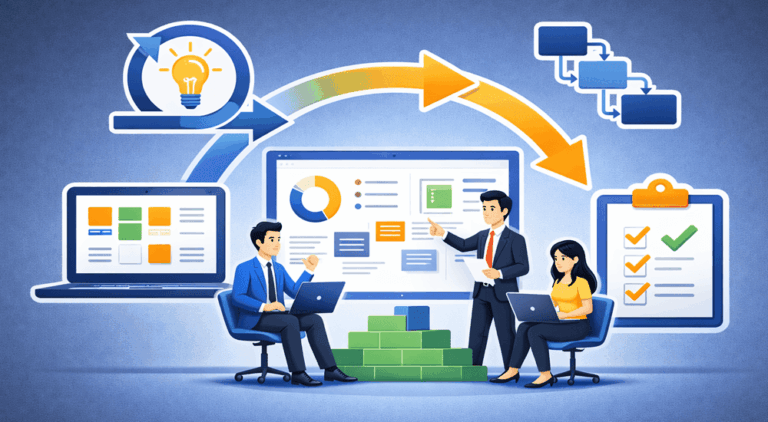
Vendor management software (VMS) lets you manage suppliers, track their performance, and mitigate risks. You often work with multiple vendors simultaneously, making manual tracking difficult. A robust VMS streamlines onboarding, centralizes contracts, enhances compliance, and ensures accurate and timely payments.
The right software also supports risk management by identifying weak points in supply chains before they become problematic. It helps you improve efficiency and control costs while maintaining strong relationships with vendors.
In this blog post, I will review the top 10 best vendor management software providers. Each section explains the company’s key features, strengths, and who it suits best.
By the end, you’ll know exactly which solution fits your business needs and how to evaluate vendor management systems.
What is Vendor Management Software?
Vendor management software is a digital tool that helps organizations manage every stage of supplier relationships. From onboarding to payments, it brings transparency and control into procurement.
Key functions include:
- Onboarding: Collects vendor data, compliance documents, and certifications in one place.
- Contract Management: Stores and monitors agreements to prevent missed deadlines or renewal risks.
- Performance Tracking: Evaluates vendors using KPIs like delivery time, quality, and cost efficiency.
- Risk Management: Identifies issues such as non-compliance, financial instability, or security risks.
- Compliance: Ensures suppliers follow rules and industry regulations.
- Payments: Manages invoices and reduces duplicate or late payments.
Benefits include:
- Cost savings through automation.
- Better compliance and reduced legal risk.
- Stronger supplier relationships built on transparency.
- Improved efficiency through centralized processes.
Example: An automaker sourcing steel from multiple suppliers can track delivery schedules, quality standards, and costs using a VMS dashboard, reducing delays and risks.
Key Features to Look For
When selecting a vendor management system, it is crucial to prioritize features that streamline workflows, enhance compliance, and mitigate risk. These features help businesses save time, cut costs, and build stronger relationships with vendors. A good system ensures that everything, from onboarding to payments, is smooth and efficient.
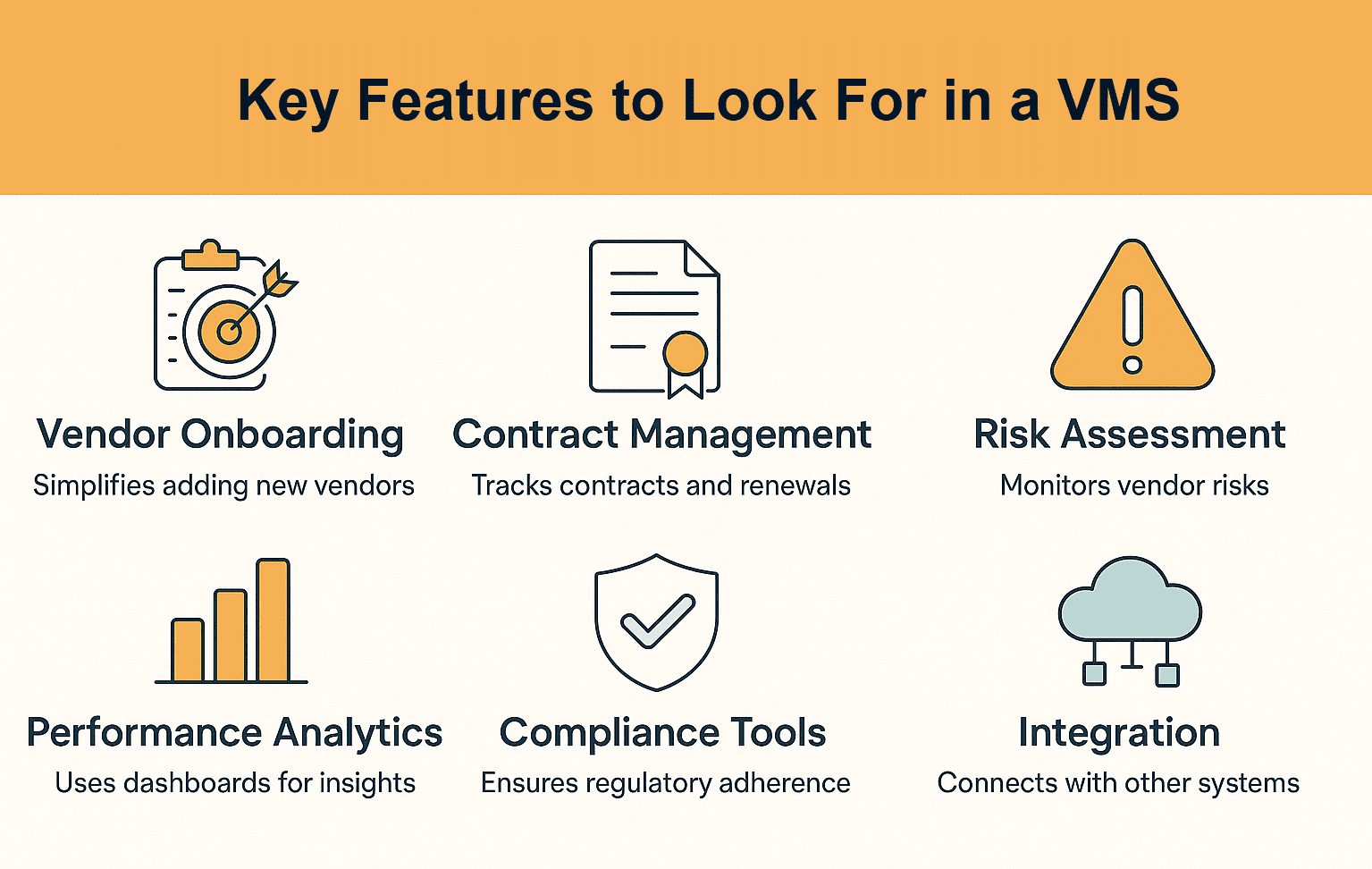
You should look for the following features in a VMS:
- Vendor Onboarding: Streamlines the process of adding new vendors by collecting compliance documents, certifications, and tax forms in a single, secure location.
- Contract Management: Keeps contracts centralized, tracks deadlines, and ensures renewals are managed on time without delays or unexpected interruptions in agreements.
- Risk Assessment: Identifies risks by monitoring vendor stability, compliance issues, and other potential threats that could disrupt supply chains or services.
- Performance Analytics: Provides dashboards and detailed reports to track key performance metrics, including quality, delivery times, costs, and overall vendor reliability, with transparency.
- Compliance Tools: Ensures vendors adhere to laws, policies, and industry standards, thereby reducing the likelihood of legal issues or costly non-compliance problems later.
- Integration: Connects seamlessly with ERP, procurement, and accounting tools, enabling smooth data sharing, better workflows, and less duplicate work across systems.
By focusing on these features, businesses can choose a vendor management system that offers control, efficiency, and long-term supplier success.
Top 10 Best Vendor Management Software Providers
Now, I will provide you with the top ten most popular vendor management software options.
Let us get started.
1. SAP Fieldglass
SAP Fieldglass is one of the most recognized vendor management systems globally. Launched in 1999 and acquired by SAP in 2014, it specializes in managing contingent labor, external workforce, and vendor-related procurement processes.
The platform provides advanced tools for contract management, compliance, and analytics. It helps large organizations streamline supplier relationships, reduce risks, and maintain visibility across their global workforce. SAP Fieldglass is widely used across industries that require scalable, enterprise-level vendor and workforce management.
Key Features:
- Workforce management with detailed vendor tracking
- Advanced reporting and analytics
- End-to-end contract lifecycle management
- Compliance monitoring for global regulations
- Smooth integration with SAP ERP and procurement systems
Pros
- Robust capabilities for large enterprises
- Strong focus on compliance and risk management
- Excellent scalability for multinational corporations
Cons
- Complex user interface for beginners
- Requires significant training and onboarding
- Pricing may be high for smaller organizations.
Ideal Users: Large enterprises, especially global corporations managing thousands of vendors and contingent workers. It works well in industries like manufacturing, finance, and energy.
Pricing: SAP does not list public pricing. Costs depend on the organization’s size and the specific features required.
Click here to visit SAP Fieldglass
Customer Reviews: Many users highlight the solution’s ability to streamline external workforce management and compliance. However, the steep learning curve can be a drawback for first-time users.
2. Coupa
Coupa is a cloud-based spend management platform that offers powerful vendor management capabilities. It provides tools for procurement, expense management, and supply chain optimization, enabling organizations to control costs and enhance visibility.
The system utilizes AI-driven insights to support informed decision-making, streamline compliance, and automate processes such as invoicing and supplier tracking. With strong integration features and a user-friendly interface, Coupa is widely adopted by mid-sized and large enterprises across multiple industries.
Key Features:
- Real-time spend visibility
- Supplier risk monitoring
- Invoice automation
- AI-driven insights and recommendations
- Integration with ERP systems like Oracle, SAP, and Workday
Pros:
- User-friendly interface
- Excellent reporting and AI-driven insights
- Strong compliance and cost-control tools
Cons:
- Customization can be limited
- Pricing is not transparent
- It may be too advanced for small businesses
Ideal Users: Mid-sized to large businesses seeking an all-in-one procurement and vendor management system. Especially useful for industries with heavy compliance needs.
Pricing: Coupa offers custom pricing based on modules and organization size.
Customer Reviews: Users love its intuitive dashboard and reporting capabilities. However, some note that integration with third-party apps can be tricky.
3. GEP SMART
GEP SMART is an AI-powered procurement and vendor management solution designed for global organizations. It offers unified tools for sourcing, procurement, and vendor lifecycle management, allowing businesses to streamline supplier collaboration and improve decision-making.
Built as a cloud-native and mobile-friendly platform, it provides contract management, risk dashboards, and advanced analytics. With AI-driven insights, GEP SMART helps enterprises enhance compliance, reduce risks, and optimize procurement performance across complex, global supply chains.
Key Features
- AI and machine learning for predictive analytics
- Cloud-native and mobile-friendly
- Contract lifecycle management
- Supplier collaboration platform
- Risk and compliance dashboards
Pros
- Mobile accessibility for on-the-go management
- Powerful AI-driven insights
- Easy integration with ERP and supply chain tools
Cons
- It can feel overwhelming for small businesses
- Advanced analytics may require training
- Customer support response times vary
Ideal Users: Enterprises seeking AI-powered procurement and vendor tools. Well-suited for industries like healthcare, retail, and logistics.
Pricing: Based on organizational needs. GEP provides custom quotes.
Customer Reviews: Highly rated for its AI capabilities and usability. Users appreciate the intuitive interface, but sometimes mention longer onboarding times.
4. Ivalua
Ivalua is a global procurement and vendor management platform designed to handle complex supplier relationships. Founded in 2000, it now serves major corporations worldwide. The system offers supplier risk management, performance tracking, spend analysis, and contract lifecycle management.
With strong customization options, it adapts to diverse industry needs and supports global compliance. Ivalua is praised for its scalability and flexibility, making it an ideal solution for enterprises seeking robust vendor and procurement management tools.
Key Features
- Unified procurement platform
- Supplier risk and performance management
- Advanced contract management
- Spend analytics and dashboards
- Supplier collaboration tools
Pros
- Flexible and highly customizable
- Strong analytics and reporting
- Focus on strategic supplier management
Cons
- Implementation can take time
- It may be costly for smaller businesses
- Requires training to maximize features
Ideal Users: Enterprises looking for strategic supplier management and complete procurement solutions.
Pricing: Custom-based, depending on modules and integrations.
Customer Reviews: Praised for its customization and flexibility. Some users note a steep learning curve, but appreciate the depth and breadth of its features.
5. Oracle Procurement Cloud
Oracle Procurement Cloud is part of Oracle’s enterprise cloud applications suite. It focuses on streamlining procurement and vendor management for enterprises, offering end-to-end automation of sourcing, purchasing, and supplier processes. The platform centralizes supplier information, manages contracts, and ensures compliance with organizational policies.
With strong integration across Oracle ERP it provides real-time insights, improves efficiency, and reduces risks. Large enterprises value Oracle Procurement Cloud for its scalability, governance, and seamless procurement-to-pay workflows.
Key Features
- Centralized supplier management
- End-to-end procurement process automation
- Advanced contract lifecycle management
- Supplier risk and compliance monitoring
- Integration with Oracle ERP Cloud
Pros
- Seamless integration with Oracle products
- End-to-end procurement automation
- Reliable compliance and governance tools
Cons
- Best for existing Oracle users
- Customization can be complex
- Higher cost for smaller businesses
Ideal Users: Large enterprises already using Oracle systems, especially in finance, manufacturing, and technology sectors.
Pricing: Subscription-based, varies by company size and needs.
Click here to visit Oracle Procurement
Customer Reviews: Known for its scalability and efficiency. Users praise the seamless integration with Oracle but mention the setup process as challenging.
6. Precoro
Precoro is a straightforward, cost-effective vendor management and procurement system designed for small to medium-sized businesses. It simplifies vendor onboarding, purchase order creation, and approval workflows, helping companies save time and reduce manual work.
The platform also provides expense tracking, reporting tools, and real-time budget visibility. With its cloud-based design and user-friendly interface, Precoro is ideal for growing businesses seeking affordable automation to streamline procurement and vendor management without the complexity of enterprise systems.
Key Features
- Vendor onboarding and catalog management
- Purchase order automation
- Approval workflows
- Expense tracking and reporting
- Cloud-based with mobile support
Pros
- Affordable for SMEs
- Intuitive and user-friendly interface
- Strong customer support
Cons
- Limited advanced features
- Not designed for large enterprises
- Fewer integrations compared to bigger players
Ideal Users: Small to mid-sized businesses looking for a simple, budget-friendly system.
Pricing: Starts at around $499 per user per month (visit pricing page).
Customer Reviews: Users love its simplicity and affordability. Some note that larger enterprises may outgrow their capabilities.
7. Kissflow Procurement Cloud
Kissflow Procurement Cloud offers a flexible, no-code platform for procurement and vendor management. It helps businesses automate workflows without needing IT support, making adoption faster and easier. The system supports vendor onboarding, contract management, purchase orders, and invoice automation.
With integration capabilities for major ERP systems, Kissflow ensures smooth data flow and better collaboration. Its no-code design makes it especially appealing for mid-sized businesses seeking simplicity, speed, and customizable procurement automation without heavy technical resources.
Key Features
- Vendor onboarding and contract management
- No-code workflow automation
- Purchase order and invoice automation
- Integration with ERPs like SAP and Oracle
- Mobile accessibility
Pros
- Easy-to-use no-code design
- Quick deployment
- Strong focus on automation
Cons
- Limited customization for advanced users
- Pricing may be high for micro-businesses
- Not as feature-rich as enterprise solutions
Ideal Users: Mid-sized businesses looking for flexible and automated vendor management.
Pricing: Starts at around $2,500 per month (visit pricing page).
Click here to visit Kissflow Procurement
Customer Reviews: Users appreciate its no-code approach and fast deployment. Some feel it lacks deep reporting capabilities compared to larger platforms.
8. Jaggaer
Jaggaer is a global procurement and vendor management platform with a strong focus on research, healthcare, and higher education sectors. It provides comprehensive tools for suppliers onboarding, spend analytics, contract management, and risk monitoring.
With AI-driven insights and industry-specific solutions, Jaggaer helps organizations streamline procurement, enhance compliance, and increase visibility across their supply chains. Its customizable features make it highly adaptable, supporting institutions and enterprises that require advanced vendor management tailored to complex industry needs.
Key Features
- Supplier onboarding and lifecycle management
- Contract and risk management
- Industry-specific solutions
- AI-driven insights
- Spend analytics
Pros
- Highly customizable
- Strong analytics
- Good for specialized industries
Cons
- Complex setup
- Higher pricing than competitors
- It can feel overwhelming for new users
Ideal Users: Research institutions, universities, healthcare organizations, and global enterprises.
Pricing: Custom-based, depending on modules and industry needs.
Customer Reviews: Highly valued for its customization and industry-specific solutions. Some users find the learning curve steep.
9. Beeline
Beeline focuses on vendor and workforce management, particularly for contingent labor and services procurement. It provides organizations with tools to track external workers, monitor compliance, and manage vendor-related risks. The platform delivers powerful reporting dashboards, audit capabilities, and collaboration features for vendor networks.
With its emphasis on large-scale workforce oversight, Beeline is widely used by enterprises to streamline procurement, reduce risks, and gain visibility into contingent labor and vendor performance across global operations.
Key Features
- Workforce vendor tracking
- Compliance and audit tools
- Risk management
- Advanced reporting dashboards
- Vendor collaboration features
Pros
- Strong workforce vendor management
- Good compliance features
- Useful analytics and dashboards
Cons
- Best for large organizations
- Complex pricing structure
- Requires training for effective use
Ideal Users: Enterprises with large external workforce requirements.
Pricing: Custom pricing available.
Customer Reviews: Users highlight its strength in workforce vendor management, but note it can be complex for small businesses.
10. Gatekeeper
Gatekeeper is a modern vendor and contract management software designed to simplify supplier relationships and compliance. It provides businesses with centralized tools for vendor lifecycle management, contract tracking, and renewal reminders.
The platform also provides risk dashboards and compliance monitoring to ensure that suppliers meet the required standards. With its cloud-based design and intuitive interface, Gatekeeper helps small to mid-sized businesses streamline vendor management, mitigate risks, and maintain robust oversight of supplier contracts and obligations.
Key Features
- Cloud-based vendor lifecycle management
- Contract management and renewals tracking
- Compliance monitoring
- Vendor risk dashboards
- Integration with renowned ERP tools
Pros
- Easy-to-use interface
- Strong contract management tools
- Affordable compared to enterprise solutions
Cons
- Limited to large organizations
- Fewer advanced AI features
- May lack deep customization
Ideal Users: Small to mid-sized businesses seeking easy vendor and contract management.
Pricing: Offers tiered subscription pricing. Starts lower than enterprise solutions.
Click here to visit Gatekeeper
Customer Reviews: Praised for simplicity, ease of deployment, and contract tracking. Some larger enterprises feel that it lacks advanced reporting capabilities.
Comparison Table
The following table shows a quick comparison of these VMSs:
| Vendor | Key Features | Best Suited For | Pricing Model | Integrations |
| SAP Fieldglass | Workforce management, compliance, analytics | Large enterprises, global corporations | Custom quote | SAP ERP, Procurement |
| Coupa | Spend visibility, AI insights, and compliance | Mid-to-large enterprises | Custom pricing | SAP, Oracle, Workday |
| GEP SMART | AI analytics, mobile-friendly, and collaboration | Global enterprises, logistics, and healthcare | Custom pricing | ERP, Supply Chain |
| Ivalua | Customizable procurement, supplier analytics | Enterprises with complex supplier networks | Custom pricing | ERP, procurement tools |
| Oracle Procurement Cloud | End-to-end procurement automation, compliance | Enterprises using the Oracle ecosystem | Subscription-based | Oracle ERP, Fusion |
| Precoro | Simple onboarding, purchase automation | SMEs, growing businesses | From $35/user per month | Limited integrations |
| Kissflow Procurement Cloud | No-code automation, purchase orders, contracts | Mid-sized firms, flexible workflows | From $1,990/month | SAP, Oracle, ERPs |
| Jaggaer | Customizable, industry-focused procurement | Research, education, and healthcare | Custom pricing | ERP, analytics tools |
| Beeline | Workforce vendor management, compliance | Enterprises with large contingent labor | Custom pricing | ERP, HR systems |
| Gatekeeper | Contract tracking, vendor lifecycle tools | SMEs, mid-market firms | Tiered subscriptions | ERP, procurement tools |
How to Choose the Right Vendor Management Software
Choosing the right vendor management software depends on your business goals, budget, and industry needs. Start by defining what you want to achieve. Do you need better compliance, stronger supplier relationships, or faster contract processing? A clear goal makes selection easier.
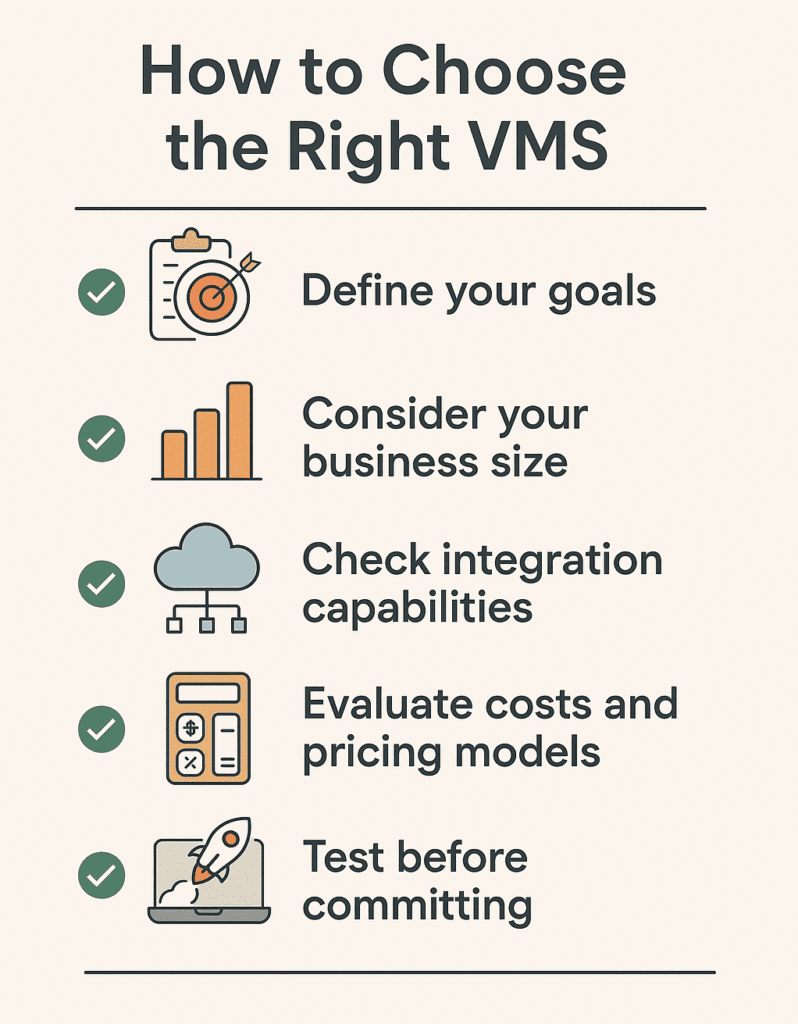
Consider your business size. Small and medium businesses may benefit from simple, cost-friendly platforms like Precoro or Kissflow. Large enterprises, especially those with global supply chains, need advanced systems such as SAP Fieldglass or Oracle Procurement Cloud.
Check integration capabilities. Your chosen software should work smoothly with your existing ERP, procurement, or accounting tools. Without integration, you risk duplicate work and poor data flow.
Look at compliance and risk features. Strong compliance tools protect you from legal and regulatory issues. Risk dashboards help you monitor supplier stability and avoid disruptions. Evaluate costs and pricing models. Some tools charge per user, while others have flat monthly fees or enterprise licenses. Compare pricing to your budget.
Finally, test before committing. Use free trials or demos to see how the system works for your team. Involve key stakeholders in testing to ensure it truly meets your needs.
FAQ
Q1. What is vendor management software?
Vendor management software is a tool that helps businesses onboard vendors, manage contracts, track performance, ensure compliance, and streamline payments.
Q2. Which is the best vendor management software for small businesses?
Precoro and Kissflow work well for small businesses. They are easy to use, affordable, and offer strong automation features without complex setup.
Q3. How does vendor management software reduce risk?
It identifies compliance gaps, monitors vendor stability, flags financial or legal risks, and ensures contracts are followed, helping prevent costly supply chain disruptions.
Q4. Is vendor management software expensive?
Prices vary by provider. Some tools start under $100 monthly, while enterprise systems like SAP Fieldglass and Coupa require custom pricing models.
Q5. Do all vendor management systems integrate with ERP?
Not all, but most leading vendors integrate with ERP and procurement platforms to support data sharing and improve workflow efficiency.
Summary
Vendor management software streamlines supplier management, making it simple, efficient, and reliable. From onboarding to payments, it reduces risks and builds stronger supplier relationships.
This article highlighted the top 10 providers, their features, pros and cons, and use cases. We also shared a comparison table and a checklist to help you select the right platform.
Now it’s your turn to match your unique needs with the best solution. Explore demos, compare features, and invest in a system that saves time, reduces risks, and enhances your procurement strategy.
Further Reading:

I am Mohammad Fahad Usmani, B.E. PMP, PMI-RMP. I have been blogging on project management topics since 2011. To date, thousands of professionals have passed the PMP exam using my resources.