Understanding the differences between audits and inspections is essential for organizations seeking strong compliance, safety, and continuous improvement. Many professionals confuse audit vs inspection vs assessment, which can lead to ineffective evaluations and missed risks.
An audit focuses on processes and systems, while inspections examine physical conditions and immediate compliance. Assessments, however, provide a broader view of performance, risks, and opportunities for improvement. Knowing the difference between audits and inspections helps teams choose the right method at the right time and avoid duplication of effort.
This blog post explains audits, inspections, and assessments in simple terms, provides practical examples, and shows how modern digital tools can improve accuracy, efficiency, and decision-making. By the end, you will confidently select the right evaluation approach.
Let’s get started.
What is an Audit?
An audit is a formal process that compares an organization’s processes, systems, or products to a standard. Auditboard’s definition notes that an audit is a systematic, independent, and documented process designed to evaluate compliance with international standards and to enhance quality, efficiency, and customer satisfaction. In practice, audits can be internal (conducted by your own employees) or external (performed by an accredited third-party). Combined audits review several management systems at once, and joint audits involve multiple auditing bodies working together.
Audits tend to be comprehensive. They may involve sampling records, interviewing staff, and reviewing documentation across departments. Because of their scope, audits take longer than inspections and often lead to official certification or detailed improvement plans. Organizations schedule them annually or at intervals set by regulators. While audits can feel burdensome, they provide a deep look into whether policies and processes work as intended.
What is an Inspection?
An inspection is more targeted. ISO 9000:2015 describes an inspection as the determination of conformity to specified requirements. In other words, an inspection checks that a specific process, piece of equipment, product, or facility meets set criteria. Unlike audits, inspections are often quick and occur on the shop floor or field site.
Inspections come in many forms. Safety inspections look for hazards such as faulty wiring, missing guards, or blocked exits. Equipment inspections ensure machines and vehicles stay in good working order. Quality control inspections verify that raw materials and finished products meet specifications. Environmental inspections check compliance with laws regulating water quality, emissions, and waste disposal. Health inspections examine food handling and hygiene practices in restaurants and hotels. Compliance inspections ensure organizations comply with building codes, tax rules, and other legal requirements. These checks may happen daily, weekly, or yearly, depending on the industry and risk.
What is an Assessment?
An assessment evaluates how well a system or process works. It goes beyond basic compliance to look at effectiveness and performance. Assessments may be quantitative or qualitative. Examples include:
- Performance assessments – managers or HR teams review employees’ skills, achievements, and contributions.
- Risk assessments – safety officers or consultants identify and prioritize hazards before accidents occur.
- Environmental impact assessments – specialists analyze how a project will affect air, water, soil, and wildlife.
- Educational assessments – teachers measure students’ knowledge and skills to guide instruction.
- Financial assessments – analysts evaluate an organization’s assets, liabilities, and cash flow to gauge its stability.
- IT security assessments – cybersecurity experts look for vulnerabilities in networks and applications.
Assessments vary widely in scope and timing. Some happen regularly, like annual performance reviews. Others are done after incidents or before major projects. The goal is to gather insights and recommendations, not just to tick a box.
Key Differences Between Audits, Inspections, and Assessments
Although audits, inspections, and assessments all aim to improve performance, they differ in purpose and approach. Audits take a big-picture view of management systems, evaluating whether processes meet standards and pointing out systemic improvements. Inspections focus on specific items or locations to confirm compliance and catch immediate hazards. Assessments sit somewhere in between; they can be narrow or broad depending on their objectives and often seek to measure effectiveness.
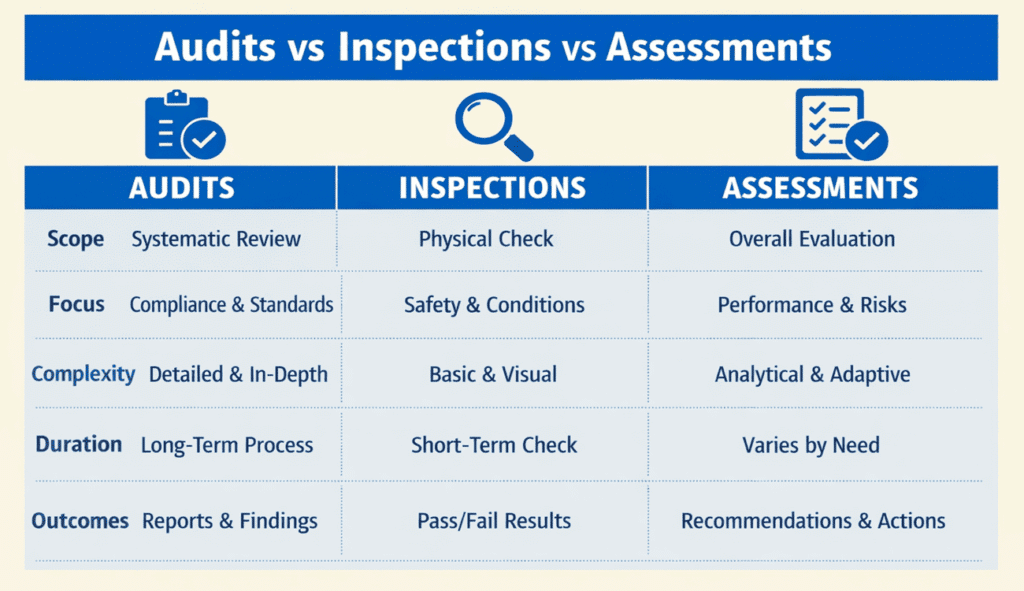
Audits are more complex and time-consuming than inspections. They may last several days and involve multiple departments. Inspections, by contrast, are often completed during a single site visit. Assessments vary: a quick risk assessment might take an afternoon, while an environmental impact assessment can span months.
The outcomes also differ. Inspections produce checklists showing conformities and non-conformities, prompting immediate corrections. Audits yield detailed reports with recommendations and, sometimes, certifications. Assessments deliver evaluations or scores that guide strategic decisions or future improvements.
Why Digitalize Your Evaluation Processes?
Manual paperwork and spreadsheets make it hard to schedule audits, track inspections, and maintain consistent assessments. Cloud-based solutions streamline these tasks and provide real-time insights. The audit software market illustrates this trend. According to Global Market Insights, the global audit software market was valued at USD 3.1 billion in 2024 and is forecast to reach USD 9.7 billion by 2034 at a compound annual growth rate (CAGR) of 12.4%. Businesses are embracing audit software to automate workflows, reduce manual errors, and support remote collaboration.
Digital tools help in several ways:
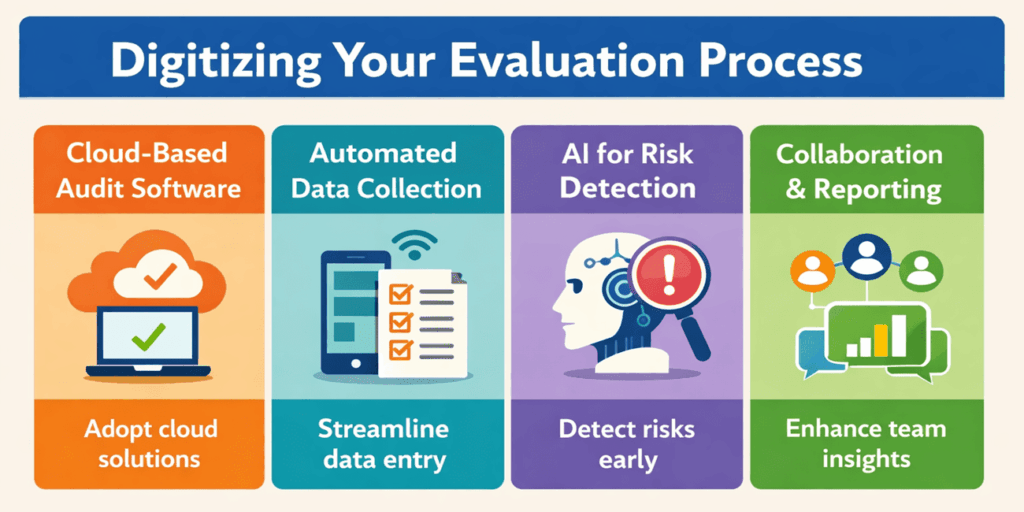
- Adopt cloud-based software – cloud platforms allow teams to access forms and checklists anywhere, even offline. They eliminate version-control issues and simplify updates.
- Automate data collection – mobile apps with built-in checklists capture photos, signatures, and GPS coordinates, cutting down on transcription errors.
- Integrate AI for risk detection – modern platforms leverage AI and analytics to flag anomalies and predict hazards, enabling proactive interventions.
- Enhance collaboration and reporting – digital systems store results in one place, enabling managers to generate reports, assign tasks, and monitor progress in real time.
The Role of Inspections in Workplace Safety and Compliance
Regular inspections protect workers and save money. The U.S. Occupational Safety and Health Administration (OSHA) reports that it conducted 34,625 federal inspections in fiscal year 2024, including 17,455 unprogrammed inspections triggered by complaints, injuries, or referrals and 17,170 programmed inspections targeting high-risk industries. These visits uncover hazards and help organizations address them before accidents occur. The data also show that programmed inspections have increased compared with earlier years, reflecting a stronger regulatory focus on proactive safety.
Failing to conduct inspections can lead to costly fines and reputational damage. For example, regulators fined one health system $800,000 in 2025 for improper access to electronic patient records. Staying ahead through regular inspections and strong data governance reduces such risks.
Choosing the Right Approach
So when should you conduct an audit, schedule an inspection, or commission an assessment? The choice depends on your goals:
- Need to verify compliance with a standard or obtain certification? Plan an audit. Use external auditors when impartiality is essential.
- Want to spot hazards or defects quickly? Perform targeted inspections. Schedule them regularly and train staff to carry them out consistently.
- Looking to evaluate performance, effectiveness, or risks? Organize an assessment. Tailor the scope and methodology to your objectives.
In practice, organizations often use all three methods. Inspections feed data into audits and assessments, while audits reveal systemic issues that inspections may miss. Assessments help prioritize resources and shape strategic decisions. By understanding the distinctions, you can align each activity with your business needs.
FAQs
Q1. What’s the main difference between an audit and an inspection?
An audit reviews entire systems against standards and looks for systemic improvements, while an inspection checks specific items or areas for immediate compliance.
Q2. How often should inspections be performed?
It depends on the industry and risk. Some equipment requires daily checks, while environmental or compliance inspections might occur only a few times each year.
Q3. Why are digital audit tools becoming popular?
Digital tools automate data collection, enable remote collaboration, and provide real-time analytics. They also support emerging technologies like AI, helping teams work smarter.
Q4. Can inspections and audits be combined?
Yes. Some combined audits include inspections as part of a broader evaluation. Inspections also supply data that auditors use to identify trends and root causes.
Q5. Do assessments replace audits?
No. Assessments complement audits by measuring performance or risk. They can be quantitative or qualitative and help guide strategic decisions rather than merely check compliance.
Summary
Audits, inspections, and assessments each play a vital role in maintaining compliance, improving safety, and strengthening organizational performance. While inspections identify immediate issues, audits evaluate processes, and assessments provide broader performance insights. Understanding these differences helps teams select the right approach, avoid gaps, and drive continuous improvement. By combining these methods and adopting digital tools, organizations can enhance accuracy, streamline workflows, and make better decisions. Ultimately, a balanced evaluation strategy leads to stronger compliance, reduced risk, and sustained operational success.

I am Mohammad Fahad Usmani, B.E. PMP, PMI-RMP. I have been blogging on project management topics since 2011. To date, thousands of professionals have passed the PMP exam using my resources.