Finishing a project can feel like crossing the finish line. Before moving on, it helps to look back at the journey. A project postmortem (or project postmortem meeting) is a conversation held after a project wraps up. The team gathers to celebrate wins, reflect on what went well, and learn from challenges. By collecting feedback while the experience is fresh, leaders can improve workflows for the next project.
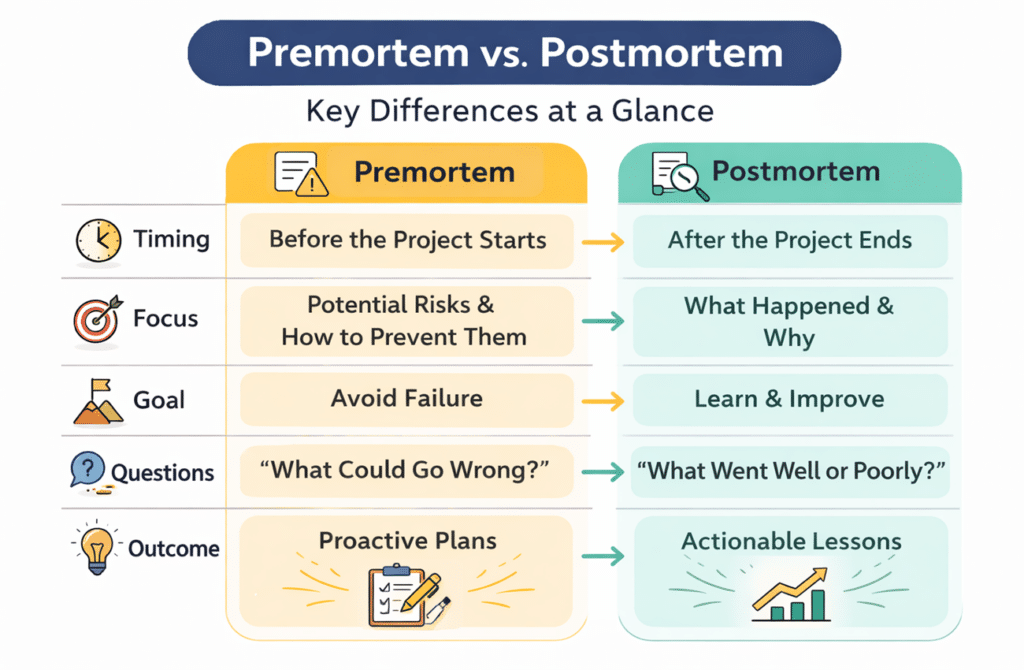
Postmortems go by many names, such as project recap, retrospective, debrief, wrap-up, or lessons-learned meeting. Each term points to the same goal: learning from experience. Unlike a premortem, which imagines problems before work starts, a postmortem looks at what actually happened.
Why Hold a Project Postmortem?
Project postmortem meetings are important because they help you learn from real project experiences. They provide a structured way to review what went well and what went wrong. This helps project teams avoid repeating the same mistakes in future projects. Postmortems also improve communication by allowing team members to share honest feedback in a safe environment. They highlight successful practices that can be reused, which improves efficiency and consistency.
In addition, project postmortem meetings support better decision-making by identifying root causes of issues. Over time, this leads to stronger processes and higher project success rates. By encouraging continuous improvement, project postmortems help teams grow, adapt, and deliver better results in every project.
Benefits for Remote and Hybrid Teams
With remote work widespread, postmortems help team members stay aligned. Scheduling reflection sessions ensures lessons are captured even when colleagues are dispersed. Encourage video participation so everyone can see body language and build rapport. Use collaborative tools that allow anonymous input before the meeting so quieter voices are heard. Remote teams often rely heavily on digital communication; postmortems provide a space to reset norms and fine-tune protocols.
Key Elements of a Successful Postmortem
Successful postmortems have several core ingredients:
- Open reflection: Create a safe space for honest feedback from everyone.
- Goal evaluation: Review whether the project met its objectives and key metrics.
- Timeline review: Compare planned vs. actual schedules and identify causes of delays.
- Root cause analysis: Look beyond surface issues to understand why problems occurred.
- Action items: Document clear, actionable improvements for the next project.
- Documentation: Record findings so the wider organization can learn and reference them.
Six Steps to Run an Effective Project Postmortem
Running a postmortem doesn’t need to be complicated. The following steps can guide your process:
- Schedule soon after the project ends. Set the meeting while memories are fresh. Aim for a few days after completion and block out an hour. Including the postmortem in your project plan ensures it isn’t overlooked.
- Send a pre-meeting survey. Ask team members what went well, what didn’t, and what could improve. Encourage them to list three positives and three pain points. Gathering input ahead of time surfaces common themes and helps set the agenda.
- Share the agenda. Circulate a brief outline so participants can prepare their thoughts. A sample agenda might include an introduction, shout-outs, discussion of positives and negatives, suggestions for next time, and a wrap-up.
- Assign roles. Appoint a moderator to guide the discussion and a note taker to record insights. Recording virtual meetings can help with reference later.
- Facilitate open discussion. During the meeting, set ground rules and encourage constructive dialogue. Ask open-ended questions like “Did anything block you from meeting timelines?” or “What would you do differently next time?” Focus on processes rather than people to avoid blame.
- Send a recap and action plan. After the meeting, share a summary of key takeaways, assigned owners, and deadlines. Update project templates or workflows based on lessons learned and reference them at the start of new projects.
Common Mistakes to Avoid
Even well-intentioned postmortems can go off track. Watch out for these pitfalls:
- Blame culture: Pointing fingers at individuals shuts down honest conversation. Focus on processes and systems.
- Skipping reflection: Rushing into the next project without reviewing lessons means missing opportunities to improve.
- Ignoring action: Documenting insights but failing to integrate them into future workflows leads to repeated mistakes.
- Reviewing only failures: Successful projects also offer valuable lessons. Celebrate what worked and replicate it.
- Waiting too long: Holding the meeting weeks later reduces recall.
Tips for a Thoughtful Discussion
Keep the conversation productive with these practices:
- Set the tone: Remind participants that the goal is continuous improvement, not criticism. Acknowledge successes before addressing challenges.
- Encourage diverse voices: Invite input from every role. Junior team members often see issues leaders miss.
- Ask “why” five times: Dig deeper when issues surface to uncover root causes.
- Document in real time: Use a shared document or whiteboard so everyone can see notes as they’re recorded. This transparency ensures no one’s feedback is lost.
- Close with appreciation: Thank participants and celebrate progress. Recognition boosts morale and encourages future engagement.
When Should You Run a Postmortem?
Postmortems work best after any sizeable project or milestone, not just when things go wrong. Some teams hold mini-retrospectives after each sprint or deliverable, while others schedule a full session at the end of a release. If a project fails or faces major obstacles, a deeper review may be warranted. For ongoing programs, quarterly or semiannual postmortems can capture trends and adjust long-term strategy.
Adapting the Process for Different Project Types
No two projects are the same, so tailor your postmortem to fit the work. For software teams using Agile, merge postmortem discussions with sprint retrospectives to reduce meeting fatigue. Construction projects may need separate sessions for on-site and design teams. When working with external clients, consider including them in part of the meeting to align expectations and clarify communication channels. The goal is to create a process that captures insight without burdening the team.
FAQs
Q1. What should a postmortem examine?
It should look at what went well, what didn’t go as planned, and why, focusing on goals, timelines, collaboration, and communication.
Q2. How do we turn postmortem lessons into improvements?
Create a concrete action plan with owners and deadlines, update templates and workflows, and reference lessons at the start of new projects.
Q3. Do we need postmortems for successful projects?
Yes. Reviewing wins reveals practices to repeat and reinforces productive behaviors.
Q4. Who should attend the meeting?
Invite the core project team, stakeholders, and anyone who contributed significantly. Consider bringing in an impartial facilitator for larger or high-stakes projects.
Q5. How long should the meeting last?
Most postmortems last 45–60 minutes. Keep discussions focused by following the agenda and parking unrelated topics for later.
Summary
A thoughtful project postmortem meeting turns experience into improvement. By scheduling the session soon after the project ends, gathering honest feedback, and documenting actionable next steps, teams build a habit of learning and growth. In an era where remote work and communication overload are the norm, taking time to reflect is more important than ever. Start small, stay consistent, and watch how continuous improvement transforms your projects and your team.

I am Mohammad Fahad Usmani, B.E. PMP, PMI-RMP. I have been blogging on project management topics since 2011. To date, thousands of professionals have passed the PMP exam using my resources.