Skip to content
PM Study Circle
  • Home
  • Blog
  • PMP Questions
  • Resource
  • Contact Hours
  • Notes
PM Study Circle
  • work performance data
    General

    Work Performance Data in Project Management: Definition, Elements & Analysis

    ByFahad Usmani, PMP February 2, 2026February 2, 2026

    Projects succeed or fail based on what you measure and act on each day. Work performance data plays a central role in this process. It captures the raw facts that show how work is actually progressing, not how it was planned. Without accurate work performance data, you rely on assumptions instead of evidence. In project…

    Read More Work Performance Data in Project Management: Definition, Elements & AnalysisContinue

  • fast-tracking
    General

    Fast-Tracking in Project Management: Techniques, Benefits & Strategies

    ByFahad Usmani, PMP February 1, 2026February 1, 2026

    When a project falls behind schedule, you need a quick way to recover lost time without changing the project scope. Fast-tracking is a key schedule-compression technique that shortens project duration by overlapping activities originally planned to run in sequence. Unlike crashing, fast-tracking does not intentionally increase costs; however, it introduces greater coordination and rework risks. …

    Read More Fast-Tracking in Project Management: Techniques, Benefits & StrategiesContinue

  • project crashing
    General

    Project Crashing in Project Management: Definition, Steps & Best Practices

    ByFahad Usmani, PMP February 1, 2026February 1, 2026

    When a project falls behind schedule, you face a tough choice: accept the delay or invest more resources to save time. Project crashing is a formal schedule compression technique that shortens a project’s timeline by reallocating people, equipment, or budget. Instead of changing scope, project crashing focuses on reducing the duration of critical path activities…

    Read More Project Crashing in Project Management: Definition, Steps & Best PracticesContinue

  • cost of non-conformance
    General

    Cost of Non-Conformance: Reduce Poor Quality Costs

    ByFahad Usmani, PMP January 31, 2026January 31, 2026

    Quality problems do more than frustrate customers. They quietly drain the business of money. The cost of non-conformance refers to all losses that occur when products or services fail to meet requirements. These losses include rework, scrap, delays, complaints, and lost trust.  Many organizations underestimate the true cost of non-conformance because it is spread across…

    Read More Cost of Non-Conformance: Reduce Poor Quality CostsContinue

  • cost of conformance
    General

    Cost of Conformance: Definition, Examples, Benefits & How to Optimize It

    ByFahad Usmani, PMP January 31, 2026January 31, 2026

    Every organization spends money to meet quality standards. These costs are often planned, controlled, and necessary. They help prevent defects, protect customers, and ensure regulatory compliance. This spending is known as the cost of conformance. The cost of conformance includes all efforts made to do work right the first time. It supports consistency, trust, and…

    Read More Cost of Conformance: Definition, Examples, Benefits & How to Optimize ItContinue

  • okrs vs balanced scorecard
    General

    OKRs Vs Balanced Scorecard: Differences, Examples & Integration

    ByFahad Usmani, PMP January 31, 2026January 31, 2026

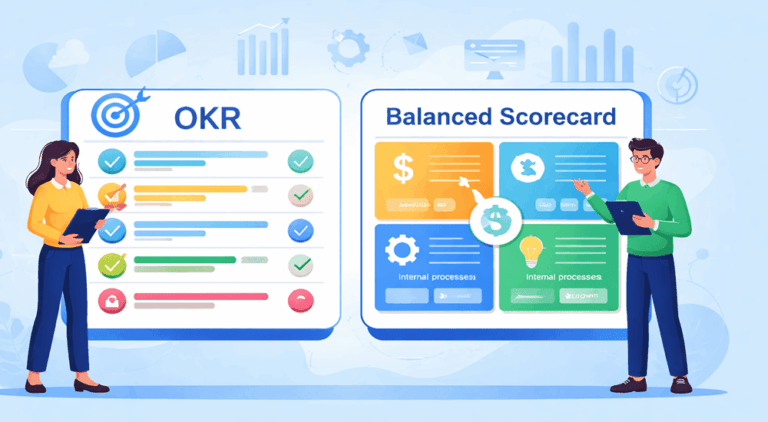
    Every organization wants a clear path from strategy to results. Two frameworks help leaders make that connection: the Balanced Scorecard (BSC) and Objectives and Key Results (OKRs). Both have been around for decades, yet many teams struggle to decide which to use or whether to combine them.  In this blog post, I will break down…

    Read More OKRs Vs Balanced Scorecard: Differences, Examples & IntegrationContinue

  • balanced scorecard vs kpi
    General

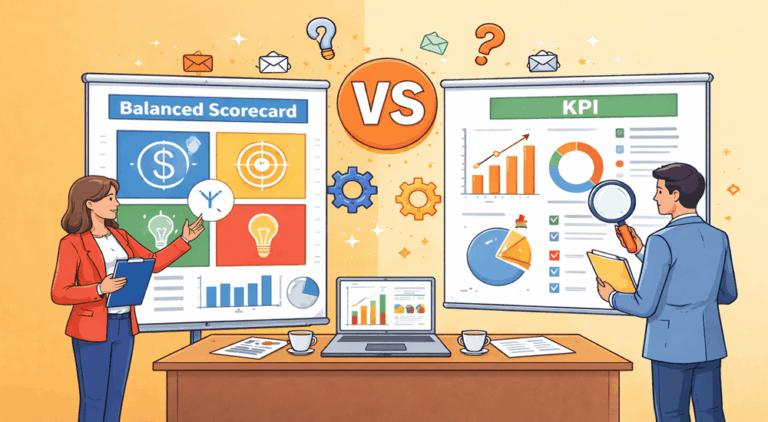
    Balanced Scorecard Vs KPI: Differences, Benefits & Examples

    ByFahad Usmani, PMP January 31, 2026January 31, 2026

    Every organization measures performance, but how you measure it shapes the decisions you make. Managers often track revenue, customer satisfaction, or production speed and refer to them as KPIs. But do a handful of metrics tell the whole story? For three decades, the Balanced Scorecard has provided leaders with a holistic view of the business by…

    Read More Balanced Scorecard Vs KPI: Differences, Benefits & ExamplesContinue

  • dashboard vs balanced scorecard
    General

    Dashboard Vs Balanced Scorecard: Key Differences and Uses

    ByFahad Usmani, PMP January 30, 2026January 30, 2026

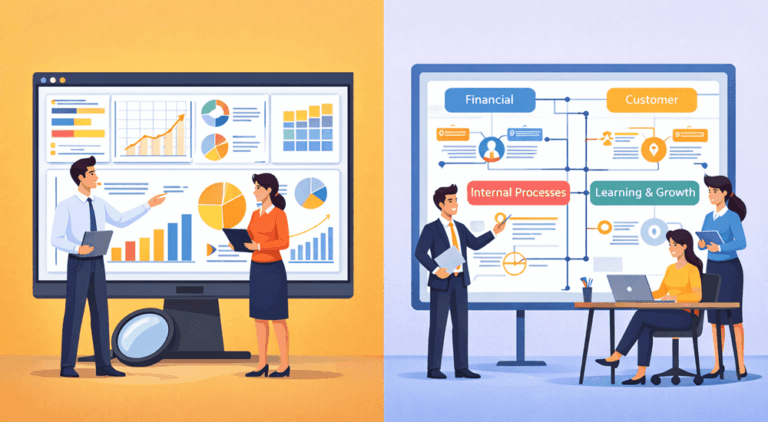
    Many managers use the words “dashboard” and “Balanced Scorecard” interchangeably, yet they serve very different purposes. A dashboard gives you a snapshot of what is happening right now. A Balanced Scorecard helps you translate long-term strategy into measurable objectives.  If you’ve ever wondered which tool suits your needs or whether you need both, this blog…

    Read More Dashboard Vs Balanced Scorecard: Key Differences and UsesContinue

  • performance prism
    General

    Performance Prism Explained: Stakeholder-Focused Project Success

    ByFahad Usmani, PMP January 30, 2026January 30, 2026

    The performance prism is a modern performance management framework that helps organizations measure success by focusing on stakeholders, not just financial results. Unlike traditional models such as the balanced scorecard, the performance prism considers what stakeholders want and what they expect in return.  This balanced view is useful in today’s complex business and project environments….

    Read More Performance Prism Explained: Stakeholder-Focused Project SuccessContinue

Page navigation

Previous PagePrevious 1 … 23 24 25 26 27 … 80 Next PageNext
  • FAQs
  • Books
  • Contact
  • About
  • Privacy

Copyright 2026 PM Study Circle, All rights reserved.

  • Home
  • Blog
  • PMP Questions
  • Resource
  • Contact Hours
  • Notes