Handling several responsibilities at once can quickly become overwhelming in today’s fast-paced work environment. Many professionals struggle to stay organized when deadlines, meetings, and tasks compete for attention. Learning how to juggle multiple projects effectively helps you stay focused and maintain control of your workload.
When you understand how to juggle multiple projects, you can prioritize tasks, manage time wisely, and reduce unnecessary stress. Project managers and team leaders often rely on clear planning and simple productivity methods to stay on track.
In this blog post, you will discover practical strategies that explain how to juggle multiple projects while improving productivity and delivering consistent results.
Let’s get started.
Importance of Juggling Multiple Projects
Handling several responsibilities at once is common in modern workplaces. That is why handling multiple projects is such an important professional skill. When work from different projects overlaps, professionals must stay organized and keep priorities clear. Learning to manage several initiatives at once helps prevent missed deadlines and confusion.
Knowing how to juggle multiple projects effectively also improves productivity. When you balance multiple projects with clear priorities, you can allocate time and resources wisely. This approach helps teams stay focused and ensures that each project continues to move forward without unnecessary delays.
Another reason managing multiple projects matters is adaptability. Organizations often run many initiatives simultaneously. Professionals who can manage multiple projects smoothly can respond to changing demands, coordinate teams better, and maintain consistent progress across all projects.
How to Juggle Multiple Projects?
You can follow the following steps to manage multiple projects:
Plan and Prioritize with Four Simple Steps
The first step to managing multiple projects is to create a clear roadmap. This involves writing everything down, estimating the effort, assessing urgency, and sorting tasks by importance. Spending a few minutes each morning organizing your workload can save hours later.
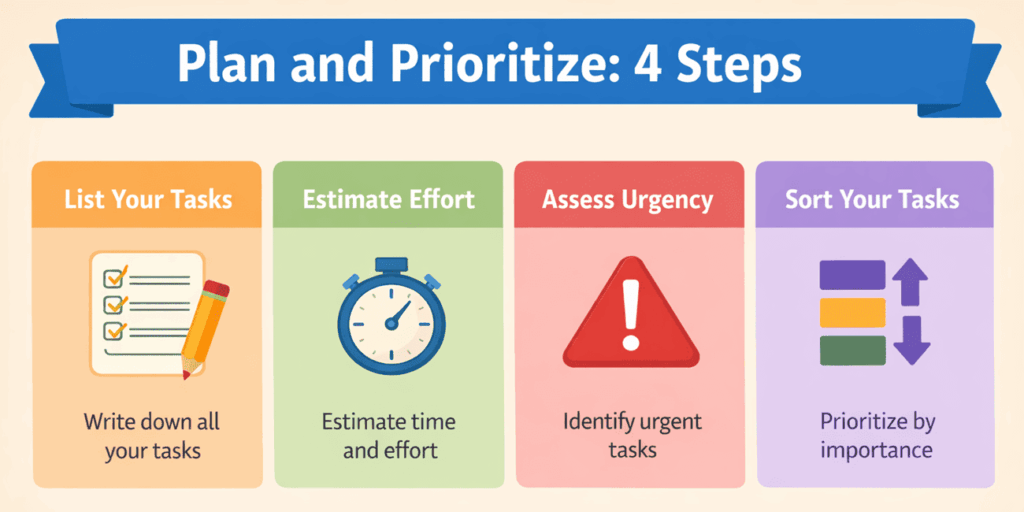
- List your tasks. Write down every task, big or small, in one place. Breaking work into bite-sized actions that take an hour or less makes it easier to track progress.
- Estimate effort. Next to each item, jot down how long you think it will take. Rough estimates are fine; you’ll get better over time.
- Assess urgency. Ask yourself which tasks are truly urgent. Highlight two or three high-priority items instead of treating everything as critical.
- Sort and prioritize. Move urgent items to the top of your list. Many people prefer to handle quick, easy tasks first to build momentum.
This simple framework turns an intimidating workload into actionable tasks. Many professionals find that writing tasks on sticky notes or using a digital task manager makes it easier to rearrange priorities. Each evening, review your list, mark off completed items, and adjust the order for the next day.
Align With Your Manager
One common mistake when juggling multiple projects is failing to communicate with your manager. Leaders often cannot see your full workload and may assume you have capacity for more. To avoid misunderstandings, share your prioritized task list and confirm that your priorities align with theirs. This practice, sometimes called “managing up,” sets expectations and builds trust.
How often should you check in? It depends on the nature of your work. If you manage many small tasks, a brief daily meeting can prevent misalignment. For larger initiatives, weekly or bi-weekly sessions may suffice. When presenting your list to senior executives, keep it concise. Focus on the tasks’ impact rather than every detail. Clear communication shows that you respect your manager’s time and take ownership of your workload.
Focus on One Task at a Time
Despite the myth of multitasking, research proves that focusing on one task yields better results. Each time you switch between projects, your brain takes time to adjust, leading to what psychologists call “switching costs.” If you find yourself jumping between email, meetings, and project work, try monotasking instead.
One effective technique is time blocking. Dedicate specific chunks of time during the day to particular tasks or projects. For example, block out an hour in the morning for deep work on a high-priority project and another block after lunch for administrative tasks. If you are frequently interrupted, let colleagues know you are unavailable during specific time blocks. Professors often hold office hours to protect time for deep work. You can do something similar by closing your email and messaging apps for a set period of time.
Visualize Your Work With a Kanban Board
Kanban boards originated in Japanese manufacturing but are now widely used in project management. The idea is to visualize work as it moves through stages. To set up a basic Kanban board, divide a wall or digital board into three columns labeled Backlog, In Process, and Complete. Write each task on a sticky note and place it in the Backlog column. When you start working on a task, move the note to the In Process column, and when it’s finished, move it to Complete.
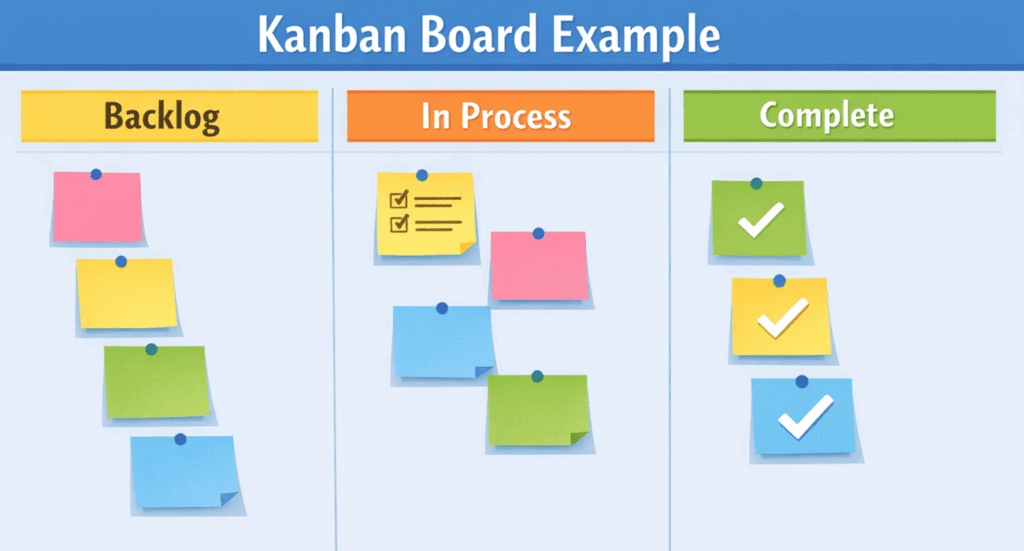
Kanban boards create transparency. They allow you, your team, and your manager to see progress at a glance. You can add other columns, such as “Stuck” or “Needs Review,” to capture tasks requiring help or feedback. For distributed teams, digital Kanban tools like Trello or Jira provide the same benefits.
Manage Stress and Take Breaks
High workloads and constant context switching can lead to burnout. Stress not only hurts productivity but also affects health. Taking short breaks improves productivity, reduces stress levels, and enhances creativity. It also suggests that shorter morning breaks and longer afternoon breaks are more effective. Incorporating micro-breaks into your schedule can help you recharge and maintain focus.
Here are some stress-relief practices to integrate into your workday:
- Schedule regular breaks. Add short pauses to your calendar to step away from your desk.
- Monitor energy levels. When you feel your concentration slipping, stand up and stretch or take a brisk walk.
- Try the Pomodoro Technique. Work for 25 minutes, then take a 5-minute break; after 4 cycles, take a longer break.
- Practice deep breathing or mindfulness. Short breathing exercises help lower stress levels.
Changing your mindset also helps. When faced with an impossible-seeming workload, ask yourself, “Was that the best I could do today?” If the answer is yes, you can leave work knowing you gave it your all. Celebrate small wins and remember that everyone has limits.
Finish What You Start
Leaving tasks half-done drains morale because you never feel the satisfaction of completion. Look for “low-hanging fruit” tasks that you can finish quickly and move off your list. For tasks that linger, break them down further and dedicate focused time to finish them. Completing tasks gives you momentum and frees mental space for new challenges.
FAQs
Q1. What’s wrong with multitasking on multiple projects?
Switching between tasks can reduce productivity by up to 40 percent. Focusing on one task at a time helps you work faster and make fewer mistakes.
Q2. What is a Kanban board, and how can I use one?
A Kanban board is a visual tool with columns like Backlog, In Process, and Complete. You move task cards across columns to track progress.
Q3. How can I prioritize tasks effectively?
Start by listing tasks, estimating how long they will take, assessing their urgency, and then sorting them so that the most urgent and important come first.
Q4. How often should I update my manager on my workload?
If your tasks change often, meet each day briefly. For bigger projects, weekly or bi-weekly check-ins suffice.
Q5. What are time blocks?
Time blocks are pre-scheduled periods dedicated to specific tasks. They help you protect deep work time and avoid constant interruptions.
Summary
Handling multiple projects doesn’t have to be chaotic. Start by planning and prioritizing your tasks each day. Align with your manager to set expectations and avoid overcommitment. Focus on one thing at a time instead of multitasking, and use time blocks to protect your schedule. Visual tools like Kanban boards make progress visible and motivate you to finish tasks. Finally, take regular breaks and remember to manage your stress. When you apply these techniques consistently, you’ll become more productive, feel more in control, and earn the trust of your team and manager.

I am Mohammad Fahad Usmani, B.E. PMP, PMI-RMP. I have been blogging on project management topics since 2011. To date, thousands of professionals have passed the PMP exam using my resources.