
If you’re preparing for the Project Management Professional (PMP) exam, you’ve probably wondered about the math involved. Will formula-based questions show up? Do you need to memorize long equations? Many candidates worry that these problems are too hard and decide to skip them altogether. But is that a good idea?
In this blog post, we’ll explore why you should embrace rather than ignore PMP exam formula questions. You’ll discover how mastering a few key formulas can actually make the exam easier and even help you in real projects.
Key Takeaways
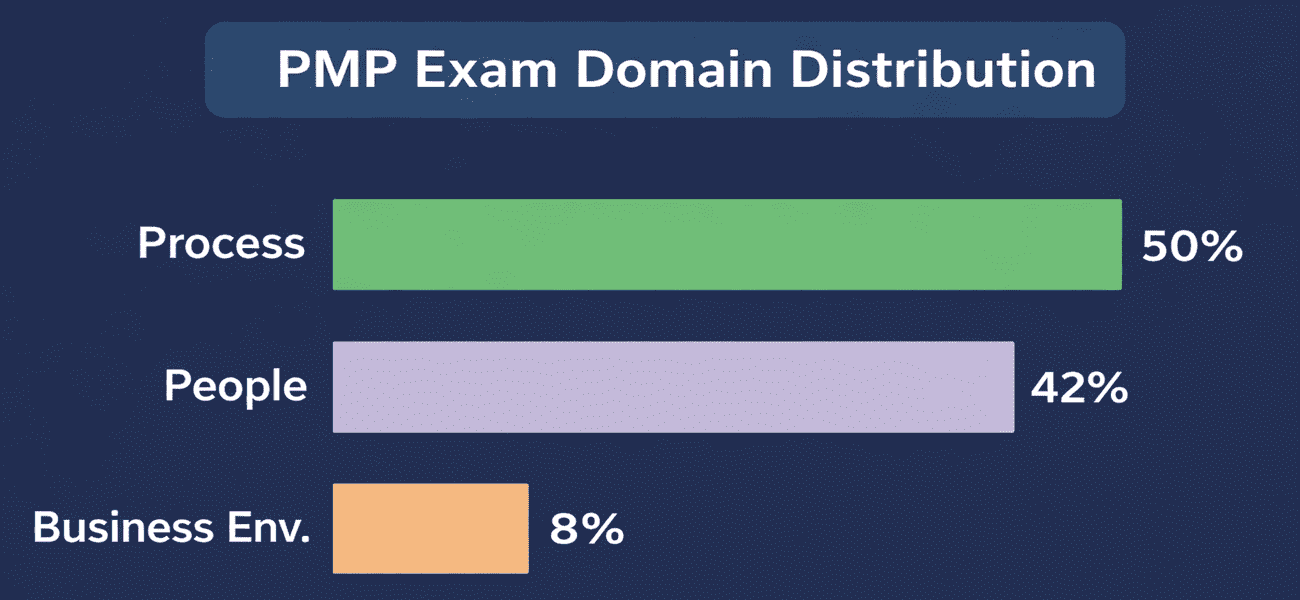
- The PMP exam is divided into three domains: Process (50%), People (42%), and Business Environment (8%). Each section tests different skills.
- About 5% of the exam questions require calculations, so ignoring them could cost you valuable points.
- The Project Management Institute does not publish a passing score, but the exam contains 180 questions to be completed in 230 minutes.
- Learning formulas helps you solve real-world project management problems, like tracking costs and evaluating risks.
What Are PMP Formula-Based Questions?
Formula-based questions test your ability to use simple equations to solve project management problems. They often cover topics like earned value management, forecasting, communication channels, risk exposure, and time estimation. For example, you might need to calculate the Cost Performance Index (CPI) or the number of communication channels in a team.
The math is straightforward once you understand the concepts behind it. Instead of complex calculus, you’ll perform basic addition, subtraction, multiplication, and division. The real challenge lies in knowing when to use each formula.
How Many Formula Questions Appear on the Exam?
The PMP exam blueprint allocates 50% of the questions to the Process domain, 42% to People, and 8% to the Business Environment. Within these domains, questions fall into several categories: situational, knowledge-based, interpretational, and formula-based. The exam may have around 5% formula-based questions. That means ignoring formulas could leave up to 36 questions unanswered on a 180-question exam.
PMI doesn’t release exact numbers or a fixed passing score, but the exam time is 230 minutes and includes short breaks. This gives you roughly 1.2 minutes per question. If you skip all math questions, you may run out of easy points.
Below is an infographic summarizing the exam’s domain distribution. It shows the weight of each section at a glance.
Why You Shouldn’t Skip Formula Questions
Skipping formula questions may feel tempting, but it’s risky.
The following are a few reasons:
- Scoring Opportunities: Formula questions typically have a single correct answer. Once you understand the concept, you can solve them quickly and gain reliable points.
- Balanced Exam: Because the exam covers different domains, doing well in only one area may not be enough. A weak performance on math questions could pull down your overall score.
- Real-World Use: Formulas are not just for exams. Earned Value Management helps track cost and schedule performance. Expected Monetary Value helps evaluate risks. Knowing these formulas improves your project management decisions.
- Confidence Boost: Understanding math builds confidence. When you see a familiar formula on the screen, you know exactly what to do. That sense of control reduces test anxiety.
Preparing for Formula Questions
Good preparation makes formula questions less intimidating. Try these strategies:
- Understand the Concepts: Don’t just memorize equations. Learn what each term means and when to apply it. For example, CPI measures cost efficiency (EV ÷ AC) and SPI measures schedule efficiency (EV ÷ PV).
- Create a Formula Sheet: Write key formulas on a single sheet. Review it daily until you can recall each equation without effort.
- Practice Regularly: Solve practice questions to build speed. Aim to solve a few formula questions every study session. This spaced practice improves long-term recall.
- Use the On-Screen Calculator: During the exam, you’ll have an on-screen calculator. Familiarize yourself with it during practice so you don’t waste time on test day.
- Plan Your Time: Allocate time for formula questions, but don’t dwell too long on a single problem. If a question is confusing, mark it and return later.
Common PMP Formulas and Categories
The following table lists common formula categories and their key equations. These are the formulas you’re most likely to encounter. Knowing them will help you answer questions confidently.
| Category | Key Formulas |
| Earned Value Management (EVM) | PV = Planned % × BAC EV = Actual % × BAC AC = Actual Cost CV = EV – AC SV = EV – PV CPI = EV ÷ AC SPI = EV ÷ PV EAC = BAC ÷ CPI ETC = EAC – AC VAC = BAC – EAC |
| Forecasting | EAC = BAC ÷ CPI (if current performance continues) EAC = AC + (BAC – EV) (if original estimate is poor) EAC = AC + ((BAC – EV)/(CPI × SPI)) (if both cost and schedule factors change) |
| Project Selection | NPV – select the project with the higher value BCR = Benefit ÷ Cost IRR – choose the project with the higher rate Payback Period – time required to recover the investment |
| Communication Channels | Channels = n(n – 1) ÷ 2 (where n is the number of team members) |
| Risk and EMV | Risk Exposure = Probability × Impact Expected Monetary Value = Probability × Impact |
| Three-Point Estimating | Triangular Estimate = (O + M + P) ÷ 3 PERT Estimate = (O + 4M + P) ÷ 6 Standard Deviation = (P – O) ÷ 6 |
| Resource Management | Utilization = Actual Time Worked ÷ Available Time |
| Critical Path Method | Float (Slack) = Late Start – Early Start (or Late Finish – Early Finish) |
Strategies for Exam Day
Here are some simple tips to help you on test day:
- Brain Dump: At the start of the exam, write down key formulas on scratch paper once the awareness session ends. This frees your memory during the test.
- Read Carefully: Formula questions are often direct. Identify the known values and plug them into the correct equation.
- Skip and Return: If a formula question seems tricky, mark it for review. Answer easier questions first, then revisit the harder ones with fresh eyes.
- Stay Calm: Remember that most math questions are simple. Trust your preparation and avoid second-guessing yourself.
FAQs
Q1. Are formula questions still relevant in the 2026 PMP exam?
Yes. While the exam now emphasizes leadership and business skills, about 5% of questions involve calculations.
Q2. How many formula questions should I expect?
PMI doesn’t reveal exact numbers, but training providers estimate that around 5% of the 180 questions are. Your experience may vary.
Q3. Do I need a physical calculator for the exam?
No. The computer-based test provides an on-screen calculator. Practice with it before the exam so you feel comfortable using it.
Q4. What if I skip all formula questions?
Skipping these questions means giving up easy points. Because formulas are often direct, mastering them is an efficient way to raise your score.
Summary
Ignoring formula questions on the PMP exam might seem like a quick fix, but it isn’t a wise strategy. Math questions make up a small yet significant portion of the test and can boost your score if you prepare well. Understanding key formulas also strengthens your real-world project management skills. Instead of avoiding them, make a plan to learn them. With practice and the tips shared here, you’ll feel confident tackling any calculation that appears on your exam. Ready to conquer the math and take your project management career to the next level?

I am Mohammad Fahad Usmani, B.E. PMP, PMI-RMP. I have been blogging on project management topics since 2011. To date, thousands of professionals have passed the PMP exam using my resources.




it is absolutely impossible to avoid math-based questions because even after finishing the programme, one will still encounter them in the field of work
Yes, you are right Lenard.
The math-based questions may seem challenging but they are not. A lot depends on how they are presented when you are studying for your exam. Try to grasp the foundational principles. Once you have that, you would be able to figure things out. Find a resource that can explain it in simple terms.
Well said Danford.
I think that the mathematical questions in the exam is so easy and direct so you should study them to get their degrees easily rather than many questions which seems to be difficult , i ready to help you any time via email and answer any questions .
Yes, once you understand the concepts, it is easier to solve them.
I have a spacial awareness issue that keeps me from being able to work the backward pass in a network diagram. In my job I am a analytical chemist who can do complicated calculations in my head and I can’t do that backwards thing. It’s the part of the whole test that panics me.
Hello Denise,
I hope following blog post will help you understand backward pass:
https://pmstudycircle.com/2014/01/critical-path-method-cpm-in-project-management/
Fahad,
Greetings! Do you have 400 PMP Exam sample questions and Answers for PMBok 6 (latest)?
Please reply, Thanks.
Hello Ketan,
I will publish it on March 26, 2018.