Organizational structure plays a vital role in determining how projects are planned, executed, and delivered. The organizational structure in project management defines reporting lines, authority levels, and communication channels. When these elements are clear, teams work faster and make better decisions. When they are unclear, projects face delays, confusion, and resource conflicts.
Understanding the impact of organizational structure in project management helps you align strategy with execution. Whether a company uses a functional, matrix, or projectized model, each structure shapes collaboration and accountability. By choosing the right organizational structure in project management, organizations can improve communication, optimize resources, and increase the likelihood of project success in today’s competitive environment.
What is an Organizational Structure?
An organizational structure defines how tasks are delegated to achieve a company’s goals and clarifies employees’ roles and responsibilities. It shows who reports to whom, how teams interact, and how information flows.
A well-organized structure helps a company operate efficiently, facilitates communication and collaboration, and reduces confusion. Without it, employees may not know who to ask for decisions or how to coordinate across teams. Clear reporting lines and defined responsibilities create stability and encourage employees to perform their roles with confidence.
Structures can be broadly categorized as centralized, where top leaders make most decisions, or decentralized, which gives more autonomy to middle managers and frontline employees. Each approach has advantages. Centralized models provide consistent direction, while decentralized structures can adapt faster to change.
Why Organizational Structure Matters for Projects
Projects are temporary endeavors with defined objectives. They require coordination across functions, timely decisions, and efficient resource use. When a project kicks off in a company with a strong structure, the project team knows who holds authority and how to get approvals. In companies with weak or unclear structures, communication gaps slow down decisions and create frustration.
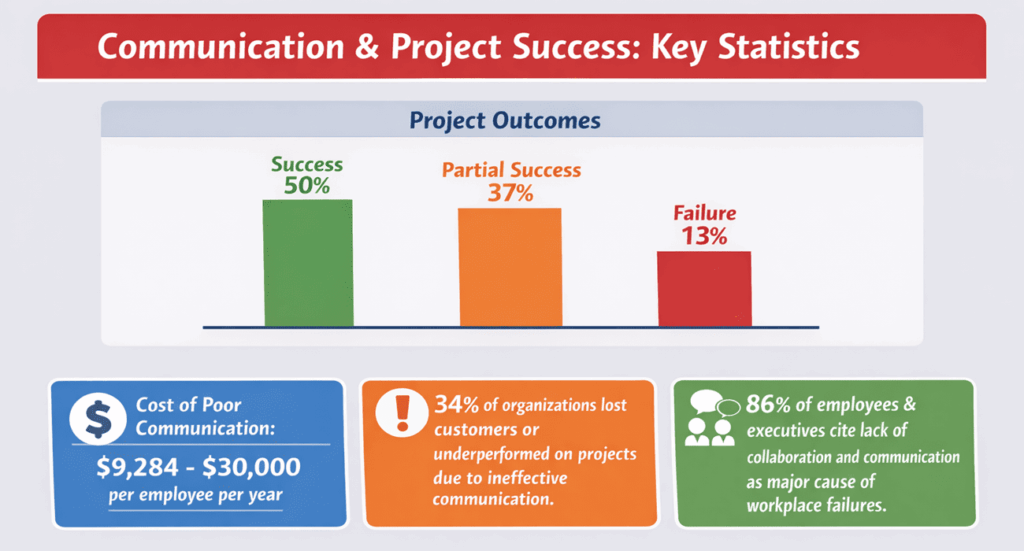
Communication is often the first casualty of poor structure. A report on internal communications found that 34 percent of organizations lost customers or underperformed on projects due to ineffective communication. Another study from 2026 estimates that poor communication costs companies between $9,284 and $30,000 per employee per year and notes that 86 percent of employees and executives cite lack of collaboration and communication as a main cause of workplace failures.
These figures show how gaps in structure and communication can drain budgets, erode morale, and undermine project outcomes.
The Main Types of Organizational Structure
Different structures serve different purposes. Choosing the right one depends on your company’s size, industry, and strategic goals.

The three models below are the most common in project management.
Functional Structure
In a functional structure, the company organizes employees into departments by specialization, such as finance, marketing, and engineering. Each department has a manager who oversees operations and reports to senior leadership. This model suits organizations that handle routine projects requiring specialized expertise and consistent processes. Strengths include clear roles, deep departmental expertise, and efficient resource use. Weaknesses include slow decision-making and limited cross-departmental collaboration.
Projectized Structure
A projectized structure organizes the company around projects rather than departments. Project managers have authority over budgets, teams, and schedules, and teams are dedicated to specific projects. Once the project ends, the team disbands. This model is common in consulting, construction, and technology firms where project delivery is the core business. Strengths include a strong focus on project goals and quick decision-making. Weaknesses include potential resource duplication and less job stability for team members.
Matrix Structure
A matrix structure blends functional and projectized models. Employees have both a functional manager and a project manager, creating a grid of reporting lines. This approach aims to balance specialized expertise with flexibility. Matrix structures can be weak (the functional manager holds more authority), balanced (authority is shared), or strong (the project manager has more authority). Strengths include flexibility and efficient resource utilization across multiple projects. Weaknesses include role conflicts and the complexity of dual reporting lines.
Impact of Organizational Structure on Project Management
The type of structure you choose shapes every aspect of project execution.
Communication
Communication pathways differ dramatically between structures. Functional models rely on departmental channels. Projectized models use direct lines of communication between project managers and team members, which accelerates communication. Matrix models require employees to coordinate with two bosses, so clarity is critical. Effective communication prevents delays and misunderstandings. Research shows that 34 percent of organizations have lost business or underperformed because of ineffective communication. Building clear communication channels within your structure can help avoid that fate.
Resource Allocation
In functional organizations, resources are controlled by department heads. Project managers must negotiate for staff and equipment, which can lead to delays. In projectized structures, project managers own the budget and resources, resulting in faster allocation but the risk of resource duplication. Matrix structures aim to share resources more efficiently across multiple projects, though employees may feel pulled in different directions. When deciding on a structure, consider how you’ll allocate specialized talent and whether you need to prioritize speed or consistency.
Decision-Making
Hierarchical structures often require multiple approvals, which slows down decisions. That can hurt time-sensitive projects. In projectized and strong matrix structures, project managers have greater authority, enabling faster decision-making. A study by the Project Management Institute noted that a major barrier to transformation is the disconnect between planning and execution, with 35 percent of executives citing outdated structures and centralized decision-making as obstacles. Giving project teams the autonomy to make decisions within clear guidelines can improve responsiveness.
Project Implementation
An organizationis structure affects how smoothly it implements projects. Functional structures provide stability and continuity, which is valuable for routine or long-term projects. However, they can slow down cross-functional initiatives. Projectized structures excel when speed and innovation matter, but they can leave employees unsure about their long-term career paths. Matrix structures offer flexibility for complex projects that cut across departments but require strong coordination to prevent confusion. When evaluating your structure, ask yourself: Does our current model support the type of projects we take on now and in the future?
Choosing the Right Organization Structure
Selecting a structure isn’t a one-time decision; it’s an ongoing alignment between strategy and operations. Below are guidelines for when each structure may be most effective.
When a Functional Structure Works Best
A functional model suits organizations that handle a high volume of similar projects and prioritize efficiency. Manufacturing companies and government agencies often use this structure because specialized departments can standardize processes. It works well when:
- Projects are routine and do not require extensive cross-functional collaboration.
- Specialized expertise is critical for quality and compliance.
- Clear reporting lines are valued, and stability is prioritized over flexibility.
When a Projectized Structure Fits
If your company lives and breathes projects, think consulting firms, software development shops, and creative agencies, a projectized structure may be ideal. Use it when:
- Projects vary widely and need dedicated teams with full autonomy.
- Outcomes must be delivered quickly to meet tight deadlines or innovate rapidly.
- The organization’s primary focus is on delivering projects rather than ongoing operations.
When a Matrix Structure Makes Sense
A matrix model is effective for organizations managing multiple complex projects that draw on diverse skills. Consider it when:
- You need to balance functional expertise with project focus.
- Resource optimization is vital because several projects run in parallel.
- The business environment is dynamic, requiring teams to be reconfigured often.
Strategic Considerations and Change Management
Aligning structure and project management is not just about picking a model. It requires thoughtful change management and periodic reevaluation. When shifting from one structure to another, leadership should develop a clear transition plan that includes training and communication. Team members need to understand their new roles and how reporting lines will change. Leaders should also establish escalation paths and decision-making protocols to prevent confusion during the transition. Regularly assess performance metrics such as project completion rates, resource utilization, and team satisfaction to determine whether the structure is delivering value.
Investment in communication pays dividends. The Axios report found that organizations that increased communication investments saw improvements in new business revenue, market share, and employee retention. Encourage feedback loops and open forums for team members to share concerns. As remote and hybrid work become more common, adopt tools and practices that support virtual collaboration.
Finally, remember that structures can be seasonally adjusted. Organizations sometimes adopt projectized approaches during high-demand periods and revert to functional models when routine operations resume.
FAQs
Q1. What’s the difference between functional and matrix structures?
A functional structure divides employees into specialized departments, while a matrix structure blends functional departments with project teams. In a matrix, employees report to both a functional manager and a project manager. This dual reporting allows for flexibility but can create role conflicts. Functional structures emphasize deep expertise, whereas matrix models balance expertise with project focus.
Q2. How does organizational structure affect resource allocation?
Your structure determines who controls budgets and resources. In functional models, department heads allocate resources, which can delay projects. Projectized structures give project managers direct control over resources, which speeds up decision-making but increases the risk of duplication. Matrix structures share resources across projects, promoting efficiency but requiring careful coordination.
Q3. Can a company change its structure over time?
Yes. Many organizations evolve from functional to matrix or projectized structures as they grow or change their strategic focus. Change management is essential: leaders should communicate the reasons for change, provide training, and gradually transition roles. Regular reviews help ensure the new structure supports business goals.
Q4. Why do projects fail despite good planning?
Even well-planned projects can fail if the structure doesn’t support execution. Lack of clear authority, poor communication, and misaligned resources can derail progress. Research shows that only half of projects succeed, and 34 percent of organizations have lost customers or underperformed due to communication issues. Ensuring your structure aligns with project needs improves the odds of success.
Q5. How can leaders strengthen communication in any structure?
Leaders should set up regular updates, encourage open dialogue, and use collaboration tools that fit the company culture. They can also promote cross-functional meetings to build shared understanding. Investing in internal communication has been linked to improved revenue, retention, and innovation. Clear, concise messages and consistent channels help employees understand company goals and reduce misunderstandings.
Summary
In today’s business environment, the organizational structure you choose directly shapes project outcomes. The right structure strengthens communication, clarifies authority, and improves resource use. The wrong one creates delays, confusion, and conflict. By understanding the impact of organizational structure in project management, leaders can align teams with strategy and execution. Evaluate your current model, identify gaps, and adjust when needed. A well-designed structure builds accountability, supports collaboration, and increases the chances of consistent project success.

I am Mohammad Fahad Usmani, B.E. PMP, PMI-RMP. I have been blogging on project management topics since 2011. To date, thousands of professionals have passed the PMP exam using my resources.