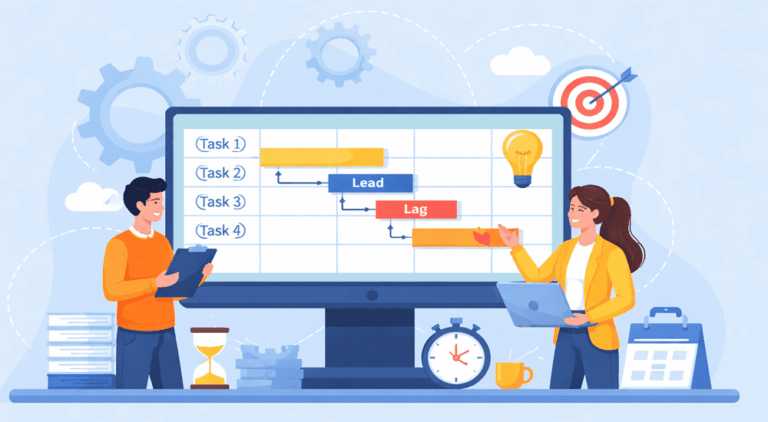
Agile project management has transformed how teams deliver value. Instead of planning for months and unveiling a product at the end, agile teams break work into smaller pieces and seek feedback early. Within agile, two popular styles exist: iteration-based agile (often implemented as Scrum) and flow-based agile (often represented by Kanban boards). If you are a project manager or team lead, how do you decide which approach fits your project?
In this blog post, I will explain each style, compare them, and help you decide.
Let’s get started.
Understanding Agile Principles
Agile is a mindset that values responding to change and delivering working solutions over following a rigid plan. It emerged from software development but now shapes work in marketing, product design, education, and even construction. Agile teams are self-organizing and share responsibility for outcomes. They embrace feedback, adjust plans quickly, and collaborate openly.
According to the 17th State of Agile report, 71 percent of surveyed organizations use agile practices in their software development lifecycle, and Scrum remains the most popular team-level methodology. These numbers show that agile is not a niche trend; it is a mainstream way of working.
What is Iteration-Based Agile?
Iteration-based agile organizes work into time-boxed sprints (often one to four weeks). Teams plan what they will complete during a sprint, work toward that goal, and then deliver something usable at the end. After each sprint, they review what went well, gather feedback from stakeholders, and plan the next sprint. This cadence creates a predictable rhythm of planning, building, reviewing, and adjusting.
Example of Iteration-Based Agile
Imagine a software team building a mobile banking app. They choose a two-week sprint length. At the beginning of each sprint, the team picks a set of features (for example, user login and account balance display) and commits to finishing them. During the sprint, they meet daily to discuss progress and address impediments. At the end of two weeks, they demonstrate the new features to stakeholders, collect feedback, and decide what to build next. This cycle repeats until the app is ready for release.
Benefits of Iteration-Based Agile
- Predictable pace: The fixed length of each sprint helps teams estimate how much they can deliver in a given timeframe. This predictability is valuable when projects have deadlines or events.
- Regular feedback loops: Frequent reviews ensure that the product evolves based on customer input and prevent costly surprises later.
- Clear goals: Every sprint has a defined goal, which aligns the team around a shared objective and allows them to measure progress.
Drawbacks of Iteration-Based Agile
- Rigid timeboxes: If requirements change rapidly, fixed-length sprints can feel restrictive. Teams may rush to finish work or struggle to accommodate urgent changes.
- Overhead from ceremonies: Scrum introduces roles (product owner, scrum master) and meetings (sprint planning, daily stand-up, sprint review, and retrospective). While these events add structure, they require time and discipline.
- Potential to neglect long-term flow: Focusing on the sprint goal can lead to context switching after each sprint, which may impact long-term flow and morale.
What is Flow-Based Agile?
Flow-based agile, often called Kanban, takes a different approach. Instead of dividing work into sprints, teams focus on continuous flow. They visualize their workflow on a board with columns such as “To Do,” “In Progress,” and “Done.” Each work item moves across the board as it progresses. Teams set a work-in-progress (WIP) limit for each stage, which prevents them from starting too many tasks at once and encourages them to finish work before starting new items.
Kanban is described as a method for visualizing work, limiting WIP, and maximizing efficiency. Kanban teams aim to reduce the time from start to finish by continuously improving their workflow. Unlike Scrum, Kanban does not prescribe roles or ceremonies, which makes it flexible for teams that need adaptability.
Example of Flow-Based Agile
Consider a design agency that handles many small requests from different clients. Each request varies in size and urgency. Instead of planning bi-weekly sprints, the team uses a Kanban board. Designers pull work from the top of the backlog whenever they finish current tasks. They set a WIP limit of three items in the “In Progress” column to ensure quality and avoid overloading anyone.
As soon as a design is finished and approved, they move it to “Done,” even if it happens mid-week. This approach allows the agency to handle urgent requests and prioritize work based on client needs.
Benefits of Flow-Based Agile
- Continuous delivery: Teams can deliver value whenever work is complete, rather than waiting until the end of a sprint.
- Flexibility: Kanban does not require fixed timeboxes or specific roles. Teams can adapt their process to fit changing priorities or urgent work.
- Focus on flow: By limiting WIP, teams reduce multitasking and concentrate on finishing tasks, which often leads to higher quality and less waste.
Drawbacks of Flow-Based Agile
- Less cadence: Without a fixed sprint rhythm, teams may find it harder to plan long-term or schedule regular reviews.
- Risk of scope creep: Continuous flow can lead to new tasks entering the system without proper prioritization if the backlog is not managed well.
- Requires discipline: Kanban boards look simple, but they rely on the team’s commitment to respect WIP limits and continuously improve their workflow.
Iteration Vs Flow-Based: Key Differences
Both Scrum and Kanban seek to improve how the project team delivers products, but they differ in cadence, structure, and change management. Kanban focuses on continuous flow and WIP limits, while Scrum uses fixed-length sprints and defined roles. Scrum teams adopt specific ceremonies and artifacts to create learning loops, whereas Kanban teams emphasize visualization and continuous improvement with fewer prescribed roles.

Cadence: Scrum operates on a repeating cycle of planning and review, which provides a steady rhythm. Kanban has no timeboxes; work flows continuously.
Planning: In Scrum, the team commits to a set of tasks during the sprint. Kanban teams pull tasks as capacity allows and focus on completing current work before starting new tasks.
Feedback: Scrum includes regular feedback through sprint reviews and retrospectives. Kanban encourages ad-hoc feedback as work moves across the board.
Roles: Scrum defines the product owner, scrum master, and development team. Kanban does not assign specific roles; teams can define responsibilities as needed.
Change management: In Scrum, changes are typically considered at the end of a sprint. Kanban allows changes at any time, provided WIP limits are respected.
How to Choose the Right Approach
Every project has unique constraints. The table below suggests which approach may work best based on common scenarios:
| Project Characteristic | Better Fit |
| Fixed deadline, clear vision, defined milestones | Iteration-based agile |
| Flexible timeline, evolving requirements | Flow-based agile |
| Need for frequent stakeholder feedback | Iteration-based agile |
| Variety of small tasks arriving unpredictably | Flow-based agile |
| The team is new to agile and needs structure | Iteration-based agile |
| The team is new to agile and needs structure | Cross-functional team comfortable with self-organization |
Questions to Ask Yourself
- Does your project have a hard deadline or release date? If yes, iteration-based agile provides a stable cadence and helps you track progress toward the date.
- Are the requirements likely to change or emerge over time? Flow-based agile is flexible and handles changing priorities well.
- How experienced is your team with agile practices? Scrum provides structure for teams new to agile, while Kanban allows experienced teams to tailor their process.
- What kind of work do you handle? For continuous support and many small tasks, flow-based agile may be more efficient. For large features or products, iteration-based agile offers focus.
Combining the Two Approaches
Many teams adopt a hybrid model, often called Scrumban. They maintain a regular cadence (for example, bi-weekly planning and review) while using a Kanban board to visualize flow and enforce WIP limits. This blend allows teams to enjoy the predictability of sprints and the flexibility of continuous delivery. Project teams often blend elements of Scrum and Kanban to create hybrid approaches.
For example, a software team might hold sprint planning meetings but pull work onto their Kanban board as capacity becomes available. The key is to tailor the process to your team’s needs rather than following one framework rigidly.
FAQs
Q1. What is a sprint?
A sprint is a short, fixed period (usually one to four weeks) during which a team completes a set of work and aims to deliver a usable increment.
Q2. How long should a sprint last?
Sprint length depends on your team and project; common durations are two or three weeks. Keep sprints short enough to get feedback but long enough to finish meaningful work.
Q3. What is a work-in-progress (WIP) limit?
A WIP limit caps the number of items a team can have in progress at once. It encourages finishing tasks before starting new ones and helps maintain flow.
Q4. Can we switch from Scrum to Kanban?
Yes. Many teams start with Scrum for structure and later move to Kanban or a hybrid approach as they mature. Evaluate your needs regularly and adjust.
Summary
Iteration-based and flow-based agile are not opposing camps; they are tools. The best choice depends on your project’s constraints, your team’s maturity, and your willingness to adapt. If your project has a fixed deadline and clear milestones, iteration-based agile offers structure and predictability. If you manage ongoing work with shifting priorities, flow-based agile provides flexibility and continuous delivery. Many organizations combine both approaches to harness the benefits of each. Agile is about learning and improvement; choosing the right framework is the first step toward consistently delivering value.

I am Mohammad Fahad Usmani, B.E. PMP, PMI-RMP. I have been blogging on project management topics since 2011. To date, thousands of professionals have passed the PMP exam using my resources.