PRINCE2 Agile combines the structured governance of PRINCE2 with the flexibility of Agile methods. It helps teams manage projects with clear roles, defined processes, and fast delivery cycles. Many organizations now prefer hybrid project management because it balances control with adaptability. PRINCE2 Agile supports better collaboration, faster feedback, and improved customer satisfaction.
The framework also helps teams handle changing requirements without losing focus on business goals. Its hexagon model highlights six key areas: time, cost, benefits, risk, quality, and scope. By blending stability with flexibility, PRINCE2 Agile has become a valuable approach for modern project management across many industries worldwide.
In this blog post, I will explain what PRINCE2 Agile is, how it works, its benefits, and how you can earn the certification.
Key Takeaways
- PRINCE2 Agile combines the structured control of PRINCE2 with the flexibility and speed of Agile methods.
- The framework helps teams manage changing requirements while keeping projects aligned with business goals.
- The PRINCE2 Agile Hexagon Model focuses on six areas: time, cost, benefits, risk, quality, and scope.
- Hybrid project management is growing in popularity because organizations want both governance and adaptability in their projects.
- PRINCE2 Agile improves collaboration, customer feedback, and the speed of delivering valuable project outcomes.
- Earning a PRINCE2 Agile certification can strengthen project management skills and improve career opportunities.
Why Combine PRINCE2 and Agile?
PRINCE2 offers a structured project management framework with clearly defined roles and processes. Agile emphasizes flexibility, delivering work in small increments and adapting quickly to customer feedback. When you merge these approaches, you get the best of both worlds: control and adaptability.
Managers often struggle to balance predictability with responsiveness. By applying PRINCE2 principles to Agile practices, organizations can set clear expectations yet remain open to change. Have you ever wished you could adapt to shifting requirements without derailing your timeline? That’s exactly what this method delivers.
The Hexagon Model: Six Variables and Five Targets
At the heart of PRINCE2 Agile lies the hexagon model. It highlights six variables: Time, Cost, Benefits, Risk, Quality, and Scope. Projects aim to stay on schedule, maintain quality, embrace change, keep teams stable, and recognize that the customer doesn’t always need everything.
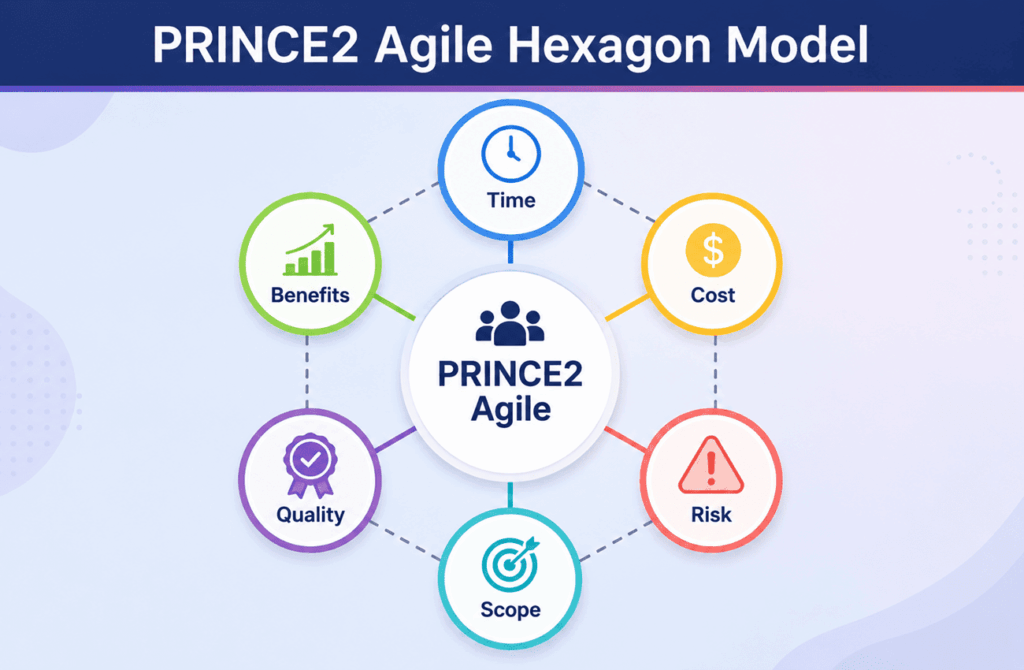
This visual representation guides teams to decide which variables are fixed and which can flex. For example, you might keep cost and time fixed while allowing scope to adapt. This approach ensures transparency with stakeholders and helps manage expectations.
How PRINCE2 Agile Works
Projects using this hybrid method still follow the seven PRINCE2 principles: continued business justification, learning from experience, defined roles and responsibilities, managed stages, exception tolerance, product focus, and tailoring to suit the project environment. These principles give structure, while Agile techniques add flexibility. Teams work in short cycles, often two to four weeks, delivering small increments and gathering feedback.
A daily stand-up or “Scrum meeting” keeps everyone aligned. Progress is tracked through burn-down charts or Kanban boards. At the end of each cycle, the team reviews what went well and what can be improved. This iterative process helps catch issues early and encourages constant learning.
Benefits of PRINCE2 Agile
- Adaptability: The method allows rapid responses to changing requirements while maintaining governance.
- Ease of Integration: You can incorporate PRINCE2 Agile into existing PRINCE2 or Agile teams without overhauling workflows.
- Faster Realization of Benefits: Delivering in increments means stakeholders see value sooner.
- Greater Control: Clear processes help manage risk and ensure accountability.
- Improved Collaboration: Enhanced communication across teams leads to better results.
Hybrid methods are gaining traction. A study by Digital.ai found 42% of respondents use a hybrid model, and 49% of large organizations do so. An ILX survey found 45% of organizations have adopted or plan to adopt a hybrid approach.
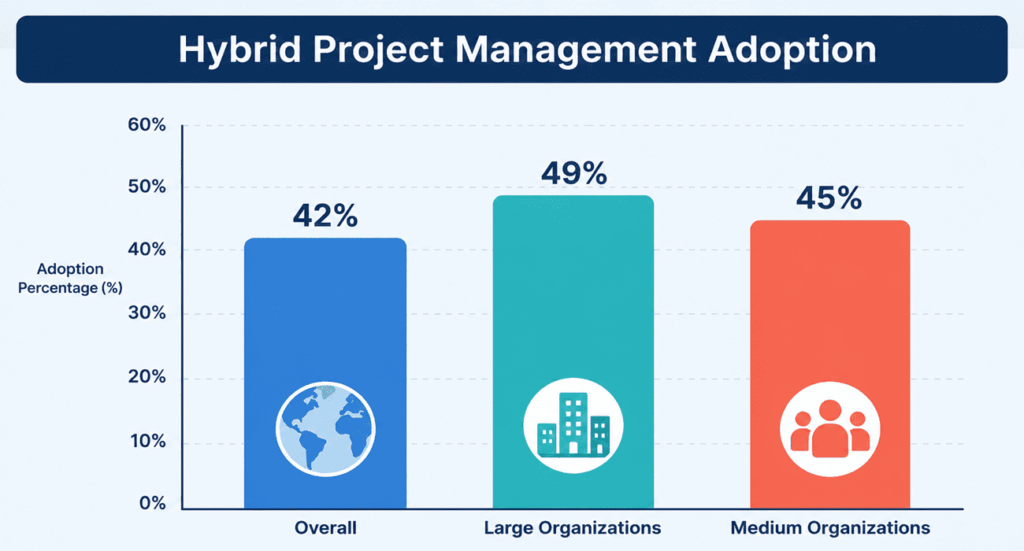
This trend reflects the need to balance structure and agility in today’s dynamic environment.
PRINCE2 Agile Certification Overview
There are two levels: Foundation and Practitioner. The Foundation exam has 50 multiple-choice questions, lasts 60 minutes, and requires a 56% pass mark (28 correct answers). It’s a closed-book exam with no prerequisites and results are often available the same day.
The Practitioner exam tests your ability to apply concepts in a scenario. It usually has 50 questions over two and a half hours and requires around 60% to pass (open-book with a scenario booklet). Candidates should first complete the Foundation exam or hold another qualifying credential.
Many training providers offer online and classroom courses. When choosing a course, consider accreditation, trainer experience, and student reviews.
Career Impact and Salary Potential
Earning a PRINCE2 Agile certification can increase your credibility. Project management specialists in the United States earn a median annual wage of $100,750. The lowest 10% earn about $59,830, while the top 10% make over $165,790. Demand for hybrid project managers is likely to grow as adoption rises, so investing in this skill could yield a strong return.
Getting Started with PRINCE2 Agile
If you’re new to project management, start by learning the basics of Agile, such as iterations and user stories. Next, familiarize yourself with PRINCE2 principles and processes. Then, enroll in a PRINCE2 Agile Foundation course. Many providers offer self-paced study options, practice exams, and peer communities.
Ask yourself: Why do you want to gain this credential? Is it to manage complex projects more effectively or to advance your career? Setting clear goals will help you stay motivated.
FAQs
Q1. How long does it take to prepare for the Foundation exam?
Preparation time varies. Many learners spend three to four weeks studying part-time. Focus on understanding the principles, processes, and hexagon model.
Q2. Can I take the Practitioner exam without prior experience?
Most candidates have some project management experience. While the exam tests your ability to apply concepts, you’ll need to have passed the Foundation exam first.
Q3. Is PRINCE2 Agile only for software projects?
No. It applies to any sector, such as construction, healthcare, and marketing, where projects require both structure and flexibility.
Summary
PRINCE2 Agile brings together the reliability of PRINCE2 with the adaptability of Agile. The hexagon model helps project teams balance time, cost, benefits, risk, quality, and scope. Adoption of hybrid methods is growing across industries, and salaries reflect the value of skilled project managers. Whether you’re a project manager seeking new tools or an organization looking to improve delivery, PRINCE2 Agile could be the key to success.

I am Mohammad Fahad Usmani, B.E. PMP, PMI-RMP. I have been blogging on project management topics since 2011. To date, thousands of professionals have passed the PMP exam using my resources.