Have you ever started a project and wondered whether you should follow a flexible set of guidelines or a strict, step-by-step process? That choice can make or break your project. Recent studies indicate that only 35% of projects worldwide finish successfully. Choosing the appropriate project management framework or methodology is therefore essential for meeting deadlines, budgets, and quality goals.
In this blog post, you will learn what frameworks and methodologies are, how they differ, when to use them, and why making the right choice matters.
What is Project Management?
At its core, project management is “the application of knowledge, skills, tools, and techniques to project activities to meet project requirements.” It involves guiding a temporary endeavor from start to finish. Successful project managers balance hard skills—such as planning and budgeting—with soft skills, including communication and leadership. They also select an appropriate approach to structure the work.
Understanding Project Management Frameworks
A project management framework provides a high-level structure for running a project. According to the University of Nebraska’s Project Management Office, a framework is “a set of processes, tasks, and tools that provide guidance and structure for the execution of a project.” Frameworks outline stages such as initiation, planning, execution, and closing, but they leave room for tailoring to the specific needs of the project.

Frameworks are useful when a project needs flexibility or is expected to evolve. They encourage collaboration and allow teams to iterate based on feedback. Common frameworks include:
- Predictive (Traditional): Work proceeds through sequential phases; requirements are fixed, and changes are discouraged. This is suitable for projects with well-defined goals and limited uncertainty.
- Adaptive (Iterative): Work is done in small cycles with frequent reviews. It supports innovation and allows requirements to evolve.
- Hybrid: Combines elements of predictive and adaptive approaches. For example, a project may follow a predictive schedule while using iterative development for certain components.
Because frameworks focus on structure rather than prescription, they are well-suited to software development, research, and other innovative fields in which requirements change frequently. Frameworks also support remote or hybrid teams by providing clear stages while allowing flexibility.
Understanding Project Management Methodologies
A project management methodology is more prescriptive. It defines a detailed system of practices, techniques, procedures, and rules. The Project Management Institute describes methodology as “a system of practices, techniques, procedures, and rules used by those who work in a discipline.” Methodologies are repeatable; they tell you exactly what to do, in what order, and with which tools.

Methodologies are suited to projects with large scopes, high complexity, or regulatory requirements. They reduce ambiguity and help ensure consistency across teams. Common methodologies include:
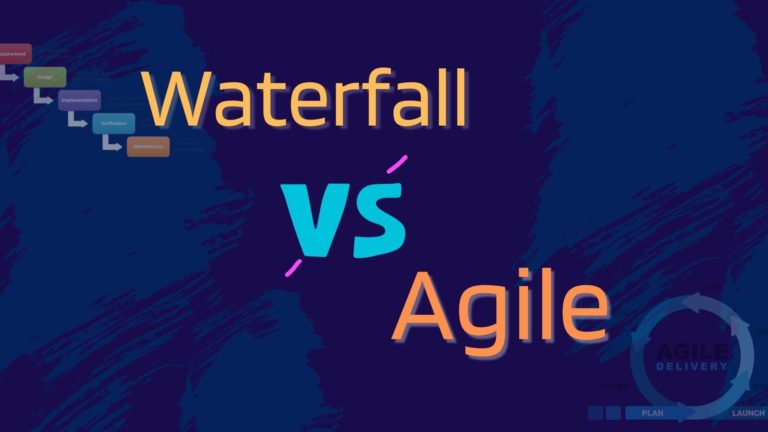
- Waterfall: A linear and sequential method where each phase must be completed before the next begins (initiation, planning, execution, monitoring, and closing).
- Agile: An iterative method emphasizing collaboration and customer feedback. Work is delivered in short sprints; teams regularly adjust based on stakeholder input.
- Lean: Focuses on eliminating waste and continuously improving processes. Lean principles can be combined with other methods to enhance efficiency.
Because methodologies are prescriptive, they are commonly used in construction, infrastructure, and regulated industries where detailed documentation and compliance are critical.
Project Management Framework Vs Methodology: Key Differences
| Parameter | Framework | Methodology |
| Structure | Provides high?level guidance and stages; adaptable to project needs | Defines detailed processes, steps, and tools; prescriptive |
| Flexibility | High – allows adjustments based on evolving requirements | Low – follows defined rules; changes require formal approval |
| Documentation | Minimal documentation; focuses on collaboration and outcomes | Extensive documentation to ensure repeatability and compliance |
| Typical Use | Innovative projects, software development, research, and exploratory work | Large-scale infrastructure, regulated industries, high-risk projects |
| Examples | Predictive, Adaptive, Hybrid frameworks | Waterfall, Agile, Lean, PRINCE2, Scrum |
The key difference lies in the degree of structure required. Frameworks offer flexible guidance, while methodologies provide strict instructions.
When Should You Use a Framework?
You should consider a project management framework when:
- Flexibility is Essential: Requirements may evolve, and the team needs room to adapt. Frameworks support iterative development and frequent feedback.
- The Scope is Smaller or Exploratory: For research, innovation, or software projects, flexibility often matters more than rigid processes.
- Stakeholders Want Collaboration: Frameworks encourage active participation, thereby improving team alignment.
Adaptive frameworks like Agile have become dominant in software and IT. Agile adoption has exceeded 70% among software and IT teams, underscoring the popularity of flexible approaches.
When Should You Use Methodology?
A methodology is appropriate when:
- The project is complex and high-risk: Large infrastructure or government projects often have tight budgets and schedules; a prescriptive approach reduces uncertainty.
- Detailed documentation is required: Regulatory or contract-driven projects need consistent records and sign-offs.
- Repeatability matters: When the same type of project is performed regularly, a methodology ensures consistent outcomes.
Even in IT, many teams still use formal methods. For example, Waterfall’s sequential approach is well-suited to projects with fixed requirements and clear deliverables.
How to Choose the Right Approach
Selecting between a framework, a methodology, or a hybrid depends on the following factors:
- Project Complexity: Complex projects with numerous dependencies may benefit from a methodology; simpler or exploratory projects may be better suited to a framework.
- Requirements Stability: If requirements are likely to change, choose a flexible framework. If they are fixed, a methodology offers more control.
- Team Experience: Teams new to adaptive methods may need time to adjust; teams familiar with predictive frameworks may find Waterfall easier to apply.
- Stakeholder Expectations: Frequent collaboration calls for a framework. Formal stakeholder reviews may require a methodology.
- Regulatory Environment: Industries with strict compliance requirements tend to adopt methodologies to meet documentation and audit requirements.
- Industry Standards and Best Practices: Research common project management approaches for your industry. For example, the choice of methodology for construction projects almost always leans toward predictive models such as the Waterfall or the Critical Path Method due to contractual and regulatory requirements. Conversely, selecting a framework for startup or software projects typically points to adaptive frameworks, such as Agile, to manage rapid innovation.
If your project has elements that require both flexibility and structure, consider a hybrid approach. For example, use a predictive plan for the overall schedule but adopt iterative cycles for product development.
Why the Choice Matters
Poorly chosen approaches can lead to overruns and failures. According to recent surveys, 66% of organizations report frequent project delays caused by unclear requirements, and 55% of projects experience scope creep. Only 35% of projects worldwide finish successfully. These statistics highlight the cost of misalignment between approach and project needs. Conversely, projects using Agile principles improve delivery speed by 30–50%, demonstrating how the right framework can enhance outcomes.
Suppose a software team uses a rigid Waterfall methodology for a product with evolving user requirements. By the time the team completes the design phase, the market has shifted, and the product no longer meets customer needs. Switching to an adaptive framework such as Agile enables continuous feedback and adjustments, reducing rework and increasing customer satisfaction.
On the other hand, a large construction project with strict safety regulations benefits from a formal methodology; omitting documentation could result in costly fines and delays. Understanding these tradeoffs helps you avoid common pitfalls.
Best Practices for Implementing Frameworks or Methodologies
- Align with Objectives: Always link your chosen approach to business goals. For example, if speed to market is critical, a flexible framework may deliver faster iterations.
- Train Your Team: Ensure everyone understands the chosen framework or methodology. Provide training or certification courses, such as the PMP Certification training to build skills.
- Customize as Needed: Neither frameworks nor methodologies are one-size-fits-all. Tailor processes to fit your organization’s culture and project context.
- Communicate Regularly: Maintain open channels with stakeholders. Clear communication reduces the risk of misunderstandings, which is a primary contributor to project failure.
- Review and Improve: After each project phase or sprint, conduct retrospectives to learn what worked and what didn’t. Even structured methodologies benefit from continuous improvement.
FAQs
Q1. What’s the main difference between a framework and a methodology?
A framework provides high-level guidance and allows flexibility, while a methodology prescribes detailed steps, tools, and documentation.
Q2. Can I use both a framework and a methodology together?
Yes. Many projects adopt a hybrid approach: a predictive framework for overall planning and an agile methodology for product development.
Q3. Which approach is best for remote teams?
Flexible frameworks like Agile encourage collaboration and adaptation, which can help distributed teams maintain momentum.
Q4. How do I know if my project needs a methodology?
If your project has a large scope, strict regulations, or high risk, a methodology provides structure, detailed documentation, and control.
Q5. Is Agile a framework or a methodology?
Agile is often referred to as both a framework with guiding principles and a set of methodologies, such as Scrum or Kanban. The key is that Agile promotes iterative delivery and customer collaboration.
Q6. What is the best project management methodology for beginners?
For beginners, starting with a well-defined methodology like Waterfall can provide a clear structure to understand fundamental PM concepts—scope, schedule, and cost. Alternatively, the Scrum framework (an Agile methodology) provides a simple set of roles, events, and artifacts that are well-suited to learning iterative delivery.
Q7. Can you give an example of a hybrid project management approach?
A common hybrid approach is to use a predictive (Waterfall) framework for overall project planning and contract stages, while employing Agile methodologies (such as Scrum) for the design and development phases. This allows for high-level budget and timeline stability while enabling flexibility and feedback loops in the creative/technical work.
Q8. How do I convince my team or stakeholders to adopt a new framework or methodology?
Focus on shared goals and pain points. Present data (like the statistics in this article) showing how the right approach reduces delays. Propose a pilot project to demonstrate value with low risk. Offer training (e.g., PMP Certification for fundamentals, Certified ScrumMaster for Agile) to build confidence and competence.
Summary
Selecting a project management framework or methodology is not a one-time choice; it’s a strategic decision that should align with your project’s goals, complexity, stakeholders, and regulatory environment. By understanding the differences and applying the right approach, you can improve your chances of success, reduce delays, and deliver greater value.
Further Reading:

I am Mohammad Fahad Usmani, B.E. PMP, PMI-RMP. I have been blogging on project management topics since 2011. To date, thousands of professionals have passed the PMP exam using my resources.