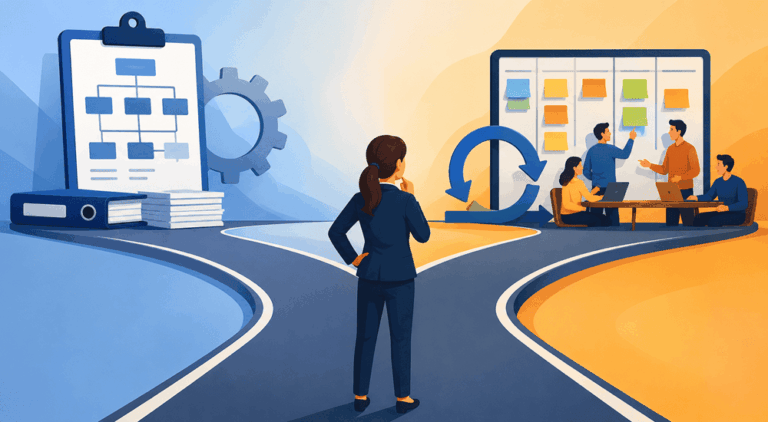
Many companies juggle several projects at once. Change happens fast. A project management office (PMO) shares tools and guides with teams. But strict PMOs can slow work. An Agile PMO mixes proven rules with flexible ways. It guides projects without heavy control.
This blog post explains what an Agile PMO is, how it differs from an old-style PMO, and how to build one. It also shows why training matters for your career.
What is an Agile PMO?
A PMO supports teams. It creates simple forms, tracks budgets, and shares lessons. Many companies now rely on PMOs. Wellingtone’s 2024 report found 86 percent of companies have at least one PMO, yet only 45 percent offer official project management lessons.
An Agile PMO adapts to change. It plans in short cycles, collects feedback, and clears roadblocks. It keeps work aligned with company goals rather than dictating strict procedures. Using agile practices helps a PMO match work with company goals and cut risk.
Have you seen a project change every week? An Agile PMO makes those shifts smoother. Managers act like coaches. They listen, help, and adjust rather than command.
How Does a Traditional PMO Differ from an Agile PMO?
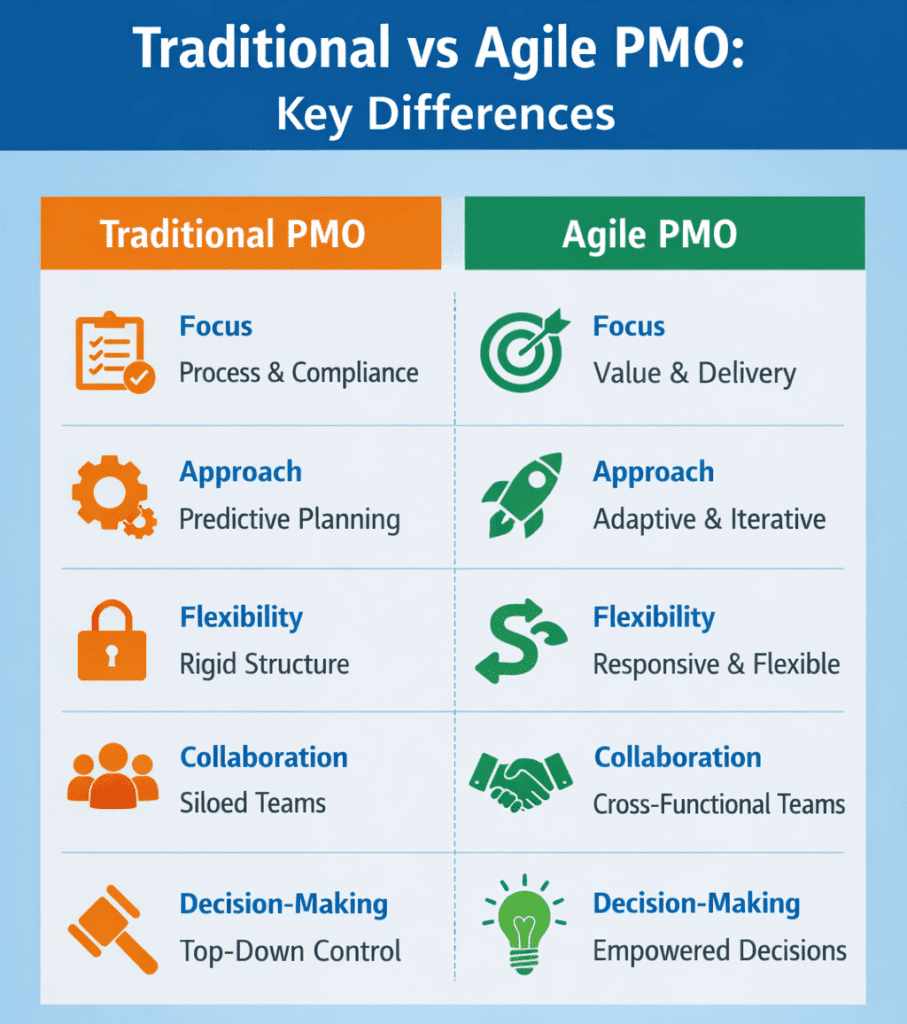
An old-style PMO follows a strict plan. It sets a budget at the start, writes a detailed schedule, and expects teams to follow it. Decisions come from the top. This works for simple jobs that rarely change.
An Agile PMO focuses on what people need. Teams plan in small steps and share results often. Managers clear roadblocks and trust teams to choose the best method. It values people and teamwork over detailed rules. Think of the difference like a traffic light versus a roundabout. A traffic light controls every move. A roundabout guides drivers but lets them choose when to go.
The infographic below highlights these differences:
An Agile PMO uses the right method for each project. Some jobs may use a simple plan; others might use Scrum or Kanban. The PMO guides the choice but does not force one way of working. This helps teams meet customer needs quickly.
How Agile PMOs Influence How Companies Work
Agile PMOs shape the way work happens. Here are some ways they help:
- Provide simple tools. Teams use clear forms and dashboards. The PMO updates these tools as people learn.
- Share lessons. The PMO collects what works and what does not. Wellingtone notes that only 47 percent of projects are led by trained project managers. Guidance fills that gap.
- Use people wisely. The PMO matches people and budgets to the right work. It reviews goals often and moves people when needed.
- Improve communication. Regular check-ins and shared dashboards keep everyone on the same page.
- Encourage learning. Teams look back on what worked and what didn’t. The PMO supports constant growth.
Using agile practices often means changing habits. Departments must work together more. Leaders need to give teams room to decide. Experts say that aligning work with company goals and helping teams move fast are major benefits of an Agile PMO.
Steps to Create an Agile PMO
Building an Agile PMO takes time and care. Follow these simple steps:
1. Define the Purpose
Write down why your PMO exists. Explain what services it will provide, such as training or managing people and budgets. Agree on how you will measure success.
2. Identify the People and Tools
Decide which roles you need. These may include project managers, agile coaches, or analysts. Secure funding for training and programs. Make sure everyone knows what they will do.
3. Build Trust
Talk with leaders, team members, and anyone who cares about the work. Hold workshops or informal meetings. Trust makes it easier to solve problems and adapt.
4. Train Your Team
Offer courses in simple agile methods like Scrum or Kanban. Provide mentoring. Many teams lack official lessons, so education pays off.
5. Roll Out Agile Practices
Start with a small project. Use easy methods and gather feedback. Share progress through visual dashboards. Adjust as you learn.
6. Review and Improve
Meet often to ask what went well and what did not. Change forms, roles, or tools based on these talks. Constant improvement keeps your PMO flexible.
The infographic below sums up these steps:
Why Build an Agile PMO?
You might ask, why bother? The gains are clear:
- Faster results. Teams work in small steps and release value often. Customers see results sooner and can respond.
- Better flexibility. The PMO adjusts methods to fit each project. When goals change, teams switch direction without starting over.
- Stronger teamwork. Teams across different jobs support each other. Walls between groups disappear, and trust grows.
- Clear goals. Projects match company goals. The PMO helps leaders choose the right projects and stop work on projects that no longer matter.
- Ongoing learning. Teams reflect often and make small changes. Over time, the company gets better.
Experts add that aligning work with company goals is a core advantage. People enjoy meaningful work, and companies stay competitive.
Investing in Yourself
Skills matter. Training and credentials can change your path. The Project Management Institute’s 2023 Salary Survey reports that PMP-certified workers earn 33 percent more than those without the badge. A PMP badge shows employers that you use good methods.
Are you preparing for the PMP exam? Consider the 35-Contact-Hours PMP Training Program from PM Sprout. The course has live lessons, practice tests, and flexible times. Investing in yourself can lead to higher pay and new chances.
FAQs
Q1. What does an Agile PMO do?
It supports teams using agile methods. It offers forms, guidance, and training. It keeps work tied to business goals and clears roadblocks.
Q2. How is an Agile PMO different from an old-style PMO?
An old-style PMO follows strict plans and rules. An Agile PMO values flexibility and teamwork. It trusts teams to choose the right way for each job.
Q3. What are the first steps to building an Agile PMO?
Begin with a clear purpose. Decide which roles and tools you need. Build trust with leaders and teams. Train people and start small.
Q4. Why pursue PMP certification?
The PMP badge proves your skills and can lead to higher pay. PMI found that PMP holders earn about one-third more than those without.
Summary
Agile PMOs blend structure and adaptability. They help companies move fast and stay focused on what matters. By defining a clear purpose, building trust, and learning continuously, you can create a PMO that keeps projects on track in a changing world.

I am Mohammad Fahad Usmani, B.E. PMP, PMI-RMP. I have been blogging on project management topics since 2011. To date, thousands of professionals have passed the PMP exam using my resources.