Choosing between PRINCE2 and PRINCE2 Agile can feel difficult because both methods support successful project delivery in different ways. PRINCE2 focuses on structure, governance, planning, and clear project control. It works best when requirements, timelines, and budgets are stable. PRINCE2 Agile combines the strong governance of PRINCE2 with the flexibility of agile practices. It helps teams adapt quickly while still maintaining accountability and business alignment.
As more organizations adopt hybrid project management approaches, professionals now need both control and adaptability.
This blog post explains the differences, benefits, and best use cases of PRINCE2 and PRINCE2 Agile so you can decide which approach fits your projects, team environment, and long-term career goals.
Key Takeaway
- Structured vs flexible: PRINCE2 is a process-based method that provides strong governance and clear roles. It works well when requirements are stable and control is important. PRINCE2 Agile adds iterative delivery and adaptability to the PRINCE2 framework, making it suited to projects where change is likely.
- Hybrid on the rise: A recent survey by Digital.ai found that nearly three-quarters of organizations now use hybrid or home-grown delivery models that mix agile practices with other frameworks. This shows the growing demand for methods that combine structure with flexibility.
- Choose based on context: Consider your project’s complexity, risk profile and team experience. If you need tight control and a clear path, PRINCE2 may be the best fit. When you must adapt quickly or incorporate agile teams, PRINCE2 Agile offers a balanced solution.
Understanding Agile Methodology
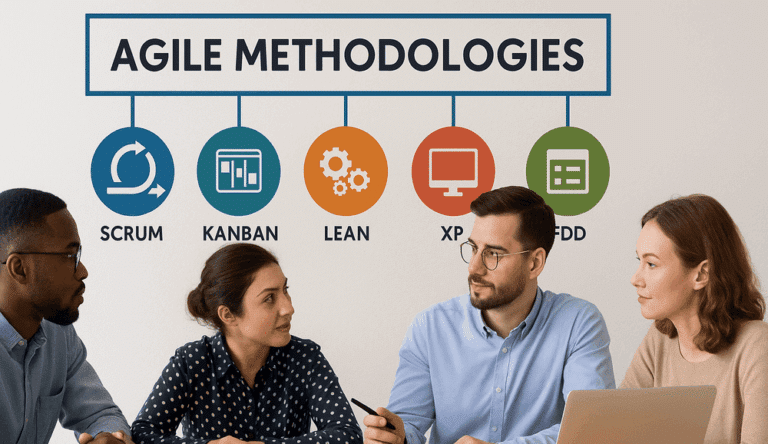
Agile is an approach built around short, iterative cycles. Instead of planning everything up front, teams break work into small increments and deliver value early and often. They review progress frequently, incorporate feedback and adjust their plans. This way of working encourages collaboration and transparency. It also empowers teams to respond to change rather than being locked into a rigid plan.
Why has agile become so popular? Many businesses need to react quickly to evolving customer needs and market changes. A software team, for example, may release a new feature, gather user feedback and refine the product in the next sprint. This continuous improvement helps them stay competitive. It also makes team members feel engaged because their ideas can be tested and implemented without waiting for a final delivery.
Hybrid delivery models are now common. The 18th State of Agile Report from Digital.ai found that about 74 percent of organizations use hybrid or home-grown approaches that blend agile with other methods. This shift reflects a pragmatic approach: teams borrow what works from different frameworks to meet complex demands. It also shows that pure agile is not always the answer. Sometimes you need the predictability of a structured method alongside the flexibility of iterative delivery.
What is PRINCE2?
PRINCE2, which stands for Projects IN Controlled Environments, is a structured project management method. It defines roles, processes and management products that guide a project from initiation to closure. PRINCE2 emphasizes a strong business case, clear governance and stage-based control. Each stage ends with a review, giving stakeholders the chance to confirm that the project remains viable.
This method is popular in government, construction, finance and other sectors where accountability is critical. Its strong governance helps ensure that projects deliver the intended benefits, stay within budget and meet quality standards. A PeopleCert survey of PRINCE2 certified professionals in the UK found that 94 percent of respondents said that over 75 percent of their PRINCE2-managed projects were considered successful. This high success rate reflects the value of clear processes and defined roles.
PRINCE2 7th Edition
The PRINCE2 method has evolved to address modern challenges. The 7th Edition, released in 2023, added a people-integrated element to sit alongside the familiar principles, practices and processes. This element highlights the importance of leadership, teamwork and communication. The update also introduced four new management approaches for change, commercial, data and sustainability, and added sustainability as a performance target. These changes make PRINCE2 more relevant in today’s environment, where projects must consider social responsibility, data management and rapid technological change.
What is PRINCE2 Agile?
PRINCE2 Agile was launched in 2015 to bridge the gap between predictive and adaptive project management. It combines PRINCE2 governance with agile delivery techniques such as Scrum and Kanban. This hybrid approach lets teams work iteratively while maintaining the control and accountability that stakeholders expect.
Under PRINCE2 Agile, the project environment still uses PRINCE2 themes, principles and processes, but delivery teams apply agile practices. For example, planning is done in shorter time boxes, and there is more emphasis on responding to change. It encourages regular communication between product owners and development teams. It also promotes continuous improvement through retrospectives. PRINCE2 Agile is not a replacement for PRINCE2; it’s an extension that offers more flexibility.
Benefits of a Combined Approach
By blending governance with agility, PRINCE2 Agile offers the best of both worlds. Teams can pivot when requirements change, yet they still have clear roles and accountability. This makes the method ideal for digital transformation, research and development, or any environment where scope is uncertain but compliance matters. It also helps organizations that already use PRINCE2 transition toward agile without discarding their existing practices.
PRINCE2 Vs PRINCE2 Agile: Key Differences
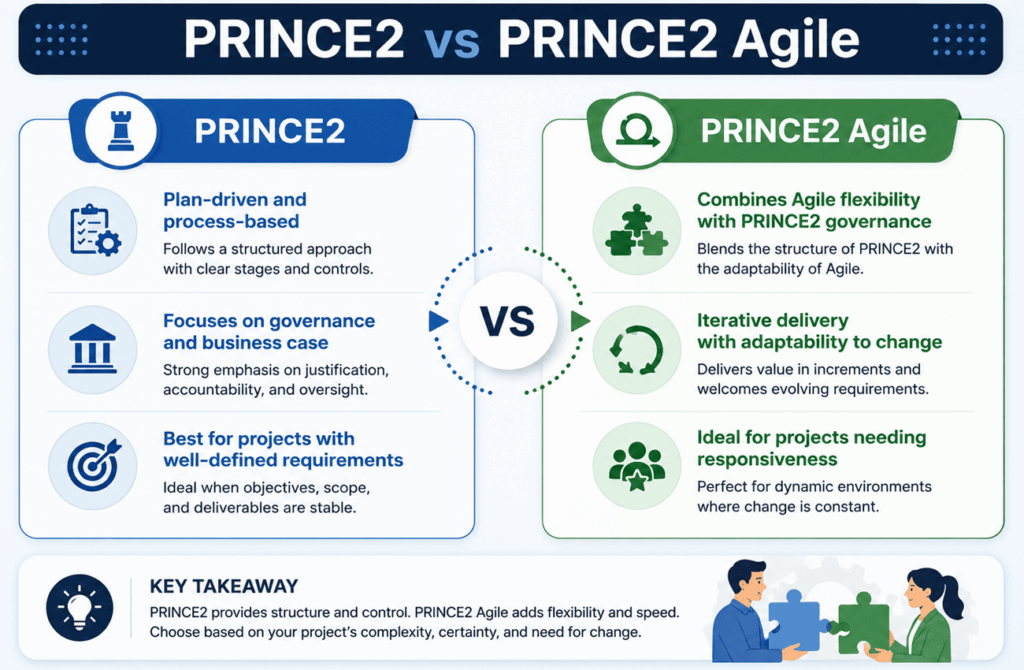
Both PRINCE2 and PRINCE2 Agile provide structure and guidance, but their focus differs. PRINCE2 is plan-driven and process-based. It defines stages, products and decision points. PRINCE2 Agile retains this governance but introduces iterative delivery, time-boxed activities and continuous feedback.
The table below illustrates the main distinctions between the two approaches:
How to Choose the Right Approach
Selecting a project management method is not a one-size-fits-all decision. Start by looking at your project environment and goals.
1. Are your requirements clear and unlikely to change? Projects with a fixed scope, such as regulatory compliance or infrastructure upgrades, benefit from PRINCE2’s stage gates and governance. The method helps teams control budgets, manage risk and keep stakeholders aligned.
2. Do you expect frequent change or uncertainty? When requirements may evolve, PRINCE2 Agile can help your team respond quickly while maintaining oversight. Iterative delivery allows you to gather feedback and pivot without losing sight of the business case.
3. How important is stakeholder confidence? PRINCE2’s emphasis on documentation and accountability gives sponsors clear visibility. If you are introducing agile practices into a conservative organization, PRINCE2 Agile may ease the transition by preserving familiar governance structures.
4. What is your team’s experience? Teams already versed in agile may adopt PRINCE2 Agile smoothly. Those with little agile exposure might start with PRINCE2 Foundation to build a solid base before layering in agile practices.
Consider these questions honestly. Your choice should reflect your organization’s culture, the complexity of your project and the expectations of your clients. Remember that methods can be tailored. You might start a project using PRINCE2 and later adopt agile techniques when change becomes more likely.
FAQs
Q1. Is PRINCE2 Agile replacing PRINCE2?
No. PRINCE2 Agile complements PRINCE2 by adding agile delivery techniques. PRINCE2 remains a stand-alone method that you can use on its own or as a base for hybrid practices.
Q2. Do I need agile experience to study PRINCE2 Agile?
Not necessarily. Understanding PRINCE2 helps, but PRINCE2 Agile includes guidance for those new to agile. It explains how to apply agile frameworks within the PRINCE2 context.
Q3. Which certification should I take first?
If you are new to project management, start with PRINCE2 Foundation to learn the core principles and processes. Once you understand the basics, you can progress to PRINCE2 Agile to expand your skills.
Q4. Can I use agile methods without PRINCE2?
Yes. Many teams use pure agile frameworks such as Scrum or Kanban. However, combining them with PRINCE2 governance can provide extra control and alignment with business goals.
Summary
Choosing between PRINCE2 and PRINCE2 Agile depends on how your projects operate and how much flexibility your team needs. PRINCE2 offers strong governance, clear roles, and structured delivery for stable environments. PRINCE2 Agile combines that structure with agile practices, making it ideal for fast-changing projects. Both methods remain highly valuable and support successful project outcomes when applied correctly. By understanding your goals, risks, and delivery style, you can select the approach that best supports long-term business success and career growth.

I am Mohammad Fahad Usmani, B.E. PMP, PMI-RMP. I have been blogging on project management topics since 2011. To date, thousands of professionals have passed the PMP exam using my resources.