
A Terms of Reference (ToR) is a simple but powerful document that explains what a project, team, or committee is meant to do. It sets clear boundaries and defines the purpose, scope, and responsibilities in one place.
Without a ToR, people can easily misunderstand their roles or the goals of the work. This often leads to delays and confusion. A good ToR keeps everyone focused and aligned from the start. It gives structure to meetings, workstreams, and decisions.
In this article, you will learn what a Terms of Reference is, why it matters, and how it helps teams work better together.
Key Takeaway
- A Terms of Reference (ToR) defines the purpose, scope, and structure of a project, team, or committee.
- It clearly outlines roles, responsibilities, and expectations for everyone involved.
- A ToR helps prevent confusion, scope creep, and miscommunication.
- It keeps meetings and project activities focused and aligned with goals.
- A well-written ToR improves accountability and decision-making.
- It acts as a simple reference document that guides the team throughout the work.
Why Use a Terms of Reference Document?
Imagine starting a meeting or project with no clear agenda or scope. Before long, people will pull in different directions. A ToR solves that problem. It sets the ground rules for groups such as steering committees, workstreams and advisory boards. By putting responsibilities and decision-making authority in writing, you avoid scope creep and save time. I’ve used ToRs to clarify roles for cross-functional teams and the result is always greater focus and respect for each member’s time.
Another reason to draft a ToR is to give stakeholders confidence. The document shows that you’ve considered who does what, how you’ll communicate and where the boundaries lie. In today’s hybrid-working world, written clarity is even more important.
What is a Terms of Reference Document?
A Terms of Reference is a concise document that outlines the purpose, scope, resources, objectives and constraints for a specific activity. That activity could be a meeting, committee, project or workstream. The ToR explains why the group exists, what it will deliver and how it will operate. It also lists who is involved and what authority they have. Because it is short, typically two or three pages, it is easy to read and agree on.
The ToR is sometimes confused with a project charter. Both documents describe why a project exists and what it aims to achieve. The difference is mostly scope and audience. A charter is a formal document that authorizes the project manager to allocate funds and resources for the entire project. It often runs to several pages and is signed by senior sponsors.
A ToR, by contrast, focuses on one group or workstream. It is high-level and can be created for committees, boards, working groups, or even recurring meetings. When in doubt, choose the document that matches the level of authority you need.
Benefits of Having a ToR
- Clarity of purpose: A ToR states why the group exists and what success looks like. It reduces ambiguity and prevents unnecessary work.
- Scope control: By setting boundaries at the start, you help team members avoid taking on tasks outside their remit.
- Accountability: Listing names and responsibilities clarifies who is responsible for each action. This encourages follow-through and keeps projects moving.
- Efficient meetings: When everyone knows the agenda and decision-making process, meetings stay focused and productive. You also avoid revisiting old issues.
- Stakeholder confidence: Sponsors and team members can see that the project is under control. A good ToR reassures them that you’re managing risks and resources wisely.
Terms of Reference Vs Project Charter: Which One Should You Use?
Both documents aim to give structure to a project, but they serve different audiences. A project charter formally launches a project and grants authority to the project manager. It is usually created at the start of a large initiative and signed off by senior executives. It may include a high-level budget, major milestones, risks and assumptions. The charter is often mandated by organizational policy.
A ToR is more flexible. You can create one for a steering committee, a technical workstream, or a decision-making board. It is shorter than a charter and focuses on the scope and responsibilities of a particular group.
For example, if you have a committee charged with reviewing pay and benefits annually, the ToR would outline their remit, the frequency of meetings and how recommendations are escalated. Use a charter when you need formal approval and financial authority; use a ToR when you need a practical tool to guide a group’s work.
What Should Be Included in a ToR?
Terms of Reference (ToR) may vary by project or group, but most follow a clear structure. These sections help readers understand the purpose, scope, and responsibilities.
- General Information: Start with basic details such as the project name, reference number, date, and version. This helps track updates and ensures everyone uses the latest version of the document. Add the document title in the footer for clarity.
- Project Introduction: Explain what the project or workstream is about. Keep it short and clear. State the main goal and mention any guiding methods, like agile or PRINCE2.
- Objectives and Deliverables: List what the team must achieve. Make goals clear and measurable. Include key outputs such as reports, designs, or training plans so progress is easy to track.
- Scope: Define what is included and what is not. This avoids confusion later. For example, a team may review policies but not approve budgets.
- Key Resources, Roles, and Responsibilities: List team members and their roles. Explain what each person does. Mention meeting frequency and how decisions are made to keep work organized.
- Organization Structure: Show how the group fits into the larger project. A simple chart helps people understand reporting lines and relationships.
- Approach: Describe how the work will be done. State if you will use agile, waterfall, or a mix. Mention key processes like risk or change management.
- Milestones: List major deadlines and key dates. This gives the team a clear timeline and helps track progress.
- Budget: Summarize the available budget if needed. Explain what costs are covered to avoid overspending.
- Other Notes: Add any extra details such as file locations or contact points. Keep this section short and relevant.
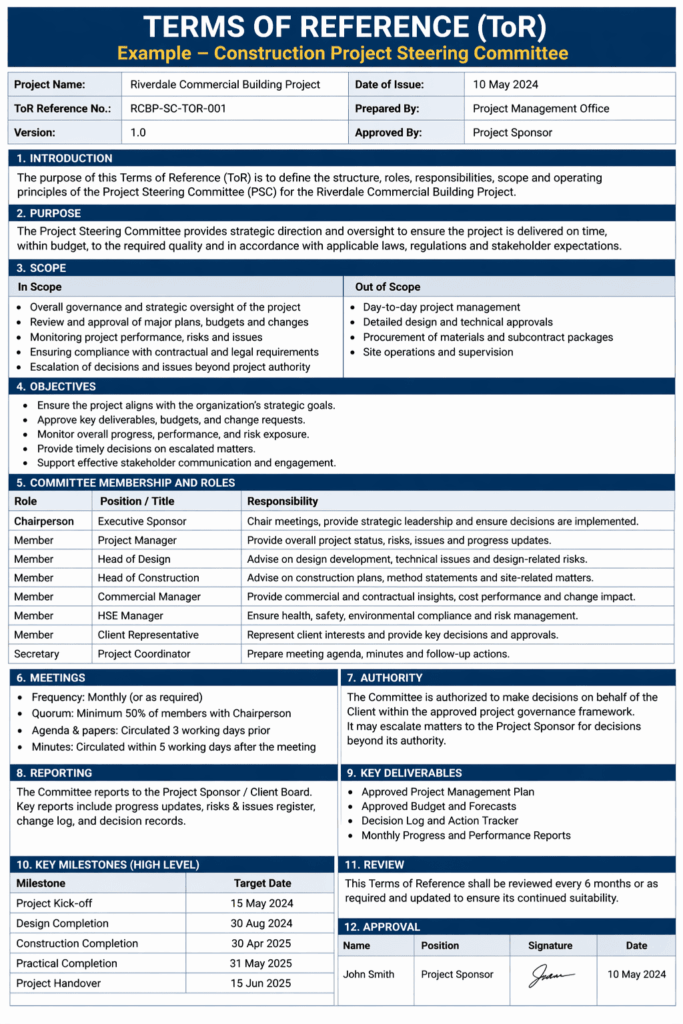
Example of ToR
The image below shows an example of Terms of Reference:
How Often Should You Update a ToR?
A ToR is a living document. It should reflect the current scope and responsibilities of your group. Most teams review their ToRs annually or when there is a significant change. For example, if the responsibilities of a steering committee expand to include budgeting decisions, revise the ToR accordingly. At the bottom of your ToR, note the next review date so everyone knows when to revisit it. You can agree on this date with the group during the kick-off meeting.
Tips for Creating an Effective ToR
Use plain language. Avoid jargon and complex sentences. Your ToR should be accessible to anyone, regardless of their role or level of project management knowledge.
Be specific. Vague statements create confusion. Say “The group will meet monthly” rather than “Meetings will occur regularly.”
Gain agreement. Circulate the draft ToR to the people who will use it and ask for feedback. Update the document based on their input. Approval ensures commitment.
Keep it concise. Aim for two or three pages. A long ToR will not be read. Focus on the information that directly affects how the group works.
Use tables and visuals. Tables, charts and infographics break up text and make complex information easier to understand.
How to Get the Terms of Reference Template
If you want a ready-made document to use as a starting point, you can download my free Terms of Reference template. It is a Microsoft Word file that contains headings, placeholder text and guidance notes.
Click here to download the FREE ToR Template
Once you download the file, remove my sample notes and replace them with your content. Update the header, footer and document properties. Remember to customize the document for your project or committee; you want it to reflect your organization’s style and terminology.
FAQs
Q1. What is the difference between a Terms of Reference and a project charter?
A ToR is concise and focuses on a single group or workstream, whereas a charter is a formal document that authorizes an entire project. Use a ToR for committees or sub-projects and a charter for larger initiatives.
Q2. How long should a Terms of Reference be?
Keep it to two or three pages. Include essential information but avoid unnecessary detail. The goal is to give readers a clear overview, not to recreate the project plan.
Q3. When should I create a Terms of Reference?
Draft a ToR at the start of a project or when forming a new committee or working group. You can also create a ToR for recurring meetings that need a defined purpose and structure.
Q4. Who approves the Terms of Reference?
The people who will use the ToR should review and agree to it. In many cases, the project sponsor or steering committee chair signs off on the document.
Q5. How often should a ToR be reviewed?
Review your ToR annually or whenever the group’s scope or responsibilities change. Note the next review date at the bottom of the document.
Summary
A Terms of Reference is a simple document, but it plays a key role in project success. It defines purpose, scope, roles, and expectations from the start. This clarity helps teams stay focused and avoid confusion. Whether you manage a project or lead a committee, a well-written ToR keeps work structured and aligned. By using a clear format and updating it when needed, you create a strong foundation for better decisions, smoother communication, and successful outcomes.

I am Mohammad Fahad Usmani, B.E. PMP, PMI-RMP. I have been blogging on project management topics since 2011. To date, thousands of professionals have passed the PMP exam using my resources.