Choosing the right training provider can shape your entire certification journey. Many PMP aspirants ask whether a PMI Authorized Training Partner is really worth it. The short answer is yes, and for good reason. A PMI Authorized Training Partner gives you structured learning, official content, and guidance from certified instructors who understand the exam. This helps you study with clarity and confidence from day one.
So, why choose a PMI Authorized Training Partner? Because it removes guesswork. You learn from PMI-approved material, follow a clear study path, and prepare with real exam-aligned content. Instead of wasting time on outdated resources, you focus on what matters. If your goal is to pass faster and build strong project management skills, choosing an ATP is a smart and reliable step forward.
This blog post will explain why partnering with a PMI ATP can make all the difference in your preparation, career growth, and salary potential.
Key Takeaway
- Trusted content: ATPs use official PMI materials, ensuring that what you learn matches the latest exam content.
- Expert coaching: Certified instructors provide real-world insights, guidance, and accountability.
- Efficient learning: Structured courses condense preparation time and focus on what matters most.
- Better results: PMP-certified professionals earn a median salary that is 17% higher than their non-certified peers, and nearly 60% report recent pay increases.
Understanding the PMI Authorized Training Partner Program
The PMI Authorized Training Partner program is a quality assurance initiative launched by the Project Management Institute (PMI). It replaces the former Registered Education Provider (REP) program, which PMI phased out because changing global markets and customer needs required more consistent content and instructor alignment.
Under the ATP model, training providers must meet rigorous standards. These include:
- Use of PMI-licensed content. Only ATPs are authorized to deliver official PMI course materials. This ensures that the curriculum aligns with the current Examination Content Outline (ECO) and the latest PMP exam updates.
- Certified instructors. ATP instructors are not just lecturers; they are credentialed project managers who bring practical experience into the classroom. Many have earned the certifications they teach and can share personal strategies for passing the exam.
- Verified quality and support. ATPs undergo periodic audits and must maintain high student satisfaction scores. PMI provides resources, feedback mechanisms, and an Authorized Training Partner badge to help learners verify legitimacy.
- Flexible delivery. The program supports a variety of formats, including live classroom, virtual instructor-led, and hybrid options, so learners can choose the experience that fits their schedule.
In essence, the ATP program offers a higher bar of quality assurance than the previous REP model. When you see the PMI ATP badge, you know that the provider meets PMI standards and delivers content that stays current with exam changes.
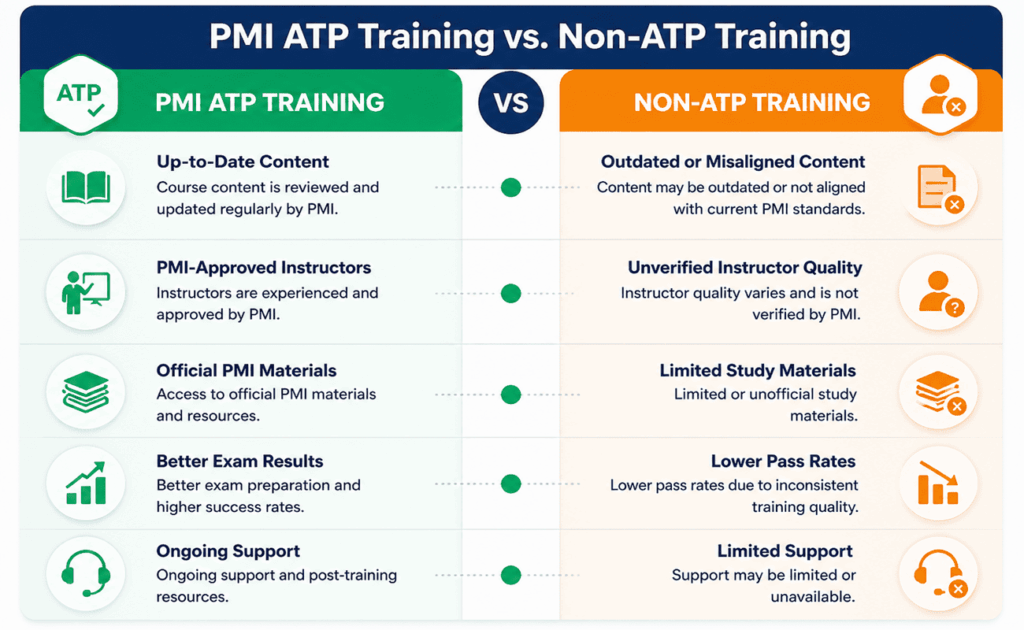
PMI Authorized ATP Vs Non-ATP Comparison
The image below shows the key differences between PMI ATP and non-ATP:
Benefits of Choosing a PMI Authorized Training Partner
PMI outlines seven core benefits of working with an Authorized Training Partner. The following sections expand on each advantage and provide real-world examples to illustrate why ATPs are a smart investment.
1. Learn from Experienced Practitioners
ATP instructors are practitioners first and educators second. They have managed projects, dealt with stakeholders, and solved real problems. This real-world experience translates into stories that make abstract concepts tangible. During a recent virtual class, one instructor shared how a risk register prevented a costly delay on an infrastructure project. Such anecdotes help you remember concepts during the exam and apply them afterward.
Beyond sharing experiences, instructors are also certified. PMI requires ATP trainers to hold the certifications they teach. They have walked the same path as their students, understand the pressure of the exam, and can offer practical study tips, like how to manage time during the 230-minute test or how to prioritize the People, Process, and Business Environment domains in the current ECO.
2. Access Authentic, PMI-Developed Curriculum
When you enroll with an ATP, you receive official PMI course materials. These materials mirror the exam content and incorporate PMI’s latest standards and frameworks. This alignment reduces the risk of studying outdated content, a common issue with third-party textbooks and free online resources. Course exercises are designed to reinforce understanding and include practice questions that closely resemble those on the real exam.
For example, the current PMP exam uses a combination of multiple-choice, multiple-response, and fill-in-the-blank question types. ATP materials include sample questions of each type, preparing students for the variety they will encounter. In contrast, self-study materials often focus on older question formats.
3. Condense Your Timeline and Study Efficiently
Preparing for the PMP exam can take months when studying alone. ATPs streamline the process by focusing on the topics that matter most. Structured lesson plans emphasize key areas in the ECO and avoid unnecessary detours. Many providers offer intensive boot camps that cover essential content in four to five days. Students leave with a clear study plan and a better understanding of their strengths and weaknesses.
Moreover, the accountability built into instructor-led sessions keeps you on track. Weekly check-ins, practice tests, and group discussions ensure consistent progress. This structure can be especially valuable for working professionals who might otherwise postpone study sessions.
4. Engage with a Community of Peers
Learning doesn’t happen in isolation. ATP classes bring together students from diverse industries and backgrounds. Group exercises encourage discussion and peer-to-peer learning. During a recent course, participants from healthcare, IT, and construction shared how they apply agile practices in their sectors. Such exchanges broaden your perspective and build a network that may help you long after the exam.
Some ATPs maintain online communities where alumni continue to ask questions, share job opportunities, and celebrate successes. This community support can keep you motivated as you prepare for the exam and beyond.
5. Gain Exclusive Resources and Practice Tools
ATPs provide access to tools that are not available elsewhere. These resources may include:
- PMI-licensed practice questions that mirror the difficulty and style of the real exam.
- Exam simulators that replicate the testing environment, allowing you to practice time management and build confidence.
- Digital flashcards and study guides that focus on process groups and knowledge areas.
- Post-course support, such as instructor Q&A sessions or refresher courses if you need additional help.
These extras add value and can make the difference between passing on the first attempt and facing re-examination fees.
6. Benefit from Proven Success Rates
While no ethical training provider can guarantee that you will pass the exam, ATPs have a track record of success. PMI notes that pass rates for students who prepare with authorized partners consistently exceed those of self-study or non-authorized options. Many ATPs even offer satisfaction guarantees or complimentary course retakes if you don’t pass on your first try.
More importantly, the return on investment extends beyond exam success. According to PMI’s 2025 Salary Survey, PMP-certified professionals report earning a 17% higher median salary than non-certified peers across 21 countries. In the United States, the median salary for PMP-certified respondents is $135,000, which is 24% higher than that of non-certified respondents. Nearly 60% of PMP-certified respondents reported a compensation increase within the past year. These statistics underscore how professional certification and the preparation that leads to it translate into tangible career and salary benefits.
7. Follow a Structured Path to Certification and Growth
ATPs help you map out your journey. They outline the steps required to qualify for the exam, guide you through application submission, and provide ongoing support after certification. Many providers offer continuing professional development units (PDUs) to help you maintain your credential. Some even pursue advanced certifications like Program Management Professional (PgMP) or Disciplined Agile, making them a long-term partner in your career.
Evidence: PMP Certification Pays Off
Certification is more than a credential; it leads to measurable economic benefits. As mentioned above, PMI’s salary survey shows significant earnings advantages for PMP-certified professionals.
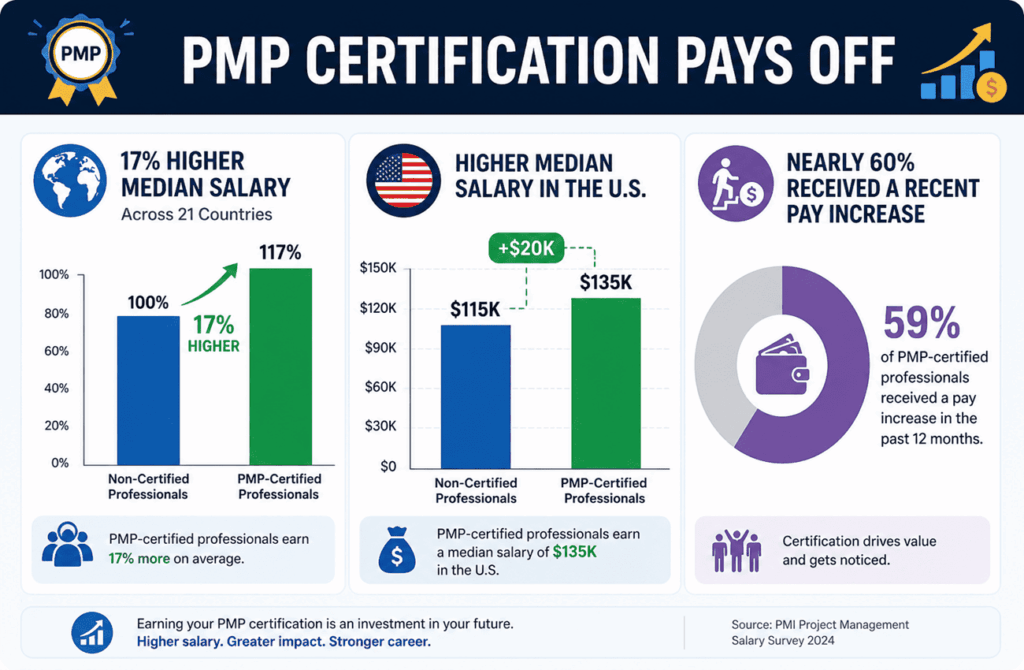
Consider these figures:
- 17% salary premium: Across 21 countries, PMP-certified respondents report earning 17% more than their non-certified colleagues.
- $135,000 median salary in the U.S.: The median pay for PMP-certified professionals in the United States is $135,000—24% higher than the median for non-certified respondents.
- Growing compensation: Nearly 60% of PMP-certified professionals surveyed experienced a salary increase in the past year.
These numbers illustrate that investing in high-quality training and certification can pay off quickly through higher compensation and greater job security.
How to Choose the Right Authorized Training Partner
Not all Authorized Training Partners offer the same experience. When selecting your provider, consider the following factors:
- Delivery format and schedule. Do you prefer an in-person classroom, a live online course, or a hybrid option? Verify that the provider offers a format that fits your availability.
- Instructor qualifications. Ask whether instructors hold the certifications they teach and have relevant project experience. Request bios or testimonials from previous students.
- Course content and resources. Confirm that the curriculum uses PMI-licensed materials and offers practice exams, study aids, and post-course support. Inquire about practice question banks or simulation tools.
- Specialization and industry relevance. Some ATPs may specialize in certain sectors, such as construction or IT. Choose a provider that understands your industry to gain context-specific insights.
- Money-back guarantee and support policies. While no provider can promise a passing score, some offer satisfaction guarantees or refresher courses. Ask about their retake or refund policies.
- Verification. Use PMI’s online Training Partner Directory to verify that a provider holds ATP status. Look for the official PMI ATP badge on their website and marketing materials.
FAQs
Q1. What is a PMI Authorized Training Partner?
A PMI Authorized Training Partner is an organization approved by PMI to provide official course content, certified instructors, and structured exam preparation.
Q2. How do I verify a training provider’s ATP status?
Visit PMI’s Training Partner Directory and search for the provider. Only partners listed there and displaying the ATP badge are authorized.
Q3. Do ATPs guarantee that I will pass the PMP exam?
Ethical providers cannot promise a passing score, but ATPs report higher pass rates than self-study or non-authorized courses and often offer satisfaction guarantees or refresher options.
Q4. Why not just study on my own?
Self-study offers flexibility but lacks expert guidance and may rely on outdated materials. ATPs provide PMI-vetted content, expert coaching, and structured timelines that reduce study time and increase confidence.
Q5. Do I need an ATP to earn PDUs after certification?
Not necessarily. You can earn PDUs through various activities, but ATPs offer convenient, instructor-led courses that count toward PDU requirements and help you stay current.
Summary
Choosing a PMI Authorized Training Partner gives you a clear path to certification and long-term success. You gain trusted content, expert guidance, and a structured learning experience that saves time and builds confidence. Instead of guessing what to study, you focus on what truly matters. This leads to better preparation and stronger results. If you want to pass faster and grow your career with confidence, an ATP is a smart choice that delivers real value.

I am Mohammad Fahad Usmani, B.E. PMP, PMI-RMP. I have been blogging on project management topics since 2011. To date, thousands of professionals have passed the PMP exam using my resources.