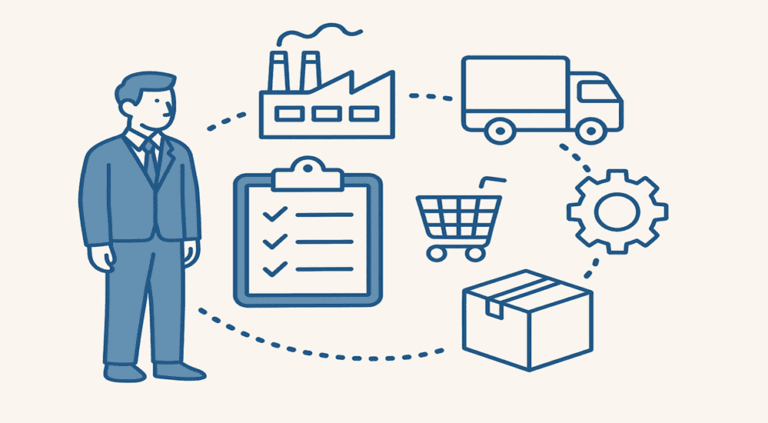
A centralized organizational structure is one in which the key processes and decision-making power stay with top management. Lower management and employees implement decisions and provide feedback to top management.
Top management creates policies and procedures, and lower-level employees follow them. They are even involved in deciding the daily activities of low-level workers.
Organizations use this structure because it outlines the chain of command and improves work efficiency.
Key Features of Centralized Organizational Structures
- Hierarchical Authority: The chain of command is clearly defined, with a distinct top-down approach. Orders flow from top management down to the subordinates.
- Uniformity in Decision-Making: Since a few individuals at the top make all the decisions, the decision-making process is highly consistent.
- Standardized Procedures: Centralization results in standardized procedures and policies, thus ensuring uniformity across the organization.
- Reduced Autonomy: Lower-level managers and employees have limited decision-making power and need approval from higher management for significant decisions.
Benefits of Centralization Organizational Structures
A few benefits of centralized organizational structures are:
- Better Control: Management can closely monitor and manage operations, thus quickly identifying and addressing issues. This ensures consistent adherence to company policies and reduces miscommunication.
- Faster, More Streamlined Decision-Making: Decisions are made by a few key people. This eliminates the need for lengthy consultations and speeds up the decision-making process. The organization can respond quickly to changes and opportunities.
- More Consistent Vision and Strategy: A central authority maintains the company’s direction and ensures that all departments align with the same goals. This creates a unified approach to achieving objectives and builds a strong, cohesive brand.
- More Transparency in the Chain of Command: The hierarchy is clear and well-defined. Employees know who to report to and seek guidance from. This reduces confusion, enhances accountability, and builds trust within the organization.
- Quicker Decision Implementation: Centralized decisions can be enacted swiftly. There is less need for approval from multiple levels, thus leading to faster plan execution, which can help the organization stay competitive and responsive.
- More Cost Efficient: Centralized organizational structures reduce redundancy. They eliminate the need for multiple layers of management, thus streamlining operations, cutting costs, and allowing for better resource allocation.
Limitations of Centralized Organizational Structures
A few limitations of centralized organizational structures are:
- Fewer Chances for Innovation: Centralized organizational structures can suppress creativity. Employees have less freedom to try new ideas, which can slow down the introduction of innovative solutions.
- Lower Employee Morale: If employees have no role in decision-making, then they may feel undervalued, which can lead to dissatisfaction, disengagement, and less motivation to perform well.
- Lack of Opportunities: There are fewer chances for employees to advance. Limited decision-making roles restrict growth, which can hinder personal and professional development.
- Reduced Responsiveness: Centralized decision-making can slow reactions to local issues. Frontline employees may feel powerless to address urgent matters, which can lead to missed opportunities or problem-solving delays.
- More Bureaucratic Delays: Processes may become bogged down by multiple approval stages. This can result in slower implementation of the necessary changes, which can frustrate employees and customers.
- Higher Risk of Overburdened Leaders: Leaders in a centralized organizational structure may face heavy workloads. This can lead to burnout and decreased effectiveness, which can cause important tasks to be delayed or overlooked.
Examples of Centralized Organizational Structures
A few examples of centralized organizational structures are:
- McDonald’s: This fast-food giant maintains a centralized organizational structure to ensure consistency in quality and service across its global outlets. Decisions regarding menu changes, marketing strategies, and operational procedures are made at the corporate headquarters.
- Walmart: Walmart is known for its centralized approach. Walmart’s key decisions (e.g., pricing strategies, supplier negotiations, and inventory management) are controlled by top management to maintain uniformity and cost efficiency.
Centralized Vs Decentralized Organizational Structures
A decentralized organizational structure spreads decision-making across various levels. In this system, low-level managers and employees can make decisions. This contrasts with a centralized organizational structure, in which top leaders control most decisions.
In a decentralized organizational structure, local managers have more autonomy. They can respond quickly to changes and opportunities. This encourages innovation and allows for tailored solutions to local needs. Employees feel more valued and motivated because they have more input and responsibility.
A centralized organizational structure keeps all the decision-making power at the top. This ensures consistency and control but can lead to slower responses. It can also limit innovation since only a few people can make the key decisions.
Decentralization promotes flexibility and employee engagement, while centralization offers uniformity and strong oversight.
When to Use a Centralized Organizational Structure
Centralized organizational structures are best suited for:
- Small-to-Medium-Sized Enterprises: In these enterprises, close control and oversight are feasible and beneficial.
- Industries with High Regulatory Compliance: In these industries (e.g., pharmaceutical or finance), strict regulation adherence is crucial.
- Organizations with Uniform Products or Services: In these organizations, consistent product or service delivery is essential to maintain their brand reputation.
Conclusion
A centralized organizational structure offers several benefits (e.g., consistent decision-making, enhanced control, and cost efficiency). However, it also presents challenges (e.g., reduced responsiveness and potential impacts on employee morale). Organizations must carefully weigh these factors to determine whether a centralized approach aligns with their strategic goals and operational needs.
Ultimately, the choice of organizational structure should support the company’s objectives and culture, as well as the dynamic environment in which it operates.

I am Mohammad Fahad Usmani, B.E. PMP, PMI-RMP. I have been blogging on project management topics since 2011. To date, thousands of professionals have passed the PMP exam using my resources.