
The Project Management Professional (PMP) certification is among the most respected credentials for project managers worldwide. It helps professionals prove their ability to plan, lead, and deliver successful projects.
Whether you work in IT, construction, healthcare, or finance, the PMP shows that you can handle complex challenges and guide teams toward results. Earning this certification can open new career opportunities, increase your salary potential, and boost your confidence as a leader.
Many employers seek PMP-certified managers because they bring proven skills, clear communication, and a strong understanding of how to deliver value in any project.
I am a PMP, and in today’s blog post, I will explain everything you need to know about the PMP certification and help you decide if you should go for this prestigious credential.
What is the PMP Certification?
The Project Management Professional (PMP) credential is awarded by the Project Management Institute (PMI), a non-profit organization based in the United States. PMI has more than 1.6 million active certification holders across 217 countries and territories.
This global reach means that the PMP is recognized in nearly every industry. Holding the PMP demonstrates that you can lead projects, manage teams, and deliver value. PMP is a voluntary credential, not a license. Employers value it because it shows you understand project management best practices and are committed to continuous learning.
Many organizations list a PMP as preferred or required for project leadership roles. It’s a mark of skill, experience, and dedication to excellence.
Eligibility Requirements for PMP Certification Exam
PMI offers three eligibility paths based on your education. Use the table below to identify the option that fits your situation:
| Path | Education | Project Management Experience | Training |
| Set A | High-school diploma or equivalent | 60 months (5 years) of experience leading and managing projects within the past eight years | 35 hours of project management training or a CAPM certification |
| Set B | Bachelor’s degree (or global equivalent) | 36 months (3 years) of experience leading and managing projects within the past eight years | 35 hours of project management training or CAPM certification |
| Set C | Bachelor’s degree from a GAC accredited program | 24 months (2 years) of experience leading and managing projects within the past eight years | 35 hours of project management training (included in the GAC coursework) |
Note: PMI’s Certified Associate in Project Management (CAPM) credential can satisfy the training requirement. If you do not yet meet the experience requirement, earning the CAPM is a good first step.
How to Apply for the PMP Exam
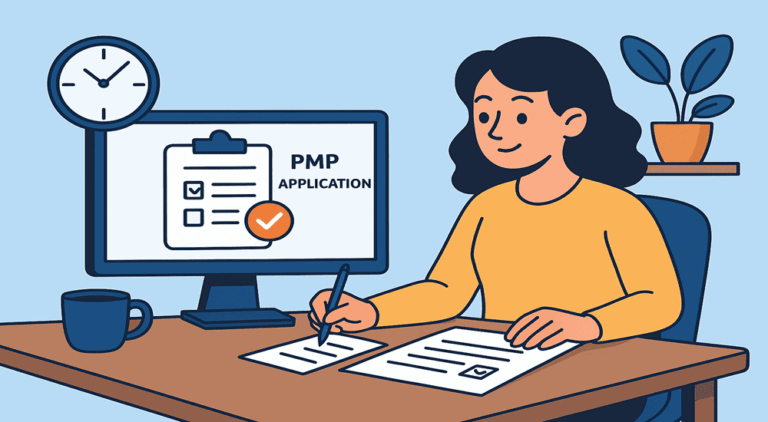
You can submit your application through PMI’s website. The process is straightforward:
- Create or Sign in to Your PMI Account: Collect information about your education, professional experience, and training.
- Fill in the Online Application: Once you start, you have 90 days to complete it. PMI will verify your project descriptions and contact your references.
- Await Application Review: PMI typically reviews applications within a week. If selected for an audit, you will need to submit additional documentation; your one-year exam eligibility period begins after the audit is cleared.
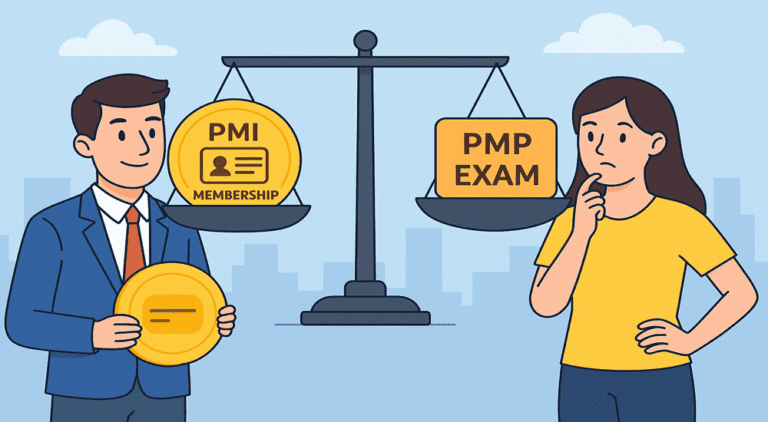
- Pay the Exam Fee and Schedule Your Test: You have one year and three attempts to pass the exam. PMP Exam fee for PMI member is 405 USD dore non-members it is 655 USD. Membership in PMI reduces the exam fee and gives you digital access to the PMBOK Guide.
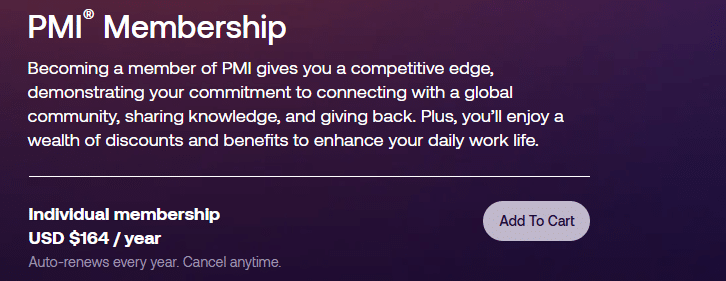
Pro Tip (Join PMI): Becoming a PMI member saves you money and connects you with a network of project professionals. Membership includes a free digital copy of the PMBOK Guide (Seventh Edition), discounted exam fees, and access to webinars and local chapters. The PMI membership fee is 164 USD (increased in Nov-2025, before it was 139 USD per year) per year but it will reduce your exam fee by by 200 USD.
PMP Exam Structure and Content
As of Nov 2025, the PMP exam is computer-based, with 180 questions to be completed in 230 minutes. Of these, 175 questions are scored, and 5 are unscored pretest items.

The exam is divided into three domains:
| Domain | Description | Weight |
| People | Focuses on team leadership, communication, conflict management, and stakeholder engagement | 42% |
| Process | Covers the technical aspects of planning, budgeting, risk management, and integrating project activities | 50% |
| Business Environment | Examines how projects align with organizational strategy, comply with standards, and support change | 8 % |
The exam includes multiple-choice, multiple-response, matching, hotspot, and fill-in-the-blank questions. You will receive two 10-minute breaks after completing question 60 and question 120. Once you start a break, you cannot return to the previous section’s questions.
Prep Tip: Use tools like my PMP Exam Preparation Tool for 1,000+ practice questions. Many PMP aspirants passed the PMP exam on their first try using my PMP exam preparation tool.
Preparation Tips and Study Resources
Preparing for the PMP exam requires dedication and a structured plan. Here is a step-by-step approach that has helped thousands of my readers:
- Understand the PMBOK & Agile Principles: The PMBOK & Agile Practice Guide (Seventh Edition) outlines twelve principles and eight performance domains. Read it carefully to understand PMI’s view of good practice.
- Use Updated Study Materials: Choose textbooks and online courses that reflect the latest exam content. Examples include Rita Mulcahy’s PMP Exam Prep and the Head First PMP guide.
- Attend Formal Training: PMI requires 35 contact hours of training. You can earn these through an authorized training partner, such as PMP Exam Prep Courses provided by PMI.
- Develop a Study Schedule: Give yourself at least three months for preparation. Allocate regular blocks of time, review each domain, and take notes.
- Practice with Realistic Mock Exams: Simulate exam conditions with timed practice tests. Focus on understanding why answers are right or wrong.
- Join a Study Group: Collaborating with peers helps reinforce concepts and exposes you to different perspectives.
- Focus on Soft Skills: The People domain requires you to demonstrate leadership and communication abilities. Seek opportunities at work to lead meetings, mentor colleagues, or mediate conflicts.
- Stay Healthy: Rest adequately before the exam. If you take the exam at a test center, arrive early to complete formalities. For online exams, ensure a quiet space, a reliable computer, and a strong internet connection.
Why PMP Certification is Worth It
PMP certification involves time and effort, but the benefits are significant:
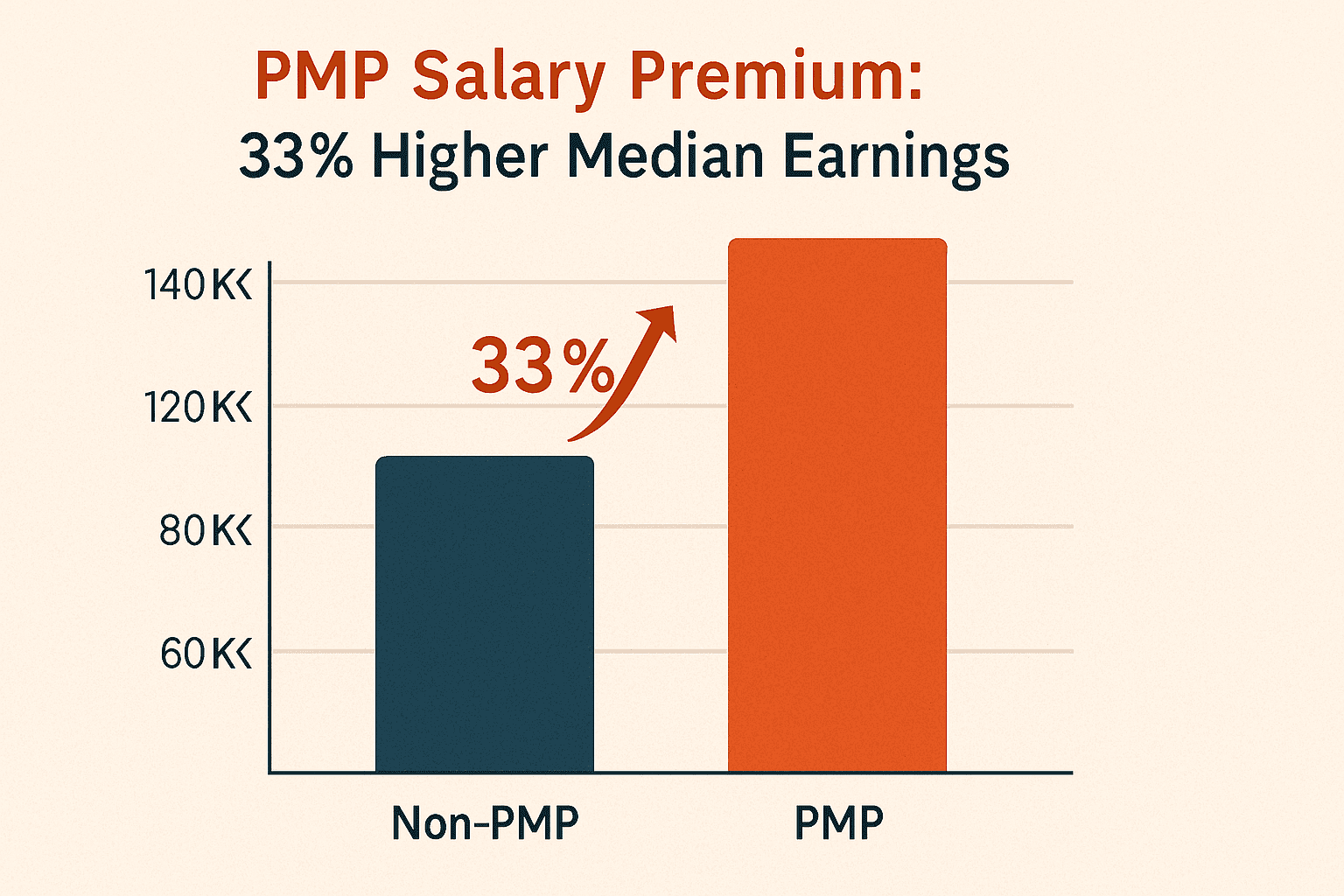
- Higher Salary Potential: The 2023 PMI Salary Survey (13th Edition) found that professionals with a PMP earn a 33% higher median salary than those without the credential across 21 countries. About 66% of respondents reported an increase in total compensation within the year before the survey.
- Global Demand: Employers worldwide seek certified project managers. PMP certification signals that you can lead complex initiatives and deliver results.
- Credibility and Recognition: PMI’s global network of 1.6 million active certification holders demonstrates the trust organizations place in this credential.
- Broader Career Opportunities: Many job postings list PMP certification as a preferred or required qualification. In some industries (construction, energy, government), it is almost a standard for project leadership roles.
- Professional Growth: Preparing for the exam exposes you to best practices across predictive, agile, and hybrid methodologies. You will learn to adapt your approach to project context and stakeholder needs.
- Networking: PMI membership and local chapters connect you with experienced professionals. Networking can lead to mentorship, job opportunities, and collaboration.
PMP is not the best choice for everyone. If you work exclusively in software development or agile environments, you might consider the PMI-ACP (Agile Certified Practitioner) as a more targeted credential.
Emerging Trends in PMP for 2025-26
Project management evolves rapidly, and PMP certificate holders adapt to it quickly. Key trends include:
- Business Acumen Focus: 66% of professionals need stronger strategic skills for success, per PMI’s Pulse report. Expect more exam questions on aligning projects to ROI.
- AI and Hybrid Tools: Integration of AI for risk prediction; PMP now emphasizes ethical AI use in processes.
- Sustainability Emphasis: Green project metrics in business environment domains, driven by ESG demands.
- Remote Team Dynamics: Enhanced people domain coverage for virtual collaboration post-pandemic.
Staying ahead? Pursue PDUs in these areas early. This keeps your certification relevant amid a $7.24 billion PM software market boom by 2025-26.
Maintaining Your PMP Credential
The PMP certification remains valid for three years. To renew it, you must earn 60 professional development units (PDUs) during that cycle. PDUs can be gained through project work, training, volunteering, or creating content. Once you have recorded 60 PDUs in PMI’s Continuing Certification Requirements System, you pay a renewal fee to extend your credential for another three years.
Maintaining the certification is effortless and free. I have held two PMI certifications (PMP and PMI-RMP) for over a decade and have renewed them at no cost. You only need to visit projectmanagement.com and watch online webinars.
For each hour spent watching a webinar, you will earn 1 PDU, which will be reported directly to PMI without any intervention on your part. You can earn all your 60 PDUs for free and don’t have to keep the record.
FAQs
Q1. Can I take the PMP exam without project management experience?
No. PMI requires three to five years of experience, depending on your education level.
Q2. Do I need a degree to apply for the PMP?
No. A high?school diploma or equivalent qualifies you if you have five years of experience.
Q3. What is the cost of the PMP exam?
PMI members pay less than non-members. Check the current fees on PMI’s website before applying. (Refer to this blog post: PMP Certification Cost)
Q4. How many times can I attempt the exam?
You have three attempts within a one-year eligibility window.
Q5. How soon will I get my results?
You receive your pass/fail result immediately after completing the exam.
Q6. Does the exam contain agile questions?
Yes. About half the exam reflects agile and hybrid approaches, while the other half tests predictive methodologies.
Q7. How do I maintain my PMP certification?
Earn 60 PDUs within three years and report them to PMI.
Summary
PMP certification remains the gold standard for project professionals. By meeting the eligibility requirements, preparing diligently, and aligning your skills with PMI’s domains, you can join over 1.5 million credential holders worldwide. The process takes commitment, but the return on investment is clear: higher earning potential, global recognition, and a stronger foundation for managing projects across industries.
Ready to take the next step? Join my PMI Approved Training Program and start your journey today.
Further Reading:
- What is the PMP Certification? (You are here.)
- What Are the PMP Eligibility Criteria?
- What is the PMP Exam Application Process?
- How Expensive is the PMP Certification?
- What is the PMP Examination Structure?
References:

I am Mohammad Fahad Usmani, B.E. PMP, PMI-RMP. I have been blogging on project management topics since 2011. To date, thousands of professionals have passed the PMP exam using my resources.


Your Blog is really appreciable. Content given in this blog would really help for the as a student of Management Subject. Thanks to share.
You are welcome Awadhesh.