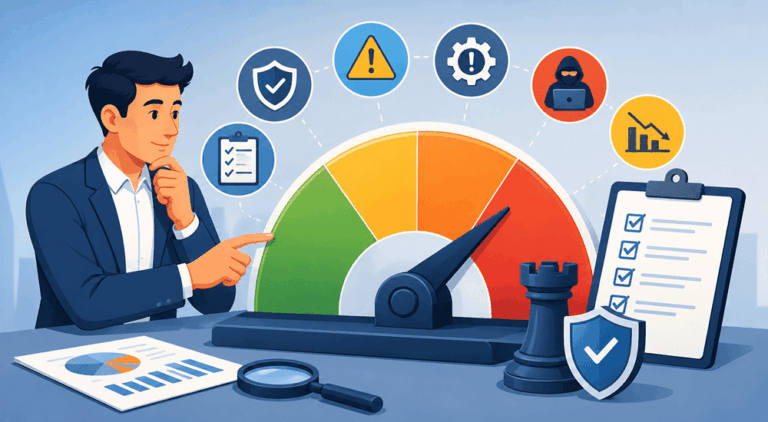
Construction projects are inherently risky. Tight schedules, complex systems, and multiple stakeholders create an environment where breach of contract is a question of “when,” not “if.” When that breach occurs, the financial survival of your project hinges on one critical distinction: whether the damages are direct or consequential.
Misclassifying these damages or failing to define them clearly in your contract can turn a $50,000 concrete repair into a $500,000 liability for lost revenue.
This blog post breaks down the legal definitions and analyzes the landmark Orlando Health v. HKS Architects case, and provides actionable documentation strategies to protect your bottom line.
Let’s get started.
Understanding Direct and Consequential Damages
What Are Direct Damages?
Direct damages, also called general or expectation damages, are the immediate costs you incur when work is not done as promised. They include the money needed to fix defective work and get the project back on track. Courts view these damages as the natural and predictable result of the breach.
For example, if an architect’s plans are deficient and you must hire another contractor to redo the work, those repair costs are considered direct damages.
What Are Consequential Damages?
Consequential damages are indirect losses that stem from the breach but are not part of what you originally bargained for. They are losses arising from dealings with third parties and do not flow directly from the immediate transaction.
Examples include lost profits, rental expenses, delayed opening costs, and reputational harm. Because these losses are harder to foresee and quantify, many contracts include clauses that waive or limit a party’s right to recover consequential damages.
Direct Vs Consequential Damages
The infographic below summarizes the key distinctions. Direct damage covers the immediate cost of fixing defects, while consequential damage encompasses lost profits and other ripple effects. You should know which category applies to potential losses so they can negotiate appropriate contract terms.

Comparison Table: Direct Vs Consequential Damages
| Category | Direct Damages (General) | Consequential Damages (Special/Indirect) |
| Definition | Losses that flow naturally and immediately from the breach. | Losses that occur as a consequence of the breach, but not directly from the act itself. |
| Foreseeability | Presumed foreseeable by both parties at contract signing. | Must be specifically foreseeable; requires prior knowledge. |
| Common Examples | Cost of repair/replacement of defective work. | Lost profits, business interruption, and rental income loss. |
| Delay Related | Accelerated costs to get back on schedule. | Revenue lost due to late opening. |
| Third Parties | Costs paid to a replacement contractor. | Losses arising from contracts with tenants/suppliers. |
| Contract Treatment | Rarely waived; usually capped. | Frequently waived via “Mutual Waiver” clauses. |
Why Precise Contract Language Matters
Ambiguous language is a leading cause of construction disputes. An Arcadis-authored report for the Construction Management Association of America notes that poorly drafted contracts and vague clauses are frequent sources of conflict. Ineffective communication, inadequate documentation, and weak project management compound the problem. As contracts become more complex, failure to define key terms like “consequential damages” leaves it to courts to interpret, often with surprising results.
The Orlando Health v. HKS Architects case illustrates why clear language matters. The contract in that project contained a general waiver of consequential damages but did not define the term. When design defects required extensive repairs, the architect argued that the owner’s costs were waived because they were consequential. The court disagreed, finding that the remediation costs were direct damage because they were the natural and necessary result of the architect’s breach.
The court relied on case law and Black’s Law Dictionary to explain that consequential damages are losses arising from dealings with third parties. Without a clear contractual definition, the waiver did not apply.
For project managers, this case underscores the importance of defining direct and consequential damages in contracts. Listing examples and specifying what is and is not waived can prevent costly arguments later. Tailor any waiver of consequential damages to your project’s risk profile instead of relying on generic language.
The Impact of Quality Control and Documentation
Poor quality management can lead to both direct and consequential damages. New research shows that many construction teams still struggle with consistent quality assurance and documentation. A survey of 811 QA/QC professionals found that 77 percent of teams report inconsistent QA/QC documentation and 56 percent cite different standards across sites and trades. When quality processes vary from site to site, errors slip through, and defects multiply. These inconsistencies make it harder to prove what happened when a dispute arises.
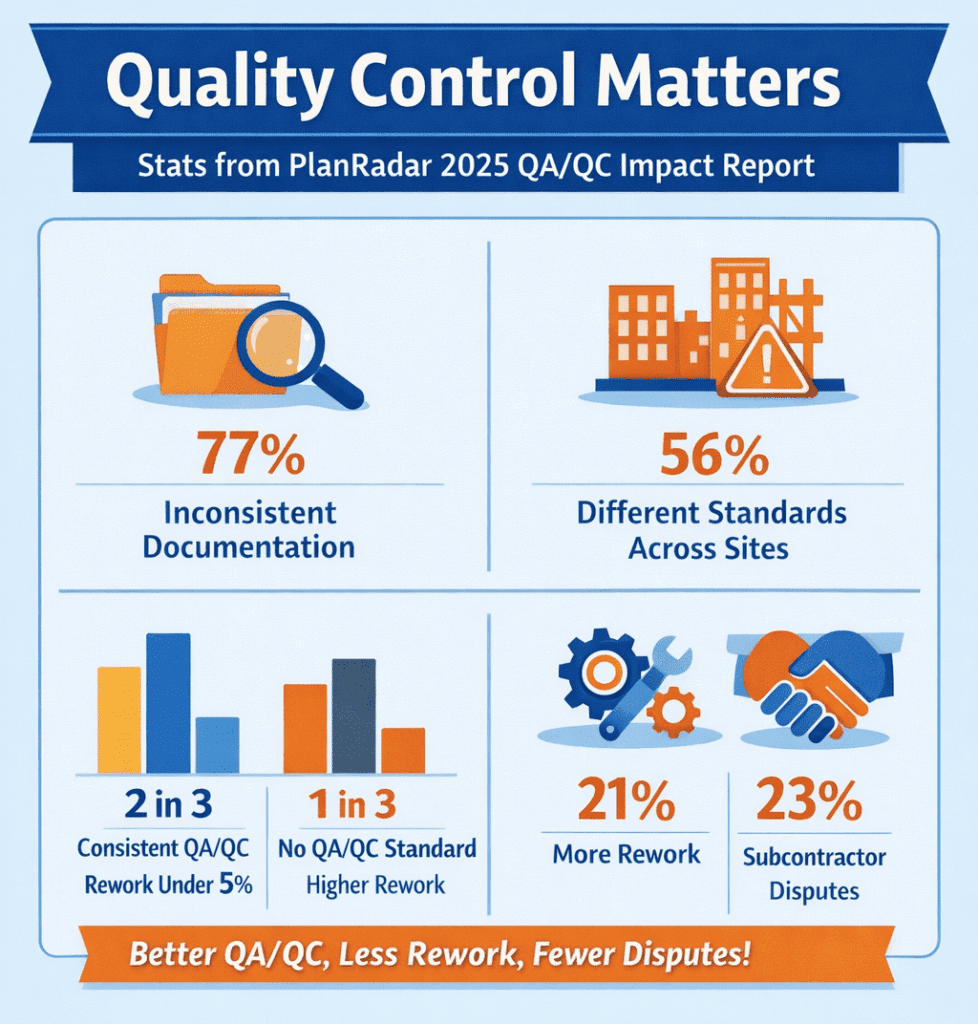
The same survey finds that nearly two-thirds of companies with consistent QA/QC processes keep rework costs under 5% of their project budget, compared with one-third of companies without standards. That gap highlights how disciplined quality practices reduce direct costs. Teams that implement uniform procedures are better positioned to avoid defects, document performance, and defend claims.
Finally, companies without QA/QC standards face a higher risk of disputes. They are 21 percent more likely to experience avoidable rework and 23 percent more likely to have subcontractor disputes. In other words, inconsistent quality management not only inflates costs but also increases the likelihood of consequential losses, such as schedule delays and damaged relationships.
For project managers, these findings translate into a straightforward lesson: make quality management a priority from day one. Establish clear QA/QC standards, document every inspection, and apply the same processes across all sites. Consistency reduces the risk of defects and provides evidence to support or defend claims when things go wrong.
Lessons for Project Managers
Anticipate and Allocate Risk
When drafting contracts, identify potential sources of direct and consequential damages. Define these terms clearly and provide illustrative examples. Allocate risk through waivers, insurance provisions, and indemnity clauses. Consult with legal counsel to ensure that waivers are enforceable in your jurisdiction.
Strengthen Project Management Practices
Many disputes stem from poor communication, inadequate documentation, and weak project oversight. Use a unified project management approach that includes regular meetings, clear lines of communication, and a common documentation system. Invest in staff training to ensure everyone understands their responsibilities.
Embrace Early Dispute Avoidance
Arcadis’s report highlights the growing use of mediation, early neutral evaluation, and dispute boards as proactive measures. Consider including provisions for alternative dispute resolution in your contracts. Early intervention can resolve issues before they blossom into litigation.
Improve Quality Control and Documentation
Apply consistent QA/QC procedures across all projects. Document inspections, decisions, and changes in real time. This discipline not only reduces the likelihood of defects but also provides a clear record if you need to prove or defend a claim. The PlanRadar report’s statistics demonstrate the financial and relational benefits of robust QA/QC processes.
Coordinate with Design Professionals
Design defects are a leading cause of direct damage in construction. Engage architects and engineers early, encourage peer reviews, and require clear documentation of design changes. In the Orlando Health case, the failure to provide accurate plans led to costly repairs. Regular coordination meetings and design checks can catch errors before they require expensive fixes.
Tips for Drafting Clear Contracts
- Use plain language. Avoid jargon and define technical terms. A clear contract reduces the chance of differing interpretations.
- List examples of damage. Provide a non-exhaustive list of what constitutes direct and consequential damages. This helps align expectations and can strengthen a waiver.
- Specify remedies. State how damages will be calculated and any caps on liability. Include timelines for notification of claims and dispute resolution procedures.
- Align with local law. Damages definitions vary by jurisdiction. Consult local statutes and case law to ensure your contract language is enforceable.
- Plan for change. Include mechanisms to amend the contract when circumstances evolve. Flexibility allows parties to address unforeseen events without renegotiating the entire agreement.
FAQs
Q1. What are direct damages in construction contracts?
Direct damages are the immediate, predictable costs required to correct defective work and put the project back on track.
Q2. Why is it important to define consequential damages?
Defining consequential damages clarifies which indirect losses, like lost profits or rental income, may be recoverable and helps parties agree on waivers.
Q3. How can project managers avoid disputes over damages?
Use clear contracts, consistent QA/QC processes, and proactive communication. Early dispute-resolution mechanisms and thorough documentation also reduce conflicts.
Summary
Direct and consequential damages can make or break a construction project’s bottom line. By understanding the difference and writing clear contract language, project managers can better allocate risk and avoid costly surprises. Robust quality management and documentation further reduce the risk of disputes. When issues arise, early dispute-resolution mechanisms and clear records allow for faster, more equitable outcomes. Taking these steps today will protect your projects tomorrow.

I am Mohammad Fahad Usmani, B.E. PMP, PMI-RMP. I have been blogging on project management topics since 2011. To date, thousands of professionals have passed the PMP exam using my resources.