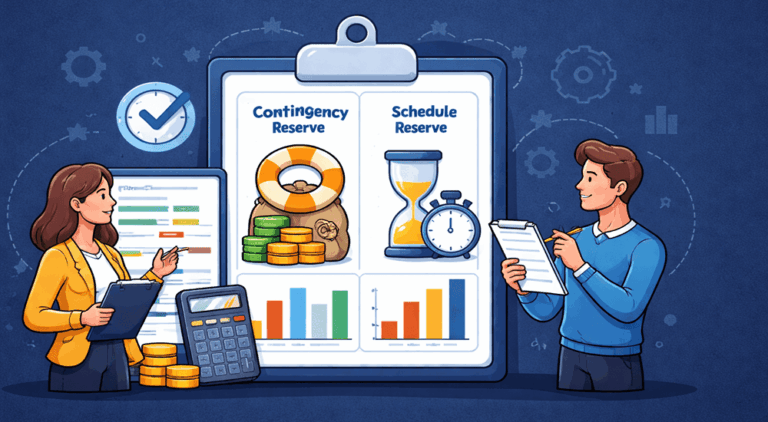
Risk management is crucial to the success of both projects and businesses. From weather disasters to data breaches, uncertainties can derail schedules and budgets. Two essential tools help you prepare: mitigation plans and contingency plans. They sound similar, but they serve different purposes.
In today’s blog post, I will break down the differences between mitigation Vs contingency plans and show why you need both.
What Is a Mitigation Plan?
A mitigation plan is a risk response plan that aims to reduce the impact or probability of the risk before it occurs. It is the proactive part of risk management. Risk mitigation is a negative risk response strategy.
Examples include installing fire alarms, training employees on cybersecurity, or moving a warehouse out of a flood zone.
These actions can save you money and stress in the long run by avoiding bigger losses.

In a mitigation plan, you:
- Identify risks early: Review your project or operations and list all potential threats. It may be due to equipment failures, supply chain issues, or extreme weather conditions.
- Analyze and prioritize: Assess the likelihood of each risk and its potential severity of impact. This helps you focus on what matters most.
- Develop preventive responses: Develop measures that reduce the likelihood of these risks or minimize their harm. For example, diversifying suppliers reduces the chance of supply interruptions.
- Assign responsibilities: Clearly state who will execute each preventive measure and set deadlines. Make sure the budget and resources are available.
- Monitor and update: Risk environments are constantly changing. Review your mitigation plan regularly and adjust as needed.
Example of a Mitigation Plan
Imagine a logistics company operating in a flood-prone area. To mitigate flooding risks, you relocate critical equipment and stock to higher ground. You also consult experts to improve drainage and use elevated racks. These proactive actions lower the chance of water damage. While you pay for these improvements upfront, you avoid costly downtime and inventory loss later.
What Is a Contingency Plan?
A contingency plan addresses what happens after a problem arises. It is your backup plan with a set of detailed instructions that kick in when a specific risk event occurs. Contingency plans are reactive. They don’t stop the risk; they manage its impact.

In a contingency plan, you:
- Identify Risks: Begin by recognizing potential threats that could disrupt operations, such as system failures, natural disasters, or supplier delays. This step ensures you understand what could go wrong before it happens.
- Develop Plan: Create a structured response for each identified risk, detailing the steps, resources, and responsibilities. The plan should outline alternative strategies to keep essential functions running smoothly.
- Implement Plan: Put the plan into action when a trigger event occurs. Communicate roles clearly, allocate resources, and follow the predefined steps to minimize damage and maintain continuity.
- Review Plan: Regularly test, evaluate, and update the plan to ensure its effectiveness. Lessons learned from past incidents or drills should be incorporated to strengthen future responses.
Contingency plans are often more detailed than mitigation plans because they describe step-by-step actions needed during a crisis. Having them documented and rehearsed helps teams respond quickly and confidently.
Example of a Contingency Plan
Returning to the logistics company, if flooding occurs despite preventive measures, a contingency plan guides the response. Workers will stack sandbags around vulnerable areas, move vehicles to safe locations, and switch operations to a backup site.
The plan may also include contact information for emergency services and contractors who can help. This reactive plan limits damage and keeps the business running smoothly.
Mitigation Vs Contingency Plan: Key Differences
A few differences between the mitigation and contingency plans are as follows:
1. Definition
A mitigation plan is a proactive strategy designed to reduce the likelihood or impact of a potential risk before it occurs. It focuses on preventing the risk or minimizing its effects.
A contingency plan is a reactive strategy prepared in advance to address a risk event after it occurs. It outlines specific actions to take if the risk materializes, minimizing disruption or damage.
2. Purpose
The mitigation plan aims to lower the probability of a risk happening or reduce its severity if it does occur.
A contingency plan aims to manage and recover from a risk event that has already happened, ensuring business continuity or damage control.
3. Timing
A mitigation plan is implemented before the risk occurs, as a preventive measure.
A contingency plan is activated after the risk has occurred as a response mechanism.
4. Approach
Mitigation Plan: Focuses on reducing exposure to risks through preventive actions (e.g., adding security measures, training staff, or improving processes).
Contingency Plan: Focuses on response and recovery actions (e.g., backup systems, alternative suppliers, or crisis management protocols).
5. Examples
Mitigation Plan:
- Installing fire-resistant materials to reduce the risk of fire damage.
- Regular software updates to prevent cyberattacks.
- Diversifying suppliers to avoid supply chain disruptions.
Contingency Plan:
- Evacuation procedures and fire drills in the event of a fire.
- Data Recovery Protocols in the Event of a Cyberattack.
- Activating a backup supplier in the event of a primary supplier failure.
6. Focus
- Mitigation Plan: Risk prevention or reduction.
- Contingency Plan: Risk response and recovery.
7. Resource Allocation
In a mitigation plan, resources are allocated to prevent or reduce risks upfront, often requiring investment in systems, training, or infrastructure.
In a contingency plan, resources are reserved or planned for use in the event of a risk, such as emergency funds, backup equipment, or personnel.
8. Outcome
A mitigation plan reduces the likelihood or impact of a risk, potentially avoiding the need for a contingency plan.
A contingency plan ensures a swift and effective response to minimize damage or downtime in the event of a risk occurrence.
Summary Table
| Parameter | Mitigation Plan | Contingency Plan |
| Definition | Proactive plan to prevent/reduce risk | Reactive plan to address risk after it occurs |
| Purpose | Reduce the likelihood or impact | Manage and recover from risk |
| Timing | Before risk occurs | After the risk occurs |
| Approach | Preventive measures | Response and recovery measures |
| Examples | Fire-resistant materials, software updates | Evacuation plans, data recovery protocols |
| Focus | Prevention or reduction | Response and recovery |
| Resource Allocation | Invested upfront | Reserved for post-event response |
| Outcome | Avoid or minimize risk | Minimize damage and ensure continuity |
Why You Need Both Strategies
Mitigation and contingency plans complement each other. Relying solely on mitigation can lead to complacency; no matter how well you prepare, some risks will still occur. Conversely, focusing only on contingency can leave you exposed to preventable threats. A balanced risk management strategy employs mitigation to reduce the likelihood of problems and contingency to respond effectively when issues arise.
For example, strong cybersecurity defenses (mitigation) reduce the likelihood of a data breach. However, if hackers breach security, an incident response plan (or contingency plan) guides the process of isolating affected systems, notifying stakeholders, and restoring data. Together, these plans help organizations stay resilient.
Conclusion
A strong risk management strategy needs both mitigation and contingency plans. Mitigation reduces the chance or impact of risks by taking preventive actions, while contingency ensures you are prepared with a backup when events occur. By combining these approaches, you can face uncertainty with confidence, protect resources, and keep projects on track.
Understanding the difference between mitigation and contingency helps teams respond proactively and react effectively, building resilience and improving success in today’s unpredictable environment.
Further Reading:
- Risk Response Strategies for Negative Risks or Threats
- Risk Response Strategies in Project Management
- What is a Contingency Plan?
- What is Management Reserve in Project Management?
- What is Contingency Reserve in Project Management?
- Contingency Plan vs Fallback Plan
- Contingency Reserve vs Management Reserve
Reference:

I am Mohammad Fahad Usmani, B.E. PMP, PMI-RMP. I have been blogging on project management topics since 2011. To date, thousands of professionals have passed the PMP exam using my resources.