Today, I will provide you with the seven best monday.com alternatives and competitors.
monday.com was previously known as DaPulse, a popular SaaS product for work management. It is known for its flexibility and customization features. However, if you are looking for tailored or budget-friendly solutions, you may explore other options.
Whether looking for a simpler interface, enhanced collaboration tools, or specific integrations, alternatives to monday.com can better suit your needs. In this article, we will explore seven alternatives to monday.com that you can use to manage your project.
But before that, let us know about monday.com and why you may need its alternative.
What is monday.com?
monday.com is a cloud-based work operating system that allows you to plan, track, and manage your work efficiently. It offers a visual interface with customizable workflows, which is adaptable to various industries, from marketing to software development. monday.com’s strengths lie in its simplicity and ability to centralize tasks, assign responsibilities, set deadlines, and monitor progress.
With its drag-and-drop functionality and automation capabilities, monday.com helps teams collaborate seamlessly, improving productivity. It also integrates with popular tools like Slack, Google Drive, and Microsoft Teams, which enhances workflow efficiency.
monday.com offers different pricing plans to serve all clients, making it a versatile solution for startups and enterprises.
Read my monday.com review.
Why You May Need an Alternative to monday.com?
While monday.com is robust and flexible, it may not meet your specific needs. For one, it can be costly, especially for small teams or startups that require advanced features but operate on tight budgets. Some users find its extensive customization options overwhelming. They find it complex and difficult to manage straightforward project tasks.
Teams that require industry-specific tools or tighter integration with niche software may also find monday.com difficult to integrate. While its interface is visually appealing, it can feel cluttered to those preferring simpler, more streamlined user experiences.
The performance may slow down with larger teams and more complex workflows, which can affect productivity.
These factors can cause you to explore alternative platforms offering more specialized features, simpler interfaces, or more affordable pricing models.
Having said all that, let us move to our main topic where we will cover seven alternatives to monday.com.
7 Best monday.com Alternatives
The following are the 7 best monday.com alternatives:
- nTask: A simple tool for small to medium-sized teams, offering task management, time tracking, and risk management at an affordable price.
- Paymo: Ideal for teams that need time tracking and invoicing capabilities, making it perfect for freelancers or agencies that bill clients hourly.
- Trello: Best for small teams with simple task management needs. Its Kanban board approach is highly intuitive and great for visualizing tasks.
- Asana: A versatile tool with a user-friendly interface, suitable for task management, timelines, and collaboration across small to medium teams.
- Nifty: Combines project management and collaboration in one tool, offering milestones, automation, and strong integrations for medium to large teams.
- ClickUp: A powerful, flexible platform with free and paid plans, ideal for teams of all sizes needing advanced project management, automation, and integrations.
- ProofHub: An all-in-one project management tool with a fixed pricing model, suitable for larger teams looking for advanced features like Gantt charts, time tracking, and file sharing.
1. nTask
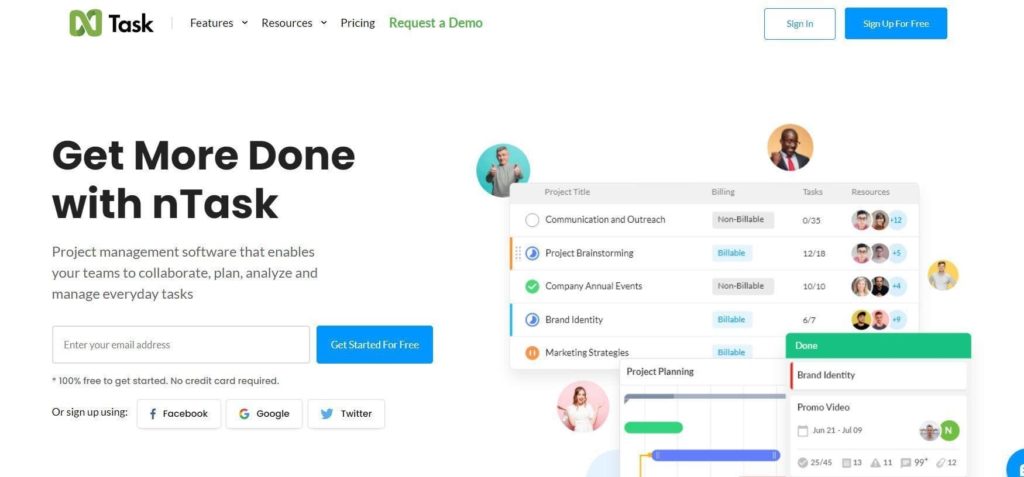
nTask is a task and project management tool that helps you organize your work. It offers task creation, scheduling, time tracking, meeting management, and issue tracking features.
You can create projects, assign tasks to team members, set deadlines, and track progress. It also has collaboration features, such as comments and file sharing, and integrates with tools like Slack and Google Calendar.
nTask Vs monday.com
- Ease of Use: nTask is designed with simplicity in mind. Its straightforward layout makes it easy for individuals and smaller teams to adopt the tool quickly without much training. monday.com offers a complex setup that may be overwhelming initially but provides more flexibility in how projects and tasks are organized.
- Customization: monday.com has more customization options. You can modify boards to fit different workflows and set up automation. nTask, while more user-friendly, has limited customization options.
- Collaboration: Both tools allow team collaboration, but monday.com is suited for large teams that need advanced communication tools, customizable workflows, and integration with multiple apps. nTask is simpler, making it ideal for smaller teams that don’t need many extras.
- Affordability: nTask is more affordable, especially for smaller teams or users needing basic features. monday.com tends to be pricier, especially when using advanced features or adding more team members.
nTask is better for individuals or small teams looking for a simple, low-cost project management solution. monday.com is better for larger teams or companies that need advanced features, more customization, and deeper integrations.
Ratings
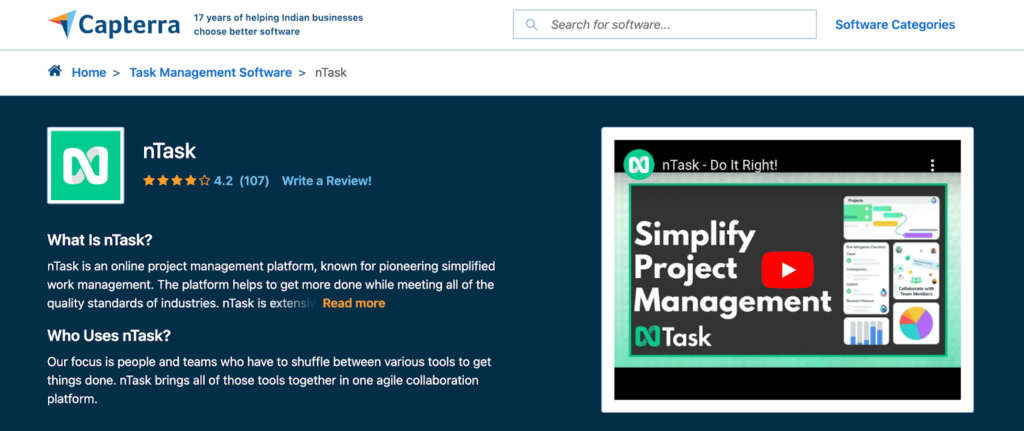
nTask has been rated 4.2 out of 5 stars by 107 users. With a user base of 250,000, notable brands like Sony, PayPal, Walmart, and HP are among its prominent customers.
Pros and Cons
Pros
- Offers task management, time tracking, and collaboration in one platform.
- Supports multiple project views like Gantt charts and Kanban boards.
- Affordable pricing with a free version for smaller teams.
- Simple and easy to use and modern interface
- Includes risk and issue tracking for better project oversight.
- Mobile application for both Android and iOS.
Cons
- Limited customization Options for workflow
- Limited integrations with third-party apps compared to competitors.
- Mobile app features are less robust than the desktop version.
- It can have a steep learning curve for new users.
- Customization options for workflows are somewhat limited.
Pricing
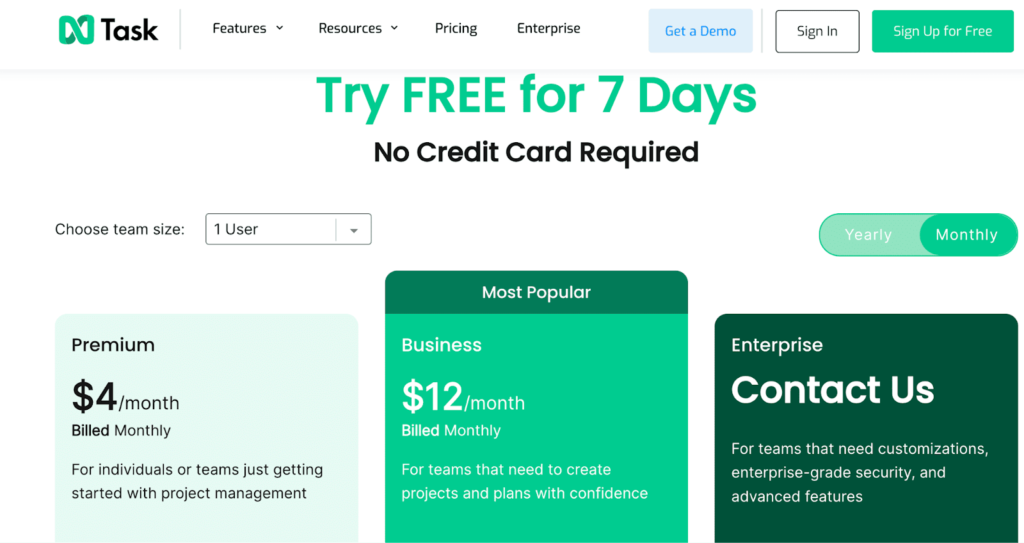
nTask’s pricing is a standout feature, making it a highly affordable option compared to other alternatives. It offers a 7-day free trial and even a free plan, providing flexibility for various needs.
nTask offers four pricing plans:
- Basic: A free plan that allows up to five members.
- Premium: Starts at 4 USD per user per month (3 USD with an annual plan).
- Business: Priced at 12 USD per user per month (8 USD with an annual plan).
- Enterprise: Custom pricing is available upon contacting support.
Read my nTask Review.
2. Paymo

Paymo is a comprehensive project management and time-tracking tool for freelancers, small teams, and agencies. It offers robust features such as task management, allowing users to create, assign, and organize tasks with deadlines and priorities. Its strong time-tracking capabilities enable users to monitor time spent on tasks, facilitating client billing and productivity tracking.
Paymo supports invoicing directly from tracked time, organizes multiple projects with milestones, and provides Gantt charts for progress tracking. The platform also promotes team collaboration through comments and file sharing. It includes resource scheduling tools to manage workloads and integrates seamlessly with popular applications like Slack and Google Calendar for enhanced workflow automation.
Paymo Vs monday.com
- Time Tracking and Billing: Paymo excels in time tracking and invoicing, making it ideal for freelancers and agencies who bill clients based on hours worked. Monday.com doesn’t have strong native time tracking or invoicing features, though you can integrate external tools for these functions.
- Customization: Monday.com is far more customizable, allowing teams to build workflows that fit their needs. You can create custom boards, automate processes, and visualize data in various ways. Paymo is more straightforward but offers fewer customization options.
- Ease of Use: Paymo is user-friendly, especially for freelancers or small teams that need project management and time tracking in one place. Monday.com offers more features but can be more complex and take longer to set up and learn.
- Collaboration: Both platforms support team collaboration, but Monday.com offers more advanced tools for larger teams that need detailed workflows, communication, and integration with other apps.
Paymo is better for freelancers or small teams needing strong time tracking and invoicing features. Monday.com is better for larger teams or organizations that need high customization, advanced collaboration tools, and more complex project management capabilities.
Ratings
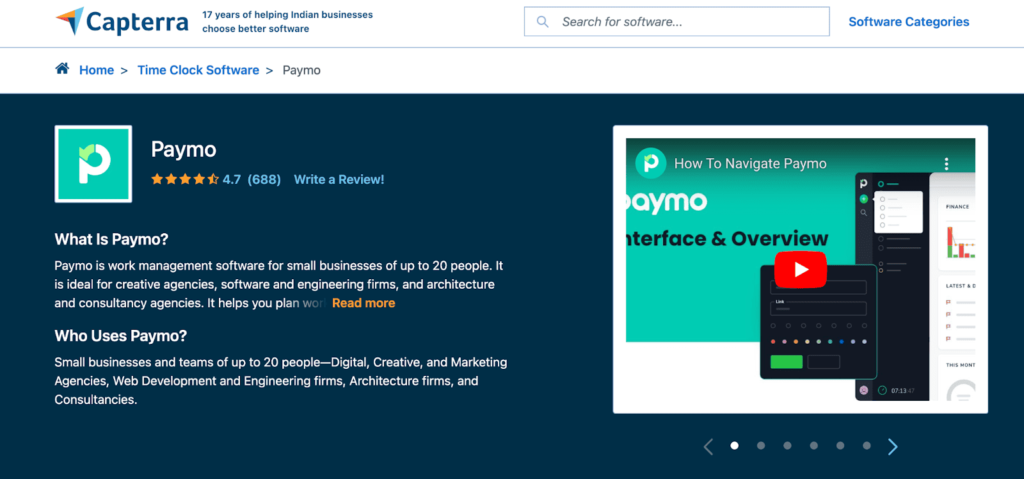
Paymo holds an impressive 4.7 out of 5 stars, based on reviews from 688 teams on Capterra. Notably, Paymo serves a customer base of over 150,000 teams.
Pros and Cons
Pros
- Mobile app support for Android and iOS
- Comprehensive time tracking, task management, and invoicing are available on one platform.
- User-friendly interface with multiple project views like Kanban and Gantt charts.
- Strong integration options with tools like Slack and Zapier.
- Affordable pricing with a free plan for freelancers and small teams.
Cons
- Limited features in the base paid plan
- Limited customization options for reports and dashboards.
- The mobile app is not as feature-rich as the web version.
- Lack of advanced automation features for recurring tasks.
- Resource management features are not as robust as some competitors.
Pricing
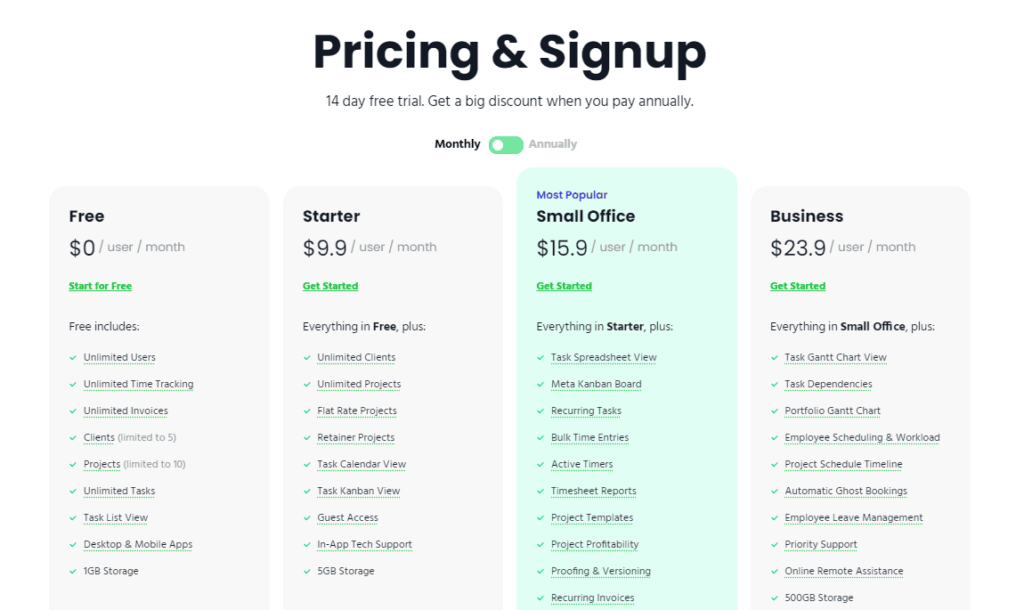
Paymo offers four pricing plans:
- Free: A basic plan available at no cost.
- Starter: 9.90 USD per user per month, or 5.90 USD per user per month with an annual plan.
- Small Office: 15.90 USD per user per month, or 10.90 USD per user per month with an annual plan.
- Business: 23.90 USD per user per month, or 16.90 USD per user per month with an annual plan.
3. Trello
Trello is a simple and visual project management tool that organizes tasks using boards, lists, and cards. Its main structure consists of boards representing projects, lists for different stages or categories, and cards for individual tasks, which can be moved between lists to indicate progress.
Users can create cards with descriptions, due dates, assigned team members, file attachments, and checklists for subtasks. Trello offers customizable labels for better organization and facilitates collaboration through comments, file sharing, and team tagging.
Trello supports integrations through Power-Ups with apps like Slack and Google Drive and provides templates for various project types to help teams get started quickly. Butler’s built-in automation tool allows users to automate repetitive tasks, such as moving cards when completed, enhancing productivity and workflow efficiency.
Trello Vs monday.com
- Ease of Use: Trello is extremely user-friendly with a simple and visual interface, which is ideal for small teams or personal task management. Monday.com is more complex but offers a higher level of customization for managing larger projects.
- Customization: Monday.com provides much more customization than Trello. While Trello allows you to add Power-Ups for additional functionality, Monday.com’s boards are far more adaptable, with more views and automation available.
- Collaboration: Both tools support team collaboration, but Monday.com offers more advanced features for larger teams. Trello is great for smaller, simpler teams, while Monday.com is better suited for larger teams needing deeper collaboration tools and tracking.
- Affordability: Trello’s free plan is very generous, making it a great option for smaller teams or individual users. Monday.com can be more expensive, especially if you need advanced features, integrations, or multiple users.
Trello is better for small teams or personal use, where simplicity and visual task management are key. Monday.com is better for larger teams or organizations needing a more customizable, powerful, and comprehensive project management tool. Both tools offer great collaboration, but Monday.com has a wider range of features and customizations, making it more suitable for complex workflows.
Ratings
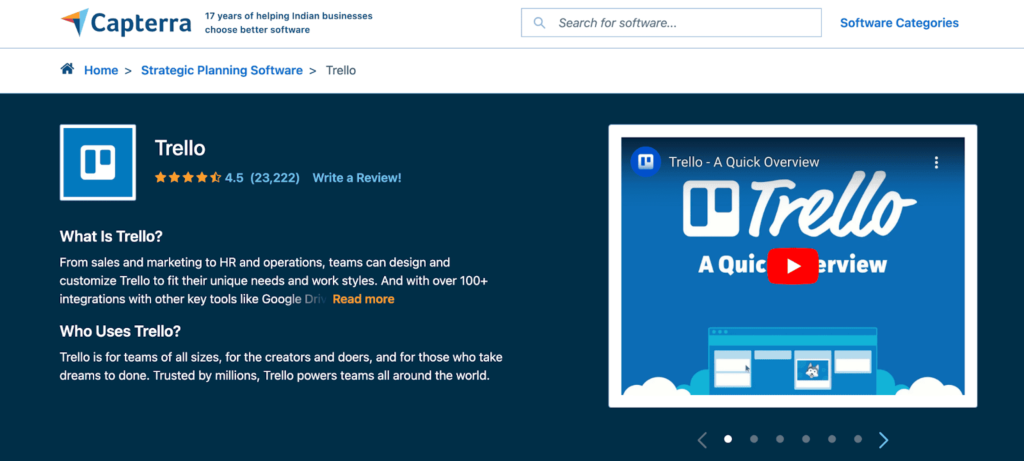
This software has been rated 4.5 out of 5 stars by 23,222 users. Trello boasts a customer base of over 2,000,000 teams, with notable clients including Visa, Grand Hyatt, and Coinbase.
Pros and Cons
Pros
- It has a butler automation feature that helps its efficiency.
- Simple, intuitive interface using boards, lists, and cards for task management.
- Highly customizable with a wide range of Power-Ups (integrations) to extend functionality.
- The free version is robust and suitable for small teams and projects.
- Excellent collaboration features like comments, file attachments, and notifications.
Cons
- The free and standard plans lack key features.
- Limited features for complex project management, such as Gantt charts or advanced reporting.
- It can become cluttered and difficult to manage with large projects.
- Power-ups are restricted in the free version, limiting advanced functionality.
- Lacks native time tracking and resource management tools.
Pricing
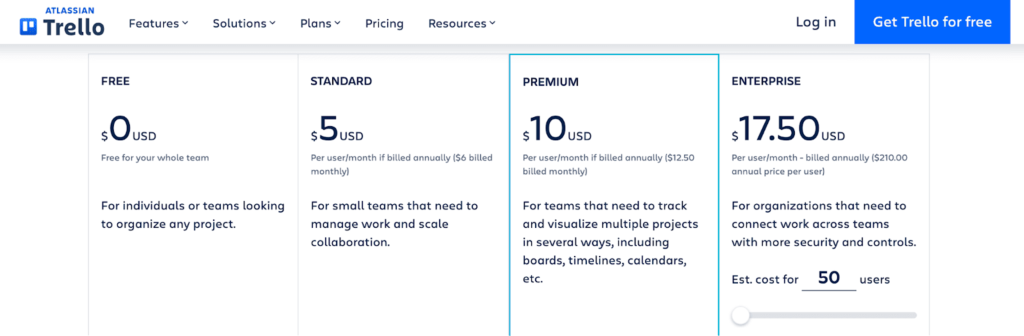
Trello offers four pricing plans:
- Free: Available at no cost.
- Standard: 6 USD per user per month for a monthly subscription or 5 USD per user per month with an annual plan.
- Premium: 12.50 USD per user per month for a monthly subscription or 10 USD per user per month with an annual plan. This plan includes a 30-day free trial that requires credit card details.
- Enterprise: 17.50 USD per user per month, billed annually.
4. Asana
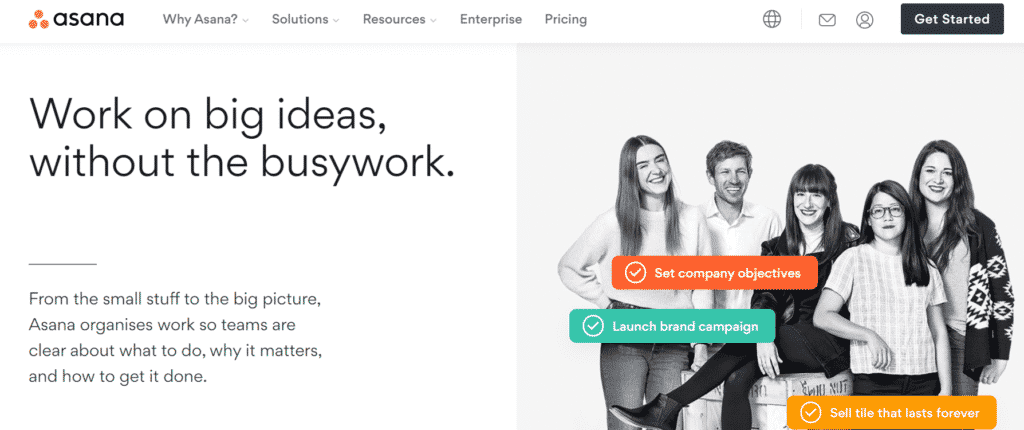
Asana is a popular project management tool that helps teams organize, track, and manage their work effectively. Its key features include robust task management, allowing users to create tasks, set deadlines, and assign them to team members while adding details such as descriptions, subtasks, and attachments. Users can organize tasks into projects and view them in various formats, including lists, Kanban boards, calendars, and timelines.
Asana offers customizable workflows, enabling teams to set up automation to streamline processes, such as moving tasks between sections based on their status. Team collaboration is enhanced through commenting, tagging team members, and file sharing directly within the platform.
Asana provides a visual timeline (Gantt chart) to map project plans, see dependencies, and track progress. It also allows users to set task dependencies to ensure tasks are completed in the correct order. The platform integrates with many tools, such as Slack, Google Drive, and Microsoft Teams, and offers reporting and analytics features to monitor project progress and identify areas needing attention.
Asana Vs monday.com
- Ease of Use: Asana and Monday.com are easy to use, but Asana’s interface is slightly simpler and more intuitive for beginners. Monday.com offers more customization options, which can feel overwhelming to new users.
- Customization: Monday.com excels in customization. You can tailor boards and workflows more flexibly than in Asana. Asana’s workflows are customizable, too, but Monday.com provides more visual and functional flexibility, including more ways to visualize data (e.g., timelines, calendars, charts).
- Automation: Both tools have automation, but Monday.com’s is more robust and allows more customization for complex workflows. Asana’s automation is useful but less advanced than Monday.com’s.
- Collaboration: Both platforms are strong in collaboration, with task commenting, file sharing, and team communication. Asana’s simpler layout might be more user-friendly for smaller teams, while Monday.com’s collaboration features suit larger teams with complex projects.
Asana is great for teams that need a simple, intuitive tool with strong project-tracking capabilities, while Monday.com is better for those needing deeper customization and advanced automation. nTask works well for smaller teams with basic needs, while Monday.com excels for teams requiring a more robust solution.
Ratings
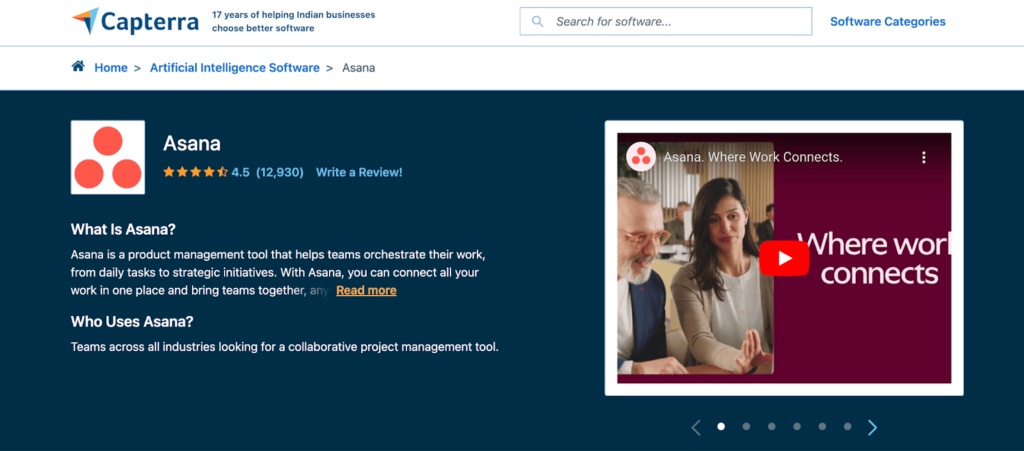
Asana has a 4.5 out of 5 rating based on reviews from 12,930 teams. Trusted by over 1,000,000 teams, it is used by major brands such as Spotify, Deloitte, Amazon, Dell, and NASA.
Pros and Cons
Pros
- It has a mobile application for both iOS and Android users.
- User-friendly interface with multiple project views like lists, boards, and timelines.
- Strong collaboration features, including task comments, file attachments, and real-time updates.
- Offers advanced project management tools like task dependencies and automation.
- Integrates well with popular third-party apps like Slack, Google Drive, and Microsoft Teams.
Cons
- The free version lacks essential features like a timeline view and advanced reporting.
- It can be overwhelming for new users due to the abundance of features.
- Limited customization options for workflows and dashboards.
- Resource management and time tracking features are less developed than in some competitors.
Pricing
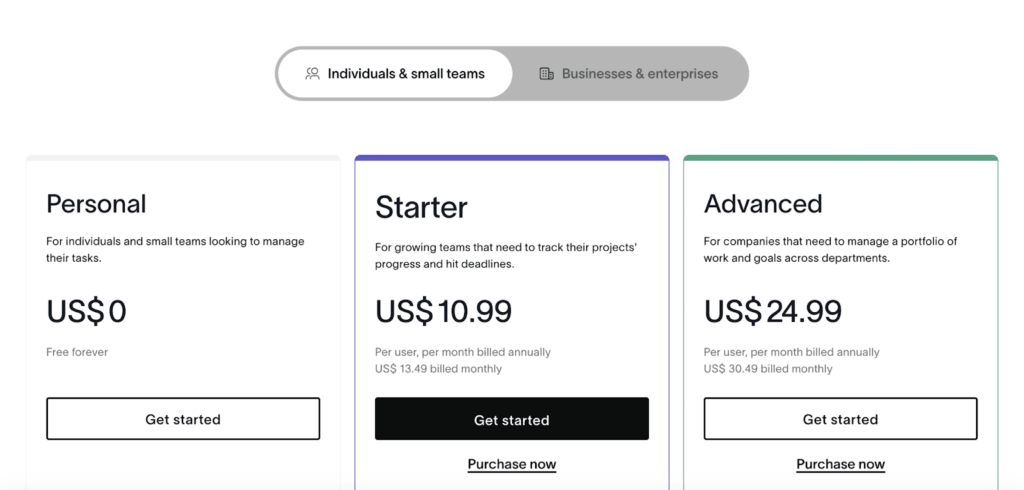
Asana offers three pricing plans:
- Personal: A forever-free plan.
- Starter: 10.99 USD per user per month for an annual subscription or 13.49 USD per user per month for a monthly subscription.
- Advanced: 24.99 USD per user per month for an annual subscription or 30.49 USD per user per month for a monthly subscription.
Asana provides two additional plans for larger organizations, Enterprise and Enterprise+, with pricing available by contacting their sales team.
5. Nifty

Nifty is a project management tool designed to efficiently facilitate team collaboration, task management, and progress tracking. Its key features include robust task management, which allows users to create tasks, assign them to team members, set due dates, and prioritize them. Nifty supports complex workflows with subtasks, dependencies, and project milestones to break down larger projects into manageable segments.
The tool includes time-tracking capabilities to monitor the time spent on tasks, enhancing productivity and workload management. Team members can collaborate directly within tasks through comments and file sharing. Nifty offers Kanban boards and task lists, allowing users to visualize tasks in a way that suits their workflow.
Gantt charts clearly show project timelines, task dependencies, and overall progress. Teams can also create and store project-related documents and a knowledge base (Wiki) within Nifty. The platform integrates with popular tools like Slack, Google Drive, and Zoom, ensuring seamless workflow management across applications.
Nifty Vs monday.com
- Ease of Use: Unlike Monday.com, Nifty offers a simpler and more intuitive interface. It is user-friendly and ideal for small-to-medium-sized teams that need basic project management features without much complexity. Monday.com offers more features but is complex to set up and navigate, which may require more learning time.
- Customization: Monday.com wins in terms of customization. It provides more ways to tailor boards and workflows, offering different project views and advanced automation options. Nifty is more straightforward with its customization but lacks the depth of Monday.com.
- Project Views: Both platforms offer multiple views for tasks, but Monday.com offers more variety (like calendar, chart, and custom boards), while Nifty focuses on Kanban, list, and Gantt views.
- Time Tracking and Collaboration: Nifty has strong time-tracking features and built-in collaboration tools, making it great for teams focused on productivity and real-time collaboration. Monday.com also has these features but with a more comprehensive range of tools, making it better suited for larger teams with more complex needs.
Nifty is excellent for small-to-medium teams that need an easy-to-use platform with solid collaboration and time-tracking features, while Monday.com offers more advanced tools for larger teams with complex projects. nTask is better for teams needing simplicity and affordability, while Monday.com excels in customization and powerful features for bigger organizations.
Ratings
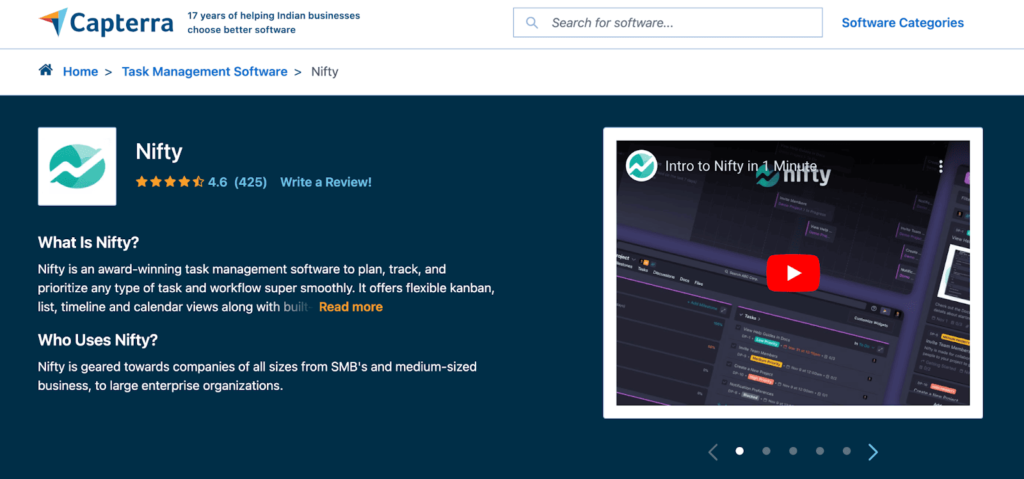
Nifty has a 4.6 out of 5 stars rating based on reviews from 425 users. Notable customers include Apple, IBM, and Verizon.
Pros and Cons
Pros
- It offers a forever-free plan.
- Combines project management, team collaboration, and communication in one platform.
- Offers built-in time tracking and task dependencies for better project planning.
- It is easy to use and has multiple project views like Kanban, Gantt charts, and lists.
- Includes unlimited guests in all plans, which is useful for client collaboration.
Cons
- The UI is outdated.
- Fewer third-party integrations compared to competitors like Asana or Trello.
- It can be expensive for smaller teams on higher-tier plans.
- The mobile app is less feature-rich compared to the desktop version.
- Limited customization options for reports and advanced workflows.
Pricing
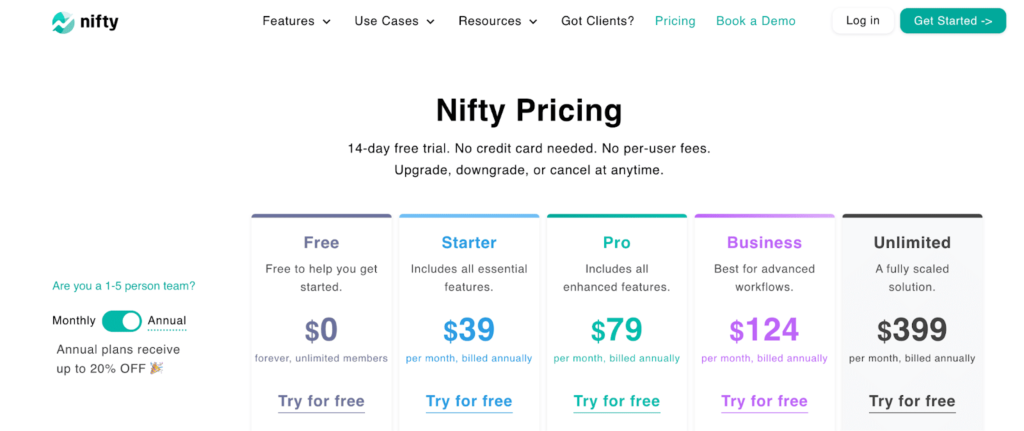
Nifty offers five pricing plans:
- Free: A basic plan available at no cost.
- Starter: 49 USD per month for a monthly plan or 39 USD per month with an annual plan. This plan accommodates up to 10 team members.
- Pro: 99 USD per month for a monthly plan or 79 USD per month with an annual plan, allowing up to 20 team members.
- Business: 149 USD per month for a monthly plan or 124 USD per month with an annual plan designed for up to 50 team members.
- Unlimited: The monthly plan costs 499 USD per month, or 399 USD per month with an annual plan, and offers unlimited team members.
Unlike most programs, Nifty does not use a per-user pricing structure. However, they have a separate per-user model plan for smaller teams of 1–5 people.
6. ClickUp
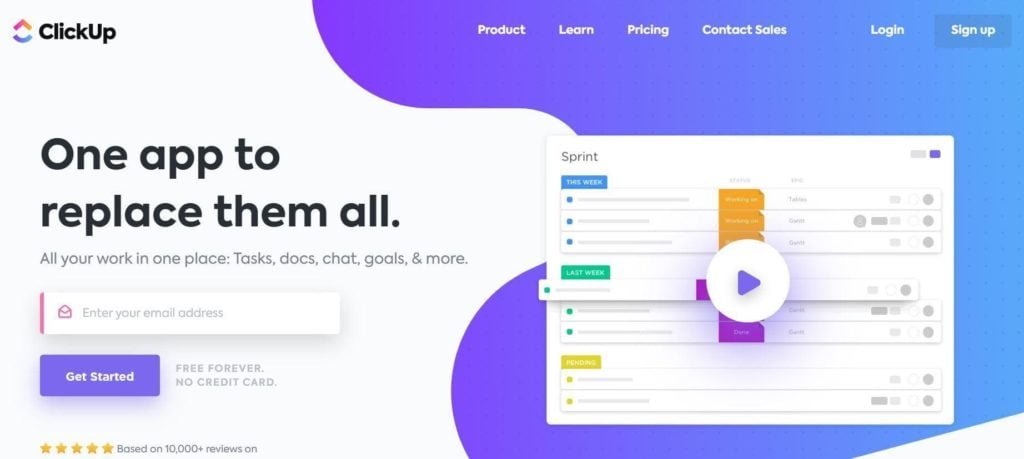
ClickUp is an all-in-one project management tool that enhances team organization, task management, and collaboration. Its key features include robust task management capabilities, allowing users to create tasks, assign them to team members, set priorities, and track deadlines. Tasks can be broken down further with subtasks and checklists.
ClickUp offers multiple project views, such as lists, Kanban boards, timelines, calendars, and Gantt charts, providing flexibility in how teams visualize their work. The platform features highly customizable workflows, enabling teams to create task statuses that align with their processes and automate actions to save time. Built-in time tracking allows users to log hours directly, facilitating productivity monitoring and billing.
ClickUp includes goal tracking, which connects tasks and milestones to ensure progress toward larger objectives. Collaboration is supported through comments, file sharing, real-time editing, and a chat feature for instant communication. ClickUp integrates seamlessly with various applications like Slack, Google Drive, and Zoom, making it a versatile tool for diverse workflows.
ClickUp Vs monday.com
- Customization and Flexibility: ClickUp and Monday.com both excel in customization. ClickUp offers more flexibility in setting up workflows, creating custom task statuses, and using advanced features like goal tracking and time management. Monday.com is also highly customizable, but ClickUp’s free version offers more options.
- Ease of Use: Monday.com has a more visually appealing and user-friendly interface, making it easier for beginners. ClickUp’s flexibility can overwhelm new users, as there are more features and options to learn.
- Task Views: Both tools offer multiple project views, but ClickUp provides more options (including Gantt charts, calendars, timelines, and mind maps). Monday.com offers similar views but fewer options than ClickUp.
- Time Tracking: ClickUp has built-in time tracking, which is useful for teams tracking hours spent on tasks. Monday.com requires integrations with third-party apps for time tracking.
ClickUp is ideal for teams seeking a highly customizable, all-in-one project management solution, while Monday.com offers a more beginner-friendly and visually appealing interface. nTask is best for teams looking for simplicity and affordability, whereas Monday.com is better for larger teams requiring advanced features and flexibility.
Ratings
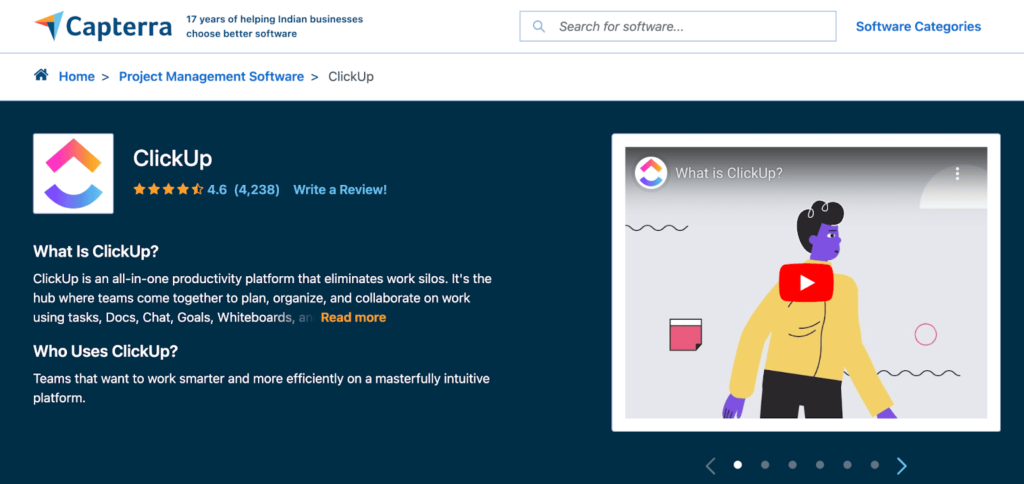
ClickUp has a 4.6 out of 5 star rating based on reviews from 4,238 users. With a customer base of over 2,000,000 teams, notable clients include Google, Booking.com, and Webflow.
Pros and Cons
Pros
- Affordable pricing and mobile application for Android and iOS.
- Extremely versatile with customizable project views like lists, boards, and Gantt charts.
- Offers robust features, including time tracking, goal setting, and automation.
- Integrates with various third-party apps like Slack, Google Drive, and Zapier.
- The free plan is feature-rich and suitable for small teams and individuals.
Cons
- The application has an overwhelming feature.
- Steep learning curve due to the abundance of features and customization options.
- The interface can feel cluttered and overwhelming for some users.
- Occasional performance issues, especially with larger teams or complex projects.
- Advanced reporting and analytics require higher-tier paid plans.
Pricing
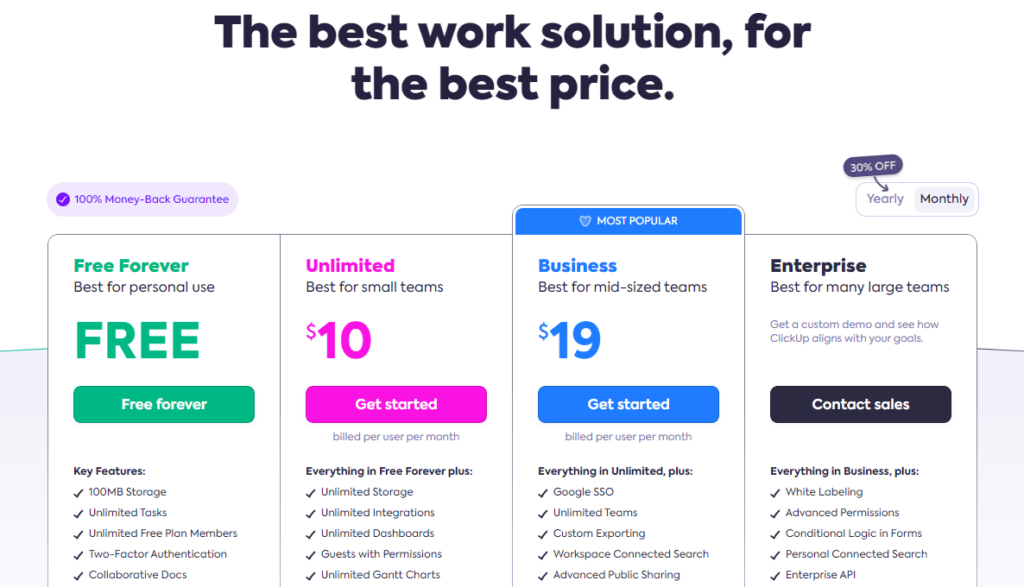
ClickUp offers four pricing plans:
- Free: A basic plan available at no cost.
- Unlimited: 10 USD per month for a monthly plan or 7 USD per month with an annual subscription.
- Business: 19 USD per month for a monthly plan or 12 USD per month with an annual subscription.
- Enterprise: Custom pricing is available by contacting customer care for details.
7. ProofHub

ProofHub is a project management and team collaboration tool to help teams effectively manage tasks, communicate, and track progress. Its key features include robust task management capabilities, allowing users to create tasks, assign them to team members, set deadlines, and add labels or priorities. Tasks can also be broken down into subtasks for better organization.
The platform supports custom workflows with different task stages, which can be easily tracked using Kanban boards. ProofHub includes built-in time tracking, enabling team members to log work hours and generate time reports for billing and productivity review. Gantt charts are available to visualize project timelines and dependencies, helping teams adjust schedules as needed.
For team collaboration, ProofHub facilitates communication through chat, discussion forums, and task comments, with the ability to attach files directly to tasks for better organization. Unique to ProofHub is its online proofing tool, which allows teams to review and approve designs and documents within the platform, complete with commenting features.
ProofHub Vs monday.com
- Task Management and Collaboration: ProofHub and Monday.com are strong in task management and collaboration. However, ProofHub’s online proofing tool is a standout feature for teams that need to review and approve designs or documents, something Monday.com lacks natively.
- Customization: Monday.com provides much more flexibility in terms of customization. It allows for deeper automation, more customizable boards, and multiple project views, making it more suitable for teams with complex workflows. ProofHub offers custom workflows but is more basic compared to Monday.com.
- Time Tracking: Both tools have built-in time tracking, but Monday.com often requires external integrations to track time effectively, while ProofHub offers this feature natively.
- Ease of Use: ProofHub’s simple interface makes it easier for smaller teams or organizations with straightforward needs. Monday.com, with its wide range of features and customizations, is more powerful but may be harder for beginners to learn.
ProofHub is excellent for teams that need strong task management, time tracking, and especially online proofing for file review. Monday.com is better for teams looking for advanced customization and powerful automation. nTask is perfect for small teams with basic needs, while Monday.com offers more flexibility and features for larger teams with complex workflows.
Ratings
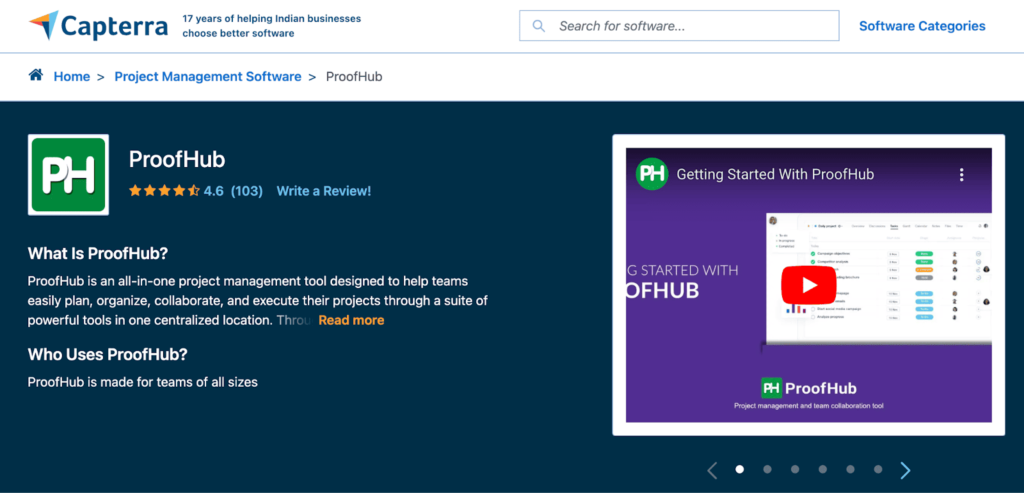
On Capterra, this software has a solid 4.6 out of 5 stars based on 103 user reviews. Notable customers include Netflix, NASA, Pinterest, Google, and other prominent brands.
Pros and Cons
Pros
- An Add-on storage option is given.
- All-in-one project management with task management, collaboration, and file proofing.
- Offers flat-rate pricing, which is beneficial for larger teams.
- Built-in tools like Gantt charts, Kanban boards, and time tracking improve project oversight.
- Strong collaboration features, including real-time chat and file markup for feedback.
Cons
- It does not offer a free plan.
- Fewer third-party integrations compared to other project management tools.
- Lacks advanced automation features for recurring tasks or workflows.
- The mobile app has limited functionality compared to the desktop version.
- Reporting features are not as robust or customizable as some competitors.
Pricing
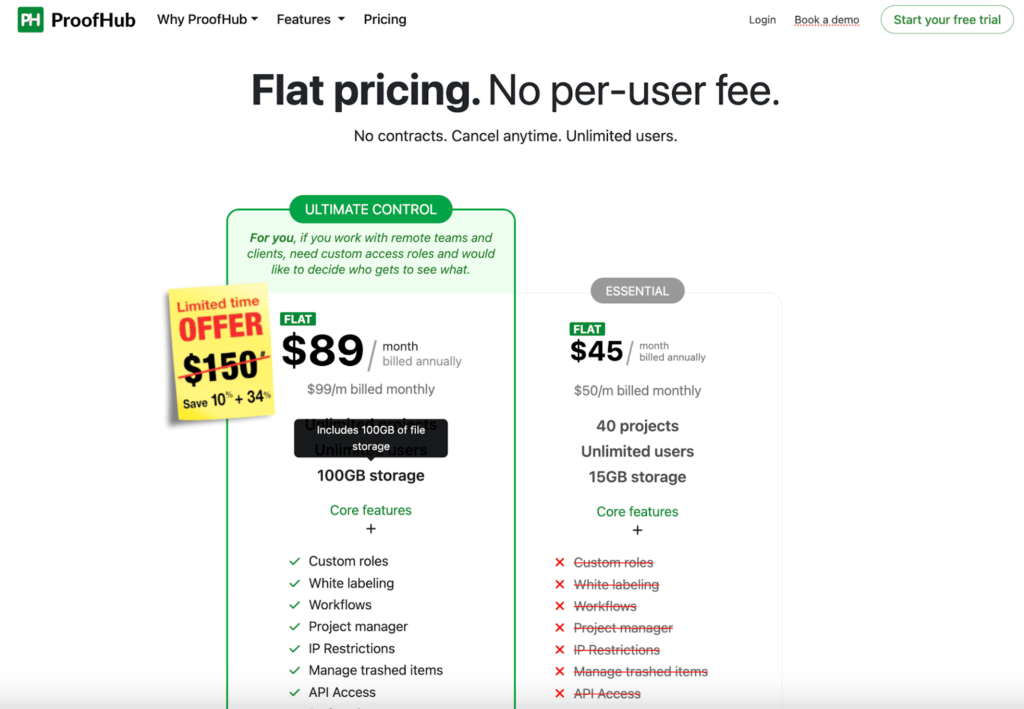
ProofHub offers two pricing plans:
- Essential: Starts at 50 USD per month or 45 USD per month with an annual subscription.
- Ultimate Control: Costs 99 USD per month or 89 USD per month with a yearly subscription.
Unlike monday.com, the price does not depend on the number of users.
The higher-paying plan offers more features, like 100 GB storage and unlimited projects. With an add-on, you can increase the storage to 2 TB.
The add-on prices beyond 100 GB are as follows:
- For 500 GB storage, tt 50 USD per month.
- For 1 and 2 TB, 100 USD per month.
How to Choose the Best monday.com Alternative?
When choosing the best alternative to monday.com, you must evaluate several key factors, including your team’s size, budget, and required features.
Below is a quick guide to help you select the right alternative to monday.com.
1. Team Size
- Small Teams (1-10 members): Look for alternatives that offer free plans or affordable pricing tiers with basic task management and collaboration tools. For example, Trello and nTask offer straightforward tools that work well for smaller teams.
- Medium Teams (11-50 members): Choose a platform that scales with more advanced project management features like resource allocation, time tracking, and automation. ClickUp, Asana, and Nifty offer scalable options suitable for medium-sized teams.
- Large Teams (50+ members): For larger teams, focus on robust tools that offer advanced workflows, reporting, integrations, and user management. ProofHub, Paymo, and ClickUp provide powerful features for enterprise-level teams.
2. Budget
- Free or Low-Cost Options: Trello and nTask provide free versions with core project management features if your team is on a tight budget. ClickUp offers a free plan with more advanced features than most free tools.
- Mid-Range Budget: Tools like Paymo and Nifty offer affordable paid plans, delivering great value for small to medium teams who need task management, time tracking, and collaboration features without the cost of enterprise solutions.
- Higher Budget/Enterprise: ProofHub offers a flat-rate pricing model with unlimited users for teams with a bigger budget. This makes it an attractive option for large teams looking for a fixed-price solution with advanced features like project planning and team collaboration.
3. Features Required
- Task Management: If your team primarily needs task management and to-do lists, Trello, Asana, and nTask excel with user-friendly task boards and simple task assignments.
- Time Tracking: Paymo, nTask, and ClickUp provide built-in time-tracking tools for teams that need them, making them ideal for agencies or teams that bill by the hour.
- Collaboration Tools: For seamless team communication and document sharing, Nifty, ProofHub, and ClickUp offer strong collaboration features, such as project chat and file sharing.
- Workflow Automation: ClickUp, Nifty, and Asana provide automation features to streamline repetitive tasks and improve team efficiency.
- Comprehensive Project Management: If your team handles complex projects with timelines and multiple dependencies, Paymo, ClickUp, and ProofHub are great for managing detailed workflows, resource planning, and milestone tracking.
4. Ease of Use
- Trello and Asana stand out for their simplicity and clean user interfaces, which make them easy for teams with little experience using project management software to adopt.
- ClickUp balances ease of use and advanced functionality with a customizable interface that can adapt to different workflows.
- nTask and Paymo are also relatively easy to use, especially for teams new to project management tools who still need time tracking and collaboration.
5. Project Complexity
- Simple Projects: Trello and Asana are ideal for teams with simple projects. Their Kanban boards and task management systems easily organize to-dos and priorities.
- Complex Projects: Teams managing more complex projects with dependencies, timelines, and resource management may prefer tools like ClickUp, Paymo, or ProofHub, which offer Gantt charts, time tracking, and advanced project planning features.
Conclusion
Using project management software helps teams align and collaborate. It can also save time by showing all the information in one place instead of being scattered in ten tabs.
So, if you are a team manager looking for a monday.com alternative, you can select any platform mentioned in this blog post.
All the software mentioned above offers a free trial period. Make sure to use these offers to evaluate your best fit.
Disclosure: Some links above are affiliate links, and I will earn a commission if you purchase after clicking. Please understand that I recommend these resources because they are useful, not because of my commissions. Please do not purchase unless you feel that the materials will help you achieve your goals. Thank you for your support.

I am Mohammad Fahad Usmani, B.E. PMP, PMI-RMP. I have been blogging on project management topics since 2011. To date, thousands of professionals have passed the PMP exam using my resources.