
The Pomodoro Technique is a helpful way to manage your time and get more done. It is simple: take a big, complex task and break it into smaller chunks called “Pomodoros.” Each Pomodoro is about 25 minutes long, where you focus only on that task. After that, take a short 5-minute break.
This helps train your brain to stay focused for short periods, making meeting deadlines easier and staying sharp. The idea is to work in short, powerful bursts instead of dragging things out.
Over time, this improves concentration and attention span. It is perfect for freelancers, students, or anyone who wants to stop wasting time and use it better. Instead of racing the clock, you work with it and get more done.
How Was the Pomodoro Technique Created?
In 1987, a student named Francesco Cirillo devised the Pomodoro Technique while studying for a university exam. He had difficulty focusing, so he grabbed a tomato-shaped kitchen timer (called a “Pomodoro” in Italian) and set it for just two minutes to help himself concentrate.
It worked so well that he slowly extended the focus time. After trying different time lengths, he found that 25 minutes of work followed by a 5-minute break was the sweet spot.
His main idea was to stop seeing time as something stressful and instead use it as a tool to get things done. With the Pomodoro Technique, you work with time, not against it, to stay focused and be more productive.
How Does The Pomodoro Technique Work?
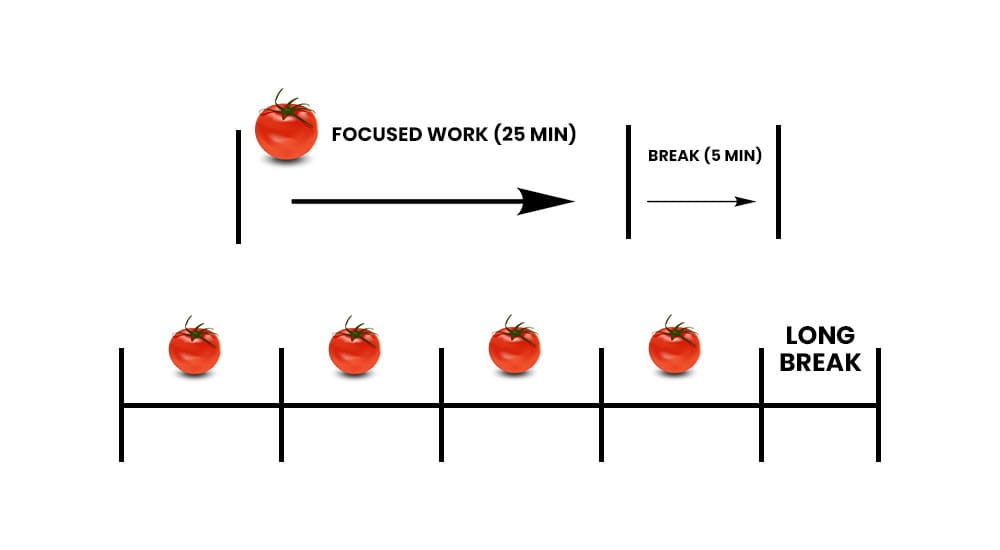
The Pomodoro Technique is a simple method with six easy steps to help you stay focused and get more done:
- Pick a Task: Start with something you’ve been putting off. Finishing it will feel great!
- Stay Focused: Remove distractions—close social media, mute your phone, and shut the door if needed.
- Set the Timer: Work on your task for 25 minutes. If something interrupts you, quickly jot it down to handle later.
- Take a Short Break: When the timer rings, take 5 minutes to relax, stretch, grab a drink, or just chill.
- Repeat: Start another 25-minute session if needed.
- Take a Longer Break: After four Pomodoros, take a 20-minute break to recharge.
The idea is to split your day into short work blocks with regular breaks. This will help you stay productive without getting burned out. Use your breaks to move around or chat—whatever enables you to reset.
You don’t need anything fancy—a simple kitchen timer works best, as it keeps you away from your phone. Remember, a Pomodoro is one solid block of work. If someone interrupts you, either stop the session and save your spot or ask them to wait until you’re done.
Francesco Cirillo suggests using a simple three-step plan for interruptions:
- Inform: Let the person know you’re busy and can’t talk now.
- Negotiate: Promise to talk later, maybe during your next break.
- Call Back: Once your session’s over, follow up as promised.
Feel free to adjust the times if 25 minutes doesn’t suit you. The main goal is to break big tasks into smaller ones, focus hard, and take breaks to stay fresh.
When Doesn’t the Pomodoro Technique Work?
Even though the Pomodoro Technique works great for many tasks, it is not always the best fit, especially for creative work like writing, coding, or making art. These kinds of tasks often need long, uninterrupted time to get into the zone, also known as the “flow” state.
When you are in flow, you are super focused and productive, but stopping every 25 minutes can break that rhythm and make it harder to stay creative.
The strict Pomodoro schedule might slow you down if you do something that requires deep thinking or creativity. In those cases, it is better to use a more flexible method that allows you to work for longer stretches without interruptions.
Benefits of the Pomodoro Technique
- Keeps You Focused: Working in set time blocks helps you stay on track and avoid distractions like social media or unnecessary tasks.
- Makes Starting Easier: Big tasks can feel overwhelming, but breaking them into smaller chunks makes it easier to begin and keep going.
- Boosts Productivity: Knowing you’re being timed helps reduce procrastination and keeps you motivated to finish what you start.
- Reduces Stress: Having a plan makes you feel more in control, which can help lower stress and anxiety.
- Helps Teams Work Better: If everyone’s using Pomodoros, it’s easier to respect each other’s focus time and understand workloads.
- Keeps You Motivated: Finishing tasks in short bursts feels rewarding and keeps you going without burning out.
Drawbacks of the Pomodoro Technique
- Can Feel Too Rigid: The fixed 25/5-minute routine might not suit everyone or every task.
- Adds Pressure: It can be frustrating if your work regularly takes longer than the timer allows.
- Doesn’t Handle Interruptions Well: It is not always easy to stay focused when unexpected things, like phone calls or urgent issues arise.
Who Can Use the Pomodoro Technique?
The Pomodoro Technique is flexible and works for various people in different fields. The following can benefit from it:
- Students: Great for studying, staying focused, and not cramming everything at the last minute.
- Freelancers: Helps manage tasks and deadlines without burning out, especially when juggling multiple clients.
- Office Workers: Useful for staying on track during the workday and completing daily to-do lists.
- Remote Workers: Helps create a routine and avoid distractions when working from home.
- Writers: Ideal for beating writer’s block, staying consistent, and boosting productivity.
- Researchers and Academics: Keeps big projects manageable and helps maintain steady progress.
- Entrepreneurs and Business Owners: Helps with time management and staying focused on business goals.
How the Pomodoro Technique Helps in Project Management
The Pomodoro Technique can be an excellent tool for project managers. Here is how it helps in project management:
- Tracks Time Better: Project managers can see how much time each task takes by using Pomodoros. This makes planning, managing schedules, and making better time estimates for future projects easier.
- Boosts Focus: Working in short, timed sessions helps avoid distractions, which is especially useful during long, detailed projects that require full attention.
- Helps Prioritize Tasks: Breaking work into smaller parts makes it easier to figure out what needs to be done first and stay organized.
Using the Pomodoro Technique in project management can improve time control, increase productivity, and smooth project completion.
Conclusion
The Pomodoro Technique is a simple yet powerful way to manage time and boost efficiency. Breaking work into smaller chunks, staying motivated, and minimizing distractions helps individuals stay on track and get more done.
When combined with other productivity methods, the Pomodoro Technique can be part of a personalized system that supports better time management and goal-setting.
Whether a student, freelancer, or professional, this technique is an excellent tool for improving focus, staying organized, and making the most of your time.
Reference:

I am Mohammad Fahad Usmani, B.E. PMP, PMI-RMP. I have been blogging on project management topics since 2011. To date, thousands of professionals have passed the PMP exam using my resources.