Construction projects often face delays, miscommunication, and shifting priorities. Pull planning offers a better way to manage these challenges by focusing on collaboration and clear goals. Instead of pushing tasks from the start, teams work backward from the final milestone to plan each step.
Pull planning method brings everyone involved into the process, helping identify risks early and build realistic schedules. It also improves accountability, since team members commit to tasks they understand and can complete.
In this blog post, you will learn what pull planning is, why it matters, and how to apply it effectively in construction projects for better results.
Key Takeaways
- End-goal first: Pull planning starts with the final milestone and works backward. This keeps the target in sight and cuts wasted effort.
- Team involvement: The entire team, from superintendents to trade partners, helps build the plan. Collaboration creates buy-in and uncovers hidden risks.
- Better outcomes: Research shows that projects with high lean intensity are three times more likely to finish ahead of schedule and twice as likely to finish under budget compared with low-intensity projects.
- Higher reliability: Traditional projects complete only about half of the planned work each week. Pull planning improves follow-through by focusing on commitments.
- Continuous improvement: Pull planning is part of the Last Planner System. It encourages regular huddles and weekly adjustments, so plans stay aligned with reality.
What is Pull Planning?
Pull planning is a collaborative scheduling method used in construction projects. It starts with a clear end goal, such as a project milestone or completion date, and works backward to identify the tasks needed to reach that goal.
Instead of one person creating the schedule, the entire team takes part. Each trade or team member adds their tasks, estimates durations, and explains dependencies. This creates a realistic plan based on actual work conditions.
Teams often use sticky notes or digital boards to map tasks and adjust them as needed. This visual approach makes it easy to see the flow of work and spot gaps. Pull planning improves coordination, reduces delays, and helps teams stay aligned throughout the project.
How Pull Planning Differs from Traditional (Push) Planning
Below is a side-by-side comparison that summarizes the differences between push and pull planning. The visual shows how each method handles key aspects such as approach, sequence, involvement and flexibility.
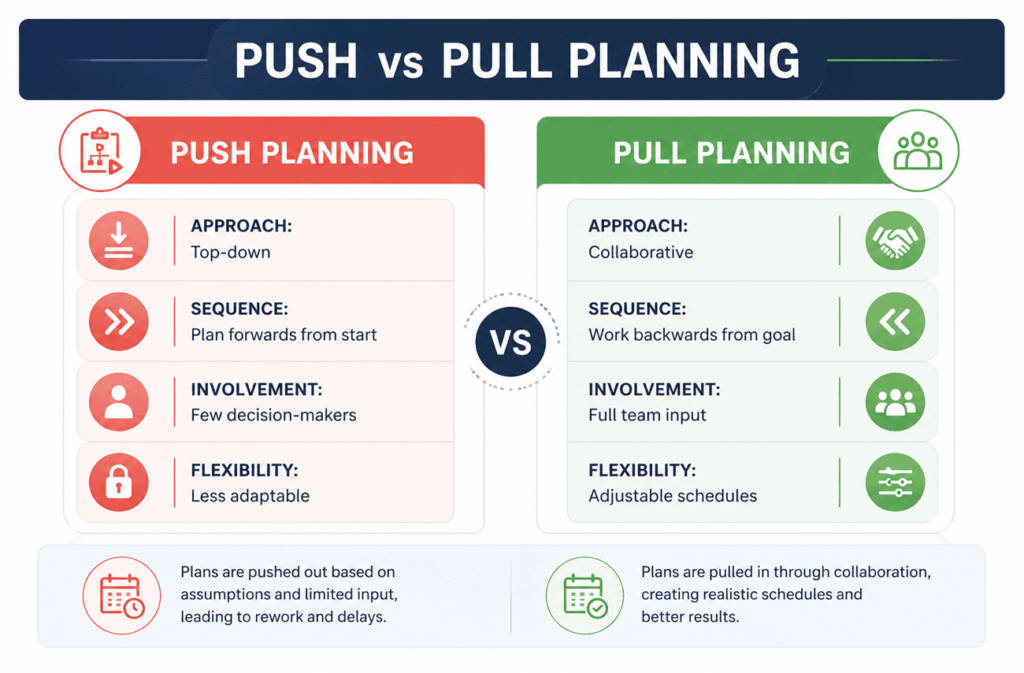
In push planning, a few decision-makers set the entire schedule. Tasks flow forward from the start, leaving little room for adjustment. In pull planning, the group looks at the final milestone and thinks backward. Everyone who will perform the work participates, resulting in a plan that is more adaptable to changing conditions.
Why Pull Planning Matters
Pull planning plays a key role in improving how construction projects are planned and delivered. It helps teams focus on the final goal and work backward to define clear, realistic steps. This approach reduces confusion and makes sure everyone understands what needs to happen and when.
It also improves teamwork. By involving all key participants, pull planning encourages open discussion and shared responsibility. People commit to tasks they believe they can complete, which increases accountability and trust.
Another major benefit is early problem detection. Teams can spot constraints, risks, or delays before work begins, which helps avoid costly disruptions later. Pull planning also creates better workflow, reduces wasted time, and improves overall efficiency.
In a fast-paced construction environment, this method supports better coordination, stronger communication, and more reliable project outcomes.
Key Principles of Pull Planning
Pull planning rests on a few core principles that align with lean construction and the Last Planner System. Each one reinforces the others and contributes to a more predictable workflow.
Backward Planning
Instead of asking “what comes next,” teams ask “what must happen before this milestone.” Working backward from the end goal keeps everyone focused on the desired outcome. Tasks are identified in reverse order and then arranged left to right for the actual schedule.
Collaboration
Everyone who contributes to the work, such as superintendents, foremen, designers, subcontractors and safety supervisors, attends the pull planning session. Each person brings their perspective on durations, handoffs and constraints. This collective knowledge leads to a plan that reflects real conditions.
Commitment Based
During the session, participants commit to realistic durations and dates. They also agree on the sequence of handoffs. When people make commitments in front of peers, they are more likely to follow through. This improves reliability and accountability.
Continuous Improvement
Pull planning sessions are not one-and-done meetings. The team revisits the plan through weekly work plans and daily huddles to adjust for new information. Lessons learned are shared, so each pull planning cycle improves upon the last.
Whole Project vs Segments
On large projects, pull planning for the entire job can be overwhelming. Instead, divide the project into major segments: structure, envelope, mechanical, electrical, plumbing and interior finishes, and hold separate sessions for each. For example, a team working on a high-rise might pull plan the exterior envelope separately from the interior finishes. Segmenting sessions keeps the scale manageable and allows specialists to focus on their work.
The Pull Planning Process Steps
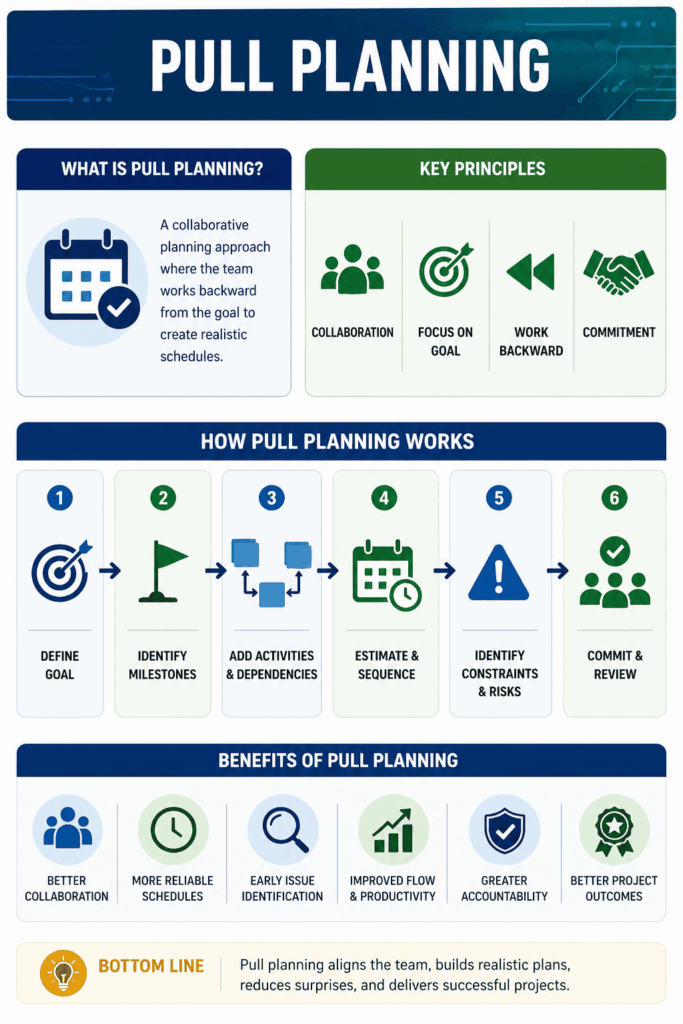
Pull planning follows a series of steps that guide the team from the milestone to a workable schedule. The infographic below summarizes these steps at a glance.
1. Establish Project Milestones
Identify the critical milestone that defines the end of the phase or project. It could be a date when the building must be dried in, an inspection deadline or a handoff to another team. Write this milestone on a card and place it on the right side of the board.
2. Break Down Activities
Working backward, list all tasks needed to reach the milestone. Each task gets its own card. Include an estimate of duration and choose a color scheme so each trade can be recognized at a glance.
3. Sequence Activities
Arrange the tasks in reverse order, moving from the milestone back to the current date. Look for opportunities to perform tasks in parallel. Ask questions like “Can the glazing team start once the steel is a day ahead?” Sequencing should reduce handoff gaps and highlight overlaps.
4. Identify Constraints
After sequencing, look for bottlenecks, resource limits or external factors, like weather or inspections, that could delay work. Use extra cards to note constraints and discuss how to mitigate them. Building a buffer around high-risk activities helps protect the schedule.
5. Assign Responsibilities
Make sure every task has a responsible trade and a promised duration. Document these commitments. After the session, send a follow-up email summarizing responsibilities and dates. This transparency helps everyone understand their role.
6. Document Everything
Take photos of the board or save the digital board. Convert the sticky-note sequence into a formal schedule for sharing with stakeholders. Keep the physical board if possible; it serves as a visual reminder of the commitments made.
7. Monitor and Adjust
Use weekly work plans and daily huddles to track progress. If delays occur, revisit the pull plan and adjust tasks accordingly. The goal is not to create a perfect plan but to establish a process for continuous learning and adaptation.
Pull Planning and the Last Planner System
Pull planning is one conversation within the Last Planner System (LPS), a comprehensive framework for reliable project delivery. LPS recognizes five levels of planning: milestone planning, pull planning, make-ready planning, weekly work planning and continuous learning. Pull planning sets the stage by establishing the sequence of handoffs.
Make-ready planning removes constraints before work begins. Weekly work plans and daily huddles translate the pull plan into actionable commitments. A key metric, Percent Plan Complete (PPC), tracks the number of tasks completed as promised and drives continuous improvement. Together, these practices help teams achieve a more predictable flow of work.
Common Challenges and Tips
Even well-run sessions can encounter obstacles. Here are a few common issues and ways to address them:
- Late invitations: If key trade partners are not invited early, they may not be prepared. Send invites several weeks in advance and follow up to confirm attendance.
- Unrealistic durations: People sometimes underestimate or overestimate task durations. Encourage honest discussion about what is possible. Use data from past projects to inform estimates.
- Missed constraints: Some constraints may not surface until work begins. After the session, review the plan with field crews and suppliers to identify any omissions. Update the plan as needed.
- Lack of follow-through: Without regular check-ins, the plan can drift. Use daily huddles and weekly planning sessions to keep everyone aligned. Track PPC and discuss root causes of missed commitments.
FAQs
Q1. What is the difference between pull planning and the Last Planner System?
Pull planning is one component of the Last Planner System. It focuses on sequencing tasks backward from a milestone. The Last Planner System includes pull planning, make-ready planning, weekly work plans, daily huddles and a process for learning and adjusting.
Q2. Who should attend a pull planning session?
Invite representatives from every trade involved in the milestone. This includes the general contractor, project manager, foremen, subcontractors, designers and safety supervisors. The goal is to capture all perspectives.
Q3. When should you hold a pull planning meeting?
Ideally, schedule it at least a month before the work starts. Early sessions give trade partners time to prepare crews and materials. If the project is already underway, it is still valuable to hold a session as soon as possible.
Q4. How does pull planning improve schedule reliability?
By involving the people who will perform the work, the schedule reflects real durations and constraints. Teams make commitments in front of their peers, which increases accountability. Regular check-ins help adjust the plan, leading to fewer delays.
Summary
Pull planning helps construction teams build reliable schedules by working backward from clear goals. It brings the right people together, improves coordination, and reduces delays. Teams make realistic commitments and adjust plans as work progresses. This approach creates better flow, fewer surprises, and stronger accountability. When used with lean principles and the Last Planner System, pull planning leads to smoother projects, better teamwork, and more consistent results. It’s a simple shift that can make a big difference.

I am Mohammad Fahad Usmani, B.E. PMP, PMI-RMP. I have been blogging on project management topics since 2011. To date, thousands of professionals have passed the PMP exam using my resources.