Projects fail more often than teams expect, and the reasons are usually simple. Many project teams begin with energy but lose focus as work progresses. Small gaps in planning or communication can slowly turn into major issues. When you understand why projects fail, you can take action early and stay in control. Have you checked if your team shares the same goals? That question often reveals hidden problems.
In this blog post, you will learn the main reasons for project failure and how to fix them. Each section gives clear, practical steps you can apply right away to improve results and keep your project on track from start to finish.
Key Takeaway
- Failure is common but preventable: Only 31% of projects succeed on time and on budget; half struggle, and 19% are outright failures.
- Eight core causes: Unclear objectives, lack of executive support, poor communication, scope creep, unrealistic expectations, limited resources, scheduling delays, and lack of transparency.
- Emerging challenges: AI initiatives have failure rates of 70%-85%, and remote work complicates communication.
- Actionable solutions: Set clear objectives, secure leadership buy-in, design a communication plan, manage scope, set realistic goals, plan resources, schedule carefully, and centralize documentation.
- Start planning now: Early planning improves your chances of success and reduces stress. Use the tips below to help your next project thrive.
What is Project Failure?
Project failure occurs when a project fails to achieve its intended goals, deliverables, or meet its deadlines. It may also fail if it exceeds the budget, produces poor-quality results, or fails to create business value. Failure is not always sudden. It often develops slowly as small issues accumulate. For example, missed deadlines, unclear direction, or lack of coordination can push a project off track. If these problems are not addressed early, they can lead to complete failure.
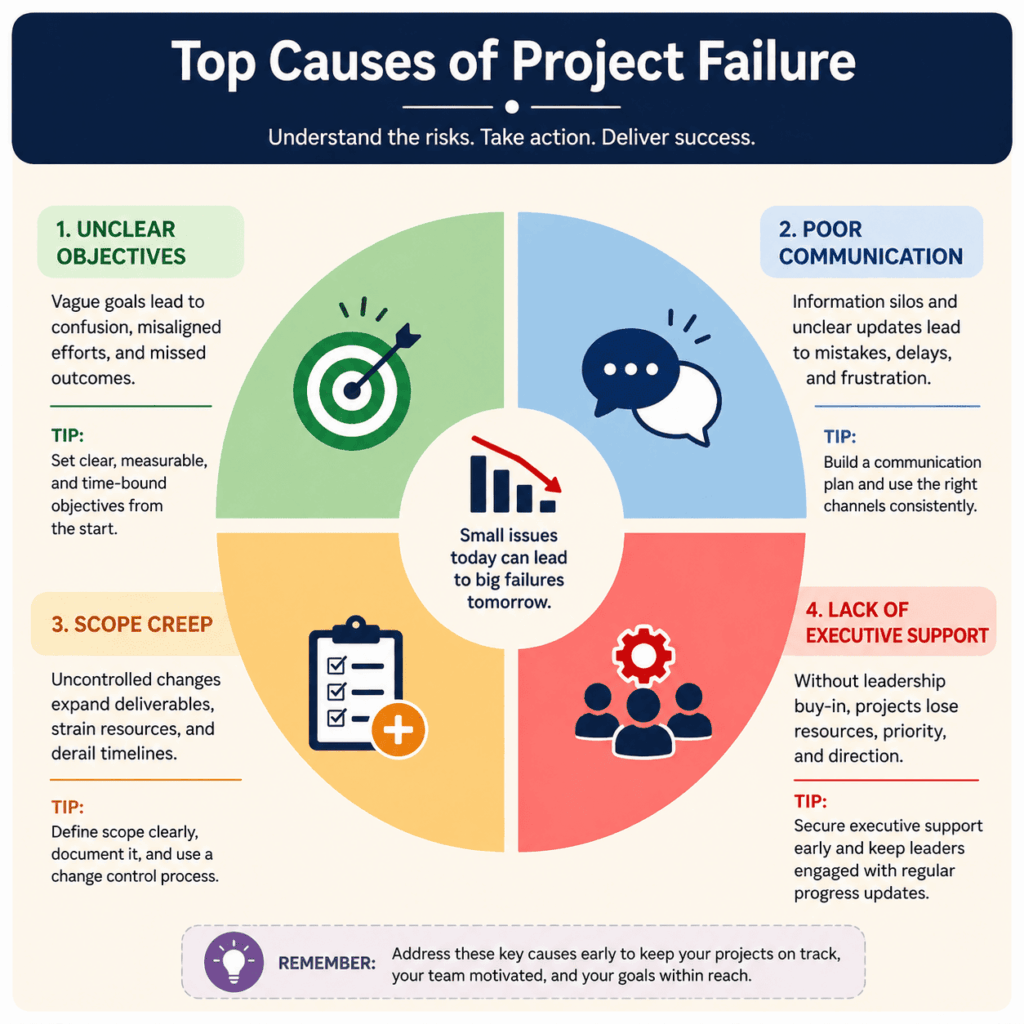
The most common causes are easy to recognize. Unclear objectives create confusion because teams do not know what success looks like. Poor communication leads to missed updates and mistakes. Scope creep adds extra work and stretches resources beyond limits. Lack of executive support reduces priority and delays decisions. When these issues combine, projects struggle to stay aligned and often fail to deliver expected results.
In the next section, we will discuss 9 common causes of project failure, including the top four.
Why Projects Fail: 9 Causes and How to Prevent Them
The following are the nine causes for project failures. The order follows how problems usually appear in real projects, from planning to execution.

1. Poor Goal Definition at the Start
Many projects fail before they even begin. Teams jump into work without clear goals. When objectives are vague, people make their own assumptions. This creates confusion and wasted effort.
For example, a team may build features that do not support business needs. In the end, the output looks complete but delivers little value.
What to do:
Define clear, measurable goals from day one. Make sure every team member understands what success looks like.
2. Weak Business Alignment
A project can look good on paper but still fail if it does not support business priorities. When leaders do not see clear value, support fades over time.
You may notice budget cuts, slow approvals, or shifting priorities. These are early warning signs.
What to do:
Link every milestone to a business outcome. Show how your project supports revenue, growth, or efficiency.
3. Lack of Stakeholder Engagement
Projects need active support from leaders and stakeholders. Without it, decisions slow down and teams lose direction.
Imagine waiting days for approvals or struggling to secure resources. This often leads to delays and frustration.
What to do:
Engage stakeholders early. Keep them involved through short and regular updates.
4. Ineffective Communication Channels
Teams often use too many tools without clear rules. Messages get lost. Updates become inconsistent.
In remote teams, this problem grows even bigger. People may miss key information or act on outdated data.
What to do:
Create a simple communication plan. Define where updates go, how often they happen, and who is responsible.
5. Uncontrolled Scope Expansion
Scope creep starts small but grows fast. A few extra requests here and there can overload the team.
Soon, deadlines slip and budgets increase. The project becomes hard to manage.
What to do:
Set a clear scope early. Document it. Review any new request before accepting it.
6. Unrealistic Planning and Deadlines
Teams often set aggressive timelines to impress stakeholders. But unrealistic plans create stress and poor-quality work.
For example, a project may require six months but is planned for three. The result is burnout and missed goals.
What to do:
Use realistic estimates. Break work into smaller tasks and build buffer time.
7. Resource Gaps and Skill Shortages
Projects fail when teams lack the right people, tools, or budget. Even a strong plan cannot succeed without proper support.
You might see delays, poor output, or overworked team members.
What to do:
Assess resource needs early. Make sure your team has the right skills and enough time to complete the work.
8. Weak Risk Management
Many teams ignore risks until problems appear. By then, it is too late to respond effectively.
Small risks can turn into major issues if not tracked. For example, a supplier delay can stop the entire project.
What to do:
Create a risk register. Review it often. Plan responses before issues occur.
9. Lack of Visibility and Tracking
When progress is not tracked, problems stay hidden. Teams may think everything is fine until it is too late.
Without visibility, leaders cannot make timely decisions. This leads to surprises and failure.
What to do:
Use a project tracking system. Monitor progress, deadlines, and performance in real time.
Project Failure Statistics and Trends
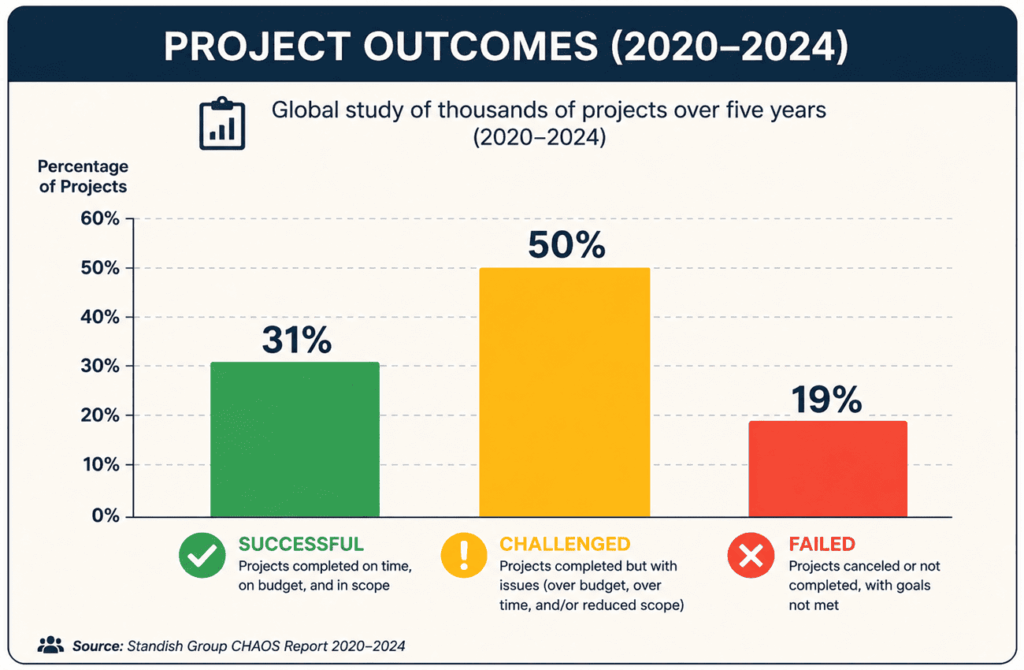
To understand how widespread these issues are, consider recent research. A longitudinal study by the Standish Group shows that from 2020 to 2024, only 31% of projects succeed on time, within budget, and in scope, while 50% are challenged and 19% fail.
In the emerging field of generative AI, the situation is worse: Gartner predicts that 70–85% of AI projects fail to move beyond proof-of-concept. Meanwhile, the Project Management Institute’s 2024 study reports that just 34% of organizations complete projects on budget and 34% deliver on time. These figures underscore how critical planning and oversight are for project success.
Emerging Challenges: AI and Remote Work
AI Projects: Many companies rush to adopt AI without clear objectives or adequate expertise. Complex data requirements, ethical concerns, and unrealistic timelines contribute to the high failure rate. To avoid these pitfalls, start with a small pilot, clarify the business problem AI should solve, and invest in data readiness and talent.
Remote and Hybrid Work: Distributed teams add communication complexity. Time zones, cultural differences, and digital fatigue can derail projects. Counter this by agreeing on core hours, using asynchronous updates, and documenting decisions clearly. Encourage camera-on meetings for relationship building, but respect boundaries to reduce burnout.
Tips for Successfully Completing Projects
- Write a Project Charter: Pitch your project in a concise document that covers goals, stakeholders, scope, and success criteria. This sets expectations early.
- Build a Project Plan: Include goals, success metrics, stakeholders, scope, budget, milestones, timeline, and a communication plan. Share it with the team and revisit it often.
- Manage Resources: Use resource management and capacity planning tools to align workloads with available talent.
- Record Risks: Maintain a risk register to flag potential issues. For example, list high-impact risks like key staff turnover or supply chain delays.
- Kick Off Strong: Host a kickoff meeting to align on goals, roles, and timelines. Encourage questions and clarify responsibilities.
- Leverage Technology: Adopt project management software to centralize tasks, track progress, and foster transparency. Choose a platform that suits your team’s workflow.
- Review and Learn: After each project, conduct a retrospective. Celebrate wins, discuss setbacks, and document lessons learned. This continuous improvement builds expertise and prevents repeat mistakes.
FAQs
Q1. What is the main cause of project failure?
Poor alignment and unclear objectives are the most common causes. Without clear goals, teams struggle to prioritize work and measure success.
Q2. Why do so many projects miss their deadlines?
Unrealistic expectations, scope creep, and poor planning lead to missed deadlines. Clear schedules and achievable goals help keep work on track.
Q3. How much do failed projects cost?
Failed projects can waste millions in budget and cause hidden costs such as lost productivity, decreased morale, and delayed initiatives. Planning mitigates these losses.
Q4. How can I tell if my project is failing?
Early signs include missed deadlines, uncontrolled scope changes, unclear goals, disengaged sponsors, and frequent miscommunication. Address issues quickly to regain control.
Q5. What tools can help prevent project failure?
Use a project management platform to centralize tasks, schedules, communication, and documentation. This transparency boosts collaboration and accountability.
Summary
Projects fail for clear reasons, and most of them are avoidable. When you set clear goals, plan resources, and communicate well, you reduce risk. Strong leadership support and realistic expectations also keep work on track. Small issues like scope creep or delays can grow fast if ignored. Stay alert and act early. Use simple tools to track progress and share updates. If you apply these practices, your projects will run more smoothly and deliver better results.

I am Mohammad Fahad Usmani, B.E. PMP, PMI-RMP. I have been blogging on project management topics since 2011. To date, thousands of professionals have passed the PMP exam using my resources.