This article covers the seven best product management software tools. Many people often confuse product management with project management, but while they share similarities, they have distinct functions and features.
To fully grasp the value of product management software, we first need to understand the stages of product management and how these tools can assist. After that, we’ll explore the top seven software options available.
Product management involves several key stages, including ideation, creating roadmaps, developing the product, drafting product requirement documents, and managing backlogs.
A product manager’s role encompasses everything from the product’s creation and development to its launch and post-launch issue resolution. Their responsibility concludes once the product is retired from the market.
The product management process follows five main stages, plus an additional final step:
- Innovation: Generating new product ideas.
- Analysis: Studying the market to understand customer needs, competitors, and other influencing factors.
- Development: Building the product according to the roadmap.
- Beta Testing: Introducing the product to a select audience for testing.
- Launch: Releasing the product to the target market.
- Retirement: When the product is no longer needed and is removed from the market.
Product managers are often called the “mini-CEOs” of their products, overseeing every stage of the product’s lifecycle.
So, how does product management software support this process?
It helps the product team stay organized, ensures seamless collaboration, provides quick access to necessary files and documents, tracks task status, identifies gaps or challenges, and helps clear obstacles to keep the project on track according to the roadmap.
In some cases, project management software can also be used to manage product teams, so our list will feature some of these tools.
With a foundational understanding of product management, let’s dive into the seven best product management software options.
The 7 Best Product Management Software
The following are the seven best product management software:
- monday.com
- nTask
- ProductPlan
- ProductBoard
- Airfocus
- Strategic Roadmaps
- Prodpad
1. monday.com
monday.com is a versatile work management platform that supports product development teams by providing tools for planning, collaboration, and execution. Product development enables teams to create, track, and manage every stage of the product lifecycle—from ideation to launch—within a customizable and user-friendly interface.
Product managers can use monday.com to build product roadmaps, prioritize tasks, and set milestones, ensuring the team stays aligned with the development goals. Its collaborative features allow team members to communicate, share files, and update project statuses in real-time, improving transparency and teamwork.
The platform’s visual dashboards help monitor progress, while its automation tools streamline repetitive tasks like status updates and notifications. monday.com integrates with popular development tools like Jira and GitHub, bridging the gap between product planning and technical execution, making it an effective solution for managing the complexity of product development.
Ratings
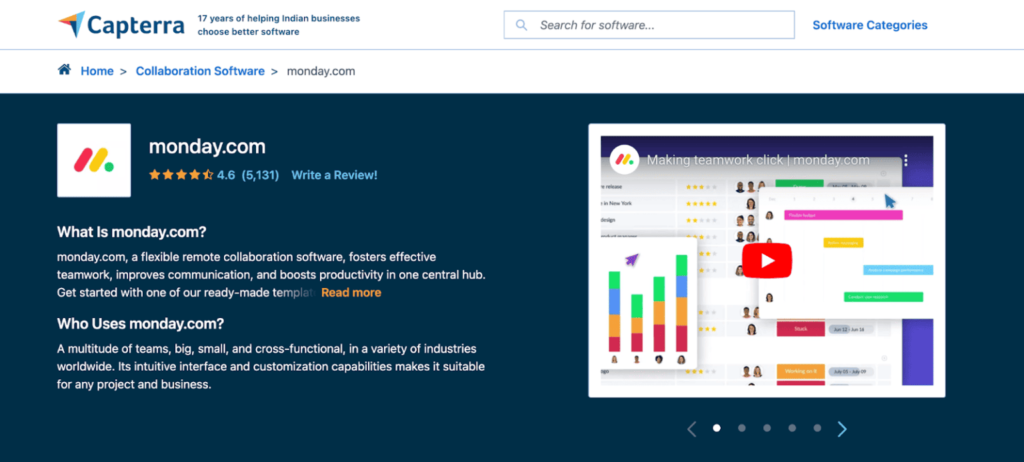
monday.com boasts an impressive rating on Capterra, with 4.6 out of 5 stars from 5,131 users.
Pros
- User-Friendly Interface: monday.com has an intuitive and visually appealing interface, making it easy for teams to navigate, organize tasks, and track progress without a steep learning curve.
- Highly Customizable: The platform allows teams to tailor workflows, task boards, and automation to fit specific product development processes, ensuring flexibility across different projects.
- Collaboration Tools: It offers built-in communication features like comments, file sharing, and integrations with tools like Slack and Zoom, enabling seamless collaboration across departments.
- Automation Capabilities: monday.com includes automation features that reduce manual work by automating repetitive tasks like status updates, notifications, and reminders, improving efficiency.
Cons
- Limited Advanced Reporting: While monday.com provides basic reporting, it may lack in-depth analytics and reporting features for complex product development tracking, requiring integrations with other tools for detailed insights.
- Can Become Expensive: For larger teams or those requiring advanced features, the cost of using monday.com can add up quickly, making it less budget-friendly for smaller companies.
- Overwhelming Customization Options: The high level of customization can be overwhelming for new users or teams unfamiliar with building their workflows, leading to inefficient setups.
- Limited Offline Access: monday.com is a cloud-based platform, so users need an internet connection to access the tool. This limitation could be problematic for remote teams in areas with unreliable connectivity.
monday.com Pricing
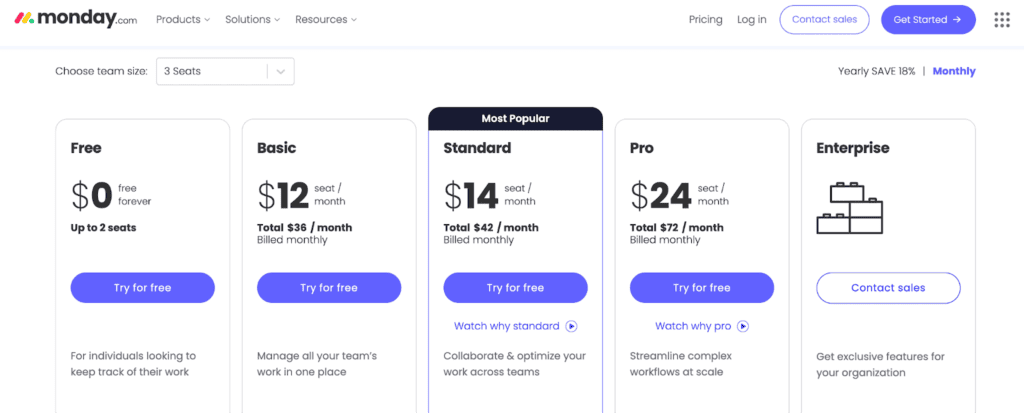
monday.com offers five pricing plans:
- Free: A newly introduced plan that is completely free of charge.
- Basic: This plan starts at 12 USD per seat per month.
- Standard: Pricing for this plan begins at 14 USD per seat per month.
- Pro: This plan starts at 24 USD per seat per month.
- Enterprise: For pricing details on this plan, please contact the monday.com sales team.
All plans come with an 18% discount when billed annually.
Visit monday.com
Read my monday.com review.
2. nTask
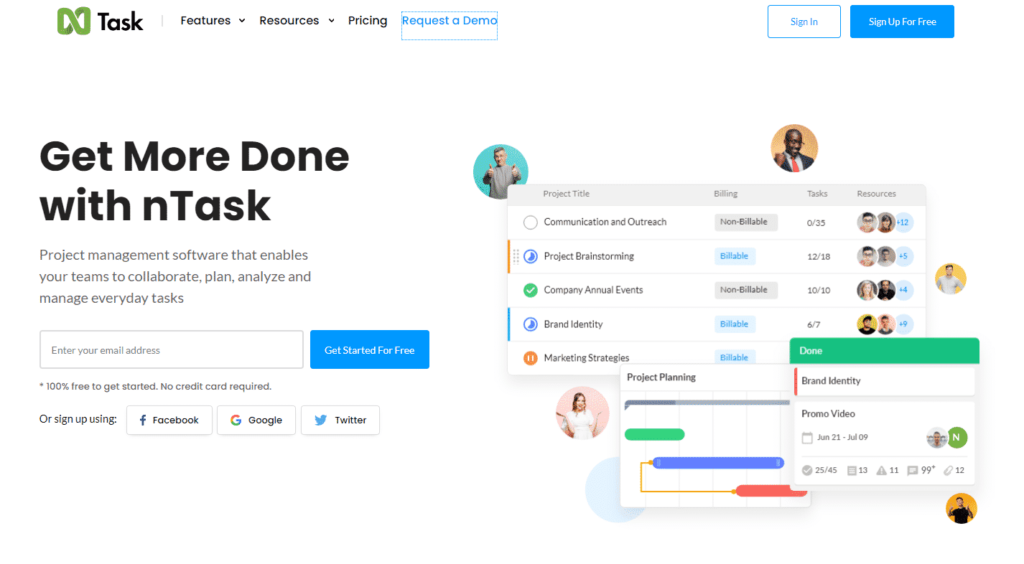
nTask is a comprehensive project management and collaboration tool designed to enhance team productivity, making it particularly valuable for product development. In this context, nTask enables product managers and development teams to efficiently plan, execute, and monitor projects through a user-friendly interface that simplifies task management.
Key features include customizable task lists, project timelines, and collaboration tools that facilitate communication among team members. Product managers can leverage nTask to create detailed project plans, assign tasks, and set deadlines, ensuring everyone stays on track.
The platform also offers integrated time tracking and meeting management, allowing teams to manage resources effectively and optimize workflows. nTask supports risk management and issue tracking, helping teams identify roadblocks early in development. With its affordability and straightforward features, nTask is an excellent choice for teams looking to enhance their product development efforts without overwhelming complexity.
Ratings
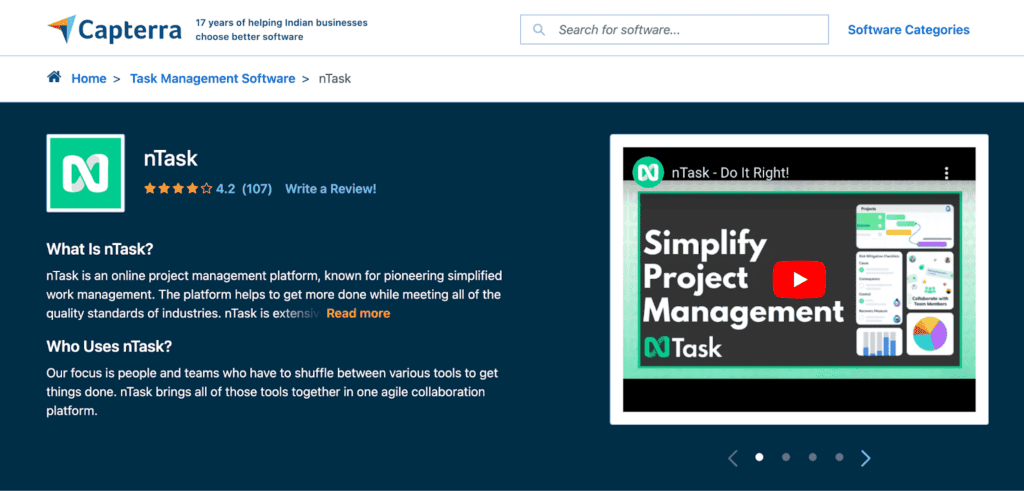
nTask has gotten a good 4.2 star rating out of 5 stars as given by 107 users.
Pros
- Affordable Pricing: nTask offers a cost-effective solution compared to many other project management tools, making it an attractive option for smaller teams or startups with tight budgets.
- Task and Issue Tracking: It provides a robust task management system and issue tracking, which is useful for monitoring product development progress, identifying bottlenecks, and ensuring that all tasks are properly managed.
- Meeting Management: nTask includes a built-in feature for scheduling and managing meetings. This allows teams to easily set agendas, send invites, and log meeting details, which can help streamline product development discussions.
- Time Tracking: The platform offers integrated time-tracking features that help product managers and teams monitor time spent on various tasks, enabling better resource planning and productivity tracking.
Cons
- Limited Customization: nTask’s customization options are more limited than those of competitors, which may make it difficult for teams with unique workflows to fully tailor the platform to their specific product development needs.
- Basic Reporting: The reporting features in nTask are relatively basic and might not provide the advanced analytics or detailed insights required for comprehensive product development tracking and decision-making.
- Integration Limitations: While nTask supports some integrations, it lacks the extensive integration options found in other tools like monday.com or Jira, which can restrict its usefulness for teams relying on multiple external platforms.
- Steep Learning Curve for Advanced Features: Though nTask is generally easy to use, some of its more advanced features like risk management and time-tracking may take time for teams to fully understand and implement effectively.
nTask Pricing
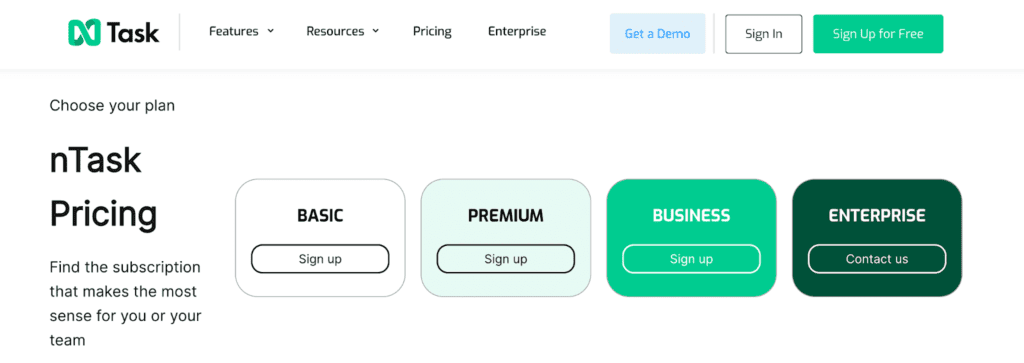
nTask offers four pricing plans:
- Basic: This is their free plan, providing essential features for users.
- Premium: This plan starts at 4 USD per month.
- Business: This plan is priced at 12 USD per month and includes additional features for growing teams.
- Enterprise: Please contact their sales team for pricing details on this plan.
If you opt for an annual subscription, you can enjoy discounted rates for the Premium and Business plans, which are 3 and 8 USD per month.
Read my nTask review.
3. ProductPlan

ProductPlan is a powerful product management software designed to create and manage product roadmaps. In the context of product development, it enables product managers and teams to visualize their product strategy, prioritize initiatives, and communicate plans clearly to stakeholders.
Its intuitive drag-and-drop interface allows users to easily build detailed roadmaps that align with business goals and customer needs. ProductPlan allows teams to customize views, making it simple to share tailored roadmaps with different audiences, such as executives, developers, or marketing teams.
The software also facilitates collaboration by enabling team members to provide feedback and make updates in real time, ensuring everyone stays aligned throughout the product development process. ProductPlan integrates seamlessly with popular tools like Jira, Trello, and Slack, helping teams synchronize their roadmap with execution. ProductPlan is essential for driving product success through effective planning and communication.
Ratings

ProductPlan has a good score of 4.4 stars out of 5.
Pros
- Easy Roadmap Creation: ProductPlan excels in creating visually appealing and easy-to-understand roadmaps, allowing product managers to communicate timelines, strategies, and priorities clearly to stakeholders.
- Collaborative Features: The platform allows real-time collaboration, enabling teams to collaborate on roadmaps, share feedback, and update plans as the product development process evolves.
- Integrations with Popular Tools: ProductPlan integrates well with tools like Jira, Trello, and Slack. This allows product managers to sync their roadmaps with project management and development tools, making it easier to stay aligned.
- Customizable Views: ProductPlan provides multiple views, such as a timeline, list, and table, offering flexibility in how roadmaps are presented based on the audience or specific project needs.
Cons
- Limited Task Management Features: ProductPlan is primarily focused on roadmap creation and lacks robust task management features found in other product development tools like nTask or monday.com, which could require additional software for task tracking.
- High Cost for Small Teams: The pricing structure may be expensive for smaller teams or startups, especially considering that it’s specialized in roadmaps rather than full-fledged product or project management.
- Steep Learning Curve for Beginners: While the tool is powerful, new users might find it challenging to fully leverage all features without a learning period, particularly if they’re unfamiliar with roadmap-focused software.
- Limited Reporting and Analytics: ProductPlan lacks advanced reporting and analytics features, which might make it harder for product managers to extract detailed performance insights or track progress beyond the roadmap level.
ProductPlan Pricing
ProductPlan pricing is not mentioned on the website; you need to contact customer care for the details.
4. Productboard
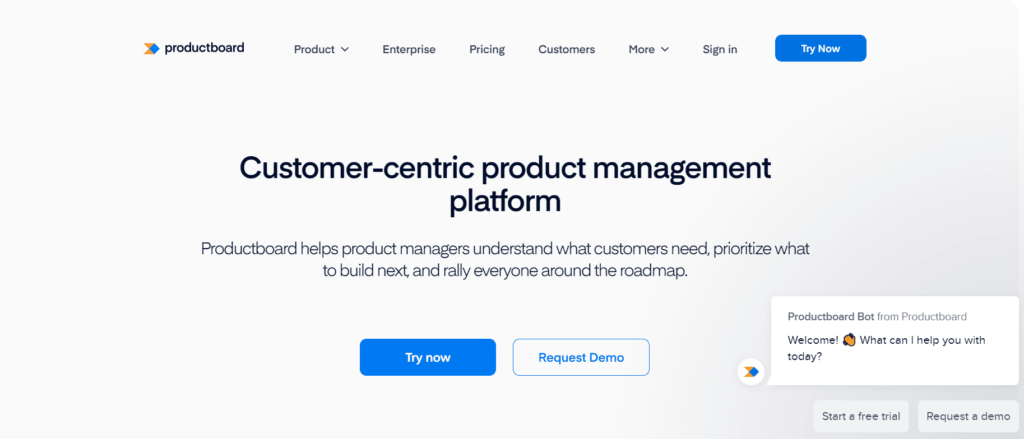
Productboard is a product management software designed to help teams prioritize features and build products that meet customer needs. In product development, it serves as a centralized platform for gathering user feedback, organizing ideas, and creating strategic roadmaps.
Product managers can easily collect insights from various sources, including customer interviews and support tickets, which helps identify the most valuable features to develop. The prioritization framework allows teams to score and rank features based on criteria such as impact, effort, and customer feedback, ensuring that resources are allocated effectively.
Productboard also enables team collaboration by providing visual roadmaps to share with stakeholders, developing transparency and alignment. Its integrations with popular development tools like Jira and Slack facilitate seamless communication between product management and engineering teams. Productboard empowers organizations to make data-driven decisions and enhance their product development process.
Ratings

ProductBoard has 4.7 rating out of 5.
Pros
- Customer-Centric Product Planning: Productboard allows teams to collect and prioritize feedback directly from customers, stakeholders, and internal teams, helping product managers build products that better align with user needs.
- Prioritization Frameworks: The platform offers robust prioritization features, including custom scoring models and prioritization frameworks, enabling teams to make data-driven decisions on what features to build next.
- Roadmap Flexibility: Productboard provides flexible roadmap views that can be easily adjusted and shared with different stakeholders, ensuring clear communication of product plans and progress.
- Integration with Development Tools: Productboard integrates seamlessly with tools like Jira, Trello, and Slack, allowing product teams to synchronize their priorities with development teams and keep everyone aligned on product goals.
Cons
- Complexity for Small Teams: Productboard’s feature-rich environment can be overwhelming for smaller teams that may not need advanced customer feedback and prioritization systems, leading to underutilization of its capabilities.
- High Cost for Premium Features: While Productboard offers a range of features, accessing advanced capabilities like deep integrations and custom reports can be costly, making it less suitable for teams on a tight budget.
- Steep Learning Curve: The platform’s robust features come with a learning curve, and users may require time to fully understand and utilize all of the tools effectively, especially for first-time users.
- Limited Task Management: Productboard is focused on product planning and feedback management but lacks comprehensive task management features, which means teams might need to rely on additional project management tools for day-to-day task tracking.
ProductBoard Pricing
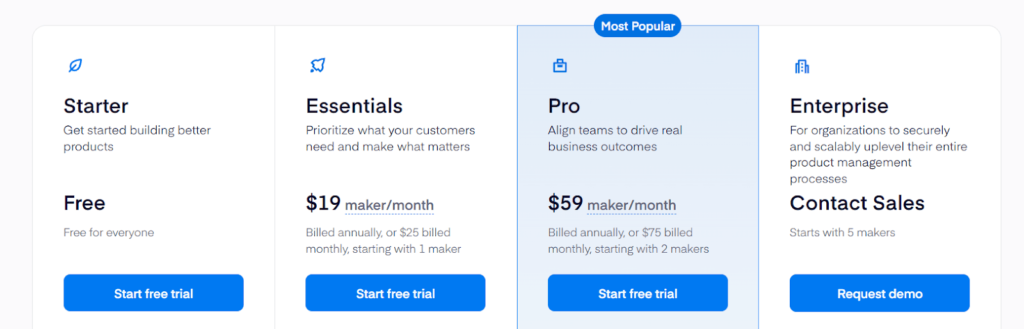
ProductBoard has four pricing plans:
- Starter: This plan is free.
- Essential: The price is 19 USD per maker per month
- Pro: The price is 59 USD per maker per month.
- Enterprise: Contact customer care for pricing details.
5. airfocus
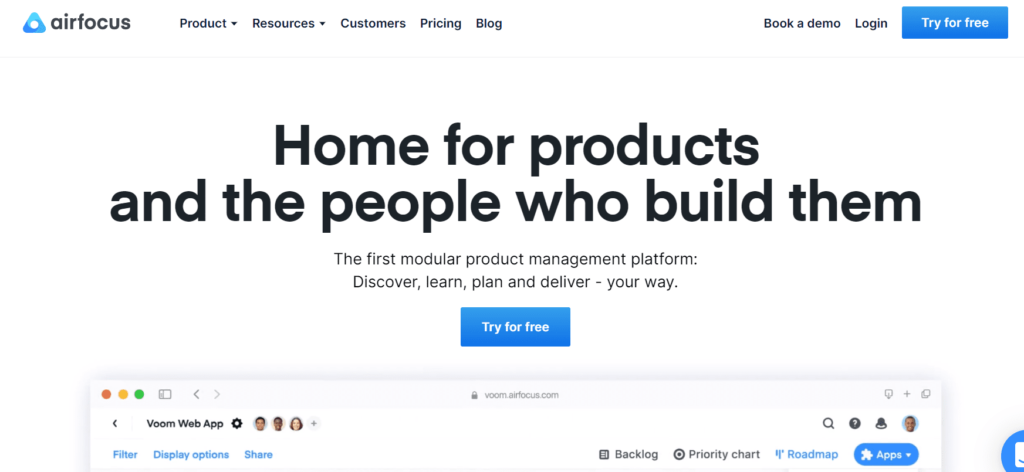
airfocus is a product management software designed to streamline prioritization and roadmap creation for product teams. In product development, airfocus helps product managers evaluate and prioritize features and initiatives based on strategic criteria.
With its intuitive prioritization framework, users can create customizable scoring models that allow teams to assess product features against various factors, such as customer value and development effort. This data-driven approach ensures that product teams focus on the most impactful initiatives.
airfocus also provides flexible roadmap templates tailored to different audiences, making it easy to communicate product strategies and progress to stakeholders. The platform supports collaboration by allowing team members to provide feedback and update priorities in real-time. Integrating tools like Jira, Trello, and Slack further enhances its utility, bridging the gap between product planning and execution and ensuring team alignment throughout development.
Ratings

Airfocus has an average of 4.5 stars out of 5 rated by 120 users.
Pros
- Strong Prioritization Tools: airfocus offers powerful prioritization frameworks, allowing product teams to easily rank features, tasks, or initiatives based on customizable criteria like value, effort, and urgency, helping make informed decisions.
- Highly Customizable Roadmaps: The platform provides flexible and visually appealing roadmaps that can be tailored to fit different audiences, from internal teams to external stakeholders, ensuring clarity on product goals and progress.
- Collaboration and Alignment: airfocus facilitates collaboration by allowing teams to work together on product strategy, share feedback, and update priorities in real-time, keeping everyone aligned on the product vision.
- Integration with Popular Tools: It integrates with project management and development tools like Jira, Trello, and Asana, helping to streamline workflows and ensure product strategies are aligned with execution.
Cons
- Limited Task Management Features: airfocus is primarily focused on prioritization and roadmap building, and it lacks the robust task management features found in tools like monday.com or nTask, requiring teams to use other tools for daily task tracking.
- High Learning Curve for Customization: While airfocus is customizable, the flexibility can overwhelm new users, who may struggle to set up their prioritization frameworks and roadmaps.
- Higher Cost for Full Features: Advanced features like enhanced collaboration tools and more detailed reporting come with higher pricing tiers, which may be too expensive for small teams or startups.
- Limited Reporting and Analytics: While airfocus excels in prioritization and roadmapping, it offers limited reporting and analytics capabilities compared to more comprehensive product management tools, making it less useful for detailed performance tracking.
Airfocus Pricing
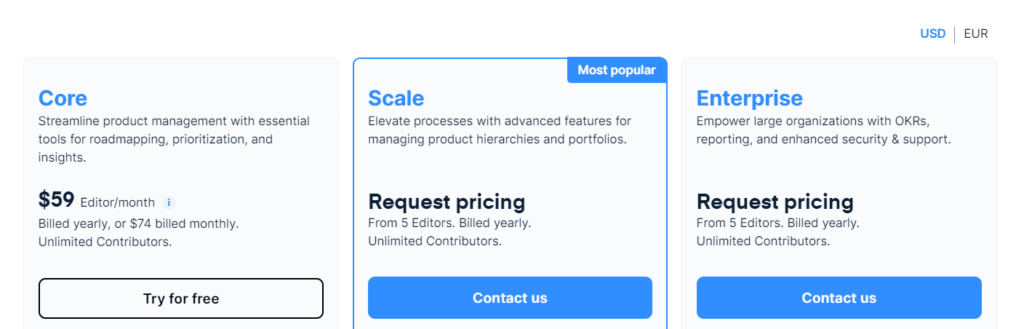
Airfocus has three pricing plans:
- Core: The price is 59 USD per editor per month if paid annually; otherwise, it is 74 USD.
- Scale: Contact customer care for pricing details.
- Enterprise: Contact customer care for pricing details.
6. Strategic Roadmaps
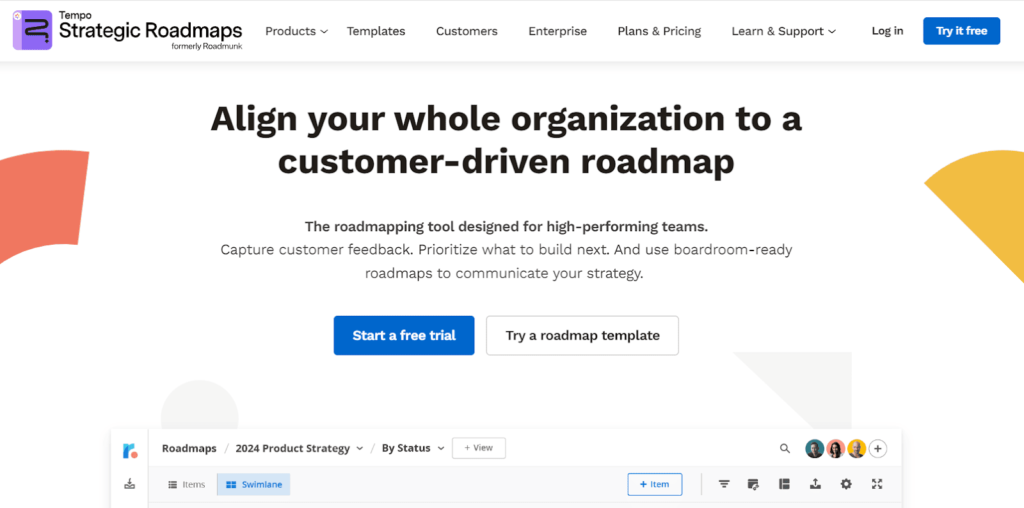
Roadmunk is a product management software focused on creating visual roadmaps to help product teams plan, communicate, and execute their strategies effectively. In product development, Roadmunk enables product managers to develop clear, detailed road maps that align with business objectives and stakeholder expectations.
The platform features an intuitive drag-and-drop interface, allowing users to easily build and customize roadmaps in various formats, such as timeline and swimlane views. This flexibility helps convey product plans and progress to different audiences, from executives to development teams.
Roadmunk also includes prioritization tools that enable teams to assess and rank features based on customer feedback and business impact. Furthermore, its collaboration features allow team members to provide input and share feedback directly within the roadmap. Integrations with tools like Jira and Trello facilitate seamless communication and workflow synchronization, making Roadmunk an essential tool for successful product development.
Ratings

Strategic Roadmaps has a decent 4.4 stars out of 5, rated by 87 users.
Pros
- User-Friendly Roadmap Creation: Roadmunk is known for its easy-to-use interface, enabling product managers to quickly create detailed, visually appealing roadmaps without requiring advanced technical skills.
- Customizable Roadmap Views: The platform allows users to toggle between timeline and swimlane views, offering flexibility in how roadmaps are presented based on the audience or the stage of product development.
- Prioritization and Feedback Features: Roadmunk includes built-in prioritization features and feedback collection tools, which help product managers prioritize features and initiatives based on customer insights and team input.
- Collaboration and Sharing: It allows teams to collaborate in real-time and share roadmaps with stakeholders, ensuring transparency and alignment across departments, from product development to marketing and sales.
Cons
- Limited Task Management: Roadmunk focuses on roadmap creation and prioritization, but it lacks robust task management features, which means teams may need to rely on other tools for detailed task tracking and execution.
- Basic Reporting Features: While Roadmunk excels at roadmap visualization, its reporting and analytics features are relatively basic, providing limited insights into product development performance or progress tracking.
- Higher Cost for Advanced Features: Some of Roadmunk’s more advanced features, such as custom fields and deep integrations, are only available in higher pricing tiers, which might make it expensive for smaller teams or startups.
- Steeper Learning Curve for Beginners: New users, especially those unfamiliar with roadmap software, may find it challenging to fully utilize all of Roadmunk’s features without some initial training or guidance, particularly for complex roadmaps.
Strategic Roadmaps Pricing
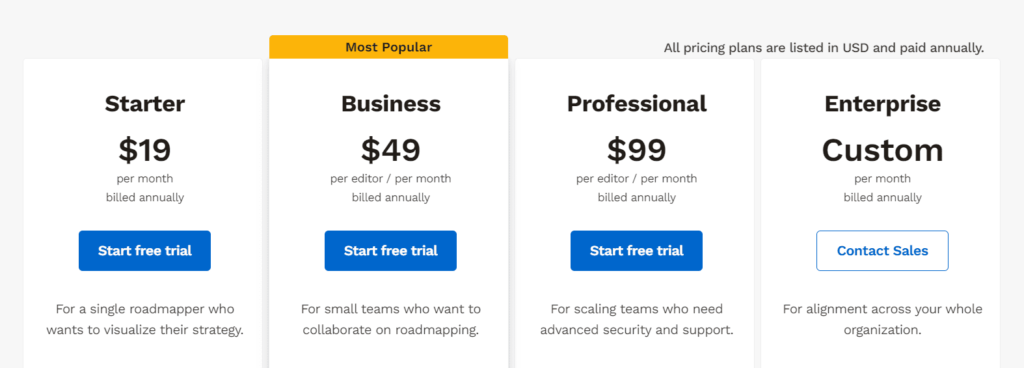
Strategic Roadmaps has four pricing plans:
- Starter: The price is 19 USD per month.
- Business: The pricing is 49 USD per month.
- Professional: The price is 99 USD per month.
- Enterprise: Contact customer care for pricing details.
7. ProdPad
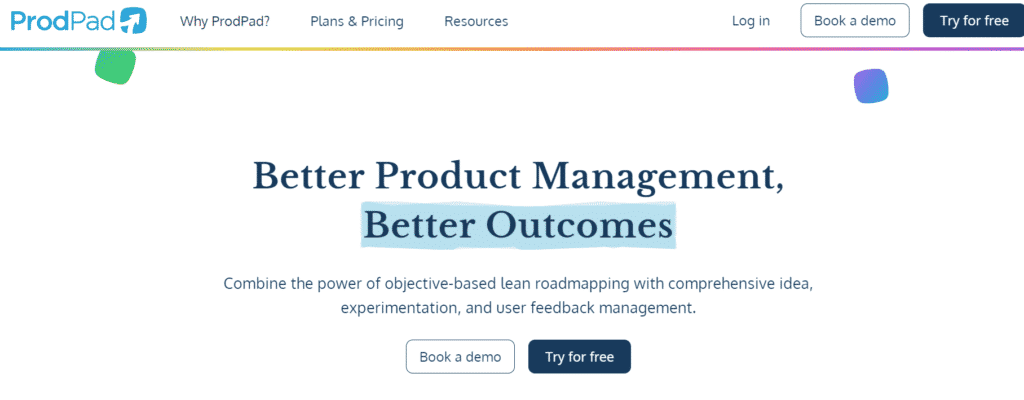
ProdPad is a comprehensive product management software designed to help teams streamline their product development processes from idea generation to execution. In product development, ProdPad serves as a centralized hub for capturing and organizing ideas, managing product backlogs, and prioritizing features based on customer feedback and business goals.
The platform’s robust idea management tools allow teams to collect insights from various sources, such as customer interviews and market research, helping to ensure that the most valuable features are developed. ProdPad also offers flexible roadmapping capabilities, enabling product managers to create dynamic roadmaps that can be easily adjusted as priorities change.
Its integration with popular development tools like Jira and Trello allows for seamless collaboration between product and engineering teams, enhancing communication and ensuring alignment throughout the product lifecycle. ProdPad empowers organizations to make informed decisions and drive successful product outcomes.
Ratings

14 users have given ProdPad 4.0 stars out of 5.
Pros
- Comprehensive Idea Management: ProdPad excels at idea management, allowing teams to capture, organize, and prioritize ideas from multiple sources. This makes it easy to develop a clear product backlog that aligns with business goals.
- User Feedback Integration: The platform offers strong feedback management features, enabling teams to gather, track, and act on customer feedback directly, which helps prioritize features that address real user needs.
- Flexible Roadmapping: ProdPad provides flexible and dynamic roadmaps that can be easily adjusted to reflect changing priorities, offering clear visibility into product development timelines for stakeholders.
- Integration with Development Tools: ProdPad integrates well with development tools like Jira and Trello, helping teams seamlessly push prioritized features or tasks into their development workflows.
Cons
- Limited Task Management: ProdPad primarily focuses on product strategy and roadmap building. It lacks robust task management capabilities, requiring teams to use additional tools for tracking day-to-day tasks and execution.
- Steep Learning Curve: The platform’s range of features, such as idea prioritization and feedback loops, may overwhelm new users, leading to a steeper learning curve than simpler product management tools.
- Higher Pricing for Advanced Features: Access to more advanced features like detailed analytics and custom reporting comes at a higher cost, which can be prohibitive for smaller teams or organizations with limited budgets.
- Basic Reporting Capabilities: While ProdPad provides useful product development features, its reporting capabilities are relatively basic and may not provide the in-depth analytics required for comprehensive progress tracking or performance measurement.
ProdPad Pricing
ProdPad has three pricing plans: Roadmaps, Ideas, and Feedback.
Roadmaps Pricing Plans
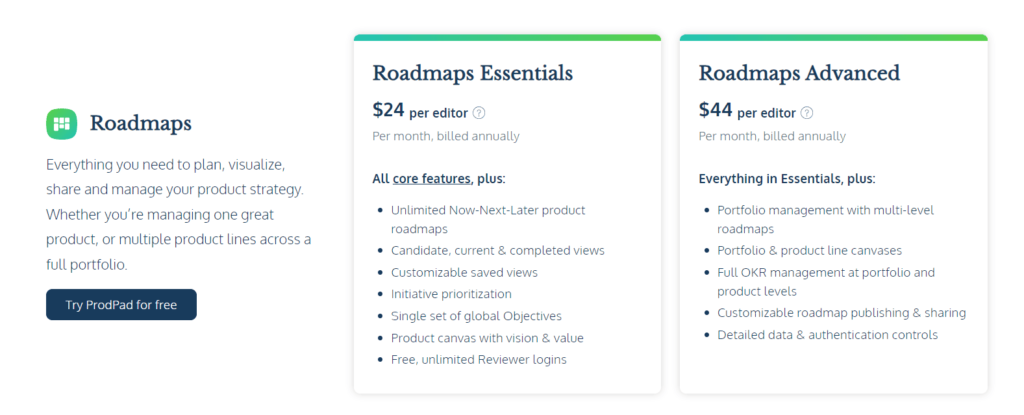
It has two pricing plans:
- Roadmap Essentials: The price is 24 USD per editor per month.
- Radmaps Advanced: The price is 44 USD per editor per month.
Ideas Pricing Plans
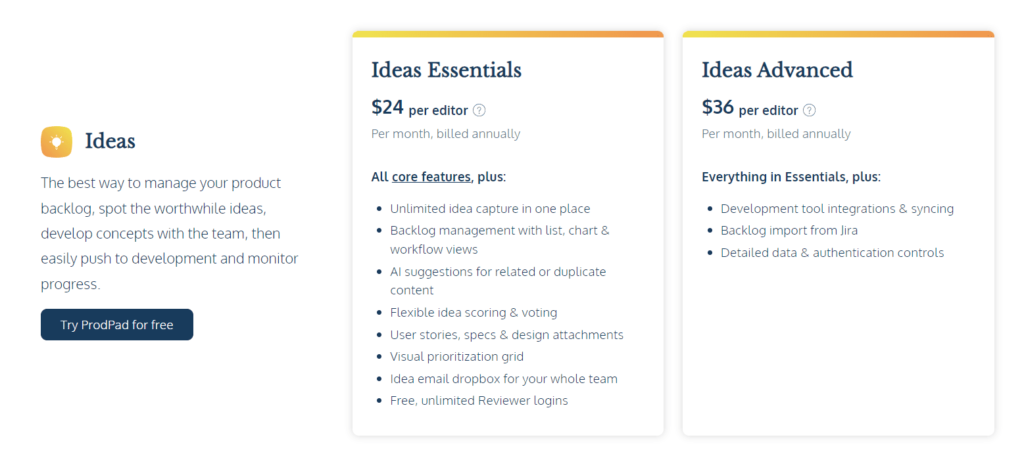
It has two pricing plans:
- Ideas Essentials: The price is 24 USD per editor per month.
- Ideas Advanced: The price is 36 USD per editor per month.
Feedback Pricing Plans
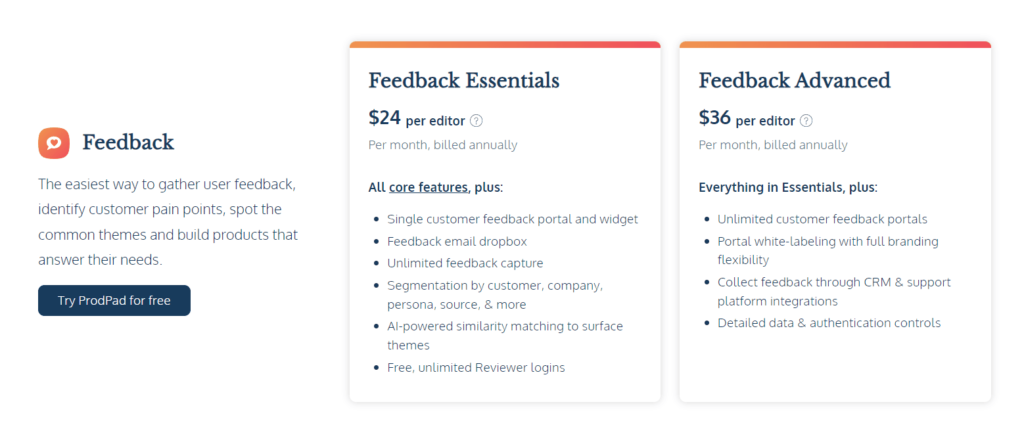
It has two pricing plans:
- Feedback Essentials: The price is 24 USD per editor per month.
- Feedback Advanced: The price is 36 USD per editor per month.
How to Choose the Best Product Development Software?
Choosing the best product development software depends on team size, budget, and the specific features you need. Here’s an analysis of each option based on these key factors:
1. Team Size
- Small Teams (1-10 members): Look for lightweight tools with simple interfaces.
- Medium Teams (10-50 members): A tool with good project management and collaboration features is essential.
- Large Teams (50+ members): You will need advanced features like user permissions, reporting, and scalability.
2. Budget
- Low Budget: Free or affordable plans with essential features are important. Look for tools with flexible pricing tiers.
- Medium Budget: Choose tools with advanced features like integrations and analytics but keep costs reasonable.
- High Budget: You can focus on feature-rich platforms with robust customization, enterprise-level security, and customer support.
3. Specific Features
- Roadmapping: Tools that offer clear product roadmap visualization.
- Task Management: Features like Kanban boards, Gantt charts, or task prioritization.
- Collaboration: Real-time collaboration, comments, and notifications.
- Integrations: Seamless integration with tools like Jira, Slack, or Trello.
- Custom Workflows: The ability to customize workflows to suit your development process.
- Analytics & Reporting: Tools that provide data-driven insights to measure progress and team productivity.
Comparison of the Options
| Tool | Team Size | Budget | Key Features |
| monday.com | Small to Large | Medium to High | Versatile project management tool with roadmapping, task management, collaboration, and excellent integrations. Highly customizable. |
| nTask | Small to Medium | Low | It is excellent for product managers who need prioritization, roadmaps, and customer feedback integration. It is also a robust tool for teams with a more strategic focus. |
| ProductPlan | Small to Medium | Medium to High | Focused on road mapping with a simple, drag-and-drop interface. Ideal for teams that need strong roadmap visualization. |
| ProductBoard | Small to Large | Medium to High | Strong road mapping features with timeline and swimlane views make it great for larger teams needing detailed roadmaps and progress tracking. |
| Airfocus | Small to Medium | Medium | Known for product prioritization, roadmapping, and collaborative features. Good for teams that focus on aligning strategy with execution. |
| Strategic Roadmaps | Medium to Large | Medium | It is good for idea management, road mapping, and customer feedback. It’s geared towards teams looking to innovate and collect feedback for their product development. |
| Prodpad | Medium to Large | Medium to High | Good for idea management, roadmapping, and customer feedback. It’s geared towards teams looking to innovate and collect feedback for their product development. |
Recommendations Based on Team Size and Budget
- Small Teams with Low Budget: Consider nTask for its affordability and basic feature set, including task and issue tracking.
- Small to Medium Teams with Medium Budget: Airfocus is a great option for those focused on prioritization and strategy or ProductPlan for easy roadmapping.
- Medium to Large Teams with Medium to High Budget: monday.com or ProductBoard offers scalability, integrations, and advanced collaboration features.
- Large Teams with High Budget: Prodpad or Roadmunk provides enterprise-level features, focusing on roadmapping, idea management, and cross-functional collaboration.
Additional Considerations
- Integration Needs: If you rely on a wide variety of software, prioritize a tool with strong integrations, such as monday.com or ProductBoard.
- Customization: If you need custom workflows and tailored dashboards, monday.com and Airfocus are highly customizable.
- Feedback and Roadmap: ProdPad and ProductBoard are great choices for teams that collect customer feedback to inform their roadmap.
Conclusion
Selecting the right product development software is crucial for streamlining processes, enhancing collaboration, and ensuring successful product launches. Each of the seven tools we reviewed offers unique features tailored to different stages of product management, from roadmap creation and idea prioritization to customer feedback integration and team collaboration.
Whether you’re a startup seeking affordability or a larger team needing advanced features, the right software can help align your product strategy with execution. Carefully assess your needs, budget, and workflows to choose the tool that best supports your product development goals.
Disclosure: Some links above are affiliate links, and I will earn a commission if you purchase after clicking. Please understand that I recommend these resources because they are useful, not because of my commissions. Please do not purchase unless you feel that the materials will help you achieve your goals. Thank you for your support.

I am Mohammad Fahad Usmani, B.E. PMP, PMI-RMP. I have been blogging on project management topics since 2011. To date, thousands of professionals have passed the PMP exam using my resources.