
Project management mistakes can quietly derail even the most well-planned initiatives. Many project teams struggle with common project management mistakes that lead to delays, budget overruns, and loss of trust. If you want to avoid project failure, you need to recognize these issues early and act fast.
This blog post explains the most critical project management mistakes and how to fix them before they grow. By understanding these risks, you can avoid project failure and improve outcomes.
Key Takeaways
- Small project management mistakes can grow fast and impact time, cost, and trust.
- Clear goals, defined roles, and strong planning set the foundation for success.
- Poor communication and scope creep are major causes of project delays and overruns.
- Simple practices like weekly check-ins and risk tracking help teams stay on track.
- Learning from past projects prevents repeat mistakes and improves future outcomes.
Why Minor Project Errors Become Major Failures
A project often begins with energy and ambition. A cross-functional team plans to build a new product, secure funding, or deliver a service. Everyone is excited and hopeful. Then, a few weeks in, deadlines slip. Team members ask the same questions. Priorities shift without warning. What happened? There usually isn’t a single disastrous event. Instead, small missteps accumulate until the team has no clear path forward. These hidden costs add up.

When teams neglect planning, skip risk analysis, or ignore communication, they create a breeding ground for confusion. According to a global survey summarized by PMWares, the average project performance rate across organizations was 73.8%. This means roughly one in four projects still fails to meet business goals. The statistics are sobering, yet they also highlight opportunity: improving just a few habits can boost success.
Poor project management wastes money and morale. When roles are unclear, tasks overlap or fall through the cracks. When scope expands without oversight, budgets explode. Teams get frustrated and stakeholders lose trust.
11 Mistakes That Derail Projects (and How to Avoid Them)
Projects rarely fail overnight. They go off course when the following avoidable errors creep in. Each section below explains what happens, why it hurts, and how to correct the course.
1. Unclear Project Goals
When a project starts without clear goals, confusion spreads fast. Team members don’t know what success looks like, so they move in different directions. This often happens when leaders use vague language or skip proper goal setting. The result is wasted effort and constant rework. To fix this, define clear and measurable goals at the start. Use simple success criteria and write them down. Share them with the team and confirm alignment. If people can’t explain the goal in one sentence, it’s still unclear.
2. Poor Stakeholder Alignment
Projects often fail when key stakeholders are not aligned from the beginning. Some may expect different outcomes, while others may not even know the project exists. This gap leads to delays, conflicts, and last-minute changes. It usually happens when teams skip stakeholder mapping. Start by identifying everyone involved or affected. Hold a kickoff meeting to align expectations. Clarify roles, responsibilities, and approval levels. Keep stakeholders regularly updated so no one is surprised later.
3. Weak Project Planning
Jumping into execution without a robust plan creates chaos. Tasks overlap, deadlines slip, and priorities shift too often. This mistake usually comes from pressure to “start quickly.” Without a roadmap, teams lose direction. A strong plan does not need to be complex. Break the project into clear tasks, assign owners, and define timelines. Use a simple visual tool to track progress. A good plan acts like a guide. It keeps everyone focused and reduces confusion as the project moves forward.
4. Undefined Scope (Scope Creep Risk)
Scope creep happens when teams accept new requests without proper review. It often starts small but grows quickly. The root cause is unclear project boundaries or a lack of control over changes. Teams want to please stakeholders, so they say yes too often. This leads to delays and budget issues. Define the project scope in detail from the start. Document what is included and what is not. Create a simple change process so every new request gets reviewed before approval.
5. Unrealistic Deadlines
Setting deadlines that look good on paper but ignore reality puts teams under constant stress. This usually happens when estimates are rushed or when leadership pushes aggressive timelines. The result is burnout, missed deadlines, and poor quality work. Instead, break tasks into smaller parts and estimate each one carefully. Involve the team in planning since they understand the work best. Add a small buffer for unexpected issues. Realistic timelines build trust and help teams deliver consistent results.
6. Inadequate Resource Planning
Projects suffer when the right people or skills are not available at the right time. Teams may feel overloaded or stuck due to a lack of expertise. This often happens when managers assume availability without checking capacity. The result is delays and frustration. To avoid this, match tasks to the right skills and review the team’s workload before assigning work. Be honest about gaps and bring in support if needed. Balanced workloads improve productivity and keep morale high throughout the project.
7. Poor Communication
Poor communication creates confusion, even in well-planned projects. Team members may miss updates, misunderstand tasks, or duplicate work. This often happens when there is no clear communication plan. Messages become inconsistent or too frequent. To fix this, set simple rules for communication. Decide what to share, how often, and through which channels. Keep updates short and focused. Regular check-ins help everyone stay aligned. Clear communication builds trust and keeps the project moving smoothly.
8. Lack of Risk Management
Ignoring risks does not make them disappear. It makes them harder to handle later. Many project teams avoid risk planning because they feel optimistic or rushed. When problems appear, they scramble to react. This leads to delays and stress. A better approach is to identify risks early. List possible issues and rate their impact. Then create simple response plans. You don’t need complex tools. Even a basic risk list can help you stay prepared and reduce surprises.
9. Weak Leadership and Decision-Making
Projects slow down when leaders delay decisions or avoid responsibility. Teams wait for direction and lose momentum. This often happens when authority is unclear or when leaders fear making the wrong choice. The result is confusion and missed opportunities. Strong leadership does not mean having all the answers. It means making timely decisions and guiding the team forward. Assign a clear project owner and define decision authority early. Quick, informed decisions keep the project on track.
10. No Progress Tracking
Without tracking progress, teams work blindly. They may believe everything is fine until problems become serious. This usually happens when project managers rely on assumptions instead of data. The result is missed deadlines and budget overruns. To avoid this, track key metrics such as task completion, timelines, and costs. Use simple dashboards or weekly updates. Regular tracking helps you spot issues early. It gives you time to adjust plans before problems grow too large.
11. Skipping Project Review and Lessons Learned
Many teams rush to the next project once delivery is done. They skip reflection, which means they repeat the same mistakes. This often happens due to time pressure or a lack of process. A short review can add huge value. Gather the team and discuss what worked and what didn’t. Keep it honest and simple. Document key lessons and share them. Over time, these insights improve performance and help teams handle future projects with more confidence.
Early Warning Signs of Trouble
Trouble rarely arrives without notice. Early signs include repeated questions, duplicated tasks, missed deadlines with vague reasons, and high frustration in private chats. When team members need to consult multiple sources before acting, or when decisions keep being revisited, take notice. These subtle signals reveal that roles, priorities, or scope are unclear. Recognizing them early allows you to intervene before the project derails.
Quick Fixes to Regain Control
When a project is already drifting, it can feel overwhelming. Yet small, targeted actions can restore momentum. Here are three fixes I use when a project is off track:
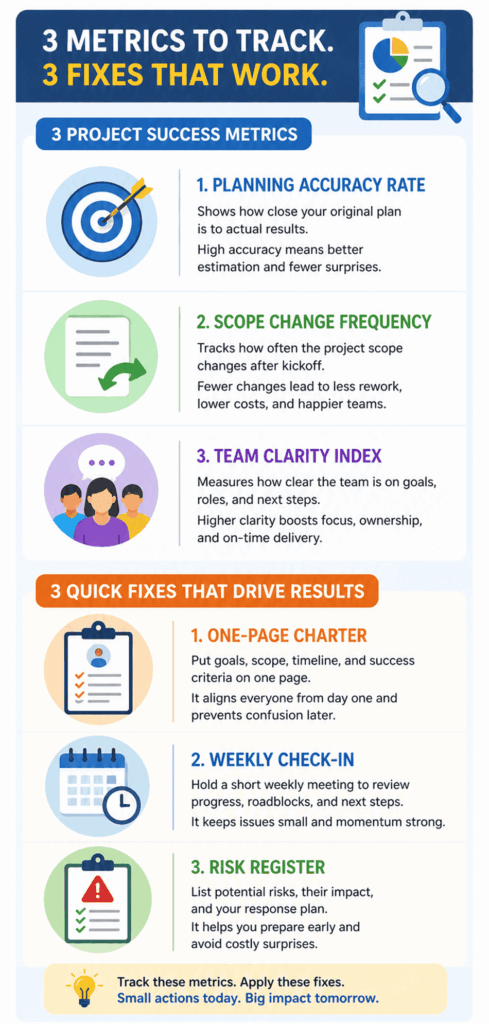
Create a one-page project charter. Define the purpose, success criteria, stakeholders, and constraints on a single page. Share it with the team and confirm alignment. This concise document becomes a north star. It usually takes two to three hours to draft, but it saves days of confusion later.
Launch a 15-minute weekly check-in. Instead of long status meetings, hold a brief weekly call. Ask three questions: What is complete? What is blocked? What matters next week? Keep it short and focus on coordination rather than detailed reporting. These quick check-ins build rhythm and reveal issues early.
Start a simple risk register. List the top five risks and one mitigation strategy for each. Review and update the list weekly. Even a basic log can help the team think proactively rather than reactively.
These quick wins don’t require a major overhaul. They create clarity and structure that let the team breathe and focus.
Measuring Progress and Improvement
To know whether your efforts work, you need to track results. Here are three practical metrics I recommend:
Planning Accuracy Rate: Measure the percentage of milestones delivered on schedule. A realistic target for established teams is 80% or higher. If accuracy is low, ask whether estimates were too optimistic or if resources were inadequate.
Scope Change Frequency: Count the number of approved scope changes per month. Fewer than one major change each month indicates good initial scoping and strong stakeholder alignment. Frequent changes suggest unclear requirements or shifting priorities.
Team Clarity Index: Survey team members weekly with a simple question: “I understand my priorities and responsibilities,” rated from 1 to 5. Aim for an average score above 4. Low scores warn of confusion or communication breakdowns.
Together, these metrics provide an early view of project health. They reveal whether planning, scoping, and communication are improving. When tracked consistently, they help you adapt quickly.
FAQs
Q1. What is the most common project management mistake?
The most common mistake is starting work without a clear plan. Without a roadmap, projects drift, and teams struggle to stay aligned.
Q2. How can I prevent scope creep?
Implement a change control process. Document requests, evaluate impacts, and get formal approval before adding new work. Clear boundaries keep projects focused.
Q3. Why is risk management important?
Risks are inevitable. Identifying and mitigating them early helps prevent surprises and reduces the cost of issues when they arise.
Q4. How can I improve team communication?
Develop a communication plan that outlines when, how, and what to share. Hold short, regular check-ins and encourage open dialogue to keep everyone on the same page.
Summary
Project success rarely depends on luck. It comes from clear goals, strong planning, and steady communication. When you avoid common mistakes, you protect time, budget, and trust. Small actions like defining roles, tracking risks, and holding short check-ins make a big difference. Every project is a chance to improve your process. Ask yourself: what can you do better next time? Start with one change today, and you’ll see stronger results in every project that follows.

I am Mohammad Fahad Usmani, B.E. PMP, PMI-RMP. I have been blogging on project management topics since 2011. To date, thousands of professionals have passed the PMP exam using my resources.