A project kick-off meeting is the first meeting between a project team member or the entire project team and the client to build a common understanding of project objectives, and other processes and procedures.
There are many meetings in project management, but kick-off meetings stand out because of their significance. They allow you to introduce yourself to team members and vice versa and get to know the clients.
A successful kick-off meeting gives your team an energetic start and motivates them to perform better and complete the project with minimal hassle.
Why You Should Conduct a Kick-Off Meeting?
A kick-off meeting is key for starting a project on the right track. It brings together the project team, stakeholders, and clients to ensure everyone understands the project objectives, scope, and expectations. This meeting helps you set clear roles and responsibilities, avoiding confusion and reducing conflicts at later stages. It provides a platform to discuss timelines, risks, and communication plans. This meeting builds collaboration and creates a sense of ownership among the team members.
It establishes a positive tone for the project, ensuring everyone is aligned and motivated to achieve the same objectives. A kick-off meeting offers a chance to address concerns early, minimizing issues. It increases the likelihood of project success by promoting clarity, teamwork, and effective planning from the start.
When Does the Kick-off Meeting Occur?
For smaller projects, the kick-off meeting is held immediately following the initiation phase and involves all team members. Only one kick-off meeting is necessary.
In larger projects, the kick-off meeting occurs once the planning phase is complete and execution is about to commence. If the project is divided into multiple phases, a kick-off meeting can be scheduled at the start of each phase.
For projects that cover a large geographical area, a virtual kick-off meeting is organized to facilitate communication among team members via the Internet.
How to Plan Your Project Kick-Off Meeting
You can follow the following step-by-step process to conduct a successful project kickoff meeting:
Step 1: Structure the Meeting
Plan the meeting’s flow to keep it organized and on time. Break it into sections (e.g., introductions, project overview, roles, and Q&A session). Set specific time limits for each segment to ensure that all topics are covered without running over. This structure will keep the meeting focused and help you maintain participant engagement.
Step 2: Set the Agenda
Decide in advance what topics will be covered during the meeting. Begin with an introductory session to outline the project objectives, milestones, assumptions, and constraints. End with a Q&A session to address questions. Use engaging presentations to explain each point clearly. Share the agenda beforehand so participants can prepare and contribute effectively.
Step 3: Conduct the Meeting
Start by introducing yourself and asking others to do the same. Present the agenda and discuss key topics (e.g., project objectives, scope, and each team member’s roles and responsibilities). Explain how communication and reporting (e.g., stakeholder updates) will be handled.
Review the project charter and explain that the stakeholders’ input will help you develop the detailed project plan. Set expectations (e.g., work assignments and leave procedures) and explain stakeholder needs and roles. Highlight the project’s importance to the client and company. Allow the client to lead and provide context.
Address any risks or constraints and how you’ll handle them.
Step 4: Close the Meeting
Hold a Q&A session for participants to clarify doubts and gain more insights. Thank everyone for attending, and encourage them to reach out for further clarification. After the meeting, send the minutes to all attendees and those who missed it.
Internal Vs External Kick-off Meeting
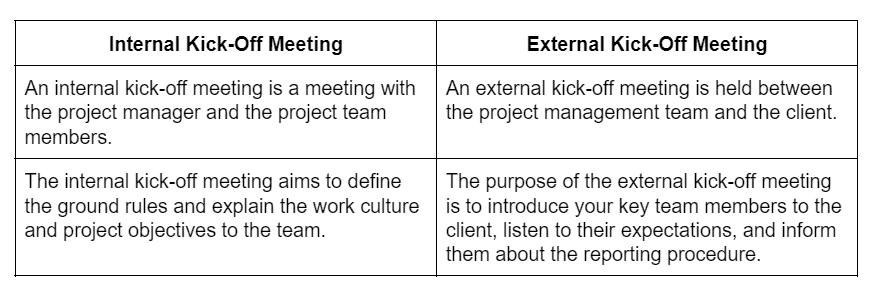
An internal kick-off meeting is held with the project team members, while an external one involves the project team and the client or project sponsor.
Internal kickoff meeting focuses on internal coordination. The goal is to align your team on project objectives, roles, responsibilities, and timelines. During this meeting, you establish workflows, discuss communication methods, and set expectations for the team’s collaboration. It helps ensure all team members know their tasks and how to work together to achieve project success.
An external kick-off meeting emphasizes building trust and understanding the client. The objective is to explain the project’s goals, scope, and business value to the client. You also outline how to communicate updates, handle challenges, and meet their expectations. This meeting sets a positive tone for the client relationship, ensuring they feel informed and confident in your team’s ability to deliver the project successfully.
Both meetings are vital and focus on different aspects of project management.
What is Involved in the Kick-Off Meeting?
In your kick-off meeting, you can address the following topics:
- Introductions: Start the kick-off meeting by introducing yourself and allowing each team member and stakeholder to do the same. This sets a welcoming tone and helps everyone familiarize themselves with each other’s roles and involvement in the project.
- Overview of Project Objectives and Scope: Explain the project objectives and their aims. Discuss the project scope, outlining what is included in the project and what is not so that everyone understands the boundaries and focus.
- Discussion of Key Milestones and Timelines: Review the major project milestones and timeline. Highlight important deadlines and discuss the project schedule to ensure that everyone knows when tasks must be completed.
- Explanation of Roles and Responsibilities: Assign specific roles and responsibilities to each team member. Ensure accountability by ensuring that everyone understands their tasks and how their work will contribute to the project’s success.
- Review of Communication and Reporting Plan: Discuss how the team will communicate throughout the project lifecycle. This includes the methods, frequency, and format for updates, meetings, and reporting so everyone knows how to stay informed and connected.
- Discussion of Project Risks and Constraints: Address any risks or challenges affecting the project. Discuss key assumptions and constraints (e.g., time, budget, or resources) and how the team plans to manage these risks.
- Explanation of Stakeholder Needs and Expectations: Clarify the key stakeholders’ needs and expectations for the project. Ensure that the team understands what is most important to the client or sponsor to align the project goals with stakeholder satisfaction.
- Clarification of Work Assignments and Procedures: Explain how work assignments will be managed (e.g., any procedures for task allocation, rotation, or leave). This will ensure that everyone knows how the work will be organized and carried out.
- Question and Answer (Q&A) Session: At the end, hold a Q&A session to address any doubts or questions that the team or stakeholders may have. This will allow everyone to clarify the details and ensure that they have all the necessary information.
- Closing Remarks and Thanks: End the meeting with closing remarks and thank everyone for participating. Encourage team members to reach out if they need further clarification and develop a positive atmosphere for the project ahead.
- Prepare Meeting Minutes: After closing the kickoff meeting, document your kickoff meeting and send meeting minutes to participants and other stakeholders for their information and feedback.
Keep in mind the four primary objectives of the kick-off meeting:
- Facilitating Stakeholder Introductions: The kick-off meeting serves as the initial gathering between project team members and the client, thus providing a valuable opportunity for project managers to introduce all stakeholders to one another.
- Developing Collaboration: The meeting enhances collaboration by helping team members get acquainted and understand each other’s skills, thus leading to a more productive, thriving work environment.
- Clarifying Project Objectives: This meeting lets project managers convey the project objectives and vision, thus ensuring that team members align their objectives with the organization’s.
- Showcasing Your Skills: This is the first stakeholder interaction. It is an ideal time to demonstrate your communication and leadership abilities, thus setting the tone to guide the team toward successful project completion.
Common Kick-off Meeting Challenges and How to Overcome Them
A few common kick-off meeting challenges and ways to overcome them are:
- Lack of Clarity on Project Objectives: Sometimes, stakeholders may not fully understand the project objectives. To overcome this, clearly explain the objectives and how they align with the bigger picture. Use simple language and provide examples to make things easier to grasp. Encourage questions to ensure that everyone is on the same page.
- Poor Engagement or Participation: Participants may be passive or hesitant to contribute. You can address this by encouraging interaction throughout the meeting. Ask open-ended questions, involve different team members in discussions, and create a comfortable atmosphere in which people feel like their input is valued.
- Too Much Information in One Sitting: Overloading the team with too many details can overwhelm the meeting. To avoid this, break information into digestible sections and use visual aids (e.g., slides or diagrams) to clarify complex ideas. You can also share detailed documents after the meeting for further reference.
- Time-Management Issues: Kick-off meetings can run too long or get sidetracked by unrelated discussions. To manage time effectively, set an agenda with time limits for each section and stick to it. Politely steer conversations back to the agenda if they go off-track.
- Unresolved Concerns or Questions: Team members or stakeholders may leave the meeting with unanswered questions, thus leading to confusion later. To overcome this, allocate enough time for a Q&A session at the end and make sure to follow up on any concerns that couldn’t be addressed during the meeting.
Kick-Off Meeting Checklist
Here’s a checklist of items to consider when planning a kick-off meeting:
- Define the meeting’s purpose and goals.
- Prepare the meeting agenda.
- Identify the attendees.
- Set a meeting date and time.
- Select the meeting platform/venue.
- Prepare key project documents.
- Create engaging visuals and presentations.
- Assign roles for the meeting.
- Share the agenda and pre-reading materials.
- Plan for participant introductions.
- Allocate time for Q&A.
- Prepare to address risks and challenges.
- Test equipment and technology.
- Plan follow-up actions.
- Plan closing remarks and next steps.
Summary
A kick-off meeting plays a crucial role in the successful completion of a project. As the first meeting between the stakeholders, it provides an opportunity to align on common goals and clarify the project’s purpose.
This meeting helps you execute the project smoothly and efficiently, minimizing obstacles. It is also a chance to showcase your skills and instill confidence in the stakeholders regarding your project management capabilities. Additionally, this is the time to set clear expectations for the project among all parties involved.
Further Readings:
- Scrum Meetings: Definition, Types of Scrum Meetings & Examples
- Five Scrum Events or Ceremonies for Beginners
- How to Write Meeting Minutes (Samples & Examples Included)?
- Meeting Minutes Template – Free Download, No Registration Required
- Meeting Notes Template-Free Download, No Registration Required
References:
- What is a Kick-off Meeting?
- Project Kickoff Checklist
- The Secrets to Conducting an Effective Project Kickoff Meeting
This topic is important from a PMP exam point of view.

I am Mohammad Fahad Usmani, B.E. PMP, PMI-RMP. I have been blogging on project management topics since 2011. To date, thousands of professionals have passed the PMP exam using my resources.