Every project faces limits. You may have a tight budget, a small team, or a short timeline. That is where resource-limited scheduling becomes important. Project managers use resource-limited scheduling to build a schedule that fits the resources they actually have. Instead of assuming unlimited staff or equipment, the plan adjusts to real constraints.
Many PMP candidates also confuse resource-limited scheduling with resource leveling. Both methods manage limited resources, but they operate differently and at different stages of a project. Understanding these concepts helps you create realistic schedules and avoid delays.
In this blog post, you will learn what resource-limited scheduling is, how it works, and how it compares with resource leveling in project management.
What is Resource-Limited Scheduling?
Resource-limited scheduling is a planning technique that accounts for resource availability when setting project start and finish dates. Rather than assuming people or equipment will be available on demand, the schedule adjusts to the actual resources on hand.
You can use this approach when certain resources are scarce or expensive, and there is little flexibility to add more later. Because the schedule is built around fixed resource availability, the timeline often extends, and individual tasks become more critical. The goal is to deliver the project in the shortest time possible using the available resources.
Why Projects Face Resource Limits
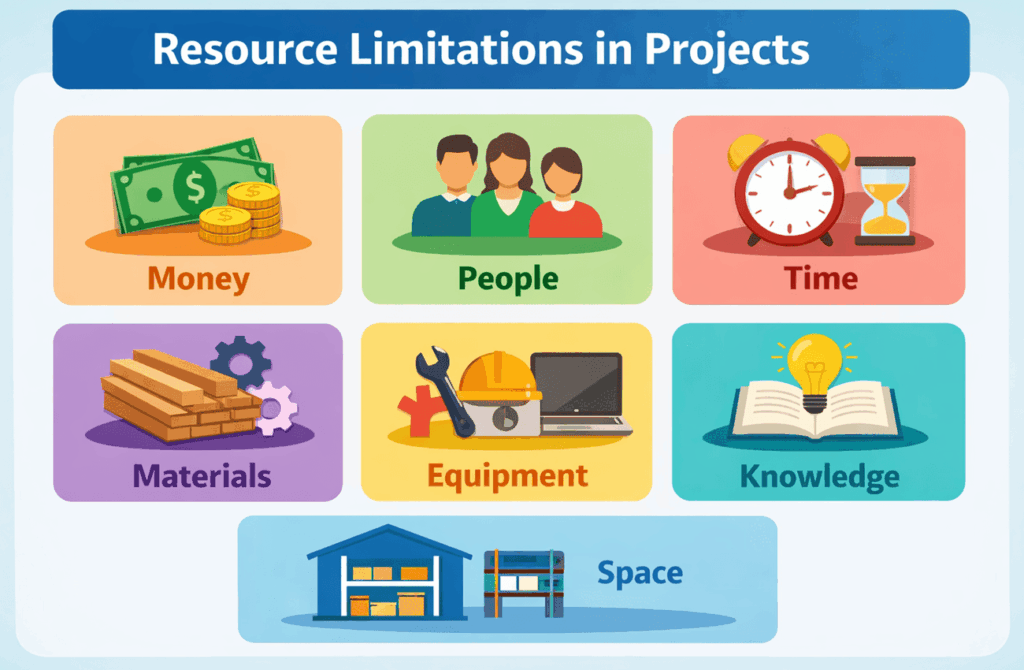
No project has unlimited money or personnel. Common limits include funding, people, time, materials, equipment, space, information, knowledge, and skills. A worker with specialized skills may cost more than the budget allows, or supply-chain problems may make certain materials hard to obtain. Seasonal weather may restrict when work can occur. In an organization where data is spread across multiple systems, teams may not know who is available to help.
These limits overlap and compound: paying more for specialized labor may shrink the budget for equipment or materials. A resource-limited schedule forces the team to recognize these constraints and plan realistically.
How to Create a Resource-Limited Schedule
Building a resource-limited schedule involves a few clear steps. Start with a work breakdown structure to list all tasks and dependencies. Next, estimate the resources required for each activity and the resources available in each time period. Identify which tasks are high priority or must start by a certain date. Use a prioritization rule, such as the earliest start date or the shortest task duration, to assign resources to tasks until the available capacity is used.
If demand exceeds supply, delay lower-priority tasks until resources free up. Update the schedule to reflect these delays and recalculate the critical path. Finally, monitor progress and adjust allocations as resources change.
What Vs Resource Leveling?
Resource leveling is the process of redistributing resources or activities across the project timeline to balance workloads and prevent overcommitment. Instead of extending the schedule to fit fixed resources, resource leveling keeps the end date fixed and moves tasks or adds people as needed. Techniques include delaying start times, splitting tasks, bringing in temporary help, or outsourcing portions of the work.
The goal is to smooth out peaks and valleys in resource demand so that no team member or piece of equipment is overused.
Resource-Limited Scheduling Vs Resource Leveling
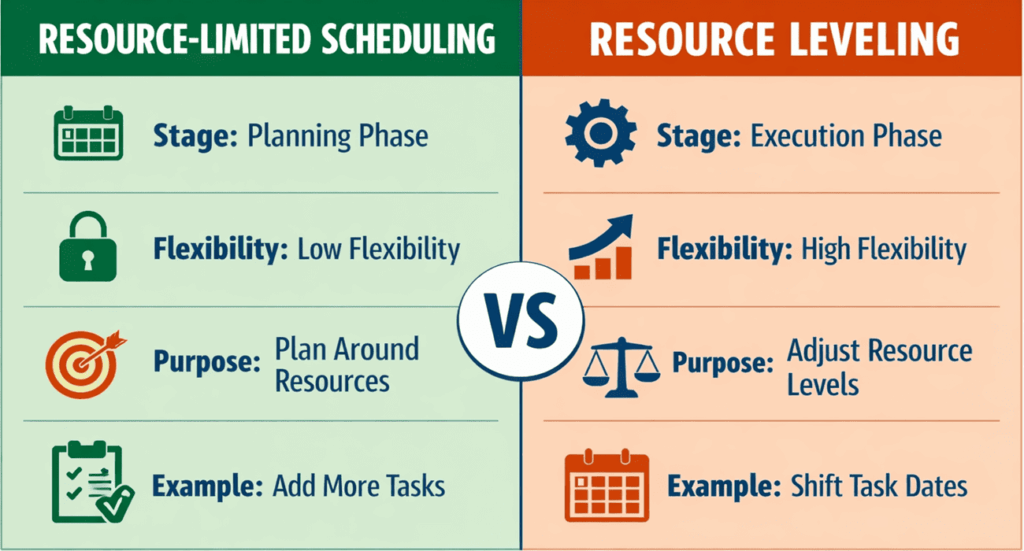
Both approaches help project managers handle scarce resources, but they serve different purposes and occur at different points in the project. Resource-limited scheduling happens during the planning phase. It sets a realistic baseline schedule based on your resources. Resource leveling happens during project execution.
When you realize a resource shortage or overutilization is threatening the schedule, you adjust assignments or timelines to keep the project on track. The table below highlights the major differences.
Best Practices for Managing Limited Resources
Good resource management requires both planning and flexible execution. The following are several practices that help teams make the most of what they have:
Plan early and involve stakeholders. Identify resource limits at the start of the project and get agreement from sponsors and team members. Early conversations reduce surprises and make trade-offs easier.
Use dedicated tools for visibility. Modern resource management software helps planners see who is available and when. In a resource management survey, 64% of organizations said improving resource allocation and scheduling accuracy was a top priority, and 60% aimed to increase resource utilization and productivity. These findings show that many teams recognize the value of accurate planning and are investing in better tools.
Avoid overcommitting people. Rushing to complete a project by asking everyone to work longer hours may backfire. The same survey reported that overcommitted resources, those operating at 125% of their capacity, cause project delays, and a utilization rate around 80% is recommended for successful delivery. Building slack into the schedule reduces burnout and improves quality.
Monitor and adjust regularly. Even with a well-planned schedule, things change. Review resource usage at regular intervals and perform resource leveling during execution when workloads spike or new risks emerge.
Develop business acumen. Project managers with strong business skills are more likely to meet budgets and schedules. PMI’s 2025 Pulse of the Profession survey found that professionals with high business acumen reported better schedule adherence (63% vs 59%) and budget adherence (73% vs 68%), and experienced fewer project failures (8% vs 11%). Building financial and strategic skills helps managers make informed trade-offs and keep stakeholders aligned.
Common Challenges and Solutions
Difficulty forecasting resource needs. Many teams struggle to predict how much labor or equipment they will need next month. Using historical data and building a rolling forecast can improve accuracy. Simple adjustments, like checking timesheets weekly and discussing upcoming tasks in team meetings, provide early warning signs.
Misalignment between capacity and demand. When sales, operations, and project teams work in silos, resource shortages or idle time can occur. Holding cross-departmental planning sessions ensures that everyone understands upcoming work and resource availability.
Lack of visibility into resource availability. If staff assignments are spread across multiple spreadsheets, managers may not know who is available. Centralizing resource data in a single system and updating it regularly gives everyone the same view.
Limited budget for training or tools. Investing in resource management skills and software may seem expensive, but failing to do so costs more. Delays and rework waste time and money. Prioritize training and choose tools that scale with your organization.
FAQs
Q1. What is the difference between resource-limited scheduling and resource leveling?
Resource-limited scheduling extends the timeline to fit fixed resources, while resource leveling redistributes or adds resources to keep the timeline fixed.
Q2. When should I use resource-limited scheduling?
Use it during the planning stage when you know you cannot add more resources. It sets a realistic baseline schedule that reflects budget and staffing limits.
Q3. How does resource-limited scheduling affect the critical path?
Because the schedule is driven by resource availability, tasks that were once on float may become critical. You need to recalculate the critical path after assigning resources.
Q4. What is a recommended utilization rate for project resources?
Surveys suggest keeping utilization around 80% to avoid delays; operating at 125% or more leads to overcommitment and project slippage.
Q5. Can I combine resource-limited scheduling and resource leveling?
Yes. Build a resource-limited schedule to establish your baseline, then use resource leveling during execution to address unforeseen constraints.
Summary
Resource-limited scheduling helps project managers build realistic plans when resources are scarce. Instead of assuming unlimited staff or equipment, the schedule adjusts to match what is actually available. This approach improves planning accuracy and reduces the risk of delays. When combined with resource leveling during project execution, teams can balance workloads and maintain progress.
For PMP candidates and practicing project managers, understanding resource-limited scheduling is essential. It helps create practical schedules, manage constraints effectively, and increase the chances of delivering successful projects.

I am Mohammad Fahad Usmani, B.E. PMP, PMI-RMP. I have been blogging on project management topics since 2011. To date, thousands of professionals have passed the PMP exam using my resources.