Preparing accurate meeting minutes not only captures decisions and action items but also saves time and money. Research shows that employees spend about 392 hours per year in meetings, and nearly 64 % of recurring meetings lack a structured agenda. When meetings are unproductive, companies lose billions of dollars.
Fellow.ai notes that unproductive meetings cost businesses up to $375 billion annually, and managers spend around 13 hours per week in meetings. With so many meetings happening every day, having a clear template is essential.
In today’s blog post, I will explain what meeting minutes are, why they matter, and provide seven free templates you can download.
Let us get started.
What Are Meeting Minutes?
Meeting minutes are official written records of a meeting. They include key details such as the date, time, place, participants, agenda topics, main discussions, decisions, and follow-up actions. These records act as a reliable reference for what was discussed and agreed upon. They are often used for legal, compliance, or documentation purposes.
Meeting minutes differ from casual notes because they follow a clear format and use objective, professional language. By keeping accurate minutes, you ensure accountability and clarity for everyone involved. They also help track progress on assigned tasks and provide a written summary for anyone who could not attend the meeting.
Put simply, meeting minutes preserve the essential information and outcomes from each meeting.
Why Meeting Minutes Matter
Meeting minutes are important because they help stakeholders stay clear and organized. Well-written minutes prevent confusion, remind everyone of key decisions, and make it easy to track action items. They also hold team members accountable for their tasks.
Without proper records, you may repeat old discussions, overlook essential points, or waste valuable time. Unclear or missing minutes often lead to inefficiency and lost productivity. Since employees spend many hours in meetings each year, accurate documentation becomes essential.
Many meetings also happen without a clear agenda, which makes detailed minutes even more valuable. Writing clear, structured minutes is not just an administrative task; it is an essential tool for teamwork, better communication, and smarter use of time and resources.
What Is a Meeting Minutes Template?
A meeting minutes template is a pre-formatted document that makes it easier to record important information during a meeting. A good template usually includes:
- Meeting Details: Date, start time, end time, and location.
- Attendees: Names and roles of participants and absentees.
- Agenda Items: A numbered list of topics to be discussed.
- Discussion Summaries: Key points or decisions for each agenda item.
- Action Items: Assigned tasks, responsible persons, and due dates.
- Next Steps: Future meetings or follow-up actions.
- Miscellaneous Notes: Any other relevant information.
Using a template helps ensure that you capture all critical elements consistently. It also speeds up the note-taking process so you can focus on the discussion.
How to Prepare Meeting Minutes: Step-by-Step
Follow these steps to create accurate and actionable meeting minutes:
- Create a Clear Agenda Ahead of Time: Share a brief agenda with participants at least a day before the meeting. An agenda keeps discussions focused and makes it easier to fill in the template.
- Invite Only the Necessary People: Keep your attendee list concise. Flowtrace data show that most one-off meetings have six or fewer participants. Smaller meetings are easier to manage and require less documentation.
- Assign a Note-Taker: Choose someone who understands the meeting’s context and can capture the discussion objectively. In large meetings, consider having a second note-taker for backup.
- Use the Template During the Meeting: As the discussion progresses, fill in each section of your template. Focus on capturing decisions and action items rather than transcribing every word.
- Write and Review the Minutes Soon After the Meeting: Draft the minutes while the discussion is still fresh. Check names, dates, and numbers for accuracy. Use clear language, past tense, and a neutral tone.
- Distribute and Store the Final Minutes: Share the final minutes with attendees within 24 hours. Store them in a shared folder or project management tool so everyone can reference them later.
- Follow up on Action Items: Maintain an action item log and review progress regularly. This ensures that tasks don’t fall through the cracks.
Seven Free Meeting Minutes Templates
Below are seven templates you can download. Each one serves a different purpose and can be customized to suit your needs. All templates come in Word format and include fields for meeting details, agenda, decisions, and action items. Use the provided links to download them.
1. Board Meeting Minutes Template
A board meeting often involves strategic decisions that affect the entire organization.

This template includes:
- Meeting information (date, time, location).
- List of board members present and absent.
- Agenda items with space for motions and votes.
- Sections for decisions, resolutions, and action items.
When to Use: For formal board or executive meetings where decisions must be recorded for legal or compliance reasons.
2. Classical Meeting Minutes Template
This is a simple, all-purpose template suitable for any meeting.
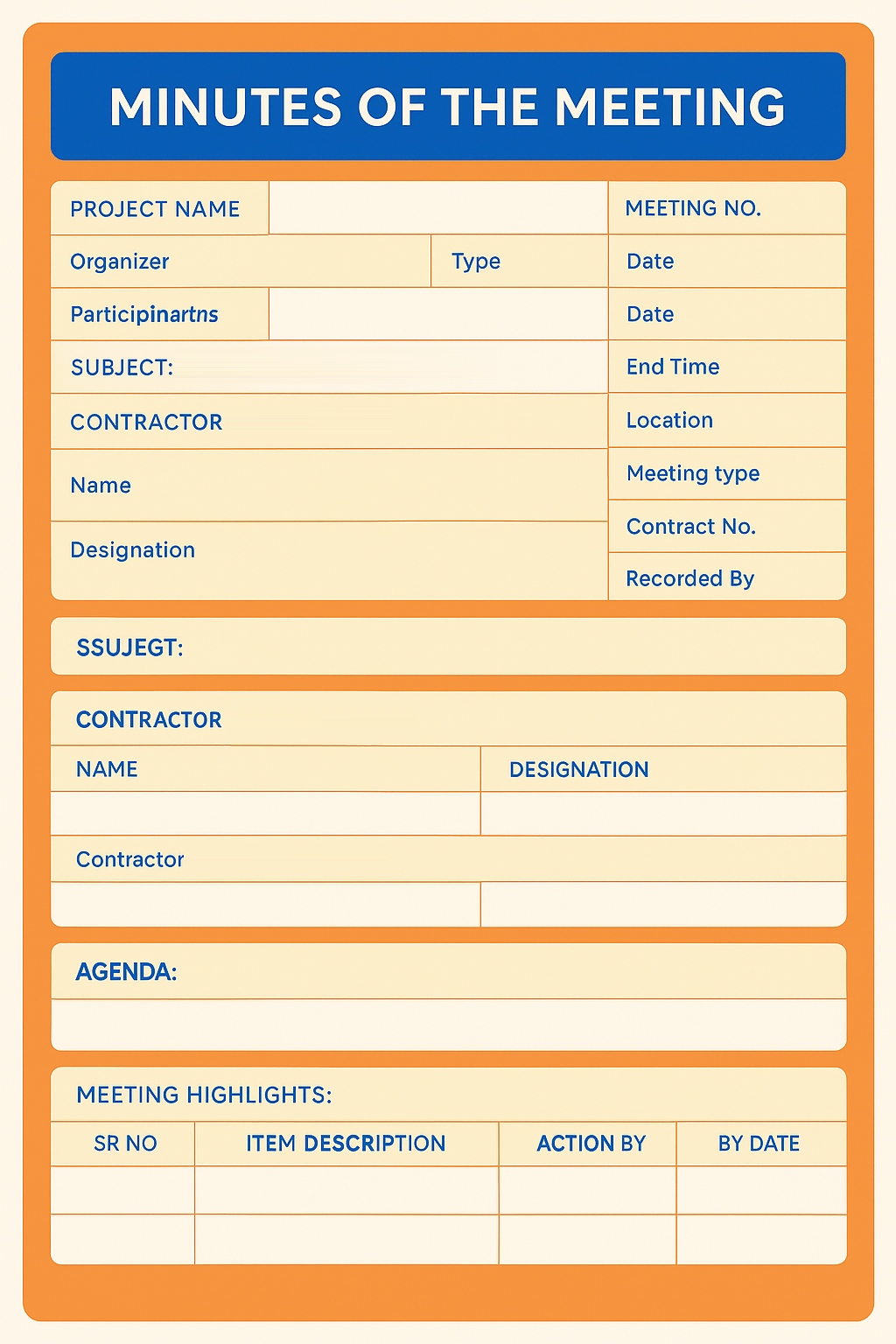
It contains:
- Meeting date, time, and location.
- List of attendees and their roles.
- A numbered agenda with space for discussion summaries.
- Action items and next steps.
When to Use: For routine team meetings or status updates where a straightforward structure is adequate.
3. Conference Call Meeting Template
Conference calls often involve remote participants and require more structure to keep everyone engaged.

This template offers:
- Meeting details with call-in information.
- Participant list with contact information.
- Agenda items designed for virtual discussions.
- Space to record key discussion points, decisions, and follow-up actions.
When to Use: For remote or hybrid meetings where attendees join by phone or video.
4. Corporate Meeting Minutes Template
A corporate meeting often deals with high-level business issues and compliance matters.
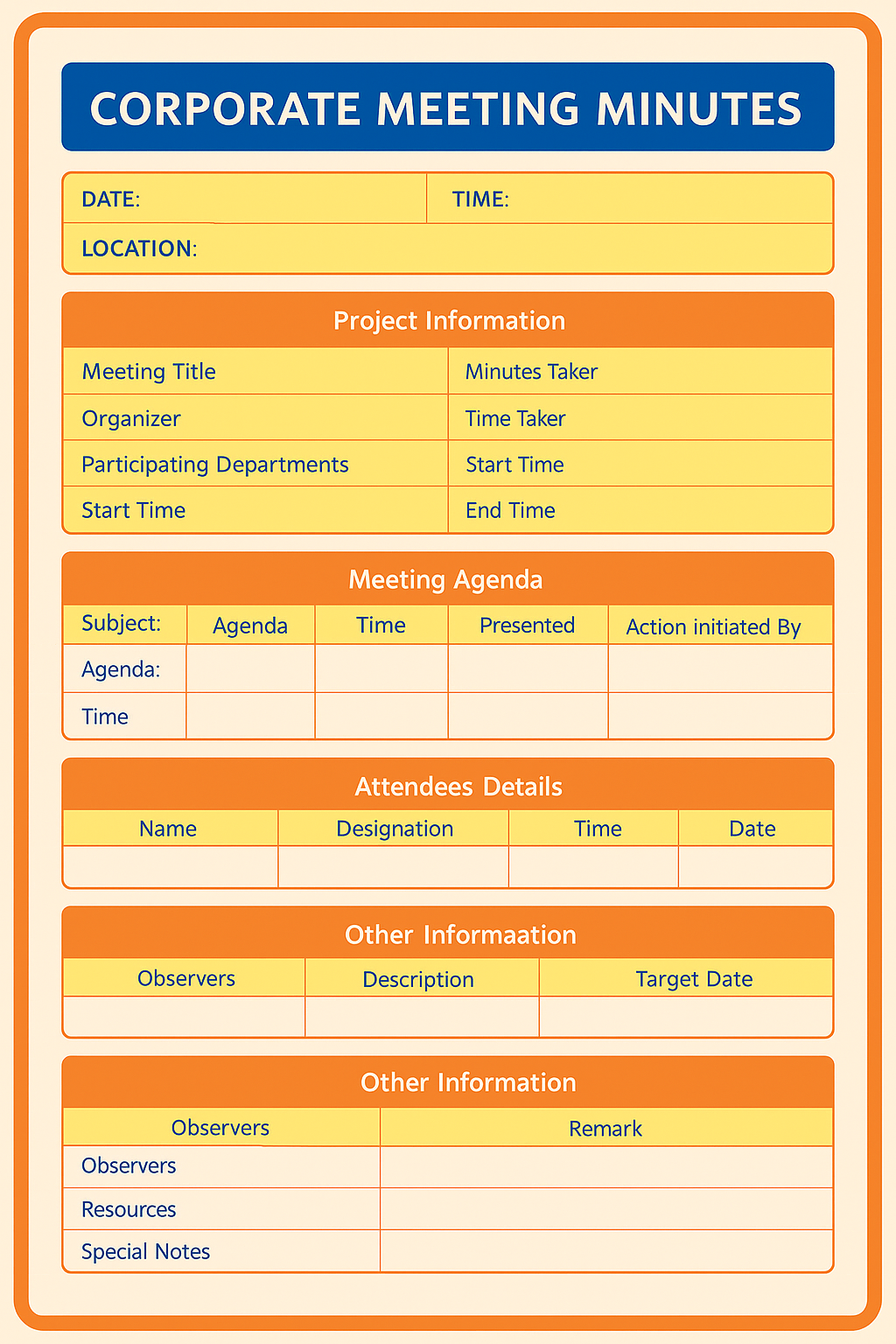
This template includes:
- Standard meeting details and attendees.
- Pre-meeting brief with objectives and expected outcomes.
- Detailed agenda with decision points and vote outcomes.
- A table for tracking action items with deadlines and responsible persons.
When to Use: For formal business meetings involving multiple departments or stakeholders.
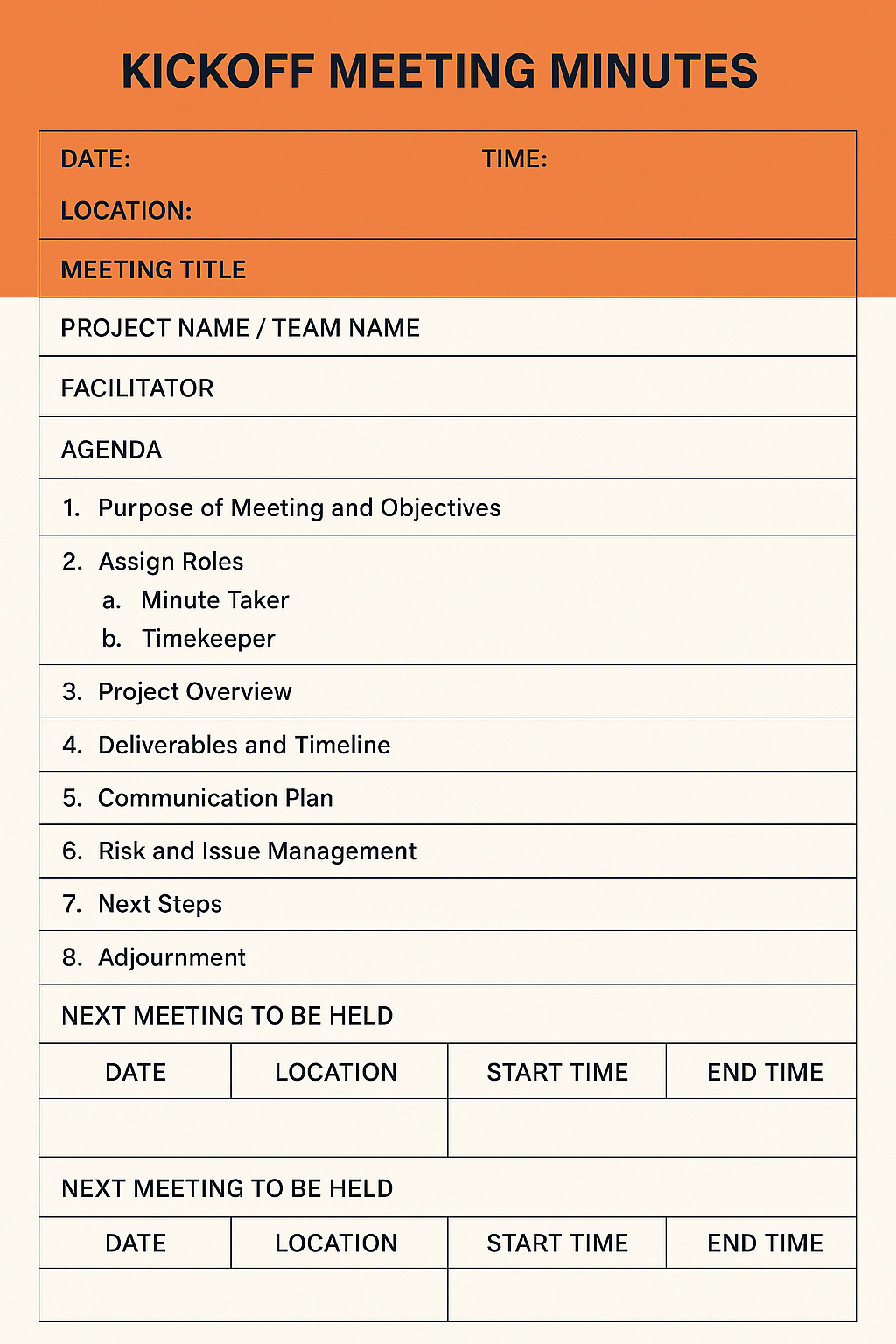
5. Kick-off Meeting Minutes Template
Kick-off meetings set the tone for a project.

This template features:
- Project introduction and objectives.
- Roles and responsibilities of team members.
- Key milestones, timelines, and risks.
- Sections for questions, concerns, and agreed actions.
When to Use: At the start of a project to align the team and document the project charter.
6. Sales Review Meeting Template
Sales meetings focus on performance and strategy.
This template provides:
- Space to record sales metrics and KPIs.
- Sections for team or individual performance discussions.
- Sections for challenges, competitor analysis, and market trends.
- Action items for improving sales strategies and following up with prospects.
When to Use: For sales review sessions or performance check-ins.
7. Staff Kick-off Meeting Template
This template helps you plan a staff kick-off or orientation meeting.
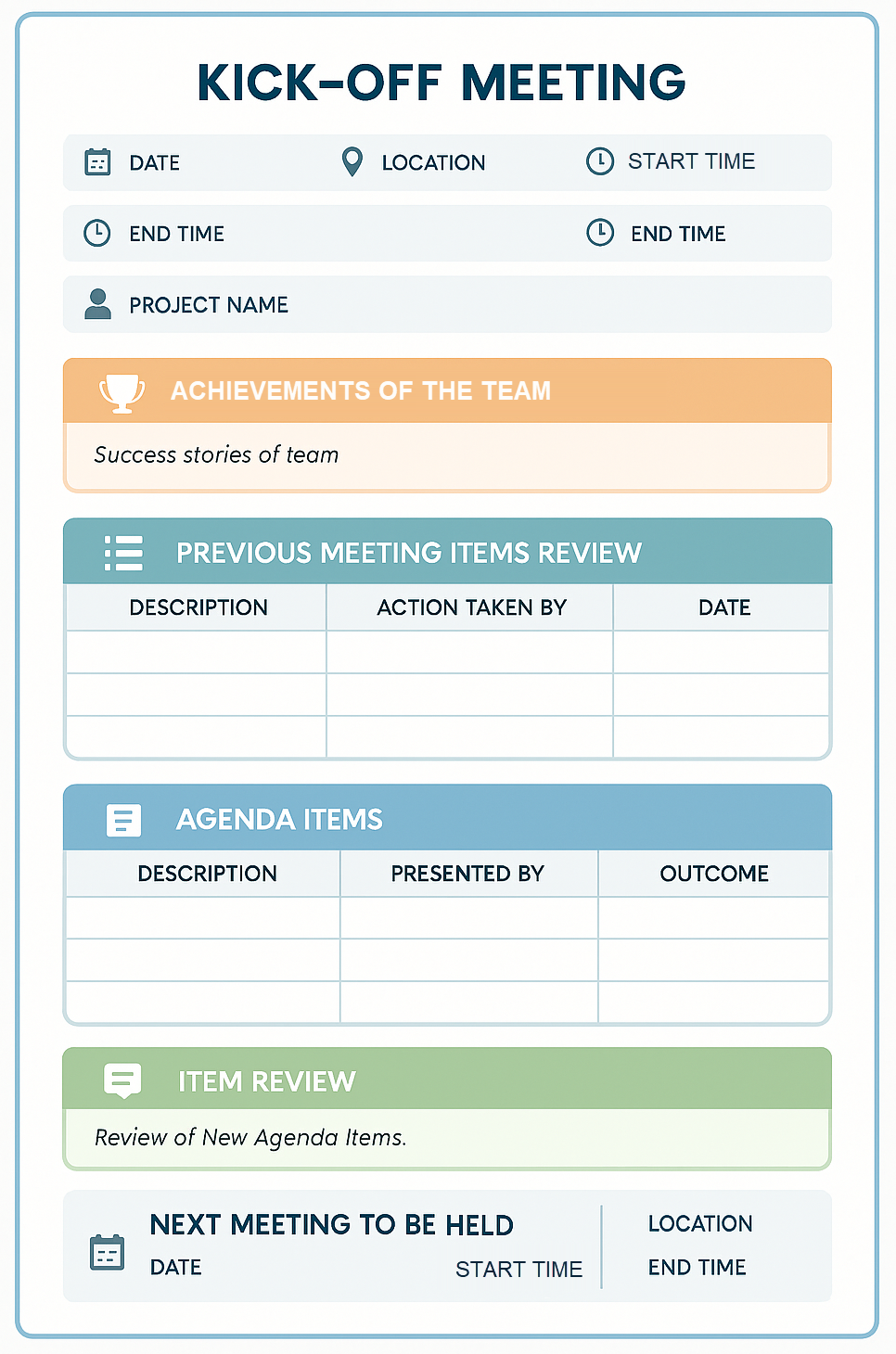
It includes:
- Purpose and goals of the staff meeting.
- Overview of the organization’s objectives or new initiatives.
- Sections for introductions, team-building activities, and policy updates.
- Action items and next steps for new or existing staff members.
When to Use: At the start of a new initiative or when onboarding staff to align everyone with organizational goals.
How to Choose the Right Template
To choose the most suitable template, consider the meeting’s purpose and audience:
- Formality. Board and corporate meetings require formal templates with spaces for motions and votes. Simple team meetings can use the classical template.
- Type of Meeting. Sales, kick-off, and staff templates are designed for specific meeting types. Use them when your agenda focuses on performance, project launch, or onboarding.
- Meeting Size and Location. Conference call templates are ideal for remote or hybrid meetings, while board templates are suitable for in-person sessions.
- Customization Needs. Each template can be customized. Add or remove sections as needed to suit your organization. For example, if you need a risk log, include a dedicated section.
Tips for Effective Minute-Taking
- Prepare in Advance: Read the agenda, review previous minutes, and set up the template before the meeting.
- Listen Actively: Focus on decisions and assignments rather than trying to capture every word.
- Stay Neutral: Avoid subjective language. Write in the past tense and maintain a factual tone.
- Use Clear Language: Simple sentences improve readability and reduce confusion.
- Review Action Items at the End: Before closing the meeting, review each action item aloud to confirm who is responsible and when it is due.
- Follow Up: Send a copy of the minutes within 24 hours and remind owners about their tasks.
Comparing Meeting Minutes and Meeting Notes
| Feature | Meeting Notes | Meeting Minutes |
| Purpose | Informal record of ideas and discussions for internal use | A formal document that records decisions and is often required for legal or compliance purposes |
| Level of detail | Summarizes main points using simple language | Includes precise wording of decisions and a list of attendees and approvals |
| Timing | Taken during the meeting and refined afterward | Prepared after the meeting based on notes and reviewed by participants |
| Usage | Shared within the team to aid follow-up and task assignments | Sent to stakeholders as the official record and stored for reference |
| Format | Flexible; can be bullet points or free form | Structured with defined sections and consistent headings |
Meeting notes are useful for quick context, while minutes are necessary for a formal record.
Frequently Asked Questions (FAQ)
Q1. Are formal minutes necessary for every meeting?
No. Informal team catch-ups may only need notes. Formal or compliance-related meetings require minutes to record decisions.
Q2. How soon should minutes be distributed?
Send draft minutes within 24 hours. Early distribution helps attendees recall details and provide corrections promptly.
Q3. Who should take meeting minutes?
A person who understands the meeting’s context and remains objective. In smaller meetings, the facilitator can take notes, but larger ones benefit from a dedicated note-taker.
Q4. Can recordings replace written minutes?
Recordings help as references but should not replace written minutes. Written minutes provide a concise summary that is easy to share and search.
Q5. What is the best way to track action items after the meeting?
Maintain a shared action item log. Update it regularly and review progress at the next meeting.
Conclusion
Meeting minutes are more than just paperwork; they help teams stay aligned, accountable, and efficient. Studies show that people spend hundreds of hours each year in meetings, and many sessions lack a clear agenda. With the right template and a structured approach, you can make your meetings productive and ensure every decision and action is documented. Use the templates provided here to save time, improve transparency, and reduce the cost of unproductive meetings.
Further Reading:

I am Mohammad Fahad Usmani, B.E. PMP, PMI-RMP. I have been blogging on project management topics since 2011. To date, thousands of professionals have passed the PMP exam using my resources.