Project management today demands more than technical knowledge. It requires strong human skills that help teams work together and deliver results. This is where power skills play a key role.
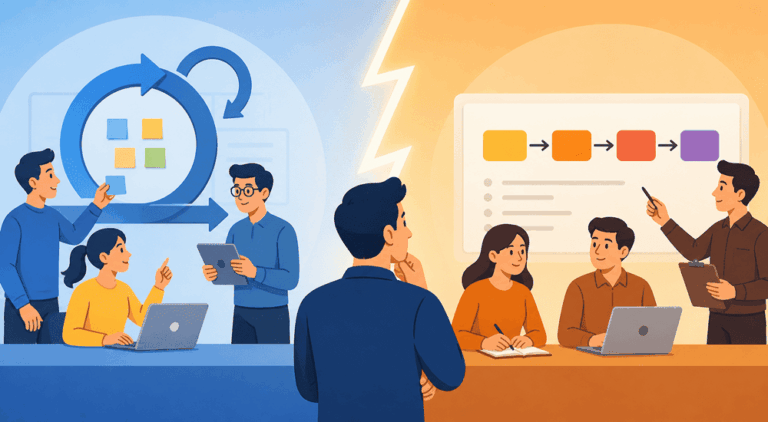
The PMI Talent Triangle highlights three core areas every project professional must develop. These are Ways of Working, Power Skills, and Business Acumen. Ways of Working focuses on technical project skills and delivery methods. Business Acumen connects projects with organizational goals and strategy. Power Skills, the third arm, centers on leadership, communication, and teamwork.
Why does this matter? Because projects succeed through people. A manager who can guide, motivate, and communicate clearly creates better outcomes. In a fast-changing work environment, power skills help you adapt, build trust, and lead with confidence.
In today’s blog post, we will discuss the power skills in detail.
Let’s get started.
What Are Power Skills?
Power skills are the behaviors and habits that enable you to collaborate with others and guide teams toward a shared goal. They go beyond technical expertise and include social, emotional, and cognitive abilities. These skills form a core competency for project professionals and help them lead with clarity and confidence.
In daily work, power skills shape how you communicate, solve problems, and handle change. For example, strong listening builds trust, while emotional intelligence helps you manage conflict. These skills turn plans into real results.
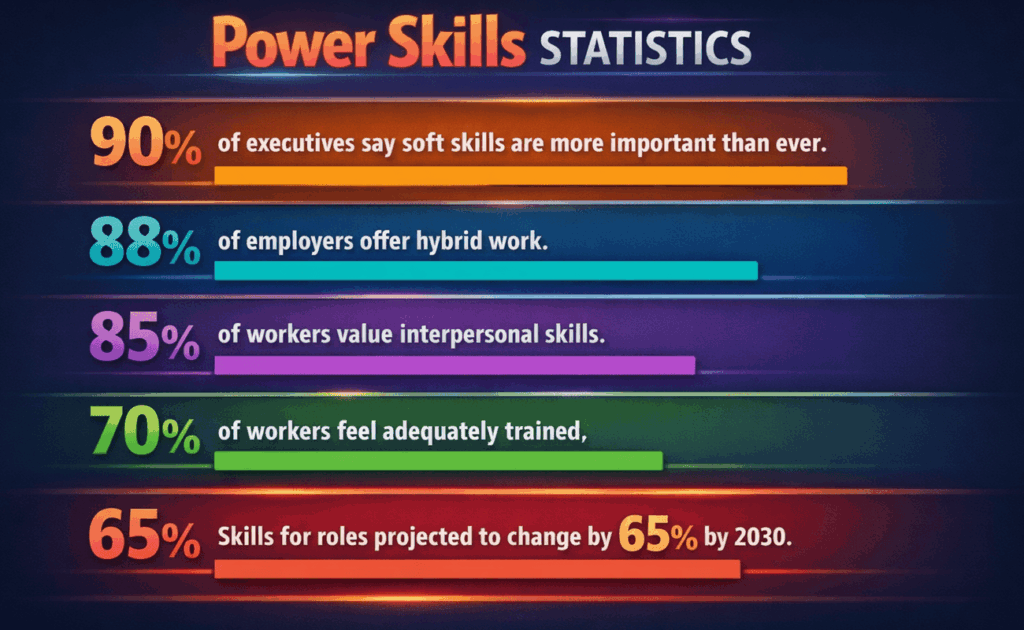
Recent research underscores their growing value: a LinkedIn survey of global executives found that 9 out of 10 leaders believe soft skills are more important than ever, with communication topping the list of in-demand abilities. The world of work is evolving quickly, and roles are changing; on average, skills required for a role have shifted 25% since 2015 and are projected to change by 65% by 2030. That pace of change means future-proof leaders must continuously invest in human skills.
Essential Power Skills
Below are thirteen power skills grouped into categories. Each description includes a practical example to help you apply the concept.
Communication and Listening
- Leadership – Inspiring others through clear vision and decisive action. A project manager who sets expectations, delegates effectively, and motivates the team exemplifies this skill.
- Active Listening – Giving full attention to speakers to understand their message. During stakeholder meetings, active listening means acknowledging concerns before responding.
- Communication – Conveying ideas through verbal, non-verbal, written, and visual channels. Writing concise status reports, delivering persuasive presentations, and using collaborative tools all show strong communication abilities.
Adaptability and Creativity
- Adaptability – Adjusting your behavior when circumstances change. When a project timeline shifts, adaptable managers re-prioritize tasks rather than panic.
- Brainstorming – Generating ideas collaboratively to solve problems or identify risks. For example, holding a cross-functional session to find creative solutions to a schedule delay.
- Problem-Solving – Identifying issues and determining workable solutions. A project leader who resolves scope creep by negotiating with stakeholders demonstrates problem-solving.
Coaching and Relationship Building
- Coaching & Mentoring – Guiding others toward their goals through feedback and shared experience. Pairing a junior team member with a seasoned mentor fosters growth and confidence.
- Conflict Management – Addressing disagreements constructively to reduce disruptions. Recognizing the root cause of a dispute and facilitating compromise keeps the project on track.
- Emotional Intelligence – Understanding and managing your emotions and those of others. Leaders with high emotional intelligence read the room, empathize with teammates, and adjust their approach accordingly.
Influence and Team Dynamics
- Influencing – Persuading stakeholders without relying on formal authority. Presenting data to support a decision and aligning it with organizational goals helps gain buy-in.
- Interpersonal Skills – Demonstrating honesty, empathy, and transparency to build trust. Sharing credit for wins and taking responsibility for mistakes encourages collaboration.
- Negotiation – Engaging in constructive dialogue to reach agreements. Negotiating realistic timelines with vendors benefits both parties and protects project quality.
- Teamwork – Working cooperatively toward a shared objective. Encouraging diverse ideas and celebrating team achievements strengthen group cohesion.
Why Power Skills Matter
The value of power skills extends beyond personal growth; it directly impacts team performance and organizational success. Hybrid and remote work have become the norm, and employers are responding. A 2025 Robert Half survey of over 500 US HR managers found that 88% of employers offer some hybrid work options, yet only 25% provide them to all employees. Job seekers overwhelmingly prefer flexibility; 55% rank hybrid schedules as their top choice, and just 16% want a fully in-office job. These trends mean managers must master communication and empathy across digital channels to keep teams engaged.
Workers also recognize the importance of power skills. A Pew Research Center report shows that 85% of workers say interpersonal skills are extremely or very important, tied with communication skills. Critical thinking follows closely at 84%. Despite this, 30% of employees feel they need more education and training to advance in their careers. Among those seeking training, nearly a third prefer learning on the job (28%), while 24% favor certificate programs and another 24% choose formal education. These figures highlight an opportunity for organizations to provide targeted learning paths and mentorship.
How to Develop Power Skills
Building power skills is an ongoing process. Here are some steps to strengthen your abilities:
- Seek Feedback – Ask colleagues or mentors for honest feedback about your communication and leadership style. Reflect on their input and adjust your approach.
- Practice Mindful Listening – During meetings, resist the urge to interrupt. Summarize what others have said to ensure you understand and to show respect.
- Invest in Continuous Learning – Pursue workshops, certificate programs, or online courses focused on specific skills. The Pew study suggests many workers prefer learning on the job, so look for opportunities to lead initiatives or mentor others.
- Apply Emotional Intelligence Daily – Monitor your reactions during stressful situations, identify triggers, and use empathy to resolve conflicts.
- Engage in Collaborative Problem-Solving – Encourage brainstorming sessions and involve a diverse range of stakeholders. Document ideas and follow up with actionable plans.
Power Skills in the Age of AI and Hybrid Work
Artificial intelligence and automation are reshaping every profession. LinkedIn’s data shows that more than half of its members hold jobs that may be disrupted or augmented by AI. As tasks become automated, uniquely human skills such as creativity, adaptability, and empathy become the differentiators. Managers who excel at guiding teams through change and negotiating uncertainty will remain indispensable.
Hybrid work also challenges traditional leadership models. Without face-to-face interaction, miscommunication can occur. Strong power skills reduce misunderstanding and build trust across locations. Employers that nurture these skills retain talent and attract new hires; the Robert Half survey found that 38% of professionals are seeking new roles and cite flexibility as a major factor.
FAQs
Q1. What’s the difference between power skills and technical skills?
Power skills are interpersonal and cognitive abilities, such as communication, problem-solving, and adaptability. Technical skills involve specific knowledge or tools. Both are important, but power skills help you apply technical knowledge effectively.
Q2. How can I improve my negotiation skills?
Start by preparing thoroughly. Clarify your objectives, understand the other party’s needs, and look for win-win solutions. Practice active listening and remain calm under pressure.
Q3. Do power skills matter for entry-level project managers?
Yes. Employers increasingly look for people who can collaborate, communicate, and think critically. Developing these skills early will set you apart and accelerate your career growth.
Summary
Power skills are no longer optional; they’re essential for project managers navigating complex, technology-driven environments. They help you communicate clearly, adapt to change, resolve conflict, and inspire your team. By investing in your growth and supporting your colleagues, you’ll create a workplace where people thrive, and projects succeed.

I am Mohammad Fahad Usmani, B.E. PMP, PMI-RMP. I have been blogging on project management topics since 2011. To date, thousands of professionals have passed the PMP exam using my resources.